
| Specification | Available Options |
|---|---|
| Product Name | Custom Pasta Boxes |
| Primary Use | Retail display, refrigerated presentation, gift sets, subscriptions, and distribution |
| Pasta Compatibility | Spaghetti, linguine, penne, fusilli, macaroni, farfalle, lasagna, ravioli, and tortellini |
| Size | Fully customizable according to pasta and inner-package dimensions |
| Capacity | Individual portions, standard retail weights, bulk packs, or multiple varieties |
| Paperboard | SBS, coated board, food-contact-compatible board, grease-resistant board, and recycled paperboard |
| Kraft Material | Natural kraft, white kraft, and recycled kraft |
| Corrugated Material | F-flute, E-flute, white corrugated, and kraft corrugated |
| Box Styles | Straight tuck, reverse tuck, auto-lock, window, sleeve and tray, two-piece, gable, and mailer |
| Window Options | Vertical, horizontal, front, side, multi-panel, or custom-shaped window |
| Inner Packaging | Sealed bag, clear pouch, paper liner, sealed food tray, or customer-supplied primary package |
| Insert Options | Flat support, tray support, compartment divider, and multipack separator |
| Closures | Tuck flaps, auto-lock bottom, sleeve, separate lid, locking tabs, and handle top |
| Printing | CMYK, Pantone, digital, offset, flexographic, and interior printing |
| Logo Treatments | Printed logo, foil stamping, embossing, debossing, and spot UV |
| Surface Finishes | Matte, gloss, aqueous coating, soft-touch, and specialty paper |
| Sustainability Options | Recyclable board, recycled content, kraft, plastic-free windows, and FSC-certified paper options |
| Supply Format | Flat-packed, pre-glued, sleeved, or pre-assembled |
| Sample Options | Structural prototype, liner-fit sample, digital proof, and printed sample |
| Minimum Order Quantity | Based on dimensions, material, printing, and construction |
| Production Time | Confirmed after the structure and artwork are approved |
| Delivery | Based on quantity, packed format, destination, and shipping method |
Custom Pasta Boxes Designed Around the Pasta Format
Custom Pasta Boxes are manufactured to protect, organize, and present pasta for retail display, refrigerated placement, gifting, subscription delivery, and branded product distribution.
Pasta varies considerably in length, thickness, shape, weight, moisture level, and storage requirements. Long spaghetti needs a tall rectangular carton, while penne and fusilli can be packed inside shorter folding boxes. Fresh ravioli and tortellini may require a sealed primary liner or fitted tray before being placed inside the printed paperboard carton.
The dimensions, material, interior protection, window, closure, printing, and finish can be customized around the actual pasta rather than forcing the product into a generic box.
What Are Custom Pasta Boxes?
Custom Pasta Boxes are paper-based cartons designed for a particular pasta shape, quantity, inner package, and retail presentation.
They may hold pasta directly when suitable food-contact materials are specified, or they may function as secondary packaging around a sealed inner bag, pouch, tray, or protective liner. The correct packaging arrangement depends on whether the pasta is dry, fresh, filled, refrigerated, frozen, or prepared for immediate serving.
The exterior can display a logo, pasta variety, cooking time, ingredients, net weight, nutritional details, preparation instructions, barcode, QR code, product story, and storage information.
Choosing the Correct Pasta Box Size
The box should be measured around the complete packaged product. When pasta will be placed inside a sealed bag or tray, that component must be filled and measured before the carton dimensions are finalized.
Long pasta requires enough internal height to prevent the pieces from pressing against the top and bottom panels. Short pasta requires a box volume that accommodates the intended weight without leaving excessive space.
| Pasta Format | Measurements to Confirm | Recommended Packaging Arrangement |
|---|---|---|
| Spaghetti and Linguine | Pasta length, bundle width, thickness, and liner dimensions | Tall rectangular carton with sealed inner bag |
| Penne and Rigatoni | Filled volume, product weight, and package depth | Medium folding carton with inner liner |
| Fusilli and Farfalle | Pasta volume, irregular shape, and movement allowance | Wide carton with reinforced bottom |
| Macaroni | Filled weight, volume, and pouring requirements | Compact carton with optional dispensing flap |
| Lasagna Sheets | Sheet length, width, stack height, and breakage risk | Flat rectangular carton with close-fitting panels |
| Ravioli and Tortellini | Filled tray dimensions, product height, and storage temperature | Printed outer sleeve or carton around a sealed tray |
| Pasta Gift Selection | Number of varieties and individual package dimensions | Divided box with fitted compartments |
A physical sample filled with the intended pasta provides the most reliable way to confirm the internal capacity and closing performance.
Materials for Custom Pasta Boxes
The selected material affects strength, printing quality, storage format, window support, and protection during retail handling.
| Material | Recommended Application | Main Advantages | Important Consideration |
|---|---|---|---|
| SBS Paperboard | Dry pasta retail cartons | Smooth surface for detailed printing and clean folds | An inner liner may be needed for product protection |
| Food-Contact-Compatible Board | Selected direct-contact applications | Clean internal surface and customizable structure | Complete material specifications must match the intended use |
| Grease-Resistant Paperboard | Fresh or filled pasta with greater oil or moisture exposure | Helps reduce staining and material softening | It does not replace refrigeration or sealed primary packaging |
| Natural Kraft Board | Artisan and minimally printed pasta packaging | Natural paper appearance and simple branding | Printed colors may appear muted |
| White Kraft Board | Brighter retail pasta designs | Cleaner surface for detailed graphics | Board thickness should match the filled weight |
| E-Flute Corrugated Board | Larger pasta sets and shipping cartons | Added rigidity and compression resistance | Creates a thicker package profile |
| F-Flute Corrugated Board | Compact cartons needing additional support | Fine flute with a relatively smooth print surface | Best confirmed through structural sampling |
Paperboard Pasta Boxes
Paperboard is suitable for spaghetti cartons, tuck-end boxes, auto-lock cartons, sleeves, window boxes, and compact packages for short pasta.
It provides sufficient printable space for product branding and preparation instructions. The board thickness should be selected according to the pasta weight, carton height, window size, and inner liner.
A reinforced or auto-lock bottom can be added when the box contains a heavier quantity of short pasta.
Kraft Pasta Boxes
Natural kraft offers a simple paper appearance that suits artisan and minimally styled pasta packaging. White kraft provides a brighter background for multicolor artwork and detailed product information.
Kraft boxes can include windows, inner bags, tuck closures, dispenser openings, paperboard dividers, and custom printing.
Corrugated Pasta Boxes
Corrugated material provides additional protection for larger pasta packages, variety sets, subscription deliveries, and transportation cartons.
E-flute and F-flute can create relatively compact packaging with greater rigidity than standard paperboard. Internal dividers may be added when several pasta cartons or bags are packed together.
Packaging Dry Pasta
Dry pasta packaging should protect the pieces from breakage, external contamination, and unnecessary movement. Long varieties may need a close-fitting inner bag that keeps the bundle together, while short pasta can be placed inside a sealed bag that follows the carton dimensions.
A paperboard box alone should not automatically be described as airtight or moisture-proof. When a stronger environmental barrier is required, the pasta can be sealed inside a suitable primary bag before being placed in the printed box.
Packaging Fresh and Filled Pasta
Fresh ravioli, tortellini, gnocchi-style pasta, and other filled varieties may require refrigerated or frozen storage and a suitable sealed primary package.
The printed paperboard box can function as an outer carton or sleeve around a sealed tray, film-covered container, or compatible pouch. The carton should be measured around that complete primary package.
Moisture resistance, grease resistance, cold-storage performance, and adhesive compatibility should be evaluated under the intended storage conditions.
Custom Pasta Box Styles
The box structure should match the pasta shape, inner packaging, shelf position, and customer opening method.
| Pasta Box Style | Structure | Recommended Use | Available Features |
|---|---|---|---|
| Straight Tuck-End Box | Top and bottom flaps close in the same direction | Spaghetti, linguine, and long dry pasta | Window, sealed inner bag, reinforced ends |
| Reverse Tuck-End Box | Top and bottom flaps close in opposite directions | Short dry pasta and compact retail cartons | Display window, locking tabs, inner liner |
| Auto-Lock Bottom Box | Pre-glued bottom locks during assembly | Heavier quantities of penne, fusilli, or macaroni | Stronger base, window, dispensing flap |
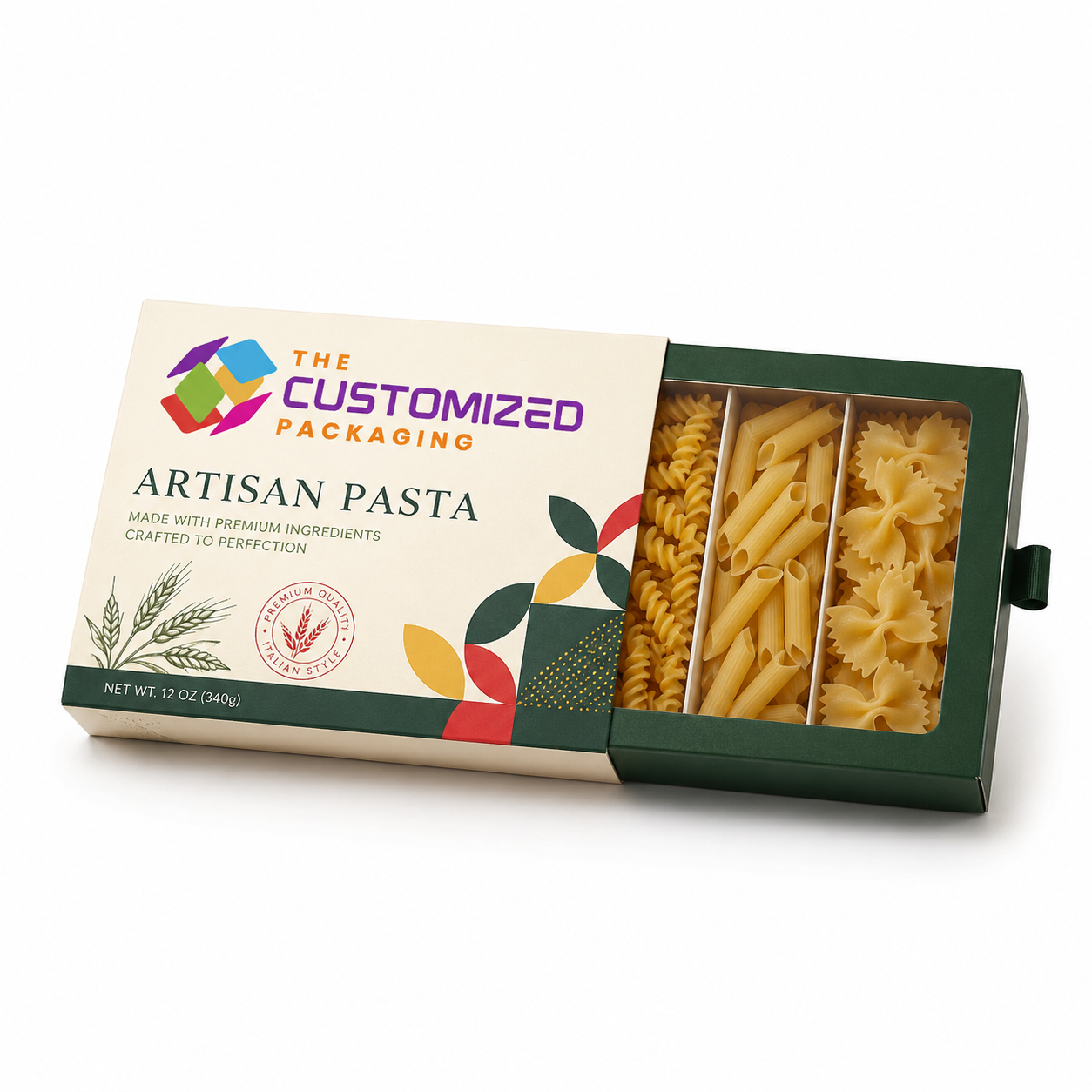
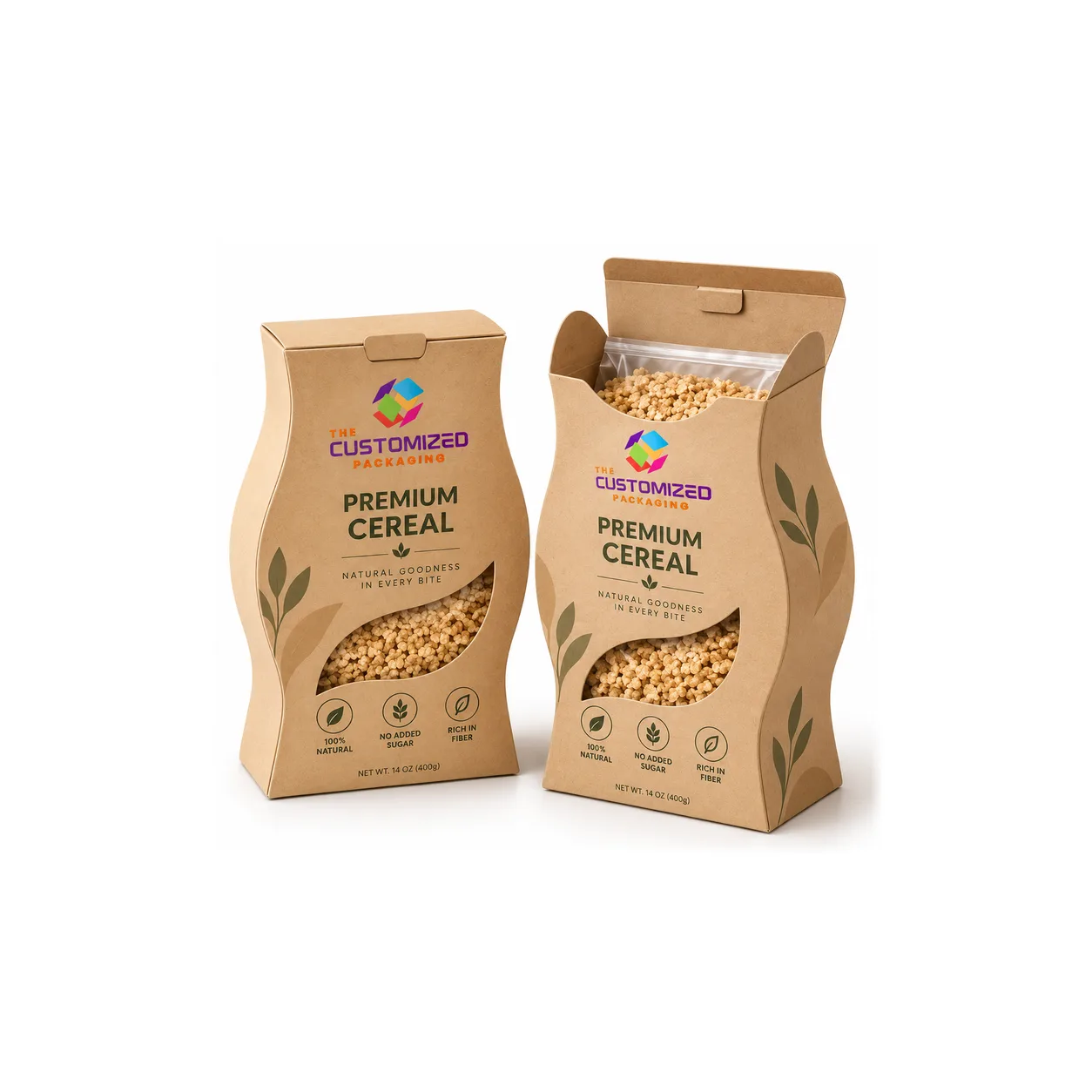
| Window Pasta Box | Clear section displays the pasta | Retail presentation of dry pasta | Custom-shaped window and protective film |
| Sleeve and Tray Box | Printed sleeve surrounds an inner tray | Fresh, filled, or premium pasta | Sealed tray, printed sleeve, removal opening |
| Two-Piece Box | Separate lid and base | Pasta gift assortments and premium presentation | Compartments, tissue, fitted inserts |
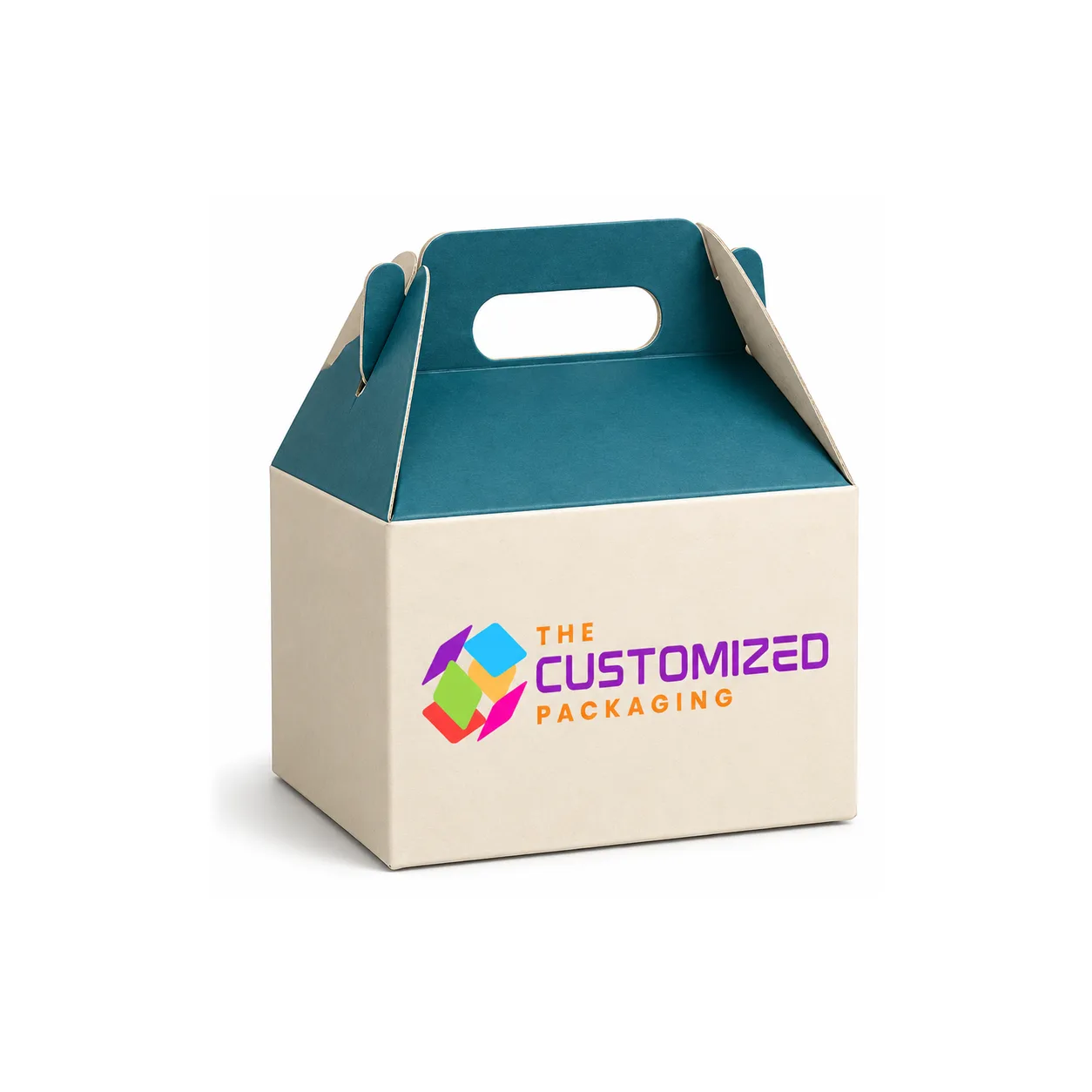
| Gable Pasta Box | Folding carton with an integrated handle | Pasta gift sets and take-home kits | Window, reinforced handle, divided interior |
| Corrugated Mailer Box | Attached lid with reinforced side walls | Pasta subscriptions and delivery sets | Dividers, interior printing, locking tabs |
Pasta Boxes with Display Windows
A clear window allows customers to view the pasta shape, color, texture, and approximate quantity without opening the package.
The window may be positioned on the front panel, side panel, lid, or several connected surfaces. Long vertical windows are suitable for spaghetti, while wider windows can display penne, fusilli, farfalle, and macaroni.
The opening should leave enough paperboard around its edges to maintain the carton’s strength. Windowless packaging may be selected when a fully paper-based structure or greater light protection is preferred.
Inner Bags and Protective Liners
A sealed inner bag can provide an additional barrier between the pasta and printed outer carton. It can also keep small pieces contained after the box is opened.
| Interior Option | Main Function | Suitable Pasta Application |
|---|---|---|
| Sealed Inner Bag | Contains pasta and provides added environmental protection | Dry spaghetti, penne, fusilli, and macaroni |
| Clear Primary Pouch | Provides visibility through an outer carton window | Retail dry pasta |
| Paper-Based Liner | Creates separation from the printed carton | Selected dry pasta applications |
| Sealed Food Tray | Holds fresh or filled pasta | Ravioli, tortellini, and refrigerated pasta |
| Flat Support Insert | Reduces movement and supports stacked pasta | Lasagna sheets |
| Compartment Divider | Separates different pasta varieties | Gift sets and multipacks |
| Pouring Flap | Supports controlled dispensing | Macaroni and small pasta shapes |
The liner dimensions and seal areas should be included when calculating the carton size.
Custom Printing and Branding
Custom Printed Pasta Boxes can carry artwork across the front, back, side panels, top flaps, bottom panels, sleeves, and selected interior surfaces.
CMYK printing supports multicolor graphics, illustrations, patterns, and product photography. Pantone printing can reproduce selected solid brand colors. Digital printing may suit samples and selected quantities, while offset printing can provide consistent results for larger production runs.
The layout can include the pasta name, shape illustration, cooking time, ingredients, nutrition facts, storage instructions, recipe suggestion, barcode, QR code, and brand story.
Finishing Options
Matte lamination creates a smooth and less reflective appearance. Gloss lamination makes printed colors appear brighter. Aqueous coating can provide surface protection while maintaining a paper-based finish.
Foil stamping, embossing, debossing, and spot UV can highlight the logo, pasta name, border, or selected design. Finishes should not interfere with required product information, folds, barcodes, or window edges.
Sustainable Pasta Packaging Options
Custom Pasta Boxes can be produced using recyclable paperboard, recycled-content stock, kraft material, corrugated board, selected FSC-certified paper, and plastic-free window alternatives.
Removing the window can simplify the material structure, while right-sized cartons can reduce unused space and unnecessary board consumption.
The recyclability of the finished packaging depends on the inner bag, window film, coating, lamination, adhesive, ink, and local collection system.
Sampling Before Production
A structural sample should be tested with the actual pasta and inner package. Testing should confirm capacity, panel strength, window position, bottom closure, liner fit, product movement, and shelf stability.
For long pasta, the sample should confirm that the pieces do not press excessively against the ends. For fresh or filled pasta, the complete sealed tray or pouch should be tested under its intended storage conditions.
Estimate the Cost of Custom Pasta Boxes
The price of Custom Pasta Boxes depends on the dimensions, material, board thickness, inner liner, window, box style, printing coverage, finishing treatments, quantity, and delivery destination.
A standard dry-pasta tuck carton generally requires fewer components than a premium pasta assortment box with compartments, a display window, interior printing, foil stamping, and multiple fitted sections.
Accurate pricing requires the pasta shape, product weight, complete inner-package dimensions, required quantity, preferred material, box style, window requirements, artwork, finishes, and delivery location.
Build Pasta Packaging Around the Actual Product
Custom Pasta Boxes should be developed around the pasta shape, quantity, primary package, storage method, and retail presentation.
Correct dimensions, protective liners, suitable materials, secure closures, and carefully positioned windows can reduce breakage, improve product visibility, and create a consistent branded shelf presence.
Spaghetti, linguine, and similar long pasta usually require tall rectangular cartons that closely follow the pasta length. Penne, fusilli, macaroni, and farfalle can use shorter and wider boxes based on their filled volume. The final dimensions should include the sealed inner bag and enough clearance for closing.
A sealed inner bag is useful when the printed paperboard carton is not intended to provide the complete moisture, contamination, and product-containment barrier. The liner also keeps small pasta pieces contained after opening. Its material should be selected according to the intended pasta and storage conditions.
Yes. A long vertical window can display spaghetti or linguine, while a wider front window can show penne, fusilli, farfalle, or macaroni. The window size should preserve enough surrounding board to support the filled carton and should reflect the pasta’s light-protection requirements.
Yes, but the printed paperboard box usually functions as an outer carton or sleeve around a suitable sealed tray or pouch. The complete package should be tested for refrigeration or freezing, moisture exposure, grease resistance, and adhesive performance under the intended storage conditions.
A dry retail pasta carton is not automatically suitable for hot prepared pasta. Cooked pasta requires packaging designed for heat, grease, moisture, sauce containment, and immediate food service. The structure and material should be specified separately according to the prepared meal.
Related Products

Order Pasta Boxes from The Customized Packaging
We manufacture Pasta Boxes for businesses that need reliable product protection, accurate printing, and professional packaging for retail, ecommerce, storage, or shipping. Each box can be customized by size, material, structure, printing, coatings, finishes, inserts, and order quantity.
Share your artwork and quantity targets for Pasta Boxes and we will recommend the most cost-effective structure for your timeline. or speak with a packaging expert. Browse custom rigid boxes, packaging inserts, and use our Custom Box Packaging Cost Calculator.