

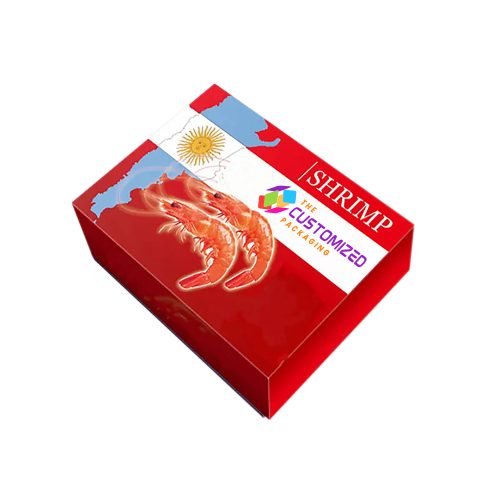
| Specification | Available Options |
|---|---|
| Product Name | Custom Seafood Boxes |
| Products | Fish, shrimp, lobster, crab, shellfish, smoked and frozen seafood |
| Materials | SBS, folding board, kraft, micro-flute and corrugated board |
| Flutes | E-flute, B-flute, C-flute and double-wall combinations |
| Styles | Tuck, sleeve, corrugated case, divided, mailer, handled and shelf-ready |
| Printing | CMYK, Pantone, digital, offset, flexographic and one-color |
| Inserts | Dividers, base pads, layer sheets and product compartments |
| Shipping Features | Insulation space, coolant sections, liners and ventilation |
| Branding | Logos, species details, barcodes, QR codes and batch areas |
| Quantity | Custom and wholesale quantities; MOQ confirmed by specification |
| Delivery | Available throughout the USA |
Seafood Packaging Designed Around the Final Product
Seafood may be vacuum sealed, tray packed, bagged, wrapped, canned, chilled or frozen before being placed inside an outer box.
Our custom seafood packaging is developed around the finished primary package rather than the seafood alone. Measurements should include pouch seals, tray rims, labels, liners, coolant packs, insulation, dividers and any irregular frozen edges.
The outer carton normally provides organization, branding and secondary protection. It should not replace the sealed primary package or be described as leakproof, odor-proof or temperature controlling by itself.
Popular Seafood Box Styles
| Box Style | Recommended Application |
|---|---|
| Folding seafood carton | Smoked fish, sealed portions and retail products |
| Printed tray sleeve | Supermarket trays and prepared seafood |
| Corrugated seafood case | Frozen portions, restaurant supply and wholesale |
| Divided seafood box | Mixed fish, shellfish and seafood assortments |
| Shelf-ready case | Sealed retail products and freezer displays |
| Seafood mailer box | Subscriptions, meal kits and local delivery |
| Insulation-compatible box | Chilled and frozen ecommerce shipments |
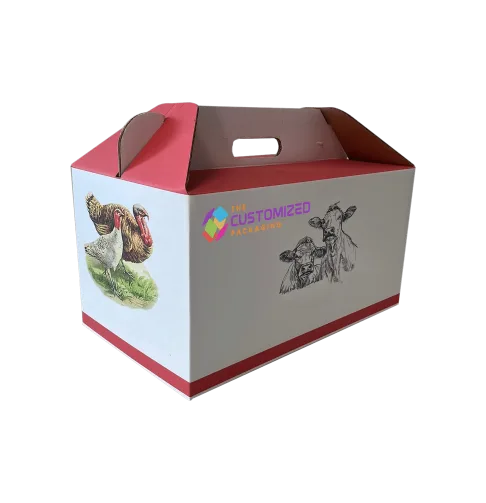
| Handled carrier | Fish-market pickup and local orders |
| Two-piece gift box | Smoked seafood and premium gift collections |
| Ventilated case | Selected shellfish and product-specific applications |
The final structure should be selected according to the product condition, temperature, weight, stacking requirements and distribution method.
Materials for Seafood Packaging Boxes
| Material | Recommended Use |
|---|---|
| SBS paperboard | Printed retail cartons and sleeves |
| Folding boxboard | Lightweight sealed seafood products |
| White kraft board | Full-color retail and premium branding |
| Natural kraft board | Fish markets and traditional branding |
| Micro-flute cardboard | Heavier retail packs and gift sets |
| E-flute corrugated | Compact frozen products and local delivery |
| B-flute corrugated | Seafood subscriptions and food-service cases |
| C-flute corrugated | Whole fish and larger distribution boxes |
| Double-wall corrugated | Heavy loads and demanding transport |
| Selected coated board | Defined moisture-exposure conditions |
Material selection should account for the packed weight, humidity, freezer exposure, condensation, stacking load and delivery route.
Fish, Shrimp and Shellfish Packaging
Fish packaging boxes can hold vacuum-packed fillets, steaks, whole sides, frozen blocks and individually wrapped portions. Long corrugated structures can be developed for whole fish, while divided boxes can organize different cuts or serving sizes.
Shrimp packaging boxes can hold sealed retail bags, frozen portions, restaurant packs or mixed sizes. Compartments may separate varieties, cooked and raw products or different seasonings.
Lobster, crab and shellfish may require stronger corrugated board because of their weight, rigid shells and irregular shapes. Products should remain inside appropriate liners, trays, bags or other primary containment.
Frozen and Chilled Seafood Boxes
Frozen seafood boxes should be specified according to the expected freezer temperature, storage duration, condensation, stacking pressure and transport cycle.
Freezing can affect board flexibility, adhesives, labels and coatings. A material should only be called freezer suitable after the complete package has been reviewed for its intended conditions.
Chilled seafood may require insulation, coolant areas, absorbent components and moisture-management features. The outer box does not create refrigeration; temperature control depends on the complete cold-chain system. FDA notes that frozen seafood can spoil when it thaws during transportation and remains warm for too long.
Seafood Shipping Boxes
Seafood shipping boxes may combine a corrugated outer case with thermal liners, molded-fiber components, foam, gel packs or other cooling materials.
The correct system depends on the required product temperature, shipping duration, season, destination and possible carrier delays. Product position, coolant quantity and insulation performance should be confirmed through representative testing.
Dry ice may require ventilation, handling instructions and carrier-specific labeling. It should not be placed inside a completely airtight package.
Dividers, Liners and Internal Supports
Paperboard or corrugated dividers can separate fish species, portion sizes, sealed pouches, trays, sauces and recipe materials.
Base pads and layer sheets can distribute weight and help organize stacked products. Insulated liners and coolant compartments can be incorporated into selected shipping structures.
Internal components should not puncture sealed pouches, crush delicate seafood or interfere with cooling-material placement.
Custom Printing and Logo Branding
Seafood boxes with logo printing help fisheries, processors, markets, restaurants, retailers and delivery brands maintain consistent packaging.
Artwork can include the seafood species, product form, cut, net quantity, ingredients, allergen information, storage directions, cooking instructions, origin details, lot number, packing date, barcode and QR code.
CMYK printing supports detailed product photography and marine artwork. Pantone printing may be used for defined brand colors, while flexographic printing can suit larger corrugated orders.
Important codes and labels should remain on flat panels away from folds, tape, moisture-prone areas and heavily textured finishes.
Seafood Labeling and Food Contact
Fish and crustacean shellfish are major food allergens under FDA labeling requirements. The specific species may need to be identified on applicable packaged-food labels.
The seafood business remains responsible for supplying and approving species names, ingredients, allergens, net quantity, storage information, preparation guidance and other regulated wording.
When paperboard, coatings, liners, adhesives, inks or absorbent components may contact seafood directly, the precise materials must be selected for the intended food type, temperature, moisture level and contact duration.
Retail, Food-Service and Wholesale Uses
Retail seafood packaging boxes can include tray sleeves, folding cartons, window boxes and shelf-ready cases for independently sealed products.
Food-service cartons can display species, cut, quantity, batch, supplier and storage details for restaurants, hotels, caterers and commercial kitchens.
Ordering wholesale seafood boxes can reduce the average unit price because structural design, tooling and printing setup are distributed across more units.
Pricing depends on dimensions, packed weight, board grade, liners, insulation, dividers, ventilation, printing, quantity, assembly and delivery destination.
Responsible Environmental Claims
Options may include right-sized corrugated boxes, recycled-content secondary board, kraft paper, paper dividers, molded fiber and removable insulation.
The complete package should not automatically be called recyclable, biodegradable, compostable or sustainable. Coatings, seafood residue, labels, liners, insulation, adhesives and local processing facilities can affect disposal options.
Why Choose The Customized Packaging?
The Customized Packaging develops seafood packaging around your sealed product dimensions, packed weight, storage conditions and distribution requirements.
Our team can assist with corrugated grades, tray sleeves, liners, dividers, ventilation, insulation space, dielines, artwork placement and printed proofs.
Share your seafood type, primary-package dimensions, packed weight, temperature requirements, quantity and delivery address for project-specific pricing.
Yes. Provide the completed primary-package dimensions, packed weight and quantity required inside each box.
Selected corrugated materials can be developed for frozen applications, but the complete box should be tested under the intended freezer, condensation and transport conditions.
Yes. Selected boxes can include insulation space, gel-pack compartments, dividers and absorbent components as part of a planned cold-chain system.
No. Direct-contact suitability depends on the precise material, coating, ink, adhesive, liner and intended conditions of use.
The outer cardboard box alone is not leakproof. Sealed pouches, trays, liners and suitable primary containment are normally required.
Related Products









Order Custom Sea Food Boxes from The Customized Packaging
We manufacture Custom Sea Food Boxes for businesses that need reliable product protection, accurate printing, and professional packaging for retail, ecommerce, storage, or shipping. Each box can be customized by size, material, structure, printing, coatings, finishes, inserts, and order quantity.
Share your artwork and quantity targets for Custom Sea Food Boxes and we will recommend the most cost-effective structure for your timeline. or speak with a packaging expert. Browse custom rigid boxes, packaging inserts, and use our Custom Box Packaging Cost Calculator.