

| Specification | Available Options |
|---|---|
| Suitable Products | Corn flakes, oat cereal, granola, muesli, bran cereal, puffed grains, protein cereal, kids’ cereal, and breakfast assortments |
| Packaging Uses | Retail, private label, hospitality, subscriptions, promotions, ecommerce, variety packs, and wholesale distribution |
| Primary Packaging Compatibility | Sealed pillow bag, stand-up pouch, flat pouch, portion pack, cup, sachet, liner, or other suitable food-contact package |
| Materials | SBS paperboard, white kraft, natural kraft, folding boxboard, recycled secondary board, clay-coated board, micro-flute, E-flute, B-flute, double-wall corrugated board, rigid board, and molded pulp |
| Box Styles | Rectangular cereal carton, reverse-tuck box, straight-tuck carton, auto-lock box, snap-lock carton, dispenser box, window box, gable box, variety pack, display box, and mailer |
| Dimensions | Fully customizable according to filled bag width, depth, height, cereal weight, serving count, and required shelf presence |
| Product Capacity | Single serving, small retail pack, standard pack, family size, multipack, variety assortment, hotel portion set, or custom capacity |
| Product Orientation | Upright, horizontal, layered, divided, pouch-supported, cup-supported, or custom orientation |
| Board Thickness | Selected according to carton dimensions, filled weight, window area, stacking, and distribution conditions |
| Flute Options | Micro-flute, E-flute, B-flute, C-flute, EB double-wall, BC double-wall, and suitable shipping combinations |
| Printing Methods | Digital, offset, flexographic, screen, CMYK, Pantone, white ink, metallic ink, and one-color printing |
| Printing Areas | Front, back, sides, top flaps, bottom panels, interior, insert, promotional panel, display header, and master case |
| Logo Options | One-color, full-color, repeating pattern, embossed, debossed, spot UV, metallic, foil-accented, or branded label |
| Closure Options | Straight tuck, reverse tuck, auto-lock base, snap-lock base, adhesive seal, tear strip, locking tab, dispenser flap, or custom closure |
| Opening Options | Top flap, side opening, tear strip, perforated panel, pour spout, dispenser opening, lift tab, or custom feature |
| Window Options | Transparent film, open die-cut, rectangular, circular, arch-shaped, grain-shaped, bowl-shaped, logo-shaped, or custom window |
| Handle Options | Die-cut handle, reinforced handle, gable handle, rope handle for specialty gift sets, or no carrying feature |
| Inner-Bag Support | Side panels, base platform, folded support, gusset clearance, bag-retention tabs, or custom structural feature |
| Single-Serve Options | Mini carton, sealed pouch box, cup sleeve, tear-open panel, spoon compartment, or custom format |
| Family-Pack Options | Full-height carton, reinforced side panels, auto-lock base, large information panels, or custom structure |
| Granola Options | Folding carton, kraft box, window package, sealed-pouch carton, premium finish, or custom format |
| Muesli Options | Window carton, natural kraft box, large front panel, pouch support, or custom design |
| Protein-Cereal Options | Premium print, nutrition panel, ingredient section, resealable primary pouch compatibility, or custom box |
| Kids’ Cereal Options | Bright artwork, games, licensed graphics with authorization, promotional panels, QR content, or custom design |
| Variety-Pack Options | Divided outer carton, multiple portion packs, flavor map, carrying handle, display tray, or custom arrangement |
| Hotel-Portion Options | Single-serving carton, multipack case, dispenser pack, private-label artwork, or custom hospitality format |
| Subscription Options | Corrugated mailer, multiple retail boxes, pouch dividers, monthly artwork, product guide, and promotional insert |
| Gift-Set Options | Premium cereal, granola, bowl, spoon, coffee, dried fruit, card, compartments, or custom collection |
| Display Options | Counter display, shelf-ready tray, front-opening display, branded header, product-count panel, or custom merchandising unit |
| Primary Barrier Function | Supplied by the inner bag, pouch, liner, cup, seal, or other validated primary packaging component |
| Moisture Protection | Barrier inner bag, sealed pouch, liner, appropriate closure, or tested complete packaging system |
| Odor Protection | Suitable sealed primary package, liner, barrier film, or product-specific evaluated system |
| Oil Protection | Appropriate inner bag, liner, pouch, coating, or validated packaging structure |
| Food-Contact Considerations | Direct-contact components selected for the cereal formulation, oil content, storage duration, temperature, and intended market |
| Tamper-Evident Options | Sealed inner bag, adhesive seal, tear strip, perforated flap, locking tab, security label, or custom feature |
| Product Information | Product name, flavor, ingredients, allergens, nutrition information, net weight, serving guidance, batch code, barcode, and company details |
| Nutrition Panel | Side panel, rear panel, full back panel, primary label, insert, QR-linked content, or custom approved layout |
| Ingredient Panel | Side panel, rear panel, bottom panel, primary pouch, applied label, or custom information area |
| Allergen Panel | Dedicated statement area, ingredient panel, rear panel, side panel, primary label, or custom approved section |
| Serving Information | Printed carton, rear panel, side panel, recipe area, primary label, QR-linked guide, or custom layout |
| Preparation Guidance | Bowl preparation, milk suggestions, yogurt pairing, recipe instructions, serving ideas, or brand-supplied directions |
| Storage Guidance | Cool and dry storage, resealing instructions for primary pouch, humidity guidance, or brand-approved text |
| Net Weight | Front panel, bottom section, side panel, primary label, or custom placement |
| Serving Count | Front panel, side panel, nutrition area, multipack statement, or custom information field |
| Product Claims | Brand-approved nutrition, ingredient, sourcing, certification, dietary, or product-positioning claims |
| Certification Marks | Authorized organic, kosher, halal, gluten-free, non-GMO, recycling, or other approved certification logos |
| Promotional Panels | Recipes, games, coupons, loyalty programs, educational content, product stories, contests, or custom campaigns |
| Coupon Options | Printed coupon, perforated coupon, QR-linked offer, peel-off label, interior promotion, or custom redemption format |
| Interactive Features | Puzzles, games, coloring panels, QR experiences, augmented-reality links, collectible content, or custom feature |
| Batch Coding | Lot number, batch code, packed date, production reference, facility code, or custom traceability field |
| Date Information | Best-before information where applicable, packed date, production date, or custom coding area |
| Barcode Options | UPC, EAN, SKU, flavor code, size code, retailer label, case code, or custom scannable data |
| QR Code Options | Recipes, nutrition details, brand story, product registration, loyalty program, subscription page, or reorder link |
| Variable Data Options | Flavors, product sizes, batch codes, retailer versions, promotional campaigns, seasonal artwork, and unique QR codes |
| Private-Label Options | Custom logo, brand colors, product name, flavor range, ingredients, nutrition information, barcode, and approved claims |
| Personalization Options | Retailer name, hotel branding, event date, promotional message, campaign code, or custom variable content |
| Retail Features | Strong front panel, top identification, side-panel product name, barcode, price-label area, and shelf-facing graphics |
| Hospitality Features | Hotel logo, single-serving size, preparation guidance, case labels, and bulk supply packaging |
| Ecommerce Features | Corrugated outer case, crush protection, dividers, void fill, shipping-label area, and transit support |
| Wholesale Features | Coordinated product range, size variations, master cartons, case labels, batch information, and pallet-ready quantities |
| Shelf-Ready Options | Tear-away cover, display tray, product-count label, retailer code, front-facing cartons, and branded display rail |
| Master-Carton Options | Unit quantity, product name, flavor, size, SKU, batch reference, packed weight, and destination label |
| Surface Finishes | Uncoated kraft, aqueous coating, matte coating, gloss coating, matte lamination, gloss lamination, varnish, spot UV, and specialty textures |
| Decorative Options | Embossing, debossing, metallic ink, selected foil accents, interior printing, labels, promotional seals, and custom graphics |
| Interior Printing | Brand story, recipes, games, promotional message, preparation guidance, loyalty offer, or QR code |
| Color Options | Natural kraft, white, bright retail colors, earthy tones, family-brand colors, CMYK, Pantone matching, and custom artwork |
| Minimalist Options | Kraft or white board, restrained graphics, clean typography, limited ink coverage, and organized information |
| Eco-Conscious Options | Recycled-content secondary board, responsibly sourced paperboard, natural kraft, reduced ink coverage, paper displays, and right-sized dimensions |
| Minimum Quantity | Low-minimum options may be available for selected digitally printed cartons, short product launches, and simple structures |
| Wholesale Orders | Available for cereal manufacturers, granola brands, private-label sellers, supermarkets, hotels, subscription companies, and ecommerce businesses |
| Bulk Pricing | Unit pricing may decrease as quantity increases, depending on dimensions, materials, artwork versions, printing, windows, finishes, and assembly |
| Artwork Files | AI, EPS, PDF, PSD, or high-resolution print-ready artwork with outlined fonts, approved dieline placement, and suitable bleed |
| Product Information Required | Filled inner-bag dimensions, product weight, serving count, box quantity, material preference, structure, artwork, and physical samples where available |
| Proofing Options | Digital proof, 3D mockup, material sample, white structural prototype, bag-fit sample, window sample, printed sample, or finished carton |
| Testing Options | Inner-bag fit review, closure test, carton-upright assessment, compression review, window alignment, barcode scan, drop test, and transit evaluation |
| Assembly Options | Supplied flat, pre-glued, auto-bottom, partially assembled, displays formed, labels applied, or custom packing support |
| Assembly Guidance | Printed instructions, numbered panels, physical sample, packing diagram, QR-linked guide, or custom production documentation |
| Storage | Clean, dry storage away from excessive humidity, direct water, heat, strong odors, contamination, pests, and crushing loads |
| Turnaround Time | Determined by quantity, dimensions, material, artwork variations, printing, windows, finishes, proof approval, and assembly |
| Delivery | Shipping available throughout the USA and other supported locations |
| Cost Estimate | Available through the Custom Box Packaging Cost Calculator or a personalized quotation |
| Design Support | Assistance with inner-bag measurements, carton sizing, windows, promotional panels, information layout, printing, and finishes |
| Ordering Options | Request a quotation, buy custom cereal boxes online, or order low-minimum and wholesale cereal packaging |
Branded Packaging for Breakfast Cereals and Grain-Based Products
Custom cereal packaging provides branded secondary packaging for flakes, granola, muesli, puffed grains, bran products, oat clusters, protein cereals, chocolate cereal, fruit blends, organic-style ranges, single-serving portions, and variety packs.
The most suitable structure depends on the sealed inner bag or pouch dimensions, cereal weight, carton capacity, serving count, product density, retail shelf requirements, printing coverage, and shipping method. Box length, width, depth, board thickness, closure design, opening feature, window placement, and outer-case configuration can all be customized.
A properly developed cereal carton helps support the inner bag, creates a stable shelf-facing structure, and provides enough printable space for branding, flavor identification, ingredients, allergen statements, nutrition information, preparation guidance, batch coding, barcodes, QR codes, promotional campaigns, and responsible-business details.
Custom breakfast cereal boxes are suitable for food manufacturers, private-label producers, supermarkets, health-food brands, granola companies, hotels, schools, subscription services, promotional programs, and ecommerce businesses.
Suitable Cereal Products and Packaging Formats
| Cereal Product or Application | Recommended Packaging Format |
|---|---|
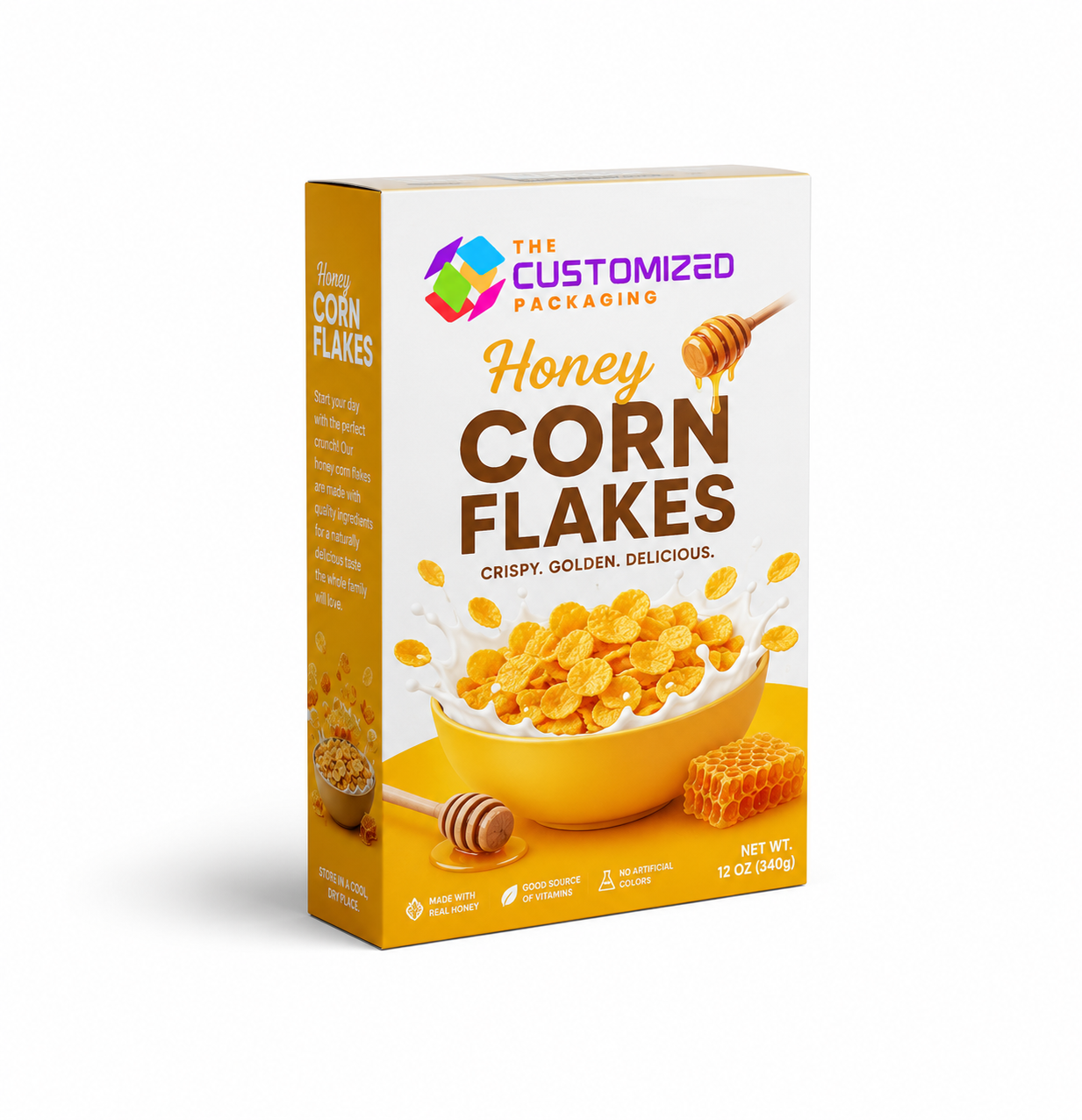
| Corn Flakes | Standard rectangular folding carton |
| Oat Cereal | Reverse-tuck or auto-lock box |
| Granola | Folding carton around a sealed barrier pouch |
| Muesli | Window carton with suitable inner bag |
| Bran Cereal | Full-height retail carton |
| Puffed Grain Cereal | Lightweight carton with reinforced side panels |
| Protein Cereal | Premium printed folding box |
| Kids’ Cereal | Bright retail carton with approved promotional graphics |
| Single-Serve Cereal | Compact carton, sleeve, or multipack |
| Cereal Variety Pack | Divided outer carton |
| Hotel Breakfast Portions | Single-serving carton or dispenser pack |
| Subscription Assortment | Branded corrugated mailer |
| Ecommerce Orders | Retail boxes inside a protective shipping case |
| Wholesale Distribution | Shelf-ready or master corrugated case |
Material Options for Cereal Packaging
The selected material affects printing quality, folding performance, shelf strength, carton weight, and overall presentation.
| Material | Recommended Use | Main Benefit |
|---|---|---|
| SBS Paperboard | Premium retail cereal cartons | Smooth surface for detailed printing |
| White Kraft Paperboard | Bright food branding | Strong color contrast |
| Natural Kraft Paperboard | Artisan and minimalist cereal ranges | Natural brown appearance |
| Folding Boxboard | Standard cereal cartons | Efficient folding and storage |
| Recycled Paperboard | Selected secondary-packaging applications | Recycled-content option |
| Clay-Coated Board | Detailed graphics and smaller text | Smooth coated exterior |
| Micro-Flute Cardboard | Large family packs and subscription products | Added rigidity |
| E-Flute Corrugated Board | Ecommerce and shelf-ready packaging | Better structural protection |
| B-Flute Corrugated Board | Wholesale shipping cases | Improved stacking strength |
| Double-Wall Corrugated Board | Large-volume distribution | Greater compression resistance |
| Rigid Board | Premium promotional and gift cereal sets | Strong presentation |
| Molded Pulp | Selected internal product or sample holders | Formed paper-based support |
The printed cereal carton commonly functions as secondary packaging around a sealed inner bag, pouch, liner, cup, or other suitable primary package. The carton alone should not automatically be described as airtight, moisture-proof, greaseproof, insect-proof, or suitable for direct food contact.
Popular Cereal Box Styles
| Box Style | Main Features | Recommended Use |
|---|---|---|
| Standard Rectangular Cereal Box | Large front and back branding panels | Everyday retail cereal |
| Reverse-Tuck Carton | Opposing top and bottom closures | Lightweight products |
| Straight-Tuck Box | Flaps close in the same direction | Compact cereal packs |
| Auto-Lock Bottom Box | Pre-glued base supports faster packing | Heavier granola and family packs |
| Snap-Lock Bottom Carton | Interlocking base increases support | Medium-weight products |
| Cereal Dispenser Box | Controlled opening or pouring feature | Portion-focused products |
| Window Cereal Box | Reveals the sealed inner package | Granola and muesli |
| Single-Serve Carton | Compact portion format | Hotels, schools, and sampling |
| Variety-Pack Box | Holds several individual portions | Multiproduct collections |
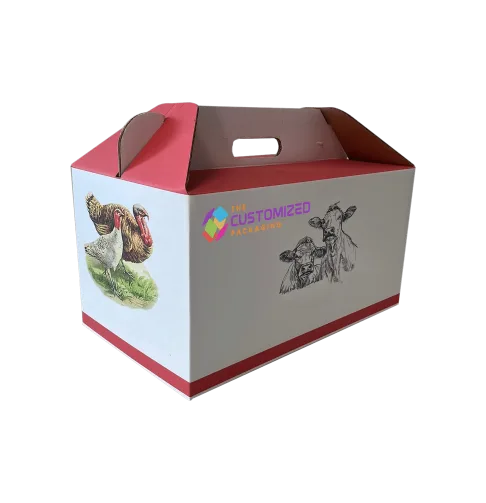
| Gable Cereal Box | Built-in carrying handle | Gift and promotional packs |
| Shelf-Ready Display | Converts into a retail tray | Small boxes and single servings |
| Corrugated Mailer | Protective ecommerce structure | Subscriptions and online orders |
Custom Dimensions and Inner-Bag Fit
Custom cereal packaging boxes can be manufactured around sealed pillow bags, stand-up pouches, flat pouches, portion packs, cups, sachets, and other suitable primary containers.
Internal measurements should account for the filled bag’s width, gusset, sealed edges, product settling, trapped air, label thickness, and required loading clearance. A carton that is too tight may crush the bag or strain its seals, while an oversized package can allow the inner bag to fold, shift, or present poorly on the shelf.
Measurements should be taken from the final filled and sealed primary package. Physical samples, bag drawings, product weight, fill level, and packed-case information can improve structural accuracy.
Standard Family-Size Cereal Boxes
Family-size cereal cartons provide broad front and back panels for branding, nutrition details, preparation suggestions, and promotional content.
The structure should remain stable when the inner bag is full, partially used, and nearly empty. Side-panel width, board grade, and top closure should reflect the finished package weight.
Family-size cereal boxes with logo can be coordinated across multiple flavors and product variations using one consistent structural format.
Single-Serve Cereal Boxes
Single-serving cartons are suitable for hotels, schools, catering businesses, travel programs, events, samples, and promotional campaigns.
They can contain a sealed pouch or cup and may include a tear-open panel, spoon compartment, or preparation instructions where appropriate. The exact format should reflect how the product will be served and stored.
Low-minimum digital printing may be suitable for pilot programs and limited promotional runs.
Granola Packaging Boxes
Granola can contain clusters, nuts, seeds, dried fruit, chocolate, oils, or other ingredients that may require an appropriate sealed barrier pouch.
The outer carton adds shelf presence, branding, and printable information. Window features can reveal the sealed inner package without exposing the food directly.
Custom granola boxes can use natural kraft, white board, premium coatings, and restrained food photography to support artisan or health-focused branding.
Muesli Packaging Boxes
Muesli cartons can be developed for fruit blends, oat mixes, nut combinations, and multigrain products.
A wide front panel can communicate the blend, serving ideas, and ingredient highlights supplied by the brand. A window may be added when the product remains inside a suitable transparent inner pouch.
The box should be sized around the filled bag rather than the dry product volume alone.
Protein Cereal Boxes
Protein-focused cereal packaging often requires space for nutritional information, serving size, protein content supplied by the manufacturer, preparation guidance, and product positioning.
Premium printing, strong typography, and organized information panels can help the product stand out without relying on excessive claims.
Any statements about protein, sugar, calories, health, performance, or dietary benefits should be supplied and approved by the responsible food business.
Kids’ Cereal Packaging
Cereal packaging intended for younger audiences can use bright colors, characters owned or licensed by the brand, puzzles, games, and approved promotional content.
Important nutrition, allergen, age, and safety information should remain clear and readable. Small removable pieces, promotional inserts, or interactive features should be evaluated carefully.
Protected characters, logos, artwork, and entertainment properties should only be printed when the customer holds the appropriate authorization or licensing rights.
Organic-Style and Natural Cereal Packaging
Natural kraft, botanical graphics, restrained colors, and simplified layouts can create an organic-style or minimally processed appearance.
Packaging should not use certified-organic, non-GMO, natural, sustainable, or similar claims unless the product and claim meet the applicable requirements and the brand can support them.
The visual style can communicate simplicity without introducing unverified statements.
Gluten-Free Cereal Packaging
A cereal carton can include brand-approved gluten-free identification, ingredient information, allergen statements, and certification marks where authorized.
The packaging itself does not establish that the cereal is gluten-free or free from cross-contact. Product formulation, manufacturing controls, testing, certification, and labeling remain the responsibility of the food company.
Certification logos should only be used with proper authorization.
Low-Sugar and High-Fiber Cereal Boxes
Nutrition-focused packaging can create clear panels for sugar, fiber, calorie, and serving information supplied by the brand.
Claims such as low sugar, high fiber, keto, heart healthy, or high protein should only be printed when lawful and substantiated for the final product.
The front panel should not present nutrition claims in a way that conflicts with required information.
Cereal Boxes with Windows
A die-cut window can reveal the product color or sealed inner pouch.
Window shapes may be rectangular, circular, arch-shaped, grain-shaped, bowl-shaped, logo-shaped, or custom designed. Large openings may reduce carton strength and can require thicker board or reinforced borders.
The cereal should remain inside appropriate primary packaging and should not contact standard window film or decorative paperboard unless those components have been evaluated for the intended use.
Open-Window Cereal Boxes
Open windows avoid transparent film and may reduce mixed materials.
They are most appropriate when the inner cereal bag is independently sealed and strong enough for retail handling. Open windows provide less protection against puncture, dust, and interference with the primary pouch.
The bag should remain secured behind the opening.
Clear-Window Cereal Boxes
Transparent film can cover the die-cut opening while maintaining visibility.
The film material, adhesive, glare, scratching, fogging, food-package role, and end-of-life considerations should be reviewed. The inner bag should not press excessively against the window.
Window placement should remain clear of folds, barcodes, and opening flaps.
Cereal Dispenser Boxes
Dispenser cartons can use perforated openings, pouring panels, or controlled-access flaps.
The feature should be developed around the inner bag or direct-dispensing system. A standard paperboard opening does not automatically preserve freshness after opening.
If the cereal is intended to pour directly from the carton, every direct-contact component and barrier requirement should be evaluated specifically.
Cereal Boxes with Handles
Gable-style or reinforced handle cartons can be used for gift packs, promotional bundles, event samples, and multiproduct cereal collections.
The handle area should support the full packed weight and should not tear during normal lifting. Internal dividers may be added for multiple cereal pouches or cups.
Handle cartons are less common for standard supermarket cereal but can create a distinctive promotional format.
Cereal Variety-Pack Boxes
Variety boxes can hold several individual cereal portions, mini cartons, pouches, or cups.
Dividers and printed maps can identify each flavor and keep portions organized. The outer box should accurately list the included varieties and quantities.
Custom cereal variety boxes are suitable for hotels, offices, schools, family assortments, subscription services, and promotional campaigns.
Cereal Subscription Boxes
Subscription companies can package multiple cereal products, granola pouches, sample packs, bowls, spoons, and promotional materials inside a branded mailer.
Dividers help separate retail boxes and sealed pouches. Interior printing can introduce the monthly theme, provide serving suggestions, or include a subscriber message.
The corrugated mailer should be developed for parcel handling and total packed weight.
Cereal Gift Boxes
Gift packaging can combine premium cereal, granola, muesli, bowls, spoons, coffee, dried fruit, or other suitable products.
Rigid, magnetic, drawer, gable, and compartment boxes can create a more premium presentation. Food products should remain inside appropriate primary packaging.
Heavy accessories should be isolated from lightweight cereal cartons and pouches.
Custom Printed Cereal Boxes
Custom printed cereal boxes can display the logo, product name, flavor, ingredients, allergen information, nutrition details, net weight, serving suggestions, preparation guidance, batch code, barcode, QR code, and promotional artwork.
Printing methods may include digital, offset, flexographic, screen, CMYK, Pantone matching, metallic ink, white ink, and one-color printing.
Artwork can be applied to the exterior, interior, top flaps, bottom panels, promotional cutouts, inserts, shelf-ready trays, and wholesale shipping cases.
Cereal Boxes with Logo
Cereal boxes with logo help food companies maintain a recognizable identity across supermarkets, convenience stores, hotels, subscriptions, private-label programs, and ecommerce channels.
The logo can be printed directly or enhanced with embossing, debossing, spot UV, metallic ink, foil accents, or branded seals where suitable.
Branding should remain balanced with nutrition information, ingredients, allergen statements, barcodes, and required product details.
Private-Label Cereal Packaging
Private-label cereal boxes can feature the retailer’s logo, product name, flavor, ingredients, nutrition information, barcode, preparation guidance, and approved product claims.
Digital printing may support shorter runs and several flavor variations. One structural carton can use different artwork for corn flakes, granola, muesli, protein cereal, and other products.
The responsible seller should review all labeling, nutrition, allergen, origin, certification, and marketing information before production.
Cereal Box Promotional Panels
Large front and back panels provide space for games, recipes, product stories, loyalty offers, educational content, and cross-promotions.
Promotional material should not cover required information or create confusion about the product. Expiry dates, offer terms, QR destinations, and redemption details should be reviewed before printing.
Promotions directed at children should be developed carefully and responsibly.
QR Codes and Digital Engagement
QR codes can link customers to recipes, preparation videos, nutrition information, brand stories, loyalty programs, product registration, subscriptions, or reorder pages.
The code should appear on a flat, high-contrast panel and should be tested on the finished carton.
Placement should avoid folds, reflective finishes, windows, perforations, and textured surfaces.
Recipe and Serving Panels
The back or side panel can include cereal-bowl ideas, granola recipes, yogurt pairings, smoothie suggestions, or preparation instructions supplied by the brand.
Recipes should reflect the actual product and should not introduce unsupported dietary or health claims.
Clear typography and structured layouts can make the content easier to follow.
Nutrition and Ingredient Information
Cereal cartons can provide space for nutrition facts, ingredients, allergen declarations, serving sizes, net weight, storage instructions, and responsible-business information.
The food company should supply and approve all content. The packaging manufacturer should not independently determine nutrition values, allergen statements, or required declarations.
Important information should remain readable after folding and final assembly.
Allergen Information
Cereal products may contain or come into contact with wheat, milk, soy, peanuts, tree nuts, sesame, or other allergens depending on the formulation and manufacturing environment.
The responsible food business must determine the appropriate allergen statements and cross-contact wording.
Allergen information should not be hidden beneath promotional labels, folds, seals, or retail stickers.
Food-Contact and Primary Packaging Considerations
Standard printed cereal cartons usually surround a sealed inner bag or pouch.
Any paperboard, liner, ink, coating, adhesive, insert, or window intended for direct food contact should be selected for the specific cereal, oil content, storage duration, temperature, and intended market.
Recycled board, standard printing, foil decoration, and general-purpose adhesives should not automatically be treated as suitable for direct food contact.
Moisture and Freshness Considerations
Cereal can lose crispness or quality when exposed to moisture, air, odors, or unsuitable storage.
The sealed inner bag or primary package should provide the required barrier and closure performance. The printed carton mainly provides branding, stacking support, and secondary protection.
The box should not be described as airtight, freshness-sealed, or moisture-proof unless the complete package has been tested and validated.
Oil and Ingredient Considerations
Granola, nuts, seeds, chocolate pieces, dried fruit, and flavored cereals may contain oils or ingredients that can affect paperboard if the inner package leaks or transfers residue.
A suitable primary pouch, liner, or bag should separate the cereal from the decorative carton.
Grease-resistant coatings should not automatically be described as greaseproof or leakproof.
Product Settling and Carton Capacity
Cereal products can settle during filling, storage, and transport.
The carton should be developed around the final filled bag and expected product behavior. Excessive empty headspace can create a poor consumer impression, while insufficient space may strain the bag seals or carton closures.
Representative production samples can improve capacity planning.
Tamper-Evident Cereal Packaging
Tamper-evident features may include adhesive seals, tear strips, perforated flaps, locking tabs, security labels, or sealed primary bags.
These features can indicate prior opening but do not make the package completely tamper-proof.
The seal should remain visible without covering required product information.
Batch and Date Coding
Flat areas can be reserved for lot numbers, production codes, packed dates, best-before information where applicable, facility references, and internal traceability data.
Coding may be preprinted, inkjet applied, laser marked where compatible, stamped, or added through labels.
The coding zone should remain accessible during packing.
Barcode Placement
UPC, EAN, SKU, product-size codes, flavor codes, retailer labels, and case identifiers can be printed or applied.
Barcodes should appear on a smooth, flat, high-contrast panel away from folds, embossing, foil, windows, perforations, and security seals.
A finished sample should be scanned before full production.
Cereal Packaging for Retail Shelves
Retail cereal cartons should remain upright, present a clear front panel, and provide easy identification from the top and side.
Consistent panel layouts can help shoppers compare flavors, sizes, and product ranges. The carton depth should suit the retailer’s shelf environment.
Shelf-facing graphics should remain recognizable when several boxes are displayed together.
Shelf-Ready Cereal Packaging
Shelf-ready cases can transport several cereal cartons and convert into retail display trays.
Perforated covers should remove cleanly without damaging visible branding. Retail boxes should remain front-facing and easy for employees to restock.
The completed case should be evaluated for stacking, compression, warehousing, and distribution.
Cereal Display Boxes
Counter displays can hold single-serving cartons, cereal cups, mini packs, snack-size granola, and promotional samples.
The front or top panel can fold back to create a branded display. Header panels provide space for the product name, logo, or promotional offer.
The tray should remain stable as products are removed.
Ecommerce Cereal Packaging
Retail cereal cartons may require a protective corrugated shipping box for ecommerce delivery.
The complete system can include retail cartons, sealed pouches, dividers, cushioning, void fill, and a corrugated outer case. The package should limit crushing while avoiding unnecessary shipping volume.
The decorative cereal carton should not normally be treated as the only parcel-shipping package.
Wholesale Cereal Boxes
Ordering cereal boxes wholesale can help manufacturers, private-label brands, hotels, retailers, and distributors maintain consistent packaging across product sizes and flavors.
Larger production quantities may reduce the average unit price. Wholesale orders can include folding cartons, variety packs, displays, shelf-ready cases, and master shipping cartons.
Pricing depends on dimensions, material, structure, printing coverage, artwork variations, finishing, assembly, and order quantity.
Bulk Cereal Packaging
Bulk cereal packaging boxes are suitable for food manufacturers, supermarkets, private-label companies, hospitality suppliers, subscription businesses, and wholesale distributors.
Corrugated master cases can organize retail boxes for warehousing, palletization, and distribution. Case labels can identify product type, flavor, quantity, SKU, batch, and destination.
Corrugated strength should reflect total packed weight and stacking conditions.
Low-Minimum Cereal Boxes
Low-minimum options may be available for startup food brands, test markets, seasonal flavors, promotional samples, private-label launches, and specialty products.
Digital printing can support shorter production runs and several artwork versions. Standard folding cartons generally provide more flexibility than rigid or highly specialized structures.
Specialty materials, numerous product variations, windows, and complex finishes may require different minimum quantities.
Order Custom Cereal Boxes Online
Businesses can order cereal boxes online by providing the filled inner-bag dimensions, cereal weight, carton quantity, preferred material, closure style, artwork, and delivery destination.
Physical samples or bag drawings can improve the fit between the primary package and outer carton. Digital proofs and structural prototypes can be reviewed before production.
The final quotation should reflect the finished packed configuration.
Custom Cereal Packaging Cost Calculator
Use our Custom Box Packaging Cost Calculator to receive a preliminary estimate for your custom cereal boxes. Enter the box dimensions, required quantity, material, structure, printing coverage, window requirements, and finishing options.
Want to know the cost of your product’s packaging? Try our Custom Box Packaging Cost Calculator.
The calculator can help compare standard cereal cartons, granola boxes, single-serving packaging, variety packs, shelf-ready displays, subscription mailers, and wholesale cases.
Final pricing is confirmed after reviewing the filled inner package, carton dimensions, structural design, artwork variations, quantity, assembly requirements, and delivery destination.
Factors That Affect Cereal Box Pricing
| Cost Factor | How It Affects the Price |
|---|---|
| Carton Dimensions | Larger family packs require more material |
| Product Weight | Heavier cereal or granola may require stronger board |
| Box Structure | Standard cartons generally cost less than specialty formats |
| Board Grade | Kraft, SBS, coated board, and corrugated materials vary in price |
| Window Design | Transparent film and die cutting add production steps |
| Printing Coverage | Full exterior and interior printing affects cost |
| Flavor Variations | Multiple cereal types may require separate artwork |
| Promotional Features | Coupons, perforations, games, and tear panels add complexity |
| Premium Finishes | Foil, embossing, spot UV, and specialty coatings increase cost |
| Shelf-Ready Cases | Retail-ready outer packaging adds components |
| Assembly Requirements | Pre-glued bases and product packing add labor |
| Order Quantity | Larger production quantities generally reduce unit cost |
Why Choose The Customized Packaging?
The Customized Packaging manufactures custom cereal packaging boxes for breakfast-food companies, granola brands, private-label manufacturers, supermarkets, hotels, subscription businesses, specialty retailers, and ecommerce sellers.
Customers can select custom dimensions, folding paperboard, kraft or white stock, viewing windows, dispenser features, auto-lock bottoms, variety-pack structures, custom printing, promotional panels, and wholesale quantities.
Whether you need cereal boxes with logo, granola cartons, family-size packaging, single-serving boxes, retail displays, or wholesale cereal packaging in the USA, we can manufacture boxes around your sealed primary packages and approved branding requirements.
Buy Custom Cereal Boxes
To request a quotation, provide the filled inner-bag dimensions, cereal type, product weight, serving count, required quantity, preferred material, box style, window needs, artwork, finishes, and delivery destination.
Our packaging specialists can help you buy custom cereal boxes online, compare low-minimum and wholesale pricing, and develop packaging that supports retail presentation, private labeling, product launches, hospitality programs, subscription fulfillment, and ecommerce distribution.
Choose The Customized Packaging for custom printed cereal boxes, granola packaging, variety-pack cartons, shelf-ready displays, corrugated shipping cases, and bulk orders delivered throughout the USA.
Yes. Your packaging can feature your logo, brand colors, cereal name, flavor, ingredients, allergen information, nutrition details supplied by your company, net weight, serving guidance, recipes, barcodes, QR codes, and promotional artwork. Printing options may include digital, offset, metallic ink, embossing, debossing, and spot UV.
Boxes can be manufactured for corn flakes, granola, muesli, oat cereal, bran products, puffed grains, protein cereal, kids’ cereal, single-serving portions, hotel breakfast packs, and variety collections. The carton is normally developed around the final sealed inner bag, pouch, cup, or portion pack.
Yes. Custom printed cereal boxes can include transparent or open windows, tear strips, perforated openings, pour panels, dispenser flaps, coupon sections, and carrying handles. The feature should be developed around the inner package and should not compromise required labeling or carton strength.
Wholesale quantities are available for cereal manufacturers, granola brands, supermarkets, private-label sellers, hotels, subscription companies, and ecommerce businesses. Low-minimum options may also be available for selected digitally printed cartons, test markets, promotional products, and seasonal flavors.
Provide the filled inner-bag dimensions, cereal type, product weight, serving count, required quantity, preferred material, box style, window or dispenser requirements, printing details, finishes, and delivery destination. You can also use the Custom Box Packaging Cost Calculator for a preliminary estimate before final production pricing.
Related Products








Order Custom Cereal Boxes from The Customized Packaging
We manufacture Custom Cereal Boxes for businesses that need reliable product protection, accurate printing, and professional packaging for retail, ecommerce, storage, or shipping. Each box can be customized by size, material, structure, printing, coatings, finishes, inserts, and order quantity.
Share your artwork and quantity targets for Custom Cereal Boxes and we will recommend the most cost-effective structure for your timeline. or speak with a packaging expert. Browse custom rigid boxes, packaging inserts, and use our Custom Box Packaging Cost Calculator.