
| Specification | Available Options |
|---|---|
| Product Name | Custom Food Box Sleeves |
| Structure | Die-cut paper or cardboard wrap around an existing food box, tray, clamshell, tub, or sealed carton |
| Suitable Applications | Bakery cartons, takeout boxes, restaurant clamshells, ready-meal trays, grocery packs, and frozen or chilled packs after a fit and material review |
| Compatible Containers | Specified to the actual inner pack already in use; the sleeve does not replace that container |
| Custom Dimensions | Cut to the approved outside length, width, height, taper, and lid or film clearance |
| Wrap Coverage | Belly band, partial wrap, full wrap, or tray-and-sleeve coverage as specified on the dieline |
| Sleeve Styles | Open-ended wrap, belly band, full wrap, locking-tab, pre-glued, windowed, tear-strip, tray-and-sleeve, corrugated wrap |
| Material Options | Kraft paperboard, white or SBS paperboard, folding boxboard, documented recycled-content paperboard where available, corrugated or micro-flute wraps |
| Kraft Options | Natural kraft print face or kraft-backed wraps as specified for the order |
| Paperboard Options | SBS or folding paperboard selected by caliper, stiffness, and print surface |
| Corrugated Options | Fluted or micro-flute wraps when a thicker band or a larger meal carton is required |
| Printing Methods | Digital, CMYK, Pantone / spot, and selected one-color or limited-coverage print |
| Color Options | Board-face color plus the approved ink set for the artwork |
| Branding Areas | Outer wrap face; keep-out at the glue flap, windows, tear notches, and scuff edges |
| Coatings | Uncoated, aqueous, varnish, or other approved surface treatments called on the quote |
| Finishes | Embossing, debossing, spot UV, and selected decorative work where the caliper allows |
| Die Cutting | Custom wrap outline, glue flap, lock tab, windows, and opening cutouts from the approved dieline |
| Embossing | Raised mark on a suitable board caliper, clear of the join and windows |
| Debossing | Pressed mark on a suitable board caliper, clear of the join and windows |
| Spot UV | Local gloss on selected artwork; listed as part of the finished construction |
| Fit Testing | Dieline review plus a wrap on the production container; storage or packing check when those conditions matter |
| Artwork Requirements | Print-ready AI, EPS, PDF, or PSD on the sleeve dieline, fonts outlined, bleed as specified |
| Proofing | Digital proof and optional white or printed wrap sample |
| Food-Contact Position | The inner container normally holds the food. Any part that may touch exposed food needs a use-specific review. Not stated as universally food-safe |
| Grease/Moisture Position | Depends on coating, board, seam, window, and storage time. Not stated as universally grease-resistant, moisture-proof, or leakproof |
| Frozen Application Position | Available after the sleeve, seam, print, and inner pack are reviewed for the intended temperature and duration |
Custom Food Box Sleeves Built Around an Existing Container
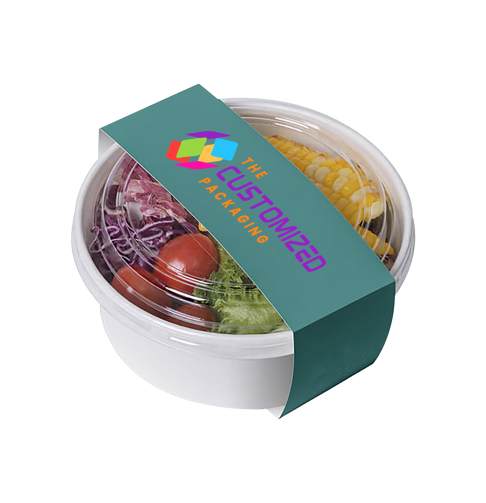
Custom Food Box Sleeves are a printed paper or cardboard wrap that goes around a food package already in use. The production quote starts with that package: outside length, width, height, taper, lid or film edge, handle or tab locations, and how far the wrap should travel around the body.
The sleeve is a branding and handling surface. It is not the food box, not a shipping carton, and not a substitute for the tray, clamshell, pouch, or tub that contains the food. Grease, moisture, and heat performance belong first to that inner package. A sleeve can only support those jobs when the board, coating, seam, and openings are specified for the same use.
Browse industry packs on Food & Beverage. Two-piece sleeve-and-tray boxes stay on Sleeve and Tray. Use this page to lock wrap style, coverage, board, print, and a physical fit check.
What the Sleeve Wraps and What It Does Not Do
A food box sleeve slides or folds around an assembled container. Common inners include bakery cartons, takeout boxes, burger or meal clamshells, sealed ready-meal trays, bowls, tubs, and frozen cartons. The wrap can show a logo, product name, allergen or nutrition panel supplied by the food business, a barcode, or a QR code.
- It does not become the primary food container
- It does not replace a shipping case or corrugated mailer
- It should not cover vents, lid locks, film corners, handles, or opening tabs unless those cutouts are designed in
- It should be removed before heating when the food brand’s instructions require it
If you also need the inner pack, specify custom take-out boxes, custom burger boxes, or a bakery box as a separate item.
Fit: Width, Height, and Wrap Coverage
Stated container names are labels, not finished sizes. Two “meal trays” from different suppliers can need different sleeves because the flange, film, and sidewall angle are not the same.
Record these values from the package you will run, or send a physical sample:
- Outside length and width at the height where the wrap will sit
- Outside height, including the closed lid or the film dome if the wrap must clear it
- Taper or draft on the sidewall
- Lid, flange, tear-notch, vent, handle, and label locations
- How far the wrap should travel: a band, a three-sided wrap, or a full circuit
- Whether sleeves are applied by hand, on a line, or supplied pre-glued
A wrap that is too open can lift, rotate, or slide off during packing. A wrap that is too tight can crease, fight the applicator, or press on a film seal or lid. Leave enough board around windows and cutouts so the sleeve keeps its shape.
Sleeve Styles and Application Fit
Style is a coverage and packing decision, not a different product family. The same plant can produce a narrow belly band and a full wrap; they still need their own dielines.
| Application | Sleeve style often considered | Fit considerations |
|---|---|---|
| Bakery cartons and confectionery packs | Belly band or windowed wrap | Do not hide the opening flap; keep the food in its inner carton or liner |
| Takeout boxes and restaurant clamshells | Locking-tab or pre-glued wrap | Clear vents, lid locks, and handles; confirm the wrap survives hand packing |
| Ready-meal and grocery trays | Open-ended or full-wrap sleeve | Clear the film corner or lid tab; confirm the flange does not lift the wrap |
| Frozen or refrigerated packs | Full wrap or corrugated sleeve | Review board, glue, and print under the intended storage time and temperature |
| Dessert or collection packs | Tray-and-sleeve assembly | This is a wrap around a tray, not a substitute for a two-piece retail box program |
| Heavier meal cartons | Corrugated or micro-flute sleeve | Check flute direction, bulk on the line, and whether the inner carton already carries the load |
A tray-and-sleeve option on this page still starts from an existing tray. Broader sleeve-and-tray box styles remain on the Sleeve and Tray category.
Board and Wrap Construction
Board is chosen after the container and print plan are known. Naming a color is not a material specification. Recycled-content fiber is listed only when the mill documentation applies to the production lot.
| Material / construction | Usually considered when | What to confirm |
|---|---|---|
| Natural kraft paperboard | A kraft face and simpler print coverage | Caliper, stiffness, and whether the kraft side is the print surface |
| White kraft or print-side kraft | A brighter face with a kraft look on the reverse | Ink holdout and crease quality at the wrap corners |
| SBS or folding paperboard | Detailed logos, light backgrounds, or tight registration | Coating, ink set, and whether windows weaken the wrap |
| Corrugated or micro-flute sleeve | A thicker wrap or a larger meal carton | Flute, bulk, and whether the inner pack already provides the structure |
| Documented recycled-content paperboard | A stated fiber mix is part of the order | Supplier percentage and the lot that will actually be used |
Coatings, films, window plastics, inks, and adhesives become part of the finished construction. End-of-life depends on that finished build and on local collection rules. Do not print a disposal claim until the approved board, coating, ink, and adhesive are known.
Printing, Branding Area, and Finishes
The printable face follows the wrap path. Type, logos, barcodes, and QR codes should be built on the approved dieline, not on a flat rectangle. Keep required marks away from the glue flap, windows, tear notches, and edges that scuff in packing.
| Option | What it is used for | Production note |
|---|---|---|
| Digital printing | Short runs, flavor versions, or campaigns | Confirm color range on the selected board face |
| CMYK process | Photographs and multi-color marks | Review a proof on the actual board family |
| Pantone / spot color | A required brand color | Call the ink and the board in the same specification |
| Embossing or debossing | A raised or pressed mark | Needs enough caliper and a keep-out from the join and windows |
| Spot UV | A glossy mark on a selected area | Treat as an added surface; include it in the finished-construction description |
The food business supplies and approves regulatory wording, allergen statements, and nutrition panels before printing. A sleeve can carry that copy. It does not create the legal label by itself.
Bakery, Takeout, Ready-Meal, and Frozen Programs
Bakery sleeves often wrap a plain inner carton so seasonal or campaign artwork can change without reprinting the box. Takeout sleeves add a mark, item name, or order field around a closed restaurant box. Ready-meal sleeves sit on a sealed tray and should leave the film corner or lid tab usable.
Frozen or chilled programs need a separate review. Condensation and cold storage can affect board stiffness, glue seams, writable date fields, and tear strips. Claims such as freezer-safe, moisture-proof, or greaseproof are not used unless the completed sleeve and inner pack have been tested for that duty.
Inner Container, Food-Contact, and Grease or Moisture Limits
The inner tray, carton, pouch, or tub normally provides food containment. If any paperboard, ink, coating, adhesive, or window part may touch exposed food, that exact use must be reviewed before production. Do not treat every sleeve as food-contact, food-safe, grease-resistant, or leakproof.
Grease and moisture behavior depend on the coating, board, seam, window, and how long the pack is stored. A wrap around a sealed tray is a different duty from a wrap around an unlined bakery carton. Specify the real pack, not a generic food claim.
Fit Samples and What to Send for a Quote
A digital dieline shows panel size and print position. A white or printed wrap on the real container shows whether the band sits, rotates, lifts a lid, or covers an opening. Test under the intended fill, storage, and packing method when those conditions matter.
To quote Custom Food Box Sleeves, send:
- Container sample or outside length, width, height, and taper
- Lid, film, handle, vent, and opening-tab locations
- Preferred wrap: belly band, full wrap, or tray-and-sleeve
- Preferred board family: kraft paperboard, SBS or folding paperboard, or corrugated wrap
- Print method, colors, and any embossing, debossing, windows, or spot UV
- Artwork versions and any supplied label copy
- How sleeves are applied and the quantity required
Industry browsing stays on Food & Beverage. For a planning range across styles and quantities, use the Custom Box Packaging Cost Calculator, then request a production quote from the approved container sample and dieline.
They are printed paper or cardboard wraps specified around an existing food box, tray, clamshell, or container. They add a branding panel and a defined hold zone. They are not the food box and do not replace the inner pack that holds the food.
Measure the assembled container’s outside length, width, height, taper, and lid or film overhang. Note vents, handles, and opening tabs. Send a sample or those measurements so the wrap coverage—belly band, full wrap, or tray-and-sleeve—can be cut without lifting the lid or covering an opening.
Typical options are kraft paperboard, white or SBS paperboard, folding boxboard, documented recycled-content paperboard where available, and corrugated or micro-flute wraps. The board is chosen after the container sample and print coverage are known.
Yes, when the wrap is specified to that container and packing method. Bakery and takeaway programs usually wrap a closed inner carton or clamshell. Frozen or chilled packs need a review of board, seam, print, and storage time. The inner container still holds the food.
Not as a universal claim. Food-contact suitability depends on the inner container and on any sleeve material that may touch exposed food. Grease and moisture behavior depend on coating, board, seam, and storage. Those properties are stated only after the finished construction is specified.
Related Products




Configure Custom Food Box Sleeves Around Your Container
Custom Food Box Sleeves are sized around the existing food box, tray, clamshell, or container. Sleeve width, height, wrap coverage, board type, printable area, and closure style should be selected around the actual container dimensions and how the finished pack will be displayed or handled.
Share the container dimensions or a physical sample, artwork, preferred material, printing requirements, and order quantity so the sleeve can be fitted and quoted for the intended application. or speak with a packaging expert. For related packaging, browse our Food & Beverage packaging and Sleeve and Tray options, or use the Custom Box Packaging Cost Calculator for general packaging cost planning.