

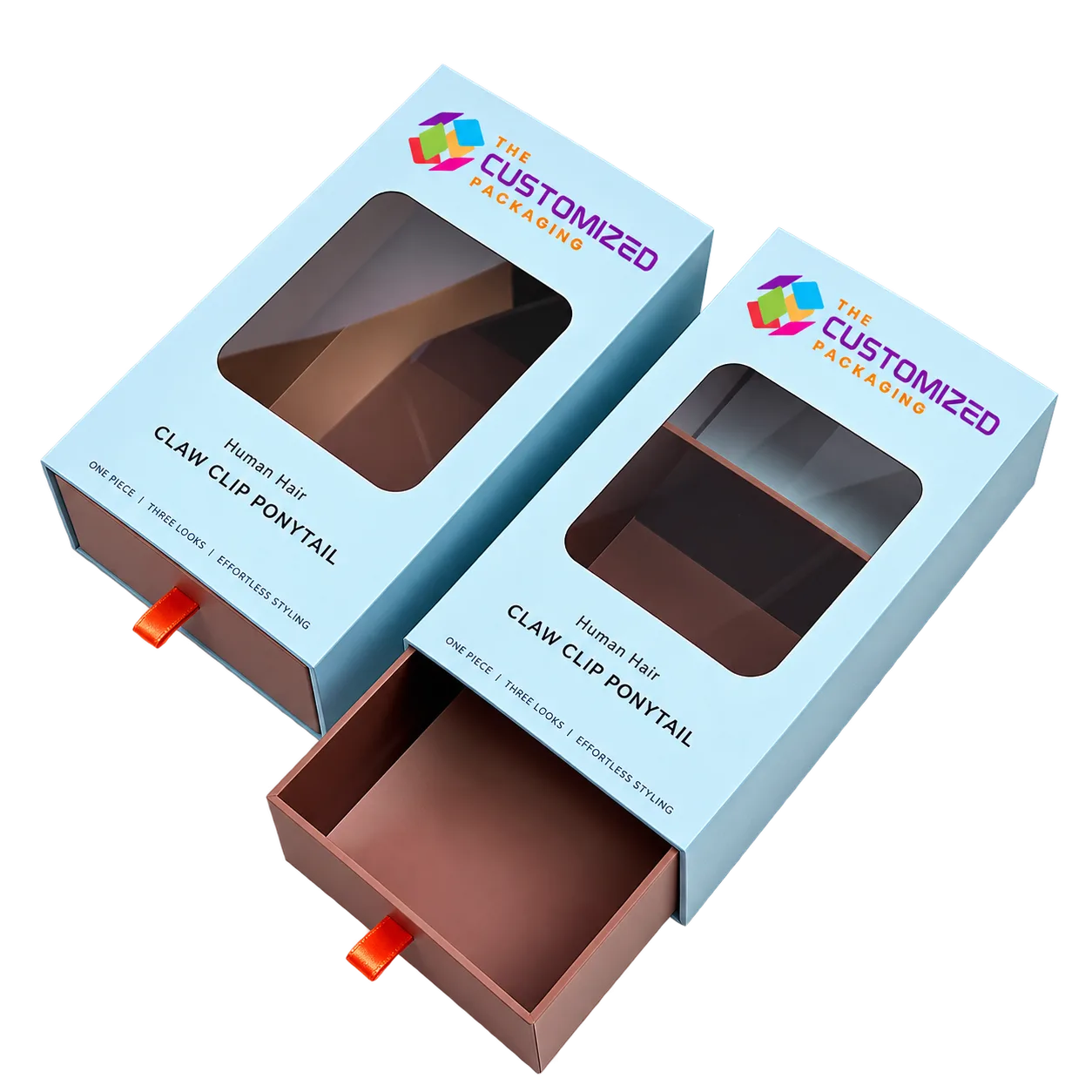
| Specification | Details |
|---|---|
| Product | Custom Drawer Boxes |
| Structure | Outer sleeve with sliding inner tray |
| Primary Function | Retail and product presentation with sliding access |
| Materials | Selected paperboard, kraft, rigid, and suitable corrugated grades |
| Dimensions | Custom around product and tray requirements |
| Sliding Direction | Approved one-way or project-specific two-way configuration |
| Sleeve Fit | Designed around tray thickness, finish, and clearances |
| Tray Support | Based on packed weight and product arrangement |
| Access Options | Selected thumb notch, ribbon, tab, or accessible tray edge |
| Pull Features | Subject to material and attachment feasibility |
| Retention | Project-specific fit or approved structural details |
| Inserts | Paperboard supports, dividers, platforms, and confirmed alternatives |
| Foam | Only if type and manufacturing availability are confirmed |
| Velvet | Only where material and construction are separately approved |
| Printing | Compatible digital, offset, or selected production methods |
| Print Areas | Sleeve, exposed tray surfaces, and suitable interior areas |
| Finishing | Compatible matte, gloss, and selected decorative treatments |
| Product Protection | Based on actual tray, insert, outer pack, and handling conditions |
| Proofing | Digital artwork proof and suitable structural sliding-fit review |
| Order Quantity | Minimum confirmed for approved construction |
| Production and Delivery | Confirmed after material and artwork approval |
| Wholesale Pricing | Quoted by structure, size, materials, inserts, printing, and quantity |
Custom Drawer Boxes with Outer Sleeves and Sliding Trays
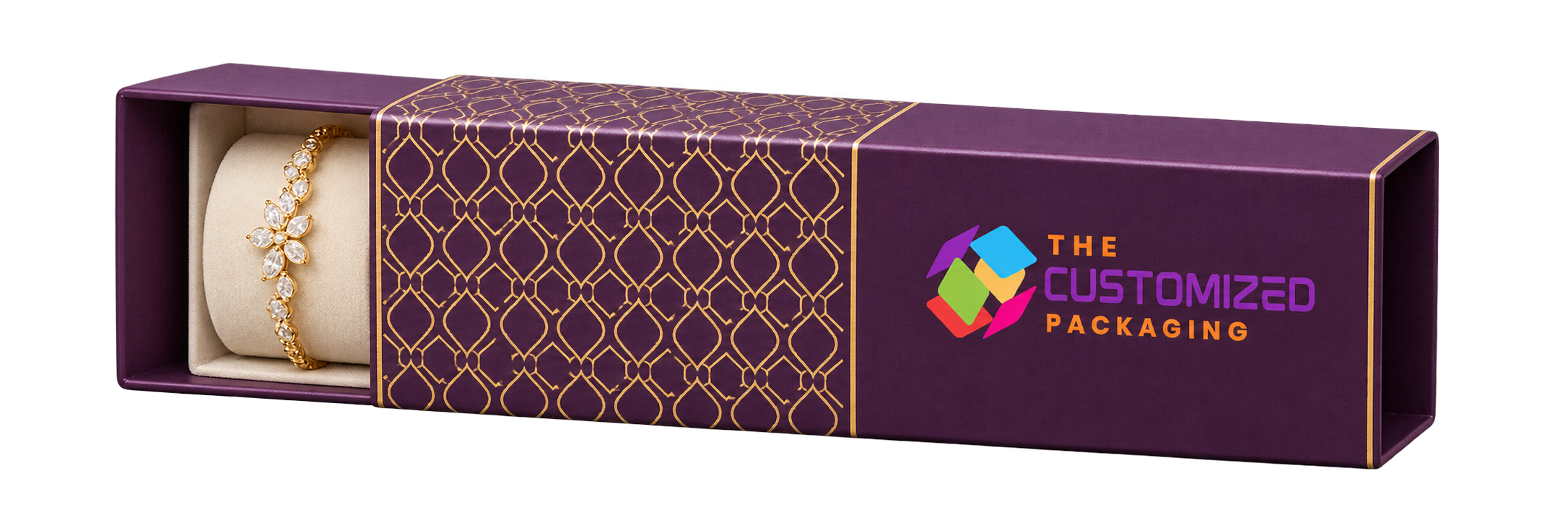
Custom Drawer Boxes combine an inner tray with an outer sleeve to create a sliding opening. The product rests within the tray while the sleeve provides enclosure, printable surfaces, and a guided path for opening and closing.
The defining feature is the relationship between the two components. The tray should move smoothly without requiring excessive force, but it should not be so loose that it falls out unintentionally under normal handling.
Material caliper, board construction, coatings, tray depth, dimensional tolerances, and product weight influence that fit. The finished package should therefore be developed and evaluated as a complete assembly, not as two independently sized boxes.
How a Sliding Drawer Box Works
The sleeve normally surrounds the tray on several sides. The tray is pulled out through an open end, allowing the customer to see or remove the contents.
Depending on the design, a sleeve may remain open at one end or support a selected two-way sliding configuration. A ribbon or notch can provide an access point, while approved stops or retention details may be considered where suitable.
The intended movement should be confirmed before choosing the final dieline. A fully removable tray and a partially retained tray are different structural requirements.
Drawer Box Styles and Opening Options
Drawer-style packaging may be produced for compact retail merchandise, multi-item collections, and premium presentation. The exact construction should be selected based on size, weight, material, and customer opening experience.
Drawer Structure Comparison
| Drawer Style | Opening Experience | Key Requirement |
|---|---|---|
| Single-end sliding tray | Drawer opens from one side | Sleeve clearance and pull access |
| Two-way sliding tray | Tray may open from either end | Retention and handling review |
| Ribbon-pull drawer | Customer draws tray using a ribbon | Attachment and pulling force |
| Thumb-notch drawer | Finger access through a cutout | Notch shape and tray clearance |
| Divided drawer box | Multiple products revealed together | Insert and weight distribution |
| Wrapped rigid drawer | Structured premium presentation | Wrap thickness and sliding tolerance |
No one drawer mechanism is appropriate for every product. The intended opening, filled weight, and handling should be considered before tooling.
Measuring Products for a Custom Drawer Box
Correct sizing begins with the items that will rest inside the tray. The sleeve's external dimensions are derived from the completed tray and the required movement allowance.
Measurements for Drawer-Box Development
- Product dimensions: Finished length, width, and height of the items.
- Tray interior: Usable space needed for products and inserts.
- Tray exterior: Dimensions after board thickness and wrapping are included.
- Sleeve clearance: Allowance for smooth sliding and any surface finish.
- Pull access: Space required for a notch, tab, or other approved feature.
- Filled weight: Products, accessories, inserts, and tray together.
- Sliding direction: Confirm which end should open.
A structural sample is useful because paperboard caliper, wrapping, coating, and production tolerances can influence the final fit. Measurements that appear suitable in a drawing may still create excessive friction in the assembled box.
Folding Paperboard, Kraft, and Rigid Drawer Materials
Drawer packaging can use different materials depending on the desired appearance, size, and required structural support. Folding paperboard may suit lighter products, while wrapped rigid construction may be evaluated for premium retail presentation.
Drawer Box Material Comparison
| Material | Potential Application | Important Consideration |
|---|---|---|
| SBS paperboard | Detailed printed folding drawers | Caliper and sliding clearance |
| Folding boxboard | Compact retail packaging | Tray stiffness and assembly |
| Natural kraft | Brown paper-style presentation | Surface friction and print contrast |
| White kraft | Printed retail drawers | Material thickness and finishing |
| Wrapped rigid board | Premium gift and product presentation | Wrap thickness and tooling |
| Selected corrugated board | Specialized larger or protective trays | Flute and sleeve fit |
For a specifically corrugated construction, compare our custom corrugated sleeve and tray boxes. That page focuses on fluted-board construction, while this page addresses the broader drawer-style opening and presentation.
Sliding Clearance, Friction, and Tray Retention
Smooth opening is one of the most important functional requirements of a drawer box. Excessively tight sleeves can make the tray difficult to remove, while oversized sleeves can create unwanted movement.
Surface coatings, embossing, decorative paper wraps, and the way materials are folded can all affect friction. A proof should be reviewed using the final material thickness and intended coating rather than relying on an uncoated sample alone.
Retention features can also influence how the package behaves when tilted or carried. Any stop, lock, or special mechanism must be approved for the selected construction.
Ribbon Pulls, Thumb Notches, and Access Features
A drawer box needs a practical way for the customer to reach or pull the tray. The best access method depends on the box's size, contents, sleeve depth, and desired opening experience.
Drawer Access Options
- Thumb notch: A die-cut opening that lets customers reach the tray edge.
- Ribbon pull: A selected flexible attachment for drawing out the tray.
- Paperboard pull tab: A structural extension where suitable.
- Exposed tray edge: A layout that leaves enough material accessible to grip.
- Specialty retention detail: A project-specific mechanism requiring feasibility review.
Ribbon type, attachment method, and pulling strength should not be assumed. A decorative ribbon may require a different attachment from a feature intended to withstand repeated opening.
Inserts and Product Positioning Inside Drawer Boxes
The sliding tray can hold a single item or a collection arranged in separate compartments. Inserts may help position merchandise and prevent loose accessories from contacting more delicate products.
Possible supports include folded paperboard holders, corrugated dividers, fitted platforms, and other approved materials. The final choice depends on product shape, weight, surface sensitivity, and intended customer removal.
Foam and velvet should not be promised as standard options without confirmation of the actual material, grade, availability, and production compatibility.
Custom Printed Drawer Boxes with Logos
Custom printed drawer boxes provide branding space on the outer sleeve and, where suitable, the tray interior or exposed sides. Logos, product names, promotional messages, instructions, and approved graphics can be arranged around the intended opening sequence.
The sleeve may display the main branding before the tray is opened, while an interior message can appear as the product is revealed. Artwork should account for the portions that remain covered when the tray is closed.
Suitable digital, offset, or other printing methods may be reviewed according to the board and quantity. Coatings and finishes should also be assessed for their effect on sliding friction.
Drawer Packaging for Retail Products and Gift Sets
Sliding boxes can be useful where the customer opening experience is part of the presentation. Suitable contents may include accessories, stationery, selected cosmetics, small electronics, keepsakes, and coordinated gift sets.
The product's weight and arrangement determine the necessary tray stiffness and support. A heavy item may need a different structure from a lightweight accessory collection.
For related commercial presentation styles, explore our retail packaging collection. Not every retail package benefits from a sliding opening; some products are better served by folding or two-piece cartons.
Drawer Boxes Versus Other Sleeve-and-Tray Structures
The terms drawer box and sleeve-and-tray box can overlap, but the selected structure should still be identified precisely. A sliding drawer typically emphasizes an inner tray pulled through a surrounding sleeve.
Other sleeve designs may cover a tray or product differently. The opening direction, panel coverage, and retention method can change the finished experience and manufacturing requirements.
Buyers should provide a reference photograph or sample where the exact opening style matters. The structural drawing should clearly show which component moves and which remains stationary.
Shipping, Wear, and Surface Limitations
A decorative drawer presentation box may require an additional outer shipping carton for parcel delivery. Wrapped corners, pull details, and printed finishes can be affected by abrasion and impacts.
Repeated sliding may also create wear, especially where materials or coatings are sensitive to friction. A reusable opening should be evaluated under suitable conditions rather than assumed from the box style alone.
Standard paperboard drawers are not automatically waterproof, impact-proof, or guaranteed to protect fragile items during shipping.
Material Choices and Environmental Considerations
Brands can compare right-sized sleeve coverage, suitable paperboard trays, and selected paper-based supports. However, material reduction should not compromise tray stiffness or smooth operation.
Ribbon attachments, foam, velvet, adhesives, coatings, decorative wraps, and other components can affect end-of-life material handling. Recyclability, biodegradability, and material certifications require verification for the finished construction.
A drawer-style box should not automatically be described as sustainable or reusable without considering the actual assembled materials and intended use.
Wholesale Custom Drawer Boxes and Pricing
The price of wholesale custom drawer boxes depends on box dimensions, material grade, sleeve and tray construction, insert requirements, access features, printing, finishes, quantity, and delivery destination.
Additional tooling or samples may be needed where fit is sensitive or where the tray uses specialty pull or retention features. Manufacturing minimums and production timing are confirmed for the approved structure.
What to Provide for a Drawer Box Quote
- The full product dimensions and packed weight.
- The intended tray layout and insert requirements.
- The preferred direction of sliding.
- Whether a thumb notch, ribbon, or other pull is desired.
- Material and finishing preferences.
- Approved artwork and quantity.
- Delivery destination and relevant timing requirements.
Use our Custom Box Packaging Cost Calculator for an initial estimate. Final pricing requires review of the actual tray, sleeve, clearance, and manufacturing details.
Planning a premium sliding package? Share a product sample or dimensional drawing and the preferred pull method so the sleeve fit, tray support, branding, and opening experience can be evaluated as one complete design.
A custom drawer box is a packaging structure made from an inner sliding tray and an outer sleeve. The tray holds the product and slides through the sleeve for access. The construction should be sized for the contents, material thickness, and desired opening.
The required clearance depends on board thickness, decorative wraps, coatings, dimensions, and manufacturing tolerances. It should allow smooth movement without making the tray excessively loose. A structural sample is useful for confirming the finished fit.
Selected designs can use thumb notches, ribbon pulls, accessible tray edges, and compatible pull tabs. Availability depends on structural design, attachment method, materials, and the filled weight of the tray.
No. Foam and velvet are not guaranteed standard components. Selected inserts may be available after confirming material type, size, tooling, and manufacturing feasibility. Paperboard platforms and dividers are other possible options.
Pricing depends on sleeve and tray dimensions, material, structural details, pull features, inserts, printing, finishing, quantity, and delivery location. Share product measurements and the intended sliding arrangement for a project-specific quote.
Related Products







Order Custom Drawer Boxes from The Customized Packaging
We manufacture Custom Drawer Boxes for businesses that need reliable product protection, accurate printing, and professional packaging for retail, ecommerce, storage, or shipping. Each box can be customized by size, material, structure, printing, coatings, finishes, inserts, and order quantity.
Share your artwork and quantity targets for Custom Drawer Boxes and we will recommend the most cost-effective structure for your timeline. or speak with a packaging expert. Browse custom rigid boxes, packaging inserts, and use our Custom Box Packaging Cost Calculator.