
| Specification | Available Options |
|---|---|
| Product Name | Custom Chocolate Sleeve Boxes |
| Primary Use | Retail presentation, gifting, assortments, premium collections, and promotional packaging |
| Chocolate Compatibility | Bars, tablets, truffles, pralines, caramels, mini chocolates, and filled pieces |
| Size | Fully customizable according to the chocolate and tray arrangement |
| Capacity | Single bar, individual pieces, multiple rows, or assorted selections |
| Sleeve Materials | SBS paperboard, natural kraft, white kraft, rigid board, F-flute, and E-flute |
| Inner Structure | Folding tray, reinforced carton, rigid drawer, or corrugated tray |
| Sleeve Styles | Full cover, partial cover, open-end, closed-end, window sleeve, and rigid slipcase |
| Insert Options | Individual wells, bar supports, grid dividers, platforms, liners, and removable trays |
| Opening Features | Thumb notch, ribbon pull, paper tab, exposed tray edge, and push-through opening |
| Window Options | Front, top, side, bar-shaped, logo-shaped, or custom die-cut window |
| Closures | Friction-fit sleeve, closed-end sleeve, stop panel, locking tray, and ribbon pull |
| Printing | CMYK, Pantone, digital, offset, flexographic, and interior printing |
| Logo Treatments | Printed logo, foil stamping, embossing, debossing, and spot UV |
| Surface Finishes | Matte, gloss, soft-touch, aqueous coating, and specialty paper |
| Interior Printing | Solid color, pattern, message, flavor identification, or full artwork |
| Food-Contact Options | Suitable liners, cups, trays, and material specifications according to intended use |
| Sustainability Options | Recyclable board, recycled content, kraft, corrugated stock, and FSC-certified paper options |
| Supply Format | Flat-packed, pre-glued, partially assembled, or fully assembled |
| Sample Options | Structural prototype, sliding-fit test, digital proof, and printed sample |
| Minimum Order Quantity | Based on size, materials, insert, printing, and structure |
| Production Time | Confirmed after structure, artwork, and sliding fit are approved |
| Delivery | Based on quantity, assembled format, destination, and shipping method |
Custom Chocolate Sleeve Boxes with Sliding Trays
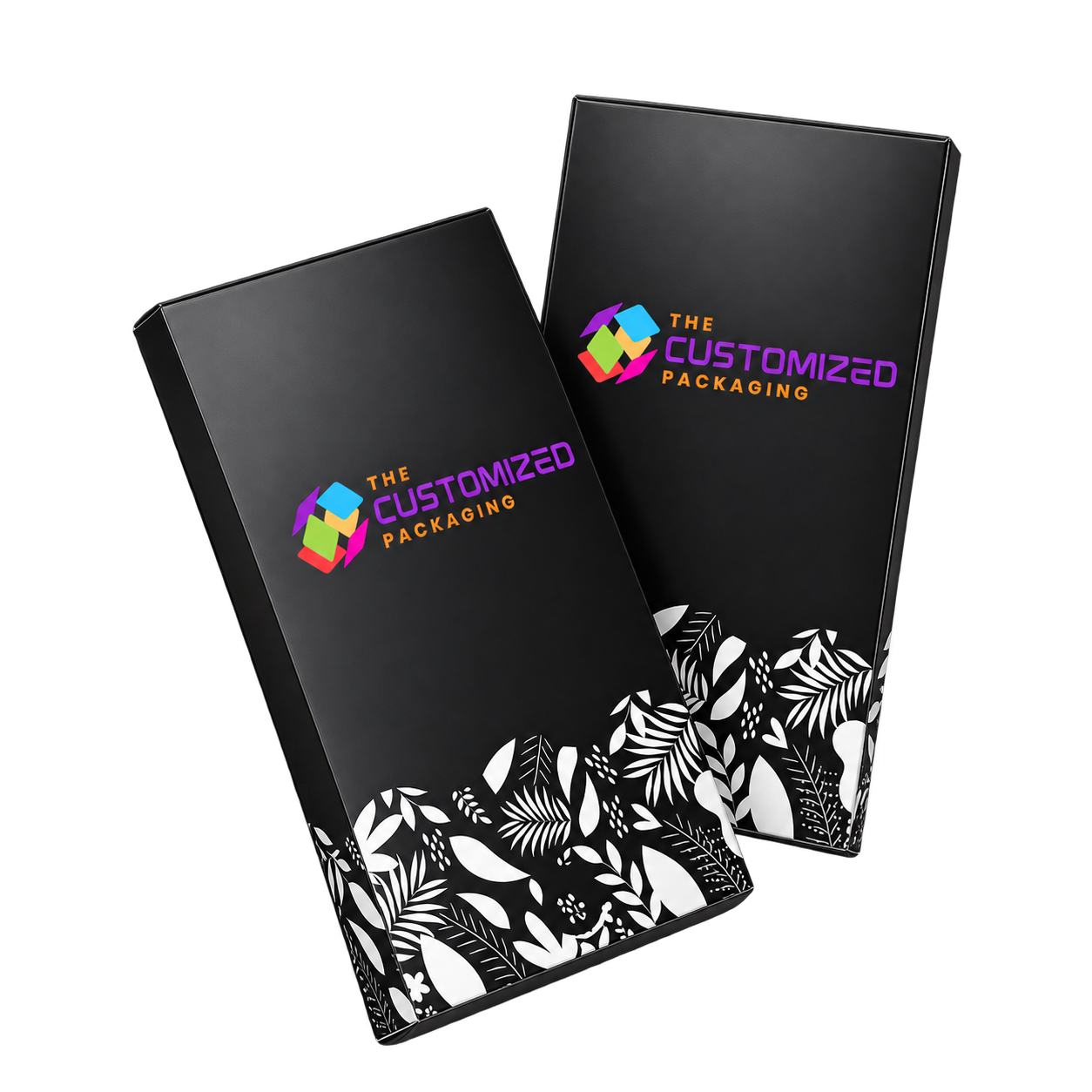
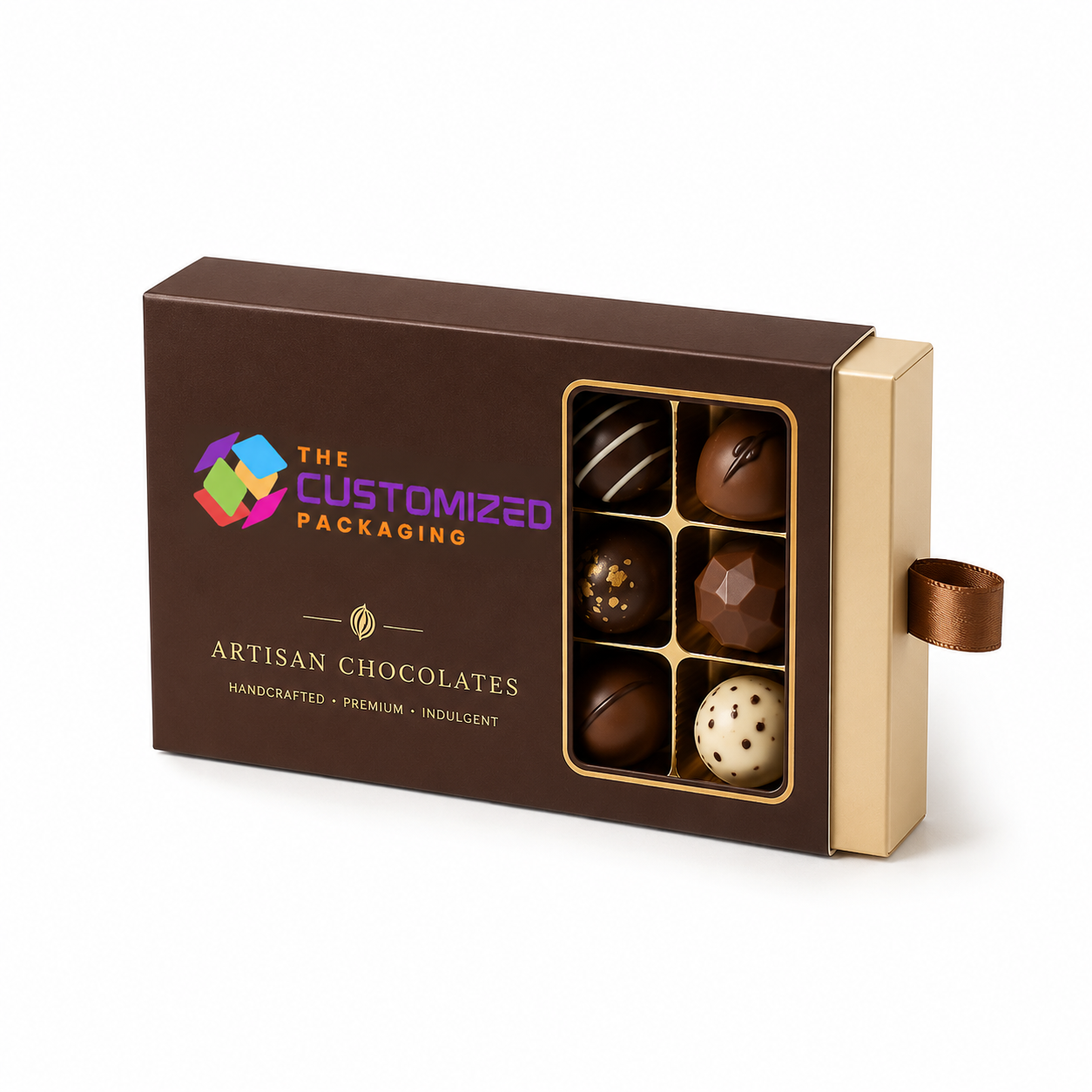
Custom chocolate sleeve boxes combine a printed outer sleeve with a fitted inner tray to create an attractive packaging presentation for chocolate bars, truffles, pralines, tablets, and assorted confectionery. The sleeve provides the primary branding surface, while the sliding tray organizes the chocolates and presents them when the package is opened.
Unlike ordinary folding cartons, chocolate sleeve packaging can be customized with different tray depths, sliding directions, compartments, windows, thumb notches, and ribbon pulls. Every component can be designed around the actual chocolates, their primary wrapping, quantity, weight, and intended retail presentation.
The Customized Packaging LLC manufactures custom printed chocolate sleeve boxes with logos for chocolatiers, confectionery manufacturers, artisan chocolate brands, gift businesses, retailers, and ecommerce sellers throughout the USA.
Chocolate Sleeve Packaging for Bars, Truffles, and Gift Sets
Chocolate products vary in size, shape, surface finish, and presentation requirements. A slim chocolate bar needs a different tray from a multi-piece praline assortment or a premium gift collection.
| Chocolate Product | Recommended Sleeve Packaging | Key Consideration |
|---|---|---|
| Chocolate Bars | Slim paperboard sleeve with fitted inner tray | Bar dimensions and primary wrapper thickness |
| Artisan Chocolate Tablets | Rectangular sleeve and support tray | Tablet thickness and edge clearance |
| Chocolate Truffles | Sliding drawer with individual cavities | Piece spacing and topping clearance |
| Pralines | Divided tray with full-cover sleeve | Individual piece retention |
| Mini Chocolates | Shallow tray with multiple compartments | Quantity and arrangement |
| Filled Chocolates | Deeper tray with fitted inserts | Surface sensitivity and product movement |
| Luxury Chocolate Gift Sets | Rigid sleeve and drawer packaging | Premium presentation and tray support |
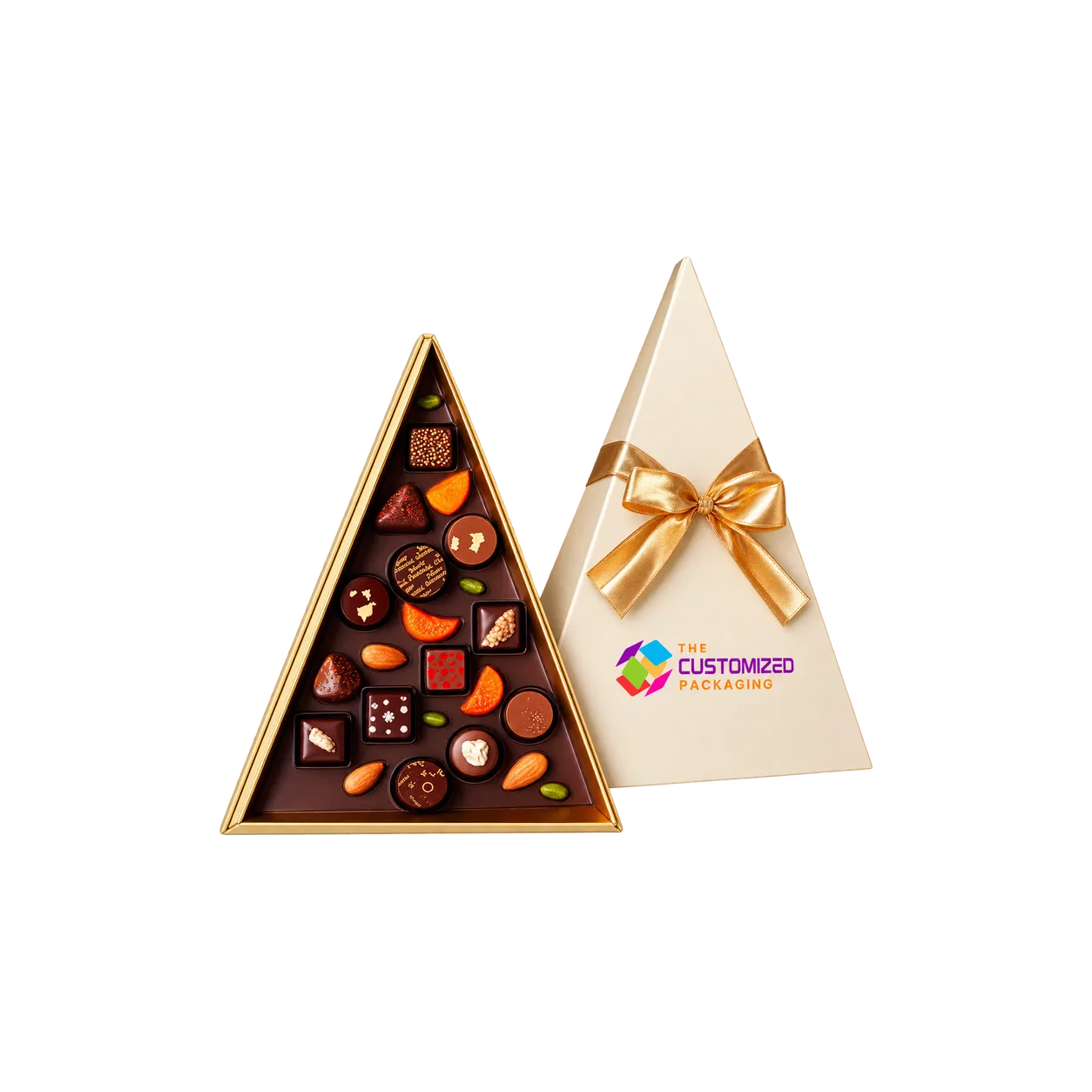
For larger confectionery assortments, our custom chocolate gift boxes provide alternative packaging structures for individually arranged chocolates, seasonal collections, and premium gifting.
Choose the Right Chocolate Sleeve Box Style
The ideal structure depends on how much of the inner tray should remain visible, the required opening direction, and the weight of the chocolate selection.
| Sleeve Box Style | Main Feature | Recommended Application |
|---|---|---|
| Full-Cover Sleeve | Outer sleeve covers most of the tray | Retail chocolate bars and assortments |
| Partial Sleeve | Exposes part of the inner packaging | Contrasting tray and sleeve designs |
| Drawer Sleeve Box | Sliding tray opens from one side | Truffles, pralines, and gift collections |
| Window Sleeve Box | Die-cut opening reveals the contents | Retail chocolate presentation |
| Open-End Slipcase | Tray can slide through an open sleeve | Wrapped bars and slim chocolate tablets |
| Closed-End Sleeve | One end limits tray movement | Controlled opening arrangements |
| Rigid Sleeve and Tray | Structured inner drawer and outer slipcase | Luxury chocolate collections |
For premium products, explore our custom rigid sleeve and tray boxes. These can be developed with fitted compartments, ribbon pulls, specialty wraps, and coordinated interior printing.
Custom Chocolate Sleeve Box Dimensions and Sliding Fit
Measure the Complete Chocolate Arrangement
Accurate measurements are essential when developing custom-size chocolate sleeve boxes. The inner tray must accommodate the chocolates, liners, cups, and dividers, while the outer sleeve must fit around the finished tray.
Important measurements include:
- Chocolate dimensions: Maximum length, width, and height of each bar or piece.
- Primary wrapping: Additional thickness from sealed wrappers, pouches, or liners.
- Chocolate quantity: Number of pieces and their intended arrangement.
- Tray dimensions: Internal length, width, depth, and side-wall height.
- Insert allowance: Space occupied by paper cups, dividers, and product cavities.
- Sleeve clearance: Room for the completed tray to slide smoothly.
- Packed weight: Total weight used to evaluate tray and sleeve strength.
A sleeve that is too tight may jam or damage the tray, while an excessively loose fit can allow unintended movement. Board thickness, lamination, folded edges, humidity, and the filled weight all influence sliding performance.
Testing the complete tray with the actual wrapped chocolates is recommended before bulk production.
Thumb Notches, Ribbon Pulls, and Drawer Openings
Opening features can improve the customer experience without changing the basic sleeve-and-tray structure.
Semicircular thumb notches allow customers to grip the inner tray. Paper tabs and exposed tray edges provide simple opening alternatives, while ribbon pulls create a decorative option for premium rigid boxes.
The selected opening mechanism should allow comfortable access without pulling directly on the chocolates or disturbing their arrangement.
Materials for Custom Chocolate Sleeve Packaging
Chocolate sleeves and trays can use the same material or different materials depending on printing requirements, presentation, and structural needs.
SBS paperboard provides a smooth printing surface for retail chocolate packaging. White kraft supports bright branding, while natural kraft creates an understated appearance for artisan confectionery and minimalist designs.
Selected recycled-content paperboards may also be available. Larger or heavier chocolate assortments can use micro-flute corrugated materials, while luxury collections may benefit from rigid board and specialty wrapping papers.
Brands looking for a natural-paper sliding structure can explore our custom kraft sleeve and tray boxes, which offer coordinated inner trays and outer sleeves with optional inserts and printing.
Custom Inserts and Chocolate Compartments
Chocolate sleeve boxes with inserts help organize individual pieces when the inner tray moves in and out of the sleeve.
Depending on the product, available arrangements may include:
- Individual chocolate cavities: Separate truffles, pralines, and filled chocolates.
- Paperboard dividers: Create organized sections for assorted pieces.
- Bar-support trays: Position wrapped chocolate bars or tablets.
- Paper cups: Provide individual presentation areas for suitable confectionery.
- Raised platforms: Position products closer to the tray opening.
- Removable inserts: Allow selected chocolates to be lifted out together.
- Ribbon-lift features: Assist with presentation and product removal in suitable rigid designs.
Insert dimensions should provide enough clearance around delicate coatings, toppings, and molded chocolate shapes. Direct-contact materials must be selected specifically for the intended food application.
Custom Printed Chocolate Sleeve Boxes with Logos
Custom printed chocolate sleeve boxes provide a continuous exterior surface for logos, chocolate names, flavor information, cocoa percentages, illustrations, product stories, and promotional artwork.
Depending on the material and construction, available customization options may include:
- Full-color CMYK printing and selected Pantone colors.
- Custom brand logos, flavor colors, and collection artwork.
- Matte, gloss, and compatible soft-touch finishes.
- Gold, silver, or other selected foil-stamping accents.
- Embossing and debossing for decorative details.
- Spot UV for localized glossy effects.
- Printed inner trays and contrasting interior colors.
- Custom windows, ribbon pulls, labels, and branded seals.
Important information such as ingredients, allergen declarations, net quantity, applicable warnings, barcodes, and batch details can be incorporated into the approved artwork.
Finishes should not create excessive thickness along sliding edges or interfere with the opening mechanism.
Chocolate Sleeve Boxes with Windows
A die-cut window can display part of a chocolate bar, the color of the inner tray, or an arranged chocolate selection.
Windows may be rectangular, oval, bar-shaped, logo-inspired, or customized around the product presentation. Depending on the packaging design, openings can remain uncovered or use a suitable transparent film.
Window placement should preserve enough sleeve material for structural support. Products sensitive to light or external handling may require a fully enclosed sleeve or an additional suitable primary wrapper.
Food-Contact Safety and Chocolate Storage
Chocolate sleeve packaging usually functions as secondary packaging around wrapped products, paper cups, liners, or fitted trays.
When chocolate will contact a tray or insert directly, the food-contact suitability of the material, coatings, inks, adhesives, and manufacturing process must be evaluated for the intended use.
Decorative printed sleeves are not automatically suitable for direct food contact. The primary wrapper or properly selected liner may also provide protection from moisture, oils, aroma transfer, and contamination.
Standard paperboard sleeves do not independently provide refrigeration, temperature control, or guaranteed freshness preservation. Chocolate quality depends on the complete packaging system and appropriate storage conditions.
Retail Presentation, Gift Packaging, and Ecommerce Delivery
Sliding chocolate boxes are suitable for retail shelves, artisan confectionery collections, corporate gifts, seasonal assortments, product launches, and premium gifting.
Luxury collections can use rigid drawers with individual compartments and printed sleeves. Smaller products may use lightweight folding trays that reduce storage requirements before assembly.
For broader gift applications, our custom gift sleeve boxes offer additional presentation structures for curated product sets and promotional collections.
For ecommerce distribution, decorative chocolate sleeve boxes may require a separate corrugated outer carton with suitable cushioning and product stabilization.
The shipping system should reflect the chocolate's temperature sensitivity, product weight, fragility, and expected handling conditions.
Wholesale Custom Chocolate Sleeve Boxes and Pricing
Wholesale chocolate sleeve box pricing depends on dimensions, material, inner tray construction, insert design, printing coverage, window requirements, finishes, quantity, and delivery destination.
A lightweight paperboard sleeve around a simple chocolate bar tray generally has different production costs from a rigid drawer box with multiple cavities, interior printing, ribbon pulls, and premium decorative finishes.
For preliminary budgeting, use our Custom Box Packaging Cost Calculator. Final pricing is confirmed after reviewing the complete packaging specifications.
What We Need for Your Chocolate Sleeve Box Quote
- Chocolate type: Bars, tablets, truffles, pralines, filled pieces, or gift assortments.
- Product dimensions: Length, width, height, and primary wrapping measurements.
- Chocolate quantity: Number of bars or individual pieces per box.
- Sleeve preference: Full cover, partial cover, window, drawer, or rigid slipcase.
- Tray and inserts: Compartment count, cavity dimensions, dividers, cups, or liners.
- Material: SBS paperboard, kraft, micro-flute, corrugated, or rigid board.
- Printing details: Logo, artwork, flavor variations, printing colors, and finishes.
- Order quantity: Total number of custom boxes required.
- Delivery details: USA ZIP code and preferred deadline.
Share your chocolate measurements, preferred sleeve style, tray arrangement, artwork, and required quantity with The Customized Packaging LLC to request a personalized wholesale quotation for custom chocolate sleeve boxes.
A Chocolate Sleeve Box describes the complete structure consisting of an outer sleeve and an inner component. When the inner component is a tray that pulls completely from the sleeve, the package is commonly called a drawer or sleeve-and-tray box. Sleeves can also wrap around a standard carton or partially cover an exposed tray.
The sleeve should fit closely enough to remain secure but should not require excessive force to open. The final clearance must account for board thickness, lamination, wrapped edges, insert weight, and the chocolates. A filled structural sample is the best way to confirm smooth movement.
Yes, when the tray, insert, liner, coating, ink, and adhesive are suitable for the intended food-contact application. Chocolates may also be placed in paper cups, individual wrappers, sealed trays, or another primary package before being loaded into the sleeve box.
Die-cut wells, paperboard grids, bar supports, and fitted compartments hold each chocolate in a defined position. The compartments should provide enough clearance for easy removal without allowing the chocolates to collide as the drawer is opened.
Yes. A window can be die-cut into the front, top, or side of the sleeve to display the chocolate or tray arrangement. The product and window must remain aligned when the tray is closed, and enough board must remain around the opening to support the sleeve.
Related Products





Order Custom Chocolate Sleeve Boxes from The Customized Packaging
We manufacture Custom Chocolate Sleeve Boxes for businesses that need reliable product protection, accurate printing, and professional packaging for retail, ecommerce, storage, or shipping. Each box can be customized by size, material, structure, printing, coatings, finishes, inserts, and order quantity.
Share your artwork and quantity targets for Custom Chocolate Sleeve Boxes and we will recommend the most cost-effective structure for your timeline. or speak with a packaging expert. Browse custom rigid boxes, packaging inserts, and use our Custom Box Packaging Cost Calculator.