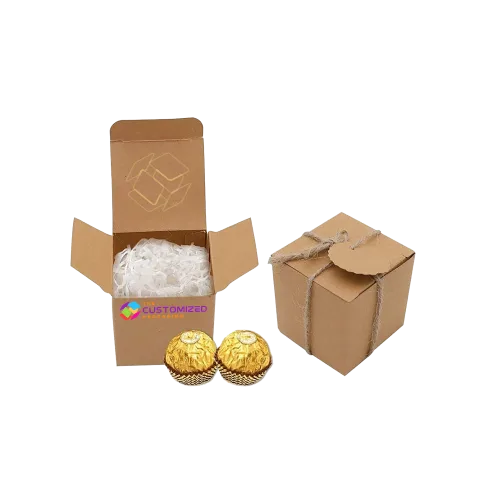
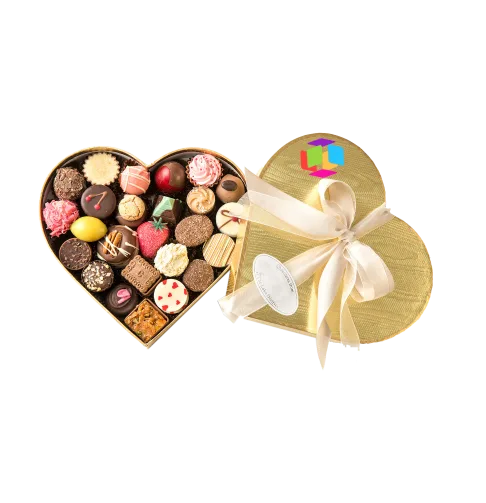
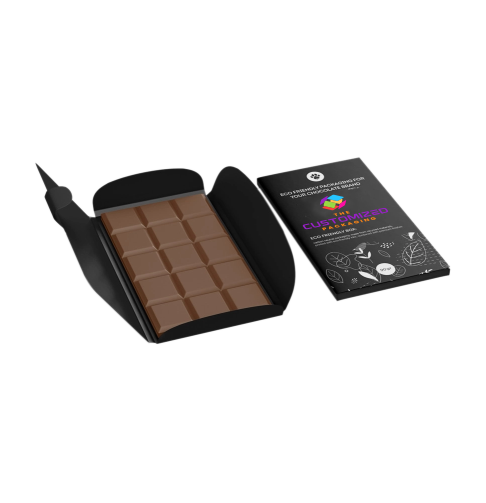
Branded Packaging for Chocolate Bars and Confectionery Tablets
Custom Chocolate Bar Boxes provide chocolate manufacturers, confectionery brands, retailers, and gift businesses with a structured outer package for wrapped chocolate bars and tablets. The box can be designed around the exact dimensions of the chocolate, its primary wrapper, product weight, break pattern, included accessories, retail display method, and distribution requirements.
A properly fitted carton helps keep the wrapped bar centered and reduces unnecessary movement without applying excessive pressure to the chocolate. The packaging can also provide space for branding, product information, flavor identification, ingredients, allergen details, nutrition panels, barcodes, QR codes, and promotional messaging.
These boxes are suitable for chocolatiers, candy manufacturers, artisan food brands, bakeries, grocery retailers, convenience stores, cafés, hotels, gift shops, subscription services, corporate gifting companies, event planners, and private-label confectionery suppliers.
Suitable Chocolate Products and Applications
| Chocolate Product |
Recommended Packaging Application |
| Milk Chocolate Bars |
Grocery shelves, candy stores, gift shops, and promotional campaigns |
| Dark Chocolate Bars |
Premium retail, artisan collections, wellness-focused ranges, and gifting |
| White Chocolate Bars |
Seasonal products, dessert collections, gift sets, and specialty retail |
| Filled Chocolate Bars |
Fitted cartons, protective sleeves, inserts, and premium presentation |
| Nut Chocolate Bars |
Retail packaging, gift assortments, subscriptions, and specialty stores |
| Fruit and Flavored Bars |
Color-coded cartons, window boxes, seasonal releases, and sampling programs |
| Artisan Chocolate Tablets |
Luxury sleeves, rigid cartons, textured packaging, and limited editions |
| Mini Chocolate Bars |
Multipacks, promotional boxes, favors, and hospitality packaging |
| Protein Chocolate Bars |
Fitness retail, ecommerce, subscription programs, and convenience stores |
| Vegan Chocolate Bars |
Specialty retail, natural branding, subscriptions, and gifting |
| Sugar-Free Chocolate Bars |
Pharmacies, wellness retailers, grocery stores, and direct-to-consumer sales |
| Chocolate Gift Sets |
Rigid boxes, drawer packaging, magnetic closures, and divided assortments |
Material Options
The selected material affects structural strength, print quality, product presentation, shipping performance, and packaging cost.
| Material |
Best For |
Main Benefits |
| SBS Paperboard |
Retail chocolate bars and full-color printed cartons |
Smooth printing surface, precise folding, and detailed graphics |
| Natural Kraft Paperboard |
Artisan chocolate, handmade products, and natural branding |
Rustic appearance and paper-based construction |
| White Kraft Paperboard |
Clean retail packaging and colorful artwork |
Strong contrast and versatile structural performance |
| Folding Cardboard |
Everyday chocolate bars and high-volume packaging |
Lightweight, economical, and efficient to store flat |
| Recycled Paperboard |
Sustainability-focused confectionery programs |
Recycled content and customizable printing surface |
| Micro-Flute Board |
Premium or heavier multipacks requiring added rigidity |
Improved compression resistance with a compact profile |
| Rigid Board |
Luxury chocolate bars, corporate gifts, and collector editions |
Strong construction and premium presentation |
| Specialty Wrapped Board |
Limited editions, weddings, and luxury confectionery |
Refined textures, decorative colors, and tactile appeal |
Material thickness should be selected according to chocolate-bar dimensions, wrapped product weight, carton depth, retail stacking, insert requirements, and transportation conditions.
Popular Chocolate Bar Box Styles
| Box Style |
Key Features |
Recommended Use |
| Straight Tuck-End Boxes |
Top and bottom flaps close in the same direction |
Standard retail bars, high-volume packaging, and lightweight products |
| Reverse Tuck-End Boxes |
Opposing tuck flaps improve sheet efficiency |
Grocery chocolate, promotional bars, and everyday retail |
| Chocolate Bar Sleeves |
Printed sleeve slides around the primary wrapper |
Artisan bars, flavor variations, and economical branding |
| Window Chocolate Boxes |
Die-cut opening reveals the wrapped or visible product |
Premium retail, gift shops, and colorful chocolate collections |
| Drawer Chocolate Boxes |
Sliding tray creates a controlled product reveal |
Luxury bars, limited editions, and gifting |
| Two-Piece Chocolate Boxes |
Separate lid and base create a classic presentation |
Premium tablets, gift sets, and commemorative products |
| Magnetic Chocolate Boxes |
Hinged rigid lid provides an elevated opening experience |
Corporate gifting, luxury brands, and special editions |
| Multipack Chocolate Boxes |
Holds several bars in an organized arrangement |
Variety packs, subscriptions, retail bundles, and gifts |
| Chocolate Display Boxes |
Converts into a counter or shelf display |
Candy stores, supermarkets, cafés, and checkout areas |
| Custom-Shaped Chocolate Boxes |
Unique openings, outlines, and internal structures |
Seasonal campaigns, collaborations, and signature products |
Custom Sizes and Chocolate-Bar Fit
We manufacture custom-size chocolate bar boxes according to the bar’s length, width, thickness, weight, primary wrapper dimensions, and multipack arrangement.
Slim boxes can hold narrow bars, mini tablets, tasting samples, and promotional chocolate. Standard cartons can accommodate common retail bars, while deeper structures may be required for filled, layered, chunky, nut-covered, or molded products.
Accurate sizing helps prevent the chocolate bar from moving excessively inside the carton while avoiding pressure that could crack the product or damage its wrapper. Customers can provide product measurements, physical samples, photographs, existing packaging, or technical drawings for structural development.
Custom Printed Chocolate Bar Boxes
Custom printed chocolate bar boxes can display your logo, brand name, chocolate type, cocoa percentage, flavor, ingredients, allergen information, nutrition facts, net quantity, barcode, website, QR code, storage guidance, and promotional messaging.
Available printing methods include offset, digital, flexographic, screen, CMYK, Pantone, white ink, metallic ink, and one-color printing.
The front, back, side panels, tuck flaps, interior, sleeve, tray, insert, labels, and promotional cards can be customized where technically suitable.
Custom Chocolate Bar Boxes with Logo
Adding a logo helps chocolate brands maintain recognizable presentation across grocery stores, cafés, candy shops, gift retailers, subscription boxes, events, and ecommerce orders.
Logos may be printed, foil-stamped, embossed, debossed, raised, or highlighted with spot UV. Branding can appear on the front panel, side walls, top flap, sleeve, interior reveal, insert, seal, or product card.
Minimal branding can support premium artisan chocolate, while bold colors and illustrations can suit children’s products, seasonal collections, flavored bars, and promotional campaigns.
Milk Chocolate Bar Boxes
Milk chocolate packaging can use warm colors, ingredient illustrations, window designs, and simple retail structures.
Straight tuck-end cartons, reverse tuck boxes, and sleeves are practical for high-volume products, while drawer and rigid boxes can support premium collections.
The packaging can include flavor details, serving suggestions, cocoa information, and promotional messages when supported by the actual product.
Dark Chocolate Bar Boxes
Dark chocolate boxes often use refined typography, darker color palettes, metallic accents, textured paper, and cocoa-origin storytelling.
Packaging can identify cocoa percentage, flavor notes, origin information, ingredients, and recommended storage conditions.
All product-origin, cocoa-content, wellness, and dietary claims should accurately reflect the chocolate and supporting documentation.
White Chocolate Bar Boxes
White chocolate packaging can use clean backgrounds, pastel colors, fruit illustrations, dessert themes, and seasonal artwork.
The carton may include a small window, interior printing, or metallic details to improve visual appeal.
The structure should still protect the wrapped bar from pressure, heat exposure, and handling damage.
Filled Chocolate Bar Boxes
Filled chocolate bars may be thicker and more sensitive to crushing than standard tablets.
Custom cartons can include deeper side walls, fitted trays, paperboard supports, and increased clearance around the product.
The box should be tested with the wrapped chocolate to ensure it does not press against fillings, toppings, molded decorations, or uneven surfaces.
Nut and Fruit Chocolate Bar Packaging
Bars containing nuts, dried fruit, seeds, or raised inclusions may require additional depth and protection.
Paperboard trays, molded supports, or fitted sleeves can help keep the bar centered.
Ingredient and allergen communication should remain clear and accurate, especially for products containing nuts, dairy, soy, wheat, or other common allergens.
Artisan Chocolate Bar Boxes
Artisan chocolate packaging can emphasize craftsmanship, origin, ingredients, small-batch production, and product storytelling.
Natural kraft, textured paper, uncoated stock, foil stamping, embossing, and custom sleeves are popular presentation options.
Selected digital-printing projects may allow different flavors or limited batches to share one structural format with changing artwork.
Luxury Chocolate Bar Packaging
Luxury chocolate bar boxes can use rigid board, drawer structures, magnetic closures, specialty wraps, foil stamping, embossing, soft-touch surfaces, and custom inserts.
The package may include a product story, tasting notes, origin card, gift message, certificate, or numbered edition label.
Luxury presentation boxes generally require an outer protective shipping carton for ecommerce delivery.
Mini Chocolate Bar Boxes
Mini chocolate bars can be packaged individually or arranged inside multipack cartons.
Small folding boxes, paper sleeves, pillow-style cartons, and display boxes are suitable for samples, hospitality programs, weddings, events, and promotions.
Multipack inserts can separate flavors, keep bars aligned, and create a consistent presentation.
Chocolate Bar Multipack Boxes
Multipack boxes can hold two, three, six, twelve, or more bars in side-by-side, stacked, or divided arrangements.
They are suitable for variety packs, subscription programs, gift sets, retail bundles, tasting collections, and holiday products.
The outer structure should be engineered according to the total product weight and number of bars.
Chocolate Tasting Set Boxes
Tasting-set packaging can organize miniature bars, origin samples, cocoa-percentage collections, or flavor comparisons.
Printed guides can explain the tasting sequence, flavor notes, product origin, or pairing suggestions.
Individual sections and labels help customers identify each bar without removing all products from the package.
Chocolate Bar Sleeve Packaging
Sleeves provide a compact branding layer around a wrapped chocolate bar or inner tray.
They can be used for different flavors, private-label programs, event personalization, and seasonal promotions.
The sleeve should fit closely enough to remain in place while allowing the product to slide out without excessive force.
Window Chocolate Bar Boxes
A die-cut window allows customers to see the primary wrapper, chocolate shape, decoration, or product color before opening the carton.
Available window shapes include rectangular, square, oval, cocoa-pod inspired, bar-shaped, logo-shaped, or fully customized openings.
The window may remain open or use transparent film for additional handling protection. Window films can affect recyclability and should be considered when making environmental claims.
Drawer Chocolate Bar Boxes
Drawer boxes use a sliding inner tray surrounded by a printed sleeve.
They can include ribbon pulls, thumb notches, paper tabs, or fabric loops. The tray may hold one chocolate bar, several mini bars, or a complete tasting set.
The sliding fit should be tested to ensure smooth opening without allowing the tray to move unintentionally.
Magnetic Chocolate Bar Boxes
Magnetic boxes provide a premium structure for luxury confectionery, corporate gifts, collaborations, and limited editions.
They can include fitted trays, document pockets, ribbon lifts, flavor guides, and interior branding.
Magnets can affect material separation, so sustainability claims should reflect the complete package rather than the paperboard alone.
Two-Piece Chocolate Bar Boxes
Two-piece boxes use a separate lid and base to create a classic gift presentation.
They are suitable for oversized chocolate tablets, premium bars, multipacks, and seasonal collections.
A fitted tray or paperboard frame can center the product inside the base and prevent movement.
Chocolate Bar Display Boxes
Custom display boxes can hold individually packaged bars at checkout counters, grocery shelves, cafés, and candy-store displays.
Available designs include open-front trays, countertop displays, shelf-ready cartons, tiered structures, and dispenser boxes.
The display can include a branded header, front lip, flavor dividers, price area, QR code, and promotional message.
Shelf-Ready Chocolate Bar Packaging
Shelf-ready packaging functions as both a shipping case and retail display.
Perforated covers or tear-away panels allow store staff to convert the carton into an open display without unpacking each bar individually.
The visible sections can display customer-facing branding, while outer panels carry shipping and inventory information.
Hanging Chocolate Bar Boxes
Folding cartons can include euro slots, round hang holes, or reinforced hanging tabs for peg-hook display.
Hanging packaging is suitable for smaller bars, samples, and lightweight retail products.
The hang area should be engineered according to the total packed weight and handling frequency.
Chocolate Bar Gift Boxes
Gift packaging can combine chocolate bars with greeting cards, ribbons, tissue paper, coffee, tea, mugs, or other products in suitable separate compartments.
Rigid, drawer, magnetic, and two-piece boxes provide a premium presentation, while printed folding cartons offer a more economical gift format.
The box may be personalized for birthdays, anniversaries, weddings, holidays, or corporate programs.
Corporate Chocolate Bar Boxes
Businesses can use branded chocolate bar boxes for employee appreciation, customer gifts, meetings, product launches, conferences, and company anniversaries.
The packaging can feature a company logo, recipient name, event date, campaign message, QR code, or personalized note.
Mini bars can be packed individually for large-scale events, while premium multipacks can be reserved for selected recipients.
Wedding and Event Chocolate Boxes
Custom chocolate bar boxes can be personalized with names, dates, monograms, venue details, table numbers, sponsor logos, or thank-you messages.
Small sleeves and folding cartons are suitable for event favors, while larger gift boxes can hold several bars or coordinated confectionery products.
Artwork can match invitations, table décor, gift bags, favor boxes, and event stationery.
Seasonal Chocolate Bar Boxes
Seasonal packaging can be created for Christmas, Valentine’s Day, Easter, Halloween, Thanksgiving, birthdays, and limited retail campaigns.
Designs may include themed colors, characters, illustrations, windows, foil details, gift messages, and promotional offers.
Digital printing may be suitable for selected short-run seasonal projects.
Subscription Chocolate Packaging
Chocolate subscription businesses can use custom boxes for monthly bars, tasting sets, international collections, origin-focused products, and limited releases.
Interior printing can include flavor guides, producer stories, membership benefits, referral offers, and QR codes.
Individual bars should remain secured inside the outer box through dividers, sleeves, trays, or fitted compartments.
Ecommerce Chocolate Bar Boxes
Chocolate bar cartons used for ecommerce usually require a corrugated outer mailer or shipping carton.
The product carton provides branding and retail presentation, while the outer packaging protects against compression, corner damage, abrasion, and parcel handling.
Heat-sensitive chocolate may require seasonal shipping planning, insulation, cooling components, or expedited delivery beyond the decorative carton.
Heat and Temperature Considerations
Chocolate can soften, melt, discolor, or develop surface changes when exposed to unsuitable temperatures.
A standard paperboard carton does not provide active temperature control. Businesses should consider climate, season, storage, carrier route, transit duration, and delivery conditions.
Any insulated shipping system should be tested with the actual chocolate and expected distribution environment.
Primary Wrappers and Inner Packaging
Chocolate bars are commonly sealed in foil, paper, film, or another suitable primary wrapper before being placed inside the printed carton.
The primary wrapper typically provides the main barrier against moisture, aroma transfer, oils, and direct handling.
The outer box should be designed around the complete wrapped product, including seals, folded edges, labels, and thickness variations.
Direct Food-Contact Considerations
Custom chocolate bar boxes may serve as secondary packaging around a sealed primary wrapper or, in selected projects, contact the product through an approved liner or tray.
When direct chocolate contact is required, the paperboard, coatings, inks, adhesives, liners, and manufacturing process must be selected specifically for that application.
Standard exterior printing, recycled stock, foil decoration, magnets, ribbons, and specialty finishes should not directly contact unwrapped chocolate unless suitable for the intended use.
Grease-Resistance Considerations
Chocolate and filled confectionery may leave grease marks on untreated paperboard if the primary wrapper is incomplete or damaged.
Grease-resistant liners, suitable inner papers, trays, and sealed wrappers can help maintain packaging appearance.
The carton should not be described as greaseproof unless the complete structure has been developed and tested for the intended product.
Moisture, Aroma, and Barrier Considerations
Chocolate quality can be affected by moisture, oxygen, aroma transfer, temperature, and light.
Barrier performance normally depends primarily on the inner wrapper rather than the decorative carton.
Standard folding boxes should not be described as airtight or moistureproof unless the complete packaging system has been specifically tested.
Shelf-life decisions should be supported by appropriate product and packaging evaluation.
Ingredients, Allergens, and Nutrition Information
Retail chocolate packaging may require space for ingredients, allergen statements, nutrition information, cocoa content, net quantity, company details, storage guidance, date coding, and applicable warnings.
Businesses are responsible for confirming the labeling requirements that apply to the product and sales market.
Allergen and dietary statements should accurately reflect the ingredients and production environment.
Cocoa Percentage and Flavor Identification
Chocolate boxes can identify cocoa percentage, flavor, filling, nut type, fruit inclusion, origin, sweetness level, or collection name.
Color coding can help customers distinguish milk, dark, white, flavored, and specialty bars.
Any origin, ethical-sourcing, organic, vegan, sugar-free, or wellness claim should be supported and accurate.
Barcodes and Retail Information
Custom chocolate cartons can include UPC barcodes, SKUs, flavor codes, batch fields, net weight, product names, prices, and inventory details.
Barcodes should appear on flat, high-contrast surfaces away from folds, windows, textured papers, and reflective finishes.
A printed sample should be scanned before the complete production run is approved.
QR Codes and Digital Integration
QR codes can connect customers to ingredient details, product stories, sourcing information, tasting videos, loyalty programs, gift messages, subscriptions, or online ordering.
The code should appear on a flat, high-contrast panel and be tested on the finished packaging.
Codes should not be positioned where seals, folds, metallic foil, or labels interfere with scanning.
Batch and Date Coding
Chocolate boxes can include areas for production dates, best-before information, batch numbers, lot codes, and inventory references.
Information may be printed directly, applied through labels, stamped, or added during filling.
The coding area should remain flat and compatible with the selected printing equipment.
Tamper-Evident Features
Optional features include branded seals, adhesive labels, tear strips, paper bands, locking tabs, and first-use stickers.
These features can indicate prior opening but do not make the carton completely tamper-proof.
The primary wrapper should provide appropriate product containment and first-use protection where required.
Tear-Open and Easy-Open Features
Chocolate cartons can include thumb notches, tear strips, perforated tabs, pull openings, and easy-release sleeves.
These features can improve customer access without requiring scissors.
Opening elements should be tested so they do not weaken the packaging during retail handling or shipping.
Inserts and Product Supports
Custom inserts can center the chocolate bar, organize several bars, and separate the product from gift accessories.
Available options include die-cut paperboard frames, folded kraft supports, corrugated dividers, molded pulp, layered platforms, and selected cavity trays.
The insert should avoid pressing against raised toppings, molded designs, or delicate edges.
Flavor Dividers and Multipack Organization
Multipack boxes can use paperboard dividers, individual sleeves, stacked trays, and labeled compartments to organize different chocolate flavors.
Printed flavor names or icons can help customers identify each bar.
The structure should support the combined weight without allowing bars to collide during handling.
Interior Printing and Product Storytelling
Interior panels can display a thank-you message, tasting guide, cocoa-origin story, pairing suggestion, product map, gift note, or promotional code.
Interior printing creates an additional branded touchpoint when the customer opens the carton.
Ink and coating suitability should be reviewed when the printed surface may contact the primary wrapper or product.
Premium Finishes and Decorative Details
Custom chocolate bar boxes can be enhanced with matte lamination, gloss lamination, soft-touch coating, aqueous coating, varnish, spot UV, metallic paper, pearlescent stock, and textured surfaces.
Decorative options include gold foil, silver foil, rose-gold foil, copper foil, holographic accents, embossing, debossing, raised logos, ribbons, paper bands, and branded seals.
Premium finishes are suitable for luxury bars, holiday collections, corporate gifts, wedding favors, and limited editions.
Eco-Friendly Chocolate Bar Boxes
Eco-friendly chocolate boxes can be manufactured using recycled paperboard, kraft stock, recyclable corrugated material, molded pulp, paper-based inserts, reduced ink coverage, unlaminated surfaces, and water-based inks.
Businesses may select right-sized cartons, minimal finishing, open windows, removable inserts, paper seals, and simplified structures.
A paper chocolate box should not automatically be described as recyclable, biodegradable, or compostable. Environmental claims should reflect coatings, grease barriers, foil, adhesives, films, magnets, labels, and food contamination.
Flat-Pack and Filling Efficiency
Folding chocolate cartons can be supplied flat to reduce warehouse space and inbound freight volume.
Pre-glued side seams, auto-lock bottoms, snap-lock bases, tuck flaps, and pre-scored folds can simplify assembly.
The structure should match the business’s filling process, production speed, sealing method, and labeling equipment.
Wholesale and Bulk Chocolate Bar Boxes
Ordering wholesale custom chocolate bar boxes can reduce the average unit cost and help confectionery brands maintain consistent packaging across flavors, bar sizes, retail locations, campaigns, and product collections.
Bulk chocolate packaging is suitable for manufacturers, chocolatiers, bakeries, grocery brands, cafés, hotels, subscription companies, corporate gifting programs, event planners, and private-label businesses.
Pricing depends on dimensions, material, box style, insert design, window size, printing coverage, closure, barrier requirements, premium finishes, quantity, and delivery destination.
Low-minimum options may be available for selected digitally printed sleeves and folding cartons. Rigid boxes, magnetic closures, specialty papers, complex inserts, multiple artwork versions, and premium finishes may require higher production quantities.
Use our Custom Box Packaging Cost Calculator to receive a preliminary estimate for your chocolate packaging project. Enter the required dimensions, quantity, material, box style, bar capacity, insert type, printing coverage, window, closure, and finishing options.
Want to know the cost of your product’s packaging? Try our Custom Box Packaging Cost Calculator.
The calculator can help compare tuck-end chocolate cartons, printed sleeves, window boxes, multipack structures, drawer packaging, rigid gift boxes, and retail display cartons.
Final pricing is confirmed after reviewing the wrapped chocolate dimensions, product weight, structure, insert requirements, artwork, quantity, and delivery destination.
Factors That Affect Chocolate Bar Box Pricing
| Cost Factor |
How It Affects the Price |
| Box Dimensions |
Larger and thicker bars require more paperboard |
| Bar Capacity |
Multipacks require larger structures, dividers, and greater support |
| Material Type |
SBS, kraft, recycled board, micro-flute, and rigid board have different costs |
| Box Style |
Standard tuck cartons generally cost less than drawer, magnetic, or rigid boxes |
| Insert Design |
Fitted frames, trays, dividers, and flavor compartments add complexity |
| Windows |
Die-cut openings and transparent films add material and tooling |
| Printing Coverage |
Full-color interior and exterior printing increases production costs |
| Artwork Variations |
Multiple flavors, cocoa percentages, and seasonal designs may add setup requirements |
| Premium Finishes |
Foil stamping, embossing, spot UV, and specialty papers add production steps |
| Barrier Requirements |
Suitable liners, inner wraps, and selected coatings add material costs |
| Order Quantity |
Larger wholesale quantities generally reduce the average unit price |
| Delivery Location |
Freight costs depend on flat-pack volume, assembled size, weight, and destination |
Why Choose The Customized Packaging?
The Customized Packaging manufactures custom chocolate packaging for chocolatiers, candy manufacturers, artisan brands, grocery retailers, cafés, bakeries, hotels, gift businesses, subscription services, event planners, and corporate gifting programs.
Customers can choose custom dimensions, paperboard materials, box styles, sleeves, windows, inserts, multipack arrangements, printing methods, personalization, and premium finishes.
Whether you need a custom chocolate bar box manufacturer, dependable confectionery packaging supplier, chocolate bar boxes with logo, luxury chocolate sleeves, multipack cartons, or wholesale chocolate packaging in the USA, we can manufacture boxes according to your products and brand requirements.
Buy Custom Chocolate Bar Boxes Online
To request a quotation, provide the wrapped chocolate bar length, width, thickness, product weight, number of bars per box, required quantity, preferred material, box structure, insert requirements, artwork, printing colors, windows, closures, finishes, and delivery destination.
Our packaging specialists can help you buy custom chocolate bar boxes online, compare low-minimum and wholesale pricing, and create packaging that protects wrapped chocolate while improving retail presentation, gifting, product identification, and brand recognition.
Choose The Customized Packaging for custom printed chocolate bar boxes, confectionery packaging with logo, chocolate sleeves, window cartons, multipack boxes, luxury gift packaging, bulk orders, and wholesale custom food packaging delivered throughout the USA.