

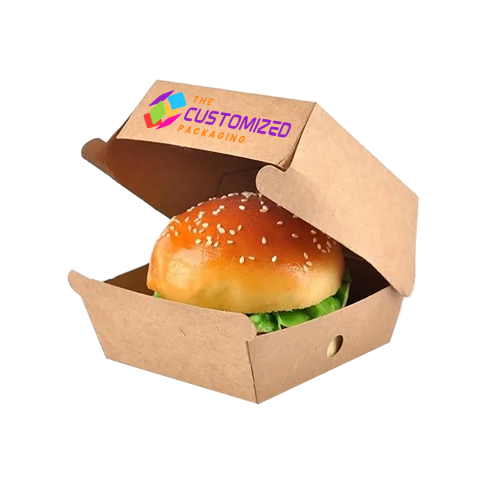
| Specification | Available Options |
|---|---|
| Product Name | Custom Burger Boxes |
| Suitable Menu Items | Hamburgers, cheeseburgers, chicken burgers, crispy chicken sandwiches, plant-based burgers, breakfast burgers, fish burgers, sliders, double burgers, gourmet burgers, and kids’ burgers |
| Main Applications | Restaurant takeout, customer pickup, local delivery, food trucks, ghost kitchens, cafés, catering, stadiums, events, franchises, and wholesale food service |
| Materials | SBS paperboard, folding boxboard, white kraft, natural kraft, selected recycled paperboard, coated food-service board, F-flute corrugated, E-flute corrugated, molded fiber components, and project-specific materials |
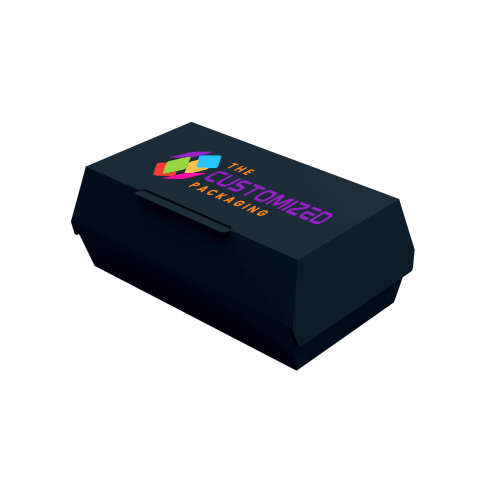
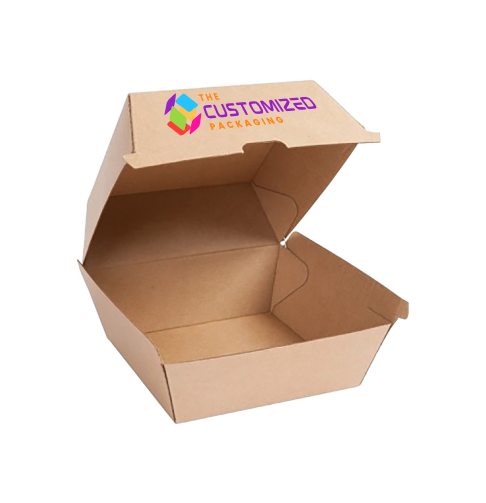
| Box Styles | One-piece clamshell, tuck-top carton, auto-lock box, snap-lock carton, corrugated burger box, slider multipack, compartment meal box, window box, handle carrier, sleeve box, and custom die-cut structure |
| Dimensions | Fully customized according to the finished burger diameter, total height, bun profile, toppings, wrapping, liner, packed weight, and delivery requirements |
| Burger Capacity | One burger, one slider, two sliders, three sliders, four sliders, six sliders, burger-and-fries meal, family order, catering set, or custom capacity |
| Internal Height | Standard, tall, extra-tall, double-patty clearance, gourmet-burger clearance, food-pick clearance, or custom height |
| Board Thickness | Selected according to dimensions, packed weight, grease exposure, moisture, closure, stacking, ventilation, and delivery conditions |
| Corrugated Options | F-flute, E-flute, selected B-flute, laminated micro-flute, or project-specific reinforced construction |
| Loading Style | Hinged clamshell, top loading, front loading, tuck-top loading, tray loading, sleeve loading, or custom opening |
| Closure Options | Front lock, tuck flap, side tabs, snap-lock base, auto-lock base, locking lid, paper band, adhesive seal, tamper label, tear strip, or custom closure |
| Ventilation Options | Lid holes, side slots, rear vents, corner gaps, perforated patterns, custom vent placement, or non-ventilated construction |
| Food-Contact Components | Suitable burger wrap, verified liner, paper tray, coated insert, molded component, food-contact board, or project-specific primary support |
| Grease-Management Options | Suitable liner, wrap, verified barrier coating, tray, raised base, absorbent component, or combined packaging system |
| Compartment Options | Burger section, fry section, sealed sauce-cup cavity, side-item area, cutlery pocket, napkin compartment, condiment section, or custom layout |
| Divider Materials | Folded paperboard, corrugated board, molded fiber, suitable food tray, removable divider, or custom component |
| Slider Options | Two-pack, three-pack, four-pack, six-pack, individual cells, removable divider, flavor labels, or custom quantity |
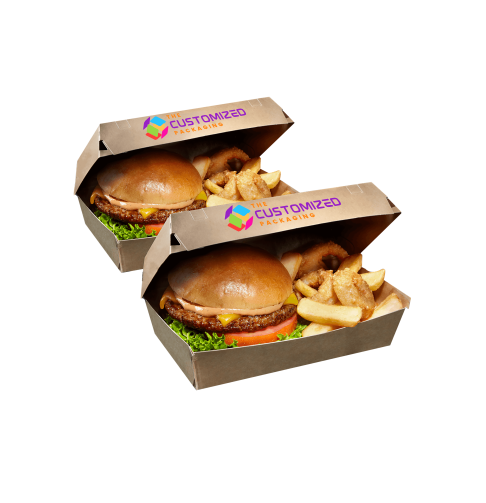
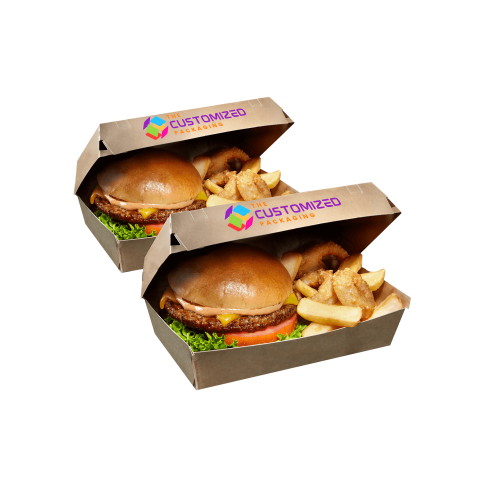
| Burger-and-Fries Options | Side-by-side sections, raised divider, removable fry tray, sealed sauce-cup holder, napkin pocket, or custom meal arrangement |
| Tamper-Evident Options | Branded sticker, security label, paper band, perforated tab, tear strip, locking flap, serialized seal, or sealed outer delivery bag |
| Printing Methods | Digital, offset, flexographic, screen, CMYK, Pantone matching, white ink, metallic ink, and one-color printing |
| Printing Areas | Lid, front panel, side walls, rear panel, base exterior, interior lid, sleeve, divider, paper band, label, seal, and outer delivery carton |
| Logo Options | Full-color logo, one-color logo, Pantone-matched logo, white-ink logo, repeating pattern, embossed logo, debossed logo, or spot UV where suitable |
| Interior Printing | Thank-you message, product story, loyalty offer, social-media details, reheating note, campaign message, or QR code |
| Order Identification | Customer name, order number, burger type, protein, cheese, sauces, spice level, dietary modification, pickup time, delivery platform, or table number |
| Dietary Identification | Beef, chicken, fish, vegetarian, plant-based, spicy, dairy-related, gluten-related, or custom menu fields when accurate |
| QR Code Uses | Online menu, ordering page, loyalty program, ingredients, nutrition details, customer survey, social profile, or promotion |
| Barcode Placement | Flat, high-contrast panel away from folds, vents, grease-prone zones, reflective finishes, seals, and textured surfaces |
| Window Options | Open die-cut, transparent-film window, rectangular, circular, arched, logo-shaped, burger-shaped, or custom opening |
| Handle Options | Reinforced paperboard handle, corrugated carry handle, die-cut grip, gable-style handle, carrying band, or handle-free construction |
| Delivery Features | Stable base, secure closure, stackable lid, tamper seal, order-label area, delivery-bag compatibility, and protective outer carrier |
| Restaurant Features | Fast assembly, compact flat storage, writable fields, menu identification, coordinated branding, and counter-service compatibility |
| Food-Truck Features | Flat-packed supply, quick closing, limited-workspace storage, easy hand holding, one-color branding, and outdoor-service suitability |
| Franchise Features | Controlled dieline, approved material, consistent colors, standard label position, multiple store versions, and centralized wholesale ordering |
| Event Features | Sponsor logos, event names, dates, table numbers, promotional messages, QR codes, and fast bulk distribution |
| More Responsible Options | Right-sized cartons, verified recycled content, paper dividers, reduced print coverage, removable seals, simplified construction, and fewer mixed materials |
| Proofing | Digital proof, dieline review, 3D mockup, plain structural sample, burger-fit sample, vent sample, divider prototype, printed sample, or barcode test |
| Testing | Burger-fit review, lid-clearance check, closure test, ventilation trial, grease review, stacking assessment, tamper-seal test, assembly test, or delivery trial |
| Artwork Files | AI, EPS, PDF, PSD, or high-resolution print-ready files with outlined fonts, bleed, approved dieline placement, and verified menu information |
| MOQ | Flexible or low-minimum options may be available depending on material, dimensions, structure, print method, food-contact components, and artwork versions |
| Wholesale Quantities | Available for independent restaurants, restaurant chains, cafés, food trucks, caterers, ghost kitchens, franchises, events, and food-service distributors |
| Turnaround | Confirmed after dimensions, material, quantity, structure, food-contact components, vents, dividers, artwork, proof approval, and destination are finalized |
| Delivery | Available throughout the USA and other supported destinations |
| Pricing | Determined by dimensions, material, structure, quantity, printing, vents, liners, compartments, seals, artwork versions, proofing, packing, and delivery |
Burger Packaging Designed for Real Takeout Conditions
Custom Burger Boxes give restaurants, food trucks, cafés, ghost kitchens, caterers, stadium vendors, and franchise operators packaging developed around the finished menu item rather than a generic food carton. A single cheeseburger, tall double burger, fried chicken sandwich, slider set, breakfast burger, or burger-and-fries meal can place very different demands on the box.
The carton should provide enough internal height to avoid pressing the bun, cheese, sauces, garnishes, or food picks. It should also close securely, fit the restaurant’s packing station, stack inside delivery bags, and remain easy for customers to open. The appropriate material, structure, ventilation pattern, liner, and seal depend on the burger recipe, serving temperature, holding time, and delivery route.
Custom printing turns the package into a clear extension of the restaurant brand. Logos, menu-item names, modification fields, order numbers, loyalty QR codes, promotional messages, reheating notes, and delivery instructions can be placed on exterior or interior panels where technically suitable.
What a Well-Planned Burger Box Should Solve
-
Provide clearance for the complete burger without crushing the bun or forcing toppings against the lid.
-
Manage the effects of heat, steam, grease, sauces, and condensation through a suitable combination of structure and inner food-contact components.
-
Close quickly during busy service while remaining secure inside takeaway bags and delivery carriers.
-
Help staff identify beef, chicken, plant-based, spicy, allergy-related, or customized orders without opening the carton.
-
Present consistent restaurant branding across pickup, delivery, catering, events, and franchise locations.
A burger box cannot correct problems caused by an unstable recipe, leaking sauce cup, incorrect holding procedure, or unsuitable delivery bag. Packaging should be tested as part of the complete service system.
Material Options for Custom Burger Boxes
The selected board influences stiffness, fold quality, printing, grease response, storage, and cost. Material specifications should be confirmed for the intended food-contact position and service conditions.
| Material | Best Applications | Main Advantages | Important Planning Point |
|---|---|---|---|
| SBS paperboard | Premium single burgers, chicken sandwiches, sliders, and full-color restaurant branding | Smooth white surface and detailed print reproduction | Usually needs a suitable liner, wrap, tray, or verified barrier for greasy products |
| Folding boxboard | High-volume clamshells and tuck-top cartons | Good stiffness-to-weight balance and clean folding | Grade and coating should match temperature and grease exposure |
| White kraft board | Modern restaurant branding and takeaway cartons | Bright printable surface with a paper-based appearance | Confirm internal treatment and food-contact suitability for the intended use |
| Natural kraft board | One-color branding, food trucks, cafés, and rustic restaurant concepts | Recognizable natural appearance and efficient printing | Brown stock changes the appearance of light colors and photography |
| Recycled paperboard | Selected secondary or supporting packaging applications | Recycled-content options and flexible converting | Recycled content does not automatically make every grade suitable for direct food contact |
| F-flute or E-flute corrugated | Tall gourmet burgers, meal combinations, multipacks, and reinforced delivery boxes | Added compression and stacking support | Corrugated profiles require careful scoring and may need a suitable inner liner |
| Molded fiber component | Selected trays, supports, or compartment systems | Can hold or separate products in a formed shape | Suitability depends on food type, temperature, grease, and the exact material formulation |
| Specialty coated board | Menu items requiring a verified grease or moisture barrier | Can improve resistance under defined conditions | Performance claims should match the selected coating and actual testing |
The heaviest board is not automatically the best option. Excess material can slow assembly and increase storage volume, while insufficient stiffness can cause the lid or base to deform.
Burger Box Styles for Restaurants and Delivery
Different formats create different packing speeds, opening experiences, and levels of support.
| Box Style | Recommended Use | Operational Benefit | Key Consideration |
|---|---|---|---|
| One-piece clamshell | Single burgers and fast counter service | Hinged lid and quick closing | Lid clearance and locking tabs must match the finished burger |
| Tuck-top carton | Premium burgers, sandwiches, and printed takeaway programs | Broad printable panels and flat storage | Staff should be able to close it without pressing the food |
| Auto-lock bottom box | Heavier burgers and meal combinations | Pre-formed or quickly assembled base | Added construction may increase unit cost |
| Snap-lock carton | Independent restaurants and flexible menu sizes | Secure base without permanent gluing | Assembly steps should be tested during peak service |
| Corrugated burger box | Tall burgers, delivery, catering, and family orders | Better stacking and compression support | Confirm food-contact components and delivery-bag fit |
| Slider multipack | Two, three, four, or six sliders | Keeps several portions organized in one carton | Dividers need enough bun and garnish clearance |
| Burger-and-fries box | Combination meals | Reduces the number of separate cartons | Burgers and fries may need different airflow and grease management |
| Compartment meal box | Burger, sides, sauces, napkins, or cutlery | Organizes a complete order | Hard sauce cups should not press against the burger |
| Tamper-evident delivery carton | App-based delivery and customer pickup | Shows visible evidence of prior opening | A seal should not block ventilation or tear the carton excessively |
| Handle carrier | Catering, events, and multi-item orders | Easier carrying for larger combinations | Base and handle must be tested with the complete packed weight |
Size the Carton from the Finished Burger, Not Only the Bun Diameter
Burger diameter is only one measurement. The box also needs the total height after adding patties, cheese, vegetables, sauces, fried toppings, skewers, and wrapping. A carton based only on bun width may close correctly for a classic burger but crush a double-stack or gourmet version.
The internal length and width should control sideways movement without gripping the bun. The height should provide practical clearance without creating so much empty space that the burger tips or slides. The dimensions must also account for the liner or wrap, raised base, insert, ventilation openings, and closure tabs.
Restaurants with several burgers can use one adaptable size when the height and footprint remain reasonably close. Very different products are often better served by two or three clearly identified sizes instead of one oversized carton for the entire menu.
Use Ventilation as a Tested Variable, Not a Universal Feature
Hot burgers release steam after packing. Small lid holes, side slots, corner gaps, or controlled openings can allow moisture to escape. This may help reduce excessive condensation, particularly for crispy chicken sandwiches and toasted buns.
Ventilation also releases heat. Too many openings can cool the meal faster, while a tightly closed box may retain more steam. The correct balance depends on the bun, fillings, sauce level, product temperature, holding time, climate, and delivery distance.
The proposed design should be evaluated with the actual burger under realistic counter, pickup, and delivery conditions. There is no single vent pattern that performs equally well for every menu item.
Grease, Sauces, and Food-Contact Components
Burgers may release oil, melted cheese, butter, meat juices, sauce, and condensation. A suitable wrap, liner, tray, coating, or verified food-contact board can help manage these conditions. The exact solution should be selected for the intended food type, temperature, contact time, and use.
Decorative paperboard should not automatically be described as greaseproof, leakproof, moistureproof, or safe for direct food contact. Inks, coatings, adhesives, recycled fibers, window films, and other components should be reviewed according to where they sit in relation to the food.
Sauce cups should provide their own secure closure and can be held in a separate cavity. The outer burger carton should not be expected to contain free liquid if a sauce cup opens during transport.
Delivery, Stacking, and Tamper Evidence
Delivery packaging must perform beyond the counter. The box should fit flat inside the restaurant’s delivery bag, avoid contact with heavier containers, and remain stable when several orders are stacked. Tall burgers may need reinforced walls or a corrugated format to reduce crushing.
Tamper-evident options include branded labels, paper bands, perforated tabs, locking flaps, serialized seals, and sealed outer bags. These features can indicate that a package may have been opened, but they do not make it impossible to access.
Order labels should remain visible without covering vents, closures, or branding. Customer names, order numbers, pickup times, delivery-platform references, and menu modifications can be printed or written in dedicated areas.
Slider Boxes and Burger Meal Packaging
Slider multipacks can use individual cells, removable dividers, or a shared tray. The internal layout should keep buns upright and separate different flavors, sauces, or dietary categories. Picks and garnishes require additional lid clearance.
Burger-and-fries cartons can reduce the number of packages in an order, but the two foods may respond differently to trapped steam. A divider, raised section, or separate inner tray can reduce transfer of grease and crumbs. Meal boxes may also include a cavity for a sealed sauce cup and an external pocket for napkins or cutlery.
Drinks should generally remain in a stable drink carrier unless a combined carrier has been specifically developed and tested for the complete load.
Branding, Menu Identification, and QR Codes
Custom printed burger boxes can carry full-color graphics, one-color kraft branding, repeating logo patterns, limited-edition artwork, or coordinated franchise designs. The inside lid can reveal a thank-you message, loyalty offer, social-media prompt, or product story when the customer opens the box.
Printed checkboxes or label zones can identify beef, chicken, fish, plant-based, cheese selections, spice levels, sauces, and customer modifications. Any dietary or allergen wording must accurately reflect the recipe and restaurant procedures. Packaging itself does not prevent cross-contact.
QR codes can link to online ordering, loyalty programs, menus, ingredient details, feedback forms, or promotional campaigns. Codes and barcodes should be placed on flat, high-contrast areas away from folds, grease-prone zones, vents, reflective finishes, and labels.
Packaging for Restaurants, Food Trucks, Franchises, and Events
Independent restaurants may prioritize flexible quantities and a small number of adaptable sizes. Food trucks need flat-packed cartons that store compactly and assemble quickly in a limited workspace. Ghost kitchens and delivery-focused brands may prioritize labels, seals, stacking, and delivery-bag compatibility.
Franchise systems need consistent dimensions, print colors, artwork versions, and ordering procedures across locations. A packaging specification should identify the approved board, structure, dieline, vent pattern, liner, print standard, and label position.
Event and catering cartons can include sponsor logos, event dates, menu identifiers, table numbers, or campaign QR codes. Bulk-service packaging should remain quick to assemble and easy to distribute.
More Responsible Burger Packaging Claims
Paper-based boxes may support material-reduction goals when they are right-sized, supplied flat, made with verified recycled content, or designed with fewer mixed components. Paper dividers, simpler printing, removable seals, and carefully selected coatings may also reduce unnecessary complexity.
Claims such as recyclable, compostable, biodegradable, plastic-free, or sustainable should describe the complete finished package and be supported for the markets where it is sold. Grease, food residue, films, coatings, adhesives, and local collection systems can affect disposal options.
MOQ, Wholesale Pricing, and Production Planning
Burger-box pricing depends on dimensions, board grade, structure, quantity, print coverage, ventilation, food-contact components, seals, dividers, artwork versions, proofing, packing, and delivery destination.
Selected digitally printed folding cartons or standard structures may support lower quantities. Corrugated constructions, custom barriers, complex compartments, multiple sizes, and franchise-wide print programs may require higher minimums.
Restaurants should approve the structure using the actual packed burger before committing to a large wholesale run. A practical sample review can identify lid pressure, awkward assembly, weak locking tabs, unsuitable ventilation, or label-placement problems.
Information Needed for an Accurate Quote
-
Finished burger diameter, total height, packed weight, photographs, and wrapping or liner method.
-
Burger types and the number of carton sizes needed for the menu.
-
Preferred clamshell, tuck-top, corrugated, slider, meal, or tamper-evident structure.
-
Service method, expected holding time, delivery route, stacking, ventilation, and grease conditions.
-
Logo files, print colors, order-identification fields, QR codes, and artwork versions.
-
Required quantity, delivery destination, target date, and any food-contact documentation needed for the project.
Estimate Your Burger Box Budget
Use the Custom Box Packaging Cost Calculator to create an early budget range for custom burger packaging. Enter the approximate dimensions, quantity, material, structure, printing, compartments, ventilation, and finishing requirements to compare possible configurations.
The calculator is intended for preliminary planning. Final pricing should be confirmed after the burger fit, dieline, food-contact components, artwork, quantity, production method, and delivery requirements have been reviewed.
Why Choose The Customized Packaging?
The Customized Packaging develops burger cartons around the finished menu item and service workflow rather than applying one general food box to every restaurant.
Businesses can request custom clamshells, tuck-top cartons, corrugated burger boxes, slider multipacks, meal compartments, ventilation, branded seals, order-label areas, interior printing, and coordinated delivery packaging.
Share the burger measurements, quantity, artwork, service conditions, and destination to receive a recommended structure for restaurants, cafés, food trucks, ghost kitchens, franchises, events, catering, takeaway, and delivery programs throughout the USA.
Yes, all our burger boxes are made with food-grade materials that meet safety standards.
Absolutely! Our boxes are designed to prevent leaks, oil stains, and sogginess.
Yes, we provide full-color printing with logos, graphics, and product details to enhance your brand visibility.
Yes, The Customized Packaging LLC offers recyclable, compostable, and biodegradable materials.
Yes, we offer competitive bulk and wholesale pricing without compromising on quality.
Related Products










Order Custom Burger Boxes from The Customized Packaging
We manufacture Custom Burger Boxes for businesses that need reliable product protection, accurate printing, and professional packaging for retail, ecommerce, storage, or shipping. Each box can be customized by size, material, structure, printing, coatings, finishes, inserts, and order quantity.
Share your artwork and quantity targets for Custom Burger Boxes and we will recommend the most cost-effective structure for your timeline. or speak with a packaging expert. Browse custom rigid boxes, packaging inserts, and use our custom box cost estimator.