

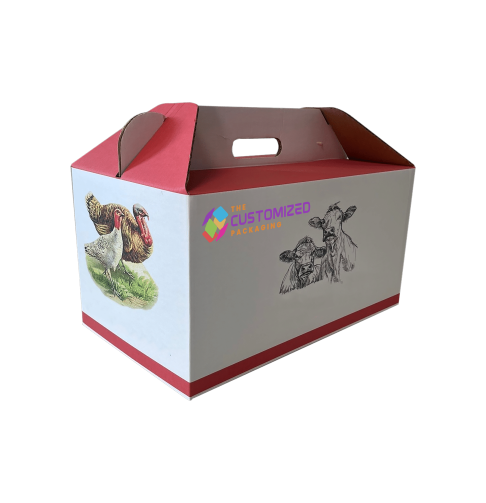
| Specification | Available options |
|---|---|
| Product type | Custom meat boxes — secondary cartons/cases for sealed meat products |
| Packaging role | Outer organization, presentation, and handling around suitable primary packaging |
| Suitable meat formats | Sealed beef, poultry, pork, lamb, sausages, deli packs, frozen portions, butcher assortments |
| Primary packaging compatibility | Sized around vacuum pouches, tray seals, barrier bags, wraps, or other customer-approved primary packs |
| Custom size / fit | Based on primary-pack dimensions, packed weight, portion count, and divider layout |
| Retail structures | Folding cartons, tray sleeves, kraft carriers, shelf-ready packs |
| Shipping structures | Corrugated cases and transit-oriented outer packs |
| Materials | Folding carton board, kraft board, corrugated board; coatings/liners only as project-specified |
| Tray sleeve options | Printed sleeves for sealed trays where specified |
| Dividers | Partitions or trays for multipack assortments |
| Thermal-system compatibility | Space can be planned for project-specified insulation components; thermal performance is not inherent to the carton |
| Printing | CMYK, Pantone, digital, offset for brand and product panels |
| Label / barcode areas | Clear zones for weight, cut name, batch, date, and barcode marks |
| Closure | Tuck, seal, sleeve retention, or case closure as specified |
| Artwork | Print-ready files with dieline, bleed, and outlined fonts |
| Quote inputs | Primary-pack size/weight, format, structure, route, dividers/sleeves, print/labels, quantity, delivery location |
Custom Meat Boxes as Secondary Packaging
Custom Meat Boxes are outer cartons and cases built around meat products that are already packed in suitable primary packaging. Typical contents include sealed beef, poultry, pork, lamb, sausages, deli packs, frozen portions, and butcher assortments—not bare meat placed directly into paperboard.
They sit in TCP’s Food And Beverage range. For broader frozen assortment cartons, compare Custom Frozen Food Boxes. Corrugated case styles are also available in the Corrugated material range when transit strength is the priority.
Primary Package vs Outer Carton
The outer meat box groups, presents, and protects already sealed packs. Oxygen, moisture, grease, leakage, and shelf-life control normally depend on the vacuum pouch, sealed tray, barrier bag, film wrap, liner, or other primary system approved for that product.
Whether a board grade, coating, or liner is appropriate for a given project depends on the primary package, food-contact position, storage conditions, and distribution route. Direct-food-contact use, freezer performance, and thermal control are not automatic properties of every paperboard or corrugated carton.
| Meat pack format | Secondary packaging consideration | Useful structure |
|---|---|---|
| Vacuum-packed cuts | Protect pouch seals and sharp frozen edges | Fitted carton or divided case |
| Tray-sealed meat | Support tray rims; avoid crushing lids | Tray sleeve or shallow retail carton |
| Sausages / deli packs | Portion count and bag movement | Divided tuck carton or kraft carrier |
| Frozen portions | Packed weight and condensation on the outer pack | Corrugated case; thermal system separate if needed |
| Mixed butcher assortments | Multiple primary packs in one outer unit | Divider layout or multi-cavity tray |
| Subscription / ecommerce sets | Transit plus brand presentation | Mailer or case sized for primary packs and void fill |
Retail Cartons, Cases, and Distribution Uses
Retail programs often use folding cartons, tray sleeves, or shelf-ready packs for sealed portions. Butcher pickup and assortment packs may use kraft carriers or divided cartons. Heavier chilled or frozen distribution usually needs corrugated cases. Insulation, gel packs, or liners—when used—are planned as part of a wider cold-chain system, not assumed from the decorative carton alone.
| Distribution use | Packaging role | Important consideration |
|---|---|---|
| Retail shelf | Brand presentation and label space | Window or sleeve only if primary pack remains protected |
| Butcher pickup | Carry and organize sealed cuts | Handle strength and divider layout |
| Chilled delivery | Secondary carton inside a chilled route | Board strength under condensation exposure |
| Frozen shipment | Outer case around frozen primary packs | Thermal control is a separate system requirement |
| Subscription / ecommerce | Branded outer pack plus transit protection | Size to primary packs, void fill, and shipper needs |
| Feature | Purpose |
|---|---|
| Divider | Separates multiple sealed packs in one outer box |
| Tray sleeve | Brands and wraps a sealed meat tray |
| Corrugated case | Adds stacking strength for heavier loads |
| Label / barcode panel | Space for weight, cut name, batch, and date fields |
| Insulation-compatible space | Room for a project-specified thermal component |
- Measure the sealed primary pack, not only the meat weight
- State chilled, frozen, or ambient route before selecting board and structure
Materials, Printing, and Label Areas
Typical outer materials include folding carton board, kraft board, and corrugated board for cases. Lightweight retail sleeves and cartons often use folding carton or kraft. Heavier assortment packs and distribution loads usually need corrugated strength and a stacking plan that matches packed weight.
Coatings, liners, or grease-resistant options are project-specific and must be matched to the primary pack and handling conditions—not promised as universal meat-box properties. Condensation on chilled or frozen goods can soften some boards, so material selection should follow the real storage and transit route.
Printing can include CMYK, Pantone, digital, or offset methods for logos, cut names, safe-handling reminders, storage notes, and brand panels. Leave clear areas for barcodes, weight statements, batch codes, and date fields when those marks are applied to the outer carton. Keep critical text off deep scores, handle cutouts, and high-rub edges.
Fit Planning Around Sealed Packs
The most reliable outer dimensions come from the sealed product, not the meat weight alone. A one-pound steak pouch, a one-pound tray of ground meat, and a one-pound frozen poultry pack can have different footprints and heights. Measure length, width, height, and any tray lip or clip that changes the packed outline.
If several sealed packs share one outer box, decide whether they sit side-by-side, stacked, or in fixed divider lanes. That layout drives dieline size, board caliper, and whether a retail carton or corrugated case is the better outer structure.
What to Send for a Quote
Useful quote inputs include primary pack type and outer dimensions (and packed weight); meat format and portion count; retail carton vs shipping case preference; chilled, frozen, or other distribution route; divider, sleeve, label-panel, or thermal-system notes; print/artwork needs; quantity; and delivery location.
For a preliminary carton estimate before final dielines, use the Custom Box Packaging Cost Calculator, then share photos or a packed sample of the sealed product for fit confirmation.
No by default. These are secondary cartons and cases for meat products that are already sealed in suitable primary packaging. Direct-food-contact needs depend on the primary pack, food-contact position, storage conditions, and distribution route.
Yes, outer cartons and cases can be sized for chilled or frozen sealed packs. Freezer performance, moisture control, and temperature holding depend on the full packaging and cold-chain system—not on the paperboard carton alone.
Retail programs often use folding cartons, tray sleeves, or kraft carriers. Heavier chilled or frozen distribution usually uses corrugated cases. The choice depends on packed weight, presentation needs, and route.
Yes. Dividers, tray sleeves, and clear label or barcode panels can be planned around the sealed primary packs and the information that must appear on the outer carton.
Share primary-pack dimensions and packed weight, meat format and portion count, retail vs shipping structure, chilled or frozen route, divider or sleeve needs, print and label requirements, quantity, and delivery location. You can also use the Custom Box Packaging Cost Calculator for a preliminary estimate.
Related Products








Order Custom Meat Boxes from The Customized Packaging
We manufacture Custom Meat Boxes for businesses that need reliable product protection, accurate printing, and professional packaging for retail, ecommerce, storage, or shipping. Each box can be customized by size, material, structure, printing, coatings, finishes, inserts, and order quantity.
Share your artwork and quantity targets for Custom Meat Boxes and we will recommend the most cost-effective structure for your timeline. or speak with a packaging expert. Browse custom rigid boxes, packaging inserts, and use our Custom Box Packaging Cost Calculator.