

| Specification | Available Options |
|---|---|
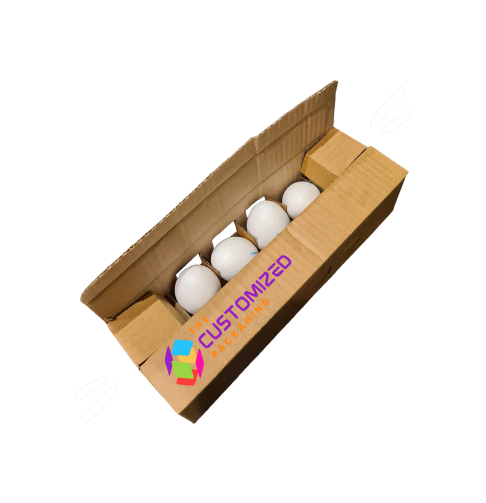
| Product Name | Custom Egg Tray Boxes |
| Egg Types | Chicken, duck, quail, specialty, retail and hatching eggs |
| Capacities | Six, ten, twelve, fifteen, eighteen, twenty-four, thirty or custom |
| Materials | SBS, folding boxboard, kraft, molded pulp and corrugated board |
| Styles | Sleeve, retail carton, handled carrier, tray-and-lid and master case |
| Printing | CMYK, Pantone, digital, offset, flexographic and one-color |
| Inserts | Molded trays, layer pads, dividers and corrugated supports |
| Ventilation | Side, lid, corner or custom openings |
| Branding | Farm logo, product details, QR codes and retailer information |
| Supply Format | Flat-packed, pre-glued or assembled where available |
| Quantity | Flexible minimums and wholesale production |
| Delivery | Available throughout the USA |
| Pricing Factors | Size, weight, material, structure, printing, inserts and quantity |
Egg Packaging Built Around the Filled Tray
Custom Egg Tray Boxes give poultry farms, egg graders, food distributors, supermarkets, farm shops, farmers’ markets, bakeries, restaurants, hotels, and catering businesses an outer packaging system designed around fragile shell eggs. The box may hold a molded-pulp tray, a hinged egg carton, a fiber carton, a selected plastic tray, or several stacked trays inside a corrugated case.
The structure should be developed from the filled tray rather than the advertised egg count alone. Two twelve-count cartons can have different outside dimensions, lid profiles, cavity depths, and stacking behavior. Chicken, duck, quail, heritage-breed, and other specialty eggs can also differ in shell height, width, weight, and projection above the tray.
Correct sizing helps limit unnecessary movement while keeping the lid, top pad, or outer carton from pressing directly on exposed shells. The final design should also account for refrigeration, condensation, handling frequency, pallet stacking, local delivery, retail display, and the space needed for labels or date coding.
What a Custom Egg Box Should Manage
-
Keep the primary carton or molded tray stable without squeezing individual eggs.
-
Separate stacked trays with pads or dividers where the load requires them.
-
Maintain practical lid clearance and compression strength during storage and distribution.
-
Reserve readable areas for count, size, grade, pack date, batch information, safe-handling text, barcodes, and retailer labels.
-
Support farm branding without blocking ventilation, closures, traceability fields, or handling instructions.
No paperboard or corrugated box should be described as breakproof. Egg protection depends on the complete system, including cavity fit, tray condition, board grade, box dimensions, stacking pattern, temperature, humidity, route handling, and the way the package is loaded.
Primary Egg Cartons, Sleeves, and Outer Cases
Egg packaging can perform several different jobs. A molded-pulp or fiber carton directly holds and separates the eggs. A printed sleeve adds branding around an existing carton. A folding paperboard box can enclose a small retail tray. A corrugated master case can carry one or several filled cartons for food service or wholesale distribution.
Keeping these functions clear prevents overengineering. A farm that already uses a suitable molded carton may only need a printed sleeve or label. A distributor moving several thirty-egg trays may need a reinforced corrugated case with pads, dividers, and stacking guidance. Premium retail eggs may use a tray-and-lid format that combines product support with a larger printed surface.
Material Options for Egg Tray Packaging
Material selection should reflect the tray format, total packed weight, print requirements, humidity exposure, stacking height, and distribution route.
| Material | Best Application | Main Advantage | Planning Requirement |
|---|---|---|---|
| SBS paperboard | Printed sleeves and lightweight retail cartons | Smooth surface for detailed branding | Usually functions around a separate tray or carton |
| White kraft board | Premium retail sleeves and bright farm graphics | Strong print contrast with a paper-based appearance | Confirm stiffness and moisture response for the intended environment |
| Natural kraft board | Farm-market sleeves and rustic branding | Natural brown surface and efficient one- or two-color printing | Pale inks and photographs reproduce differently on brown stock |
| Folding boxboard | Small-count cartons and retail outer boxes | Clean folding and flat storage | Grade must suit the filled weight and closure style |
| Molded pulp | Individual cavities and tray support | Separates shells and follows the egg profile | Cavity dimensions must match the actual egg size |
| E-flute corrugated | Compact multipacks and local-delivery cases | Added rigidity with a relatively slim profile | Flute direction and vent placement affect compression |
| B-flute corrugated | Food-service trays and wholesale cases | Improved cushioning and stacking support | Board grade should be tested under full load |
| C-flute corrugated | Larger distribution cases | Greater structural depth and compression support | Requires sufficient storage and pallet space |
| Double-wall corrugated | Heavy stacked-tray and longer-route cases | Higher stacking capacity when properly specified | Material alone does not replace compression and route testing |
| Combined system | Corrugated case with molded-pulp or fiber trays | Separates eggs while supporting outer stacking | Every component should be tested together |
A decorative finish should not be allowed to weaken the package. Large windows, deep embossing, heavy coating, and poorly positioned perforations can reduce panel strength or interfere with closure and stacking.
Box Styles for Retail, Farms, and Bulk Supply
The best structure depends on whether the package is sold to a consumer, carried from a market, supplied to a kitchen, or stacked for distribution.
| Box Style | Recommended Use | Main Benefit | Key Consideration |
|---|---|---|---|
| Printed egg-carton sleeve | Existing molded or fiber cartons | Adds farm branding without replacing the primary carton | Must not block the lid, vents, or label fields |
| Small-count folding carton | Six-, ten-, or twelve-egg retail sets | Compact shelf presentation and flat storage | Needs a fitted inner tray or individual support |
| Window outer box | Premium retail eggs protected by an inner carton | Allows product or carton visibility | Window size must preserve panel strength |
| Handled egg carrier | Farmers’ markets and local pickup | Easier level carrying | Handle and base require full-load testing |
| Tray-and-lid box | Specialty or premium farm collections | Larger printable area and controlled reveal | Lid depth must clear the tallest egg and tray |
| Corrugated single-tray case | Twenty-four- or thirty-egg food-service supply | Protects one large filled tray | Empty space should be minimized without shell pressure |
| Multi-tray master carton | Bakeries, restaurants, hotels, and distributors | Organizes several trays in one case | Layer pads, dividers, and stacking limits may be required |
| Stackable wholesale case | Warehouse and pallet distribution | Aligns loads and improves handling consistency | Compression depends on board grade, humidity, and pallet pattern |
| Hatching-egg box | Breeders and specialty poultry operations | Supports orientation and identification | Packaging cannot guarantee hatchability |
| Quail-egg retail carton | Small specialty eggs | Close cavity spacing and compact display | Free movement between cavities must be avoided |
Size the Box from the Actual Tray
The quotation should use the outside length, width, and height of the filled tray or closed carton. The height measurement should include any egg projection above the cavity, lid dome, locking tab, label, top pad, or stacked-tray arrangement.
For a master carton, the packing map should show how many trays are placed in each layer, whether the trays face the same direction, where the layer pads sit, and how much clearance remains at the walls and lid. Too much space can allow shifting. Too little space can transfer pressure into the carton lids or exposed eggs.
A plain structural sample is especially important when using large duck eggs, mixed sizes, custom molded cavities, several stacked trays, carrying handles, or a new pallet pattern.
Egg Counts and Product Variations
Custom packaging can be developed for six, ten, twelve, fifteen, eighteen, twenty-four, thirty, or another required count. The count should not be used as a substitute for dimensions because different tray manufacturers and egg classes produce different footprints.
Six- and twelve-count packs are useful for grocery retail, direct farm sales, specialty collections, and farmers’ markets. Eighteen-count cartons support family packs and promotions. Twenty-four- and thirty-egg formats are common for bakeries, restaurants, hotels, caterers, and other food-service buyers. Corrugated master cartons can hold multiple retail cartons or several large trays.
Duck eggs often require wider cavities, greater lid clearance, and stronger outer packaging than standard chicken eggs. Quail eggs need closely spaced small cavities that prevent free movement. Specialty colored-shell eggs can use premium sleeves or window packaging, but decorative features should remain secondary to shell protection.
Shell Clearance, Movement, and Cushioning
Each egg should remain separated from neighboring shells. The cavity should support the egg without pinching it, and the lid or top pad should not press down on the egg unless the complete system has been engineered for controlled contact.
Top pads, bottom pads, molded trays, corrugated sheets, paper cushioning, and side restraints can help control vibration and distribute stacking loads. Adding cushioning without testing can create new pressure points, reduce ventilation, or make the lid difficult to close.
The filled package should be evaluated for lifting, ordinary vibration, short drops likely in the intended route, stacking, and repeated handling. The goal is to reduce foreseeable damage, not to make an absolute no-breakage promise.
Treat Cold-Storage Moisture as a Structural Variable
Egg packaging used in refrigerated areas may encounter condensation when it moves between cold and warmer environments. Moisture can reduce paperboard stiffness, affect adhesive bonds, cause labels to lift, and weaken stacked corrugated cases.
The material, coating, adhesive, label stock, ink, ventilation, and storage duration should therefore be reviewed together. A moisture-resistant treatment may improve performance under defined conditions, but it should not be described as waterproof unless the complete construction has been verified for that claim.
Cases should be stored clean and dry, protected from floor moisture, crushing loads, strong odors, pests, and contamination. Stack limits should reflect the actual board grade, environment, duration, and pallet pattern.
Retail Labeling and Traceability Space
Custom printed egg boxes can reserve flat panels for the statement of identity, egg count, grade, size, packer or distributor details, packing date, lot or flock code, storage guidance, safe-handling information, barcode, retailer label, and QR code.
The exact wording and placement depend on the market, grading program, claims used, retailer requirements, and applicable federal or state rules. Claims such as organic, free-range, pasture-raised, cage-free, welfare certified, or a particular feeding practice should only appear when the producer is entitled to use them and can support the claim.
Date, lot, and retailer fields should remain accessible during packing. Barcodes and QR codes need a flat, high-contrast area away from folds, handles, perforations, glossy reflections, and condensation-prone edges.
Farm Logos, Printing, and Shelf Presentation
Egg tray boxes can use one-color kraft printing, full-color farm artwork, Pantone-matched brand colors, labels, sleeves, security seals, stamps, or direct printing on suitable panels. The lid or sleeve can tell the farm story, show the source region, display recipes, or direct customers to traceability and reorder information.
Digital printing may suit selected lower-volume sleeves, labels, and cartons. Offset or flexographic printing may be appropriate for larger quantities depending on the material and artwork. Embossing, debossing, varnish, or spot effects can be considered for premium retail packs, provided they do not interfere with stacking, coding, or moisture performance.
A clear packaging hierarchy is more useful than filling every panel. The brand, egg type, count, size, grade, and required handling information should remain easy to find.
Local Delivery, Food Service, and Distribution
Farm pickup and local delivery boxes may use reinforced bases, locking lids, stable tray fits, carrying handles, route labels, and “keep level” guidance. Handles should be tested with the complete packed load and should not cause the case to tilt.
Food-service cases can identify tray count, total egg count, size, grade, packing date, supplier, lot code, and kitchen storage guidance. Clear side-panel identification allows bakery, hotel, restaurant, and catering staff to rotate stock without opening every case.
Eggs shipped through parcel networks need more than a decorative retail carton. A tested corrugated outer box, shaped cavities, limited void space, pads, dividers, orientation markings, and careful carrier selection may be required. The appropriate packaging depends heavily on the route, and ordinary parcel handling can still result in breakage.
More Responsible Packaging Claims
Potential options include molded pulp, recycled-content paperboard, recyclable corrugated board, right-sized cases, reduced print coverage, paper labels, and designs that use fewer mixed materials. A sleeve can also update branding without replacing an otherwise suitable primary carton.
Terms such as recyclable, biodegradable, compostable, reusable, or eco-friendly should describe the finished package, not merely one component. Coatings, adhesives, window films, labels, inks, contamination, and local collection or composting systems can affect the correct claim.
MOQ, Wholesale Pricing, and Production Planning
Pricing depends on tray dimensions, egg count, filled weight, box structure, corrugated grade, insert or molded-tray requirements, ventilation, handles, print coverage, labels, variable data, quantity, assembly, packing, and delivery destination.
Selected printed sleeves, labels, and simple folding cartons may support lower minimum quantities. Custom molded-pulp tools, reinforced master cases, specialty coatings, several size versions, and multiple retailer artworks may require larger production runs.
A wholesale order should be approved only after the tray fit, lid clearance, closure, handle, coding fields, stacking, and moisture response have been reviewed for the intended application.
Information Needed for an Accurate Quote
-
Egg type, size or weight class, count, photographs, and any specialty characteristics.
-
Filled tray or closed-carton length, width, height, total weight, and physical sample where available.
-
Number of trays per outer box, layer arrangement, pads, dividers, and pallet or stacking requirements.
-
Retail, farmers’ market, local-delivery, food-service, wholesale, or specialty-hatching application.
-
Preferred material, handle, window, ventilation, closure, printing, labels, and variable coding.
-
Required quantity, artwork versions, delivery destination, target date, and relevant labeling requirements.
Estimate Your Egg Packaging Budget
Use the Custom Box Packaging Cost Calculator to create an early budget range for custom egg tray packaging. Enter the filled dimensions, quantity, material, structure, printing, handle, window, divider, and finishing requirements to compare possible configurations.
The calculator is intended for preliminary planning. Final pricing should be confirmed after the tray sample, egg fit, board grade, inserts, artwork, variable fields, production quantity, and delivery route have been approved.
Why Choose The Customized Packaging?
The Customized Packaging develops egg tray boxes around the filled tray, shell clearance, packed weight, sales channel, and distribution conditions rather than relying on the egg count alone.
Businesses can request printed sleeves, folding retail cartons, handled carriers, tray-and-lid packaging, corrugated single-tray cases, multi-tray master cartons, dividers, pads, ventilation, date-code panels, traceability fields, and farm-logo printing.
Share your tray dimensions, egg type, quantity, artwork, and delivery requirements to receive a recommended structure for farms, grocery retail, farmers’ markets, bakeries, restaurants, hotels, catering, local delivery, and wholesale supply throughout the USA.
We provide egg trays in 6, 12, 18, and 30-egg capacities to suit different needs.
Yes, we offer trays made from recyclable, biodegradable, and compostable materials.
Absolutely! Our trays can be fully printed with logos, brand colors, and designs.
Yes, they are designed with durability and cushioning to prevent cracks and damage.
Yes, we offer competitive wholesale rates for farms, distributors, and large-scale buyers.
Related Products










Order Custom Egg Tray Boxes from The Customized Packaging
We manufacture Custom Egg Tray Boxes for businesses that need reliable product protection, accurate printing, and professional packaging for retail, ecommerce, storage, or shipping. Each box can be customized by size, material, structure, printing, coatings, finishes, inserts, and order quantity.
Share your artwork and quantity targets for Custom Egg Tray Boxes and we will recommend the most cost-effective structure for your timeline. or speak with a packaging expert. Browse custom rigid boxes, packaging inserts, and use our Custom Box Packaging Cost Calculator.