
| Specification | Available Options |
|---|---|
| Product Name | Custom Food Trays |
| Tray Styles | Open food trays, kraft food boats, deep serving trays, bakery trays, compartment trays, and catering trays |
| Materials | Natural kraft paperboard, white paperboard, coated paperboard, and selected corrugated board constructions |
| Custom Sizes | Custom length, width, and depth according to food portions and serving requirements |
| Sidewall Designs | Straight, flared, shallow, medium, and deep profiles |
| Corner Construction | Folded corners, interlocking corners, and glued corner designs |
| Compartments | Single serving area, divided compartments, custom dividers, and optional cup holders |
| Printing | Custom logo printing, CMYK full color, and selected single color printing options |
| Finishing Options | Matte, gloss, and application specific coatings where suitable |
| Optional Accessories | Food liners, dividers, separate lids, printed sleeves, and inserts where specified |
| Applications | Restaurants, food trucks, cafes, bakeries, catering, festivals, concession stands, and takeout |
| Food Contact Requirements | Board, coatings, and liners selected according to intended food contact and serving conditions |
| Quotation Requirements | Tray dimensions, food type, filled weight, temperature, printing, quantity, and delivery destination |
Custom Food Trays for Open Food Service and Branded Presentation
Custom Food Tray Boxes are open-top serving containers designed to hold, portion, and present food during counter service, takeaway handoffs, catering, and events. Unlike enclosed takeout cartons, these trays allow customers to access the food directly. The most suitable tray depends on the portion footprint, sidewall height, filled weight, and conditions in which the food will be served.
Restaurants, food trucks, bakeries, concession stands, and catering companies use custom printed food trays for fries, nachos, wings, sandwiches, pastries, appetizers, and other prepared servings. Each menu item can require a different tray depth, opening width, base shape, or divider arrangement. The aim is to create a tray that is practical for staff to fill and convenient for customers to handle.
Available construction approaches can include folded paperboard trays, kraft food boats, lock-corner structures, and selected divided serving trays. Material, coating, and food-contact suitability must be established for the specific food, serving conditions, and finished packaging specification.
Food Tray Sizes Based on Portion, Base Width, and Wall Height
Choosing the correct custom food tray size starts with the actual serving rather than the exterior appearance. A shallow tray may work for a pastry or wrapped sandwich, while loaded fries or appetizers may need taller walls to help contain the portion during handling.
For tapered food trays, the top opening can be wider than the base. Measuring only the top width may lead to an unsuitable fit for foods that sit on the tray bottom. The usable base dimensions, wall angle, and finished tray height should therefore be considered together.
Measurements Needed for a Custom Food Tray
- Base length and width: Determine how much space the actual food portion occupies.
- Top opening: Check whether the serving can be loaded and accessed comfortably.
- Wall height: Select the depth needed to accommodate the food without excessive overflow.
- Wall angle: Account for any taper between the base and upper opening.
- Filled weight: Include sauces, toppings, accompanying items, and serving accessories where applicable.
- Serving temperature: Identify whether the tray will contain hot, room-temperature, or chilled foods.
- Contact conditions: Describe whether the food touches the tray directly or sits inside a suitable liner or wrapper.
A physical portion sample or loaded tray test can help confirm the finished dimensions. The tray should provide sufficient capacity without adding unnecessary material or making the serving awkward to hold.
Open Food Tray Styles for Different Serving Needs
Open serving trays can be produced in different shapes and constructions. The choice should reflect the food being served, the desired presentation, and how quickly staff need to assemble and fill the packaging.
Comparison of Common Food Tray Structures
| Tray Style | Suitable Application | Important Design Consideration |
|---|---|---|
| Open-top paper food tray | Fries, appetizers, pastries, and snacks | Base dimensions and sidewall height |
| Kraft food boat | Street food, nachos, loaded fries, and event servings | Taper, filled weight, and handling comfort |
| Four-corner serving tray | Bakery selections and organized food portions | Corner construction and base stability |
| Lock-corner tray | Selected folded paperboard serving applications | Assembly method and corner retention |
| Compartment food tray | Meal combinations, sides, and tasting portions | Divider dimensions and separation needs |
| Shallow display tray | Packaged snacks and bakery presentation | Product visibility and easy access |
| Reinforced serving tray | Larger portions and selected catering arrangements | Base support and full-load testing |
These are construction possibilities rather than guaranteed stock configurations. The selected material and folding method should be evaluated against tray dimensions, portion weight, and handling conditions.
Custom Kraft Food Trays and Paperboard Material Options
Custom kraft food trays provide a natural brown paper appearance that can suit casual food service, markets, and event concessions. White paperboard may be preferred when the design requires bright printed colors, detailed branding, or a different visual presentation.
The visible paper color does not determine the tray's resistance to grease, moisture, or heat. Those properties depend on the complete material specification, including any liner, coating, treatment, and construction details.
Material Considerations for Printed Food Trays
| Material Option | Potential Benefit | Selection Consideration |
|---|---|---|
| Natural kraft paperboard | Brown paper appearance for food-service branding | Caliper, coating, and intended food contact |
| White paperboard | Suitable print surface for colorful artwork | Filled weight and surface treatment |
| SBS paperboard | Smooth surface for detailed printed graphics | Appropriate grade and contact conditions |
| Selected coated board | Potential resistance to specified moisture or grease exposure | Coating performance and intended application |
| Selected corrugated board | Additional structural support for larger trays | Flute size, fold design, and suitability for the contents |
Material selection should be based on the actual serving conditions. Recycled content, recyclability, compostability, and biodegradable performance must not be assumed from the appearance of kraft or paperboard alone.
Food-Contact Suitability and Grease-Resistant Tray Requirements
Food packaging materials must be appropriate for their intended contact with food. The requirements for a tray holding wrapped bakery items can differ from those for a tray containing exposed hot fries, oily food, or moist prepared ingredients.
If food will touch the tray directly, the relevant paperboard, coatings, inks, adhesives, and other components should be reviewed for that specific application. A tray is not automatically food-contact suitable simply because it is made from paper or described as food-service packaging.
Grease-resistant or moisture-resistant options may be evaluated for appropriate projects, subject to material availability and performance requirements. The finished structure should be assessed for the intended temperature, contact duration, and food characteristics.
No food tray should be described as universally leakproof, waterproof, oven-safe, microwave-safe, or suitable for every type of hot food without verification of the complete packaging specification.
Food Boats and Open Trays for Fries, Nachos, and Snacks
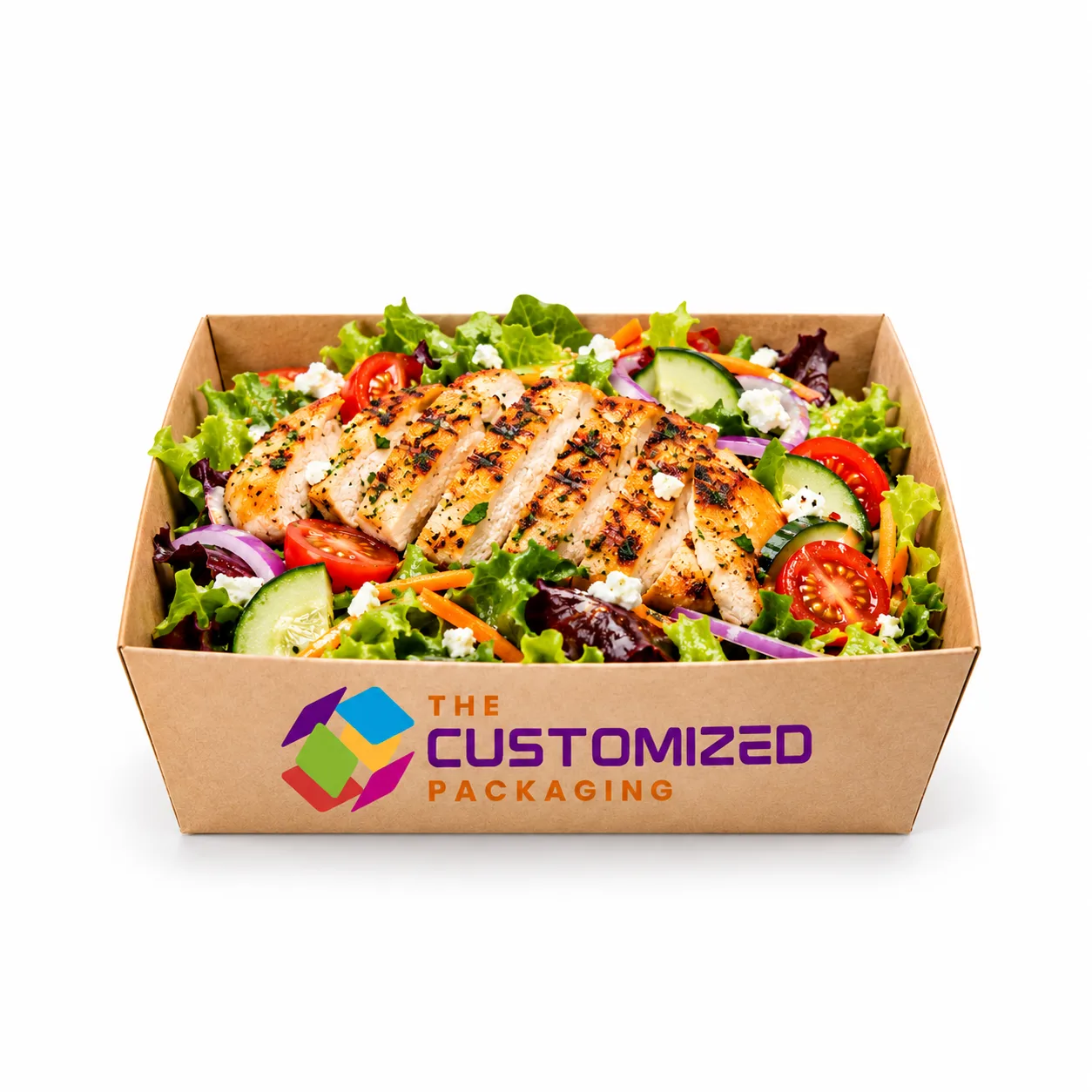
Printed food boats and open paper trays are useful for foods intended to be eaten soon after preparation. Their open top provides access for customers while allowing staff to add toppings or arrange the serving before handoff.
For loaded fries or nachos, the tray should offer enough base area to distribute the portion without placing all the weight against one wall. Higher sides may help manage toppings, but excessive depth can make food harder to reach.
Fried items can release heat and moisture. The selected board and any liner must be suitable for the actual serving conditions. An open tray does not automatically maintain crispness, prevent grease transfer, or preserve food temperature.
For sauces or dips, a separate suitable cup may be more appropriate than placing liquid directly into an unverified paperboard compartment.
Custom Food Trays with Dividers and Compartments
Some food-service applications require several items to be presented in one tray. A divided design can help organize the serving, separate portions, and leave a defined position for an accompanying sauce cup or utensil packet.
The divider arrangement should be developed around the actual food dimensions. A shallow partition may be sufficient for individually wrapped items, while heavier components may require stronger support or separate packaging.
When Compartment Trays Are Worth Considering
- Meal combinations: Arrange compatible portions without overcrowding the tray.
- Tasting events: Present several samples with visible separation.
- Bakery assortments: Help organize pastries or individually wrapped treats.
- Event catering: Maintain a repeatable serving layout across multiple guests.
- Sauce accompaniment: Reserve space for a suitable separate sauce container.
Dividers do not automatically prevent liquid migration, allergen cross-contact, or transfer between food components. These considerations depend on the actual food and the completed packaging system.
Custom Printed Food Trays with Restaurant Logos
Custom printed food trays can carry restaurant names, logos, campaign graphics, menu branding, and selected product information. The available print area depends on the tray structure, wall angle, folds, and any regions that may contact food.
Brand artwork should be positioned where customers can see it without interfering with assembly or food service. On shallow trays, exterior sidewalls may provide a practical branding surface, while larger food boats can offer more visible panel space.
Printing methods and finishing options depend on the approved board, artwork, quantity, and intended contact conditions. Decorative printing should not compromise the tray's suitability for the food being served.
Artwork Details to Prepare
- Vector logo and approved brand colors
- Finished tray dimensions and structure preference
- Artwork for outer walls and any approved interior print areas
- Required product, menu, or promotional information
- Any barcode or QR code, with sufficient space for testing
- Separate artwork versions for different menu items, if needed
A production dieline should identify fold positions, trim allowances, and artwork-safe areas. QR codes and small printed text should be checked on the actual finished size before production approval.
Food Tray Packaging for Restaurants, Food Trucks, and Events
The way food is served influences the most suitable tray structure. A restaurant using trays for immediate counter service may prioritize quick filling, reliable stacking before use, and easy customer access.
Food trucks and concession stands often need packaging that can be assembled efficiently in a limited workspace. A tray should be practical for staff handling and appropriate for the filled serving, especially when customers may be standing or walking.
For catering and events, portion consistency and handling become especially important. Larger trays may require stronger bases, appropriately designed corners, or separate carrying support. The maximum practical load should be established through product-specific evaluation rather than a universal weight claim.
Open Food Trays Versus Closed Takeout Boxes
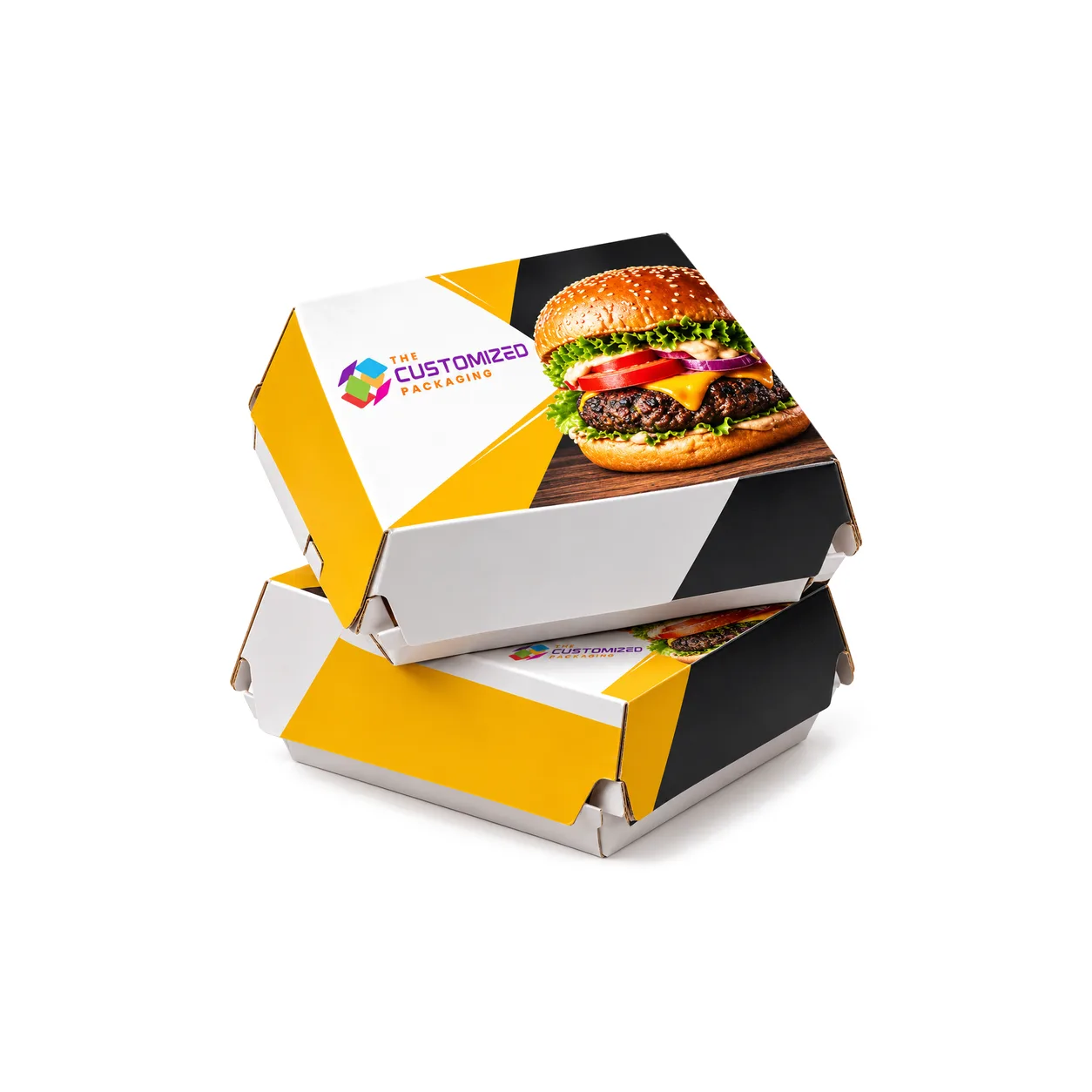
An open serving tray and a closed takeout carton have different functions. A tray is primarily designed for accessible food service, portion presentation, and immediate consumption. A closed carton adds a lid or enclosing structure for applications where food needs to be covered during handoff or transport.
| Packaging Type | Primary Purpose | Best-Fit Consideration |
|---|---|---|
| Open food tray | Accessible serving and portion presentation | Food footprint, wall height, and immediate handling |
| Paper food boat | Casual snack and street-food service | Tapered shape and hand-held convenience |
| Divided serving tray | Organizing compatible food portions | Compartment layout and component weight |
| Closed takeout box | Enclosed food handoff or pickup | Closure, contents, ventilation, and carrying conditions |
| Food box sleeve | Secondary branding around an existing container | Correct fit around the assembled primary package |
If your project requires an enclosed restaurant carton rather than an open serving tray, compare our Custom Takeout Boxes. For printed wraps around existing food containers, see Custom Food Box Sleeves.
A food tray should not be treated as a parcel shipping box. Longer-distance delivery may require separate protective packaging and temperature-control measures suitable for the food and delivery route.
How to Plan Stackability, Assembly, and Food-Service Handling
Operational efficiency matters when hundreds of servings must be prepared during a busy shift or event. A tray that looks appropriate in a digital mockup may be difficult to open, assemble, or fill if the fold design and board stiffness do not match the intended workflow.
Flat-packed trays may help with storage where the structure permits it. Preassembled or glued constructions may be considered when setup time is a priority. The most suitable approach depends on the tray style and production requirements.
Empty-tray nesting, filled-tray stacking, and transport stacking are separate considerations. A tray that nests well before use may not be suitable for stacking with exposed food inside.
When filled stacking is required, the complete load, food height, wall support, and contact between trays must be evaluated. Do not assume that every open paper tray is stackable when loaded.
Wholesale Custom Food Tray Pricing and Order Specifications
Pricing for wholesale custom food trays depends on the finished size, board specification, structural style, printing, coating or liner requirements, number of compartments, quantity, and delivery destination.
Different menu items can sometimes share one structural design when their portions and contact conditions are compatible. However, a change in serving volume, liquid content, temperature, or filled weight may require a different tray or material specification.
To request a quotation, provide the following information:
- Food type and portion dimensions
- Required tray base length, width, and wall height
- Approximate filled serving weight
- Hot, room-temperature, or chilled serving conditions
- Direct food contact or use of a separate liner
- Preferred kraft or white paperboard appearance
- Any dividers, compartments, or reinforced sections
- Artwork, printing, and quantity requirements
- USA shipping destination and required delivery date
You can explore an initial packaging budget using our Custom Box Packaging Cost Calculator. Final food tray pricing requires confirmation of the materials, structure, food-contact requirements, and production specifications.
Request a Quote for Custom Printed Food Trays
A well-designed food tray should fit the actual portion, provide appropriate wall height, and make serving and handling practical for the intended application. Material selection, coatings, printing, and structural features should be considered together rather than chosen independently.
Request a custom food tray quote by sharing your food portion measurements, serving conditions, preferred design, order quantity, and delivery location. Our team can review the required tray structure and manufacturing options before preparing project-specific pricing.
Custom Food Trays are used to serve and present fries, burgers, sandwiches, nachos, salads, pastries, appetizers, and other prepared foods. They are popular with restaurants, food trucks, bakeries, caterers, and event vendors.
Yes. Custom printed food trays can feature your restaurant logo, brand colors, promotional graphics, and other artwork. Printing options depend on the tray material, design, and intended food contact conditions.
Common options include natural kraft paperboard, white paperboard, coated paperboard, and selected corrugated constructions. The suitable material depends on serving size, filled weight, temperature, moisture, and food contact requirements.
Yes. Tray length, width, depth, sidewall profile, and corner construction can be customized to suit your food portions. Compartments and inserts can also be specified for meals containing multiple items.
They can be developed for specified hot or greasy food applications when suitable materials, coatings, or liners are selected. The intended temperature, food type, contact duration, and grease or moisture exposure must be reviewed before confirming the construction.
Related Products

Order Custom Food Trays from The Customized Packaging
We manufacture Custom Food Trays for businesses that need reliable product protection, accurate printing, and professional packaging for retail, ecommerce, storage, or shipping. Each box can be customized by size, material, structure, printing, coatings, finishes, inserts, and order quantity.
Share your artwork and quantity targets for Custom Food Trays and we will recommend the most cost-effective structure for your timeline. or speak with a packaging expert. Browse custom rigid boxes, packaging inserts, and use our Custom Box Packaging Cost Calculator.