
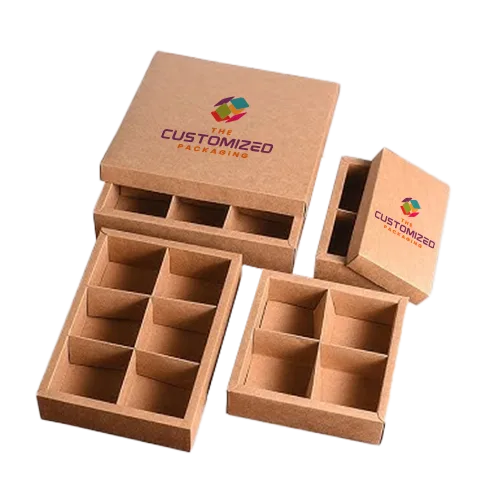
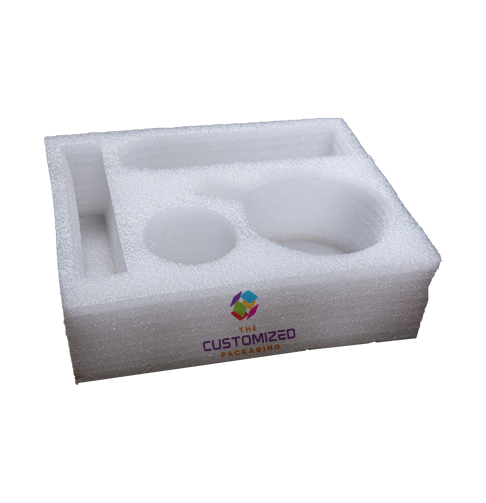
| Specification | Available Options |
|---|---|
| Product name | Custom EPS Foam Insert Boxes |
| Insert material | Expanded polystyrene in selected densities |
| Construction | Molded, fabricated, cut, layered or bonded |
| Insert styles | End caps, corner blocks, trays, pads, cavities and divided supports |
| Outer boxes | Corrugated, double-wall, mailer, rigid and folding carton |
| Product layout | Single product, multiproduct or accessory compartments |
| Cavity options | Rectangular, circular, contoured, stepped and divided |
| Support areas | Ends, corners, base, top, sides or selected structural points |
| Outer-box printing | CMYK, Pantone, exterior and selected interior printing |
| Outer-box finishes | Matte, gloss, foil, embossing, debossing and spot UV |
| Special materials | Anti-static or other verified grades subject to availability |
| Measurements | customized according to product and box dimensions |
| Sampling | Fabricated samples, prototypes or molded trial options |
| Order quantity | Flexible minimums depending on construction and tooling |
| Delivery | Available throughout the USA |
| Pricing factors | Size, density, tooling, construction, box style, printing and quantity |
Custom EPS Foam Inserts Designed Around Your Product
Products can move, collide, or contact the walls of a shipping carton when the internal packaging does not match their dimensions. Custom EPS foam inserts are developed around the product so that the outer packaging and internal supports work as one complete system.
The insert can support one product or several components. Depending on the design, EPS may be formed into two end caps, four corner protectors, a full tray, top and bottom pads, a divided insert, or a cavity surrounding the product.
The correct construction depends on the packed weight, fragility, dimensions, center of gravity, sensitive areas, shipping method, and expected handling conditions. A large appliance requires a different support system from a glass bottle, electronic device, or lightweight promotional product.
What Is EPS Foam Packaging?
EPS stands for expanded polystyrene. It is a lightweight cellular material used in protective packaging for many consumer and industrial products. Its structure can be molded or fabricated into shapes that support products and create separation between the item and the outer carton.
EPS packaging is commonly selected when a project requires rigid support without adding excessive packaging weight. The finished performance depends on material density, thickness, insert geometry, product fit, and the complete outer-box design.
The term “styrofoam” is often used informally when customers refer to white EPS packaging. On this page, EPS is used as the primary technical term.
Molded and Fabricated EPS Inserts
Custom EPS packaging can be produced through molded or fabricated construction. The best method depends on the design, quantity, tooling budget, required detail, and product dimensions.
| EPS construction | How it is produced | Recommended use |
|---|---|---|
| Molded EPS insert | Formed inside a dedicated mold | Repeat production, complex shapes, end caps and detailed support structures |
| Fabricated EPS insert | Cut, shaped, bonded or layered from foam blocks or sheets | Prototypes, lower quantities and simpler rectangular designs |
| EPS end caps | Molded or cut to support both ends of a product | Electronics, appliances, equipment and long products |
| EPS corner blocks | Positioned around corners and impact-sensitive areas | Furniture, glass products, frames and equipment |
| EPS trays | Formed with one or several product cavities | Bottles, jars, components, kits and multiproduct packaging |
| EPS pads and panels | Placed above, below or around a product | Separation, surface clearance and additional internal support |
Molded inserts generally require dedicated tooling, while fabricated inserts may be more practical for initial testing or projects with simpler geometry.
EPS End Caps and Corner Protection
Custom foam end caps support a product at selected points while creating distance between it and the walls of the outer box. They are commonly positioned at the top and bottom or at opposite ends of the product.
End-cap geometry can include ribs, recesses, support ledges, clearance areas, cable spaces, and openings for accessories. The design should avoid placing unnecessary pressure on screens, controls, connectors, decorative surfaces, or other sensitive components.
Corner blocks may be used when the product requires protection primarily around its corners or edges. They can also help reduce the amount of foam used compared with a full cavity insert.
EPS Trays and Product Cavities
EPS packaging inserts can be developed as full trays with individual cavities for products and accessories. These structures are useful for bottles, components, electronics, samples, glassware, instruments, and multiproduct kits.
Cavity depth and product clearance must be carefully controlled. An opening that is too loose may allow movement, while an overly tight cavity may make packing difficult or place unnecessary pressure on the product.
Finger-clearance spaces, accessory sections, cable channels, raised platforms, and divided compartments can be included where the manufacturing method allows.
Compatible Outer Packaging
EPS inserts are normally placed inside a separate outer box. The box should be developed after considering the foam’s finished dimensions and the total packed weight.
| Outer box | Recommended application |
|---|---|
| Corrugated shipping box | Appliances, electronics, glassware, equipment and direct shipping |
| Double-wall corrugated carton | Heavy, fragile or larger products requiring greater box strength |
| Corrugated mailer box | Smaller ecommerce products, kits and accessories |
| Rigid presentation box | Promotional kits and products requiring both protection and presentation |
| Folding carton | Lightweight retail products with compact EPS supports |
| Wooden or reusable case | Industrial equipment and selected high-value components |
For direct shipping, the corrugated board grade, flute, box style, closure, insert geometry, and product weight should be evaluated together.
Products Suitable for EPS Inserts
| Product type | Possible EPS configuration |
|---|---|
| Electronics | End caps, base supports and accessory cavities |
| Appliances | Molded corner protection and top-and-bottom supports |
| Glassware | Separated cavities with clearance between products |
| Bottles and jars | Individual wells, neck supports and divided trays |
| Equipment | Reinforced supports around strong structural areas |
| Instruments | Fitted cavities with clearance around sensitive controls |
| Components | Multiproduct trays with separate compartments |
| Promotional kits | Lightweight supports combined with a printed outer box |
Actual suitability must be confirmed according to the product’s weight, fragility, finish, value, and distribution method.
EPS Compared With Other Foam Inserts
EPS is not the best material for every packaging project. Its rigid construction is different from softer polyurethane foam, flexible pluck foam, and denser EVA inserts.
| Insert material | Main characteristics | Common applications |
|---|---|---|
| EPS foam | Lightweight, rigid and suited to molded protective supports | Appliances, electronics, equipment and shipping packaging |
| EVA foam | Firm with clean, presentation-focused cavities | Electronics, cosmetics, tools and premium boxes |
| Soft polyurethane foam | Compressible and suitable for softer product contact | jewelry, glassware, cosmetics and lightweight products |
| Pick-and-pluck foam | Manually configurable pre-scored sections | Changing equipment layouts and prototypes |
| Corrugated insert | Folded paper-based structural support | Shipping, product separation and multipacks |
| Molded pulp | Formed fiber-based insert | Bottles, jars, electronics and retail packaging |
Customers requiring a refined visible presentation may prefer EVA or fabric-covered soft foam. EPS is generally more appropriate when lightweight structural support and shipping protection are the main priorities.
Density, Thickness and Structural Support
EPS density affects its rigidity, compression behaviour, and ability to support the packed product. Density should be reviewed together with insert thickness and geometry rather than selected as a separate specification.
Heavy products may require thicker walls, broader support areas, greater material density, or several support points. Lightweight products may use smaller inserts where sufficient clearance and stability can still be maintained.
The insert should support structurally suitable areas of the product. Fragile projections, screens, switches, decorative trims, and connectors should not carry the primary packaging load.
Designing the Insert Around Accurate Measurements
Provide the maximum length, width, and height of the product, including handles, controls, cords, caps, attachments, and projecting parts. The complete packed weight and center of gravity should also be considered.
Identify which surfaces are strong enough to receive support and which areas require clearance. Product photographs, technical drawings, CAD files, 3D models, or physical samples may be requested when the product has an irregular shape.
The usable internal dimensions of the outer box must be confirmed with the finished insert. Designing the foam and carton independently may result in fitting or closure problems.
Product Samples and Prototypes
A prototype may be recommended before full production, particularly for fragile, heavy, irregular, or high-value products.
Sampling allows the product fit, support locations, foam thickness, box dimensions, packing process, and closing clearance to be reviewed. Molded production may require prototype tooling or a fabricated sample before the final mold is approved.
A successful visual fit does not automatically confirm shipping performance. Products travelling through parcel or freight networks may require additional transit testing.
Shipping Performance and Testing
Protective foam inserts for shipping must be evaluated as part of the complete package. Performance depends on the product, EPS density, support geometry, outer corrugated box, empty space, closure, stacking, distribution method, and handling conditions.
Testing may include drops, vibration, compression, temperature exposure, repeated handling, and different product orientations. The appropriate testing programme depends on the product and shipping environment.
No foam insert should be represented as guaranteeing damage-free delivery without reviewing the complete packaging system and distribution conditions.
Static-Sensitive and Special Products
Standard EPS should not automatically be described as anti-static. Electronics containing exposed circuit boards or static-sensitive components may require a verified anti-static or static-dissipative material specification.
EPS should also not automatically be described as food-safe, medical-grade, sterile, waterproof, flame-retardant, or chemically resistant. These requirements must be confirmed for the exact material grade and intended application.
Recycling and Disposal
EPS recycling depends on local collection and processing access. Some communities have dedicated drop-off sites, commercial collection programmes, or mail-back options, but acceptance is not universal. Inserts may need to be clean and free from tape, labels, cardboard, film, and other contamination before recycling.
Avoid describing every EPS package as curbside recyclable or universally recyclable. Disposal guidance should be based on the customer’s local recycling facilities and the exact finished packaging construction.
Printing and Branding
The outer box provides the main area for logo printing and product information. Corrugated and paperboard boxes can feature company branding, handling instructions, barcodes, QR codes, product identification, and packing directions.
Available outer-box finishes may include matte or gloss lamination, foil stamping, embossing, debossing, spot UV, interior printing, and Pantone color matching, depending on the chosen material and box structure.
EPS inserts are generally used for protection rather than detailed full-color branding. Selected molded markings, labels, or applied components may be reviewed according to the project.
Quantities and Pricing
Pricing depends on the finished insert size, density, molded or fabricated construction, tooling, number of parts, cavity complexity, outer-box material, printing, finishes, quantity, and delivery destination.
Molded EPS projects may require higher initial tooling costs but can become more economical for repeated production. Fabricated inserts may be considered for prototypes, lower quantities, or simpler structures.
Larger quantities generally reduce the average unit price because setup, tooling, and production costs are distributed across more units.
Estimate Your Packaging Cost
Use the Custom Box Packaging Cost Calculator to receive an initial estimate for the outer box based on its dimensions, material, style, printing, finishes, and quantity.
The EPS insert normally requires a separate quotation after the product weight, dimensions, support points, material density, construction method, and quantity have been reviewed.
Why Choose The Customized Packaging?
The Customized Packaging coordinates the EPS insert and outer box as one complete packaging system. This helps maintain the required relationship between the product, support structure, internal box dimensions, printing, and shipping requirements.
Our team can assist with insert layout, outer-box structure, material selection, dielines, artwork placement, sampling, and production planning.
Share your product dimensions, packed weight, photographs, preferred box style, quantity, shipping destination, and protection requirements to receive a project-specific quotation.
Our team provides complimentary design support for Custom Styro Foam Insert Boxes, including dieline setup, bleed checks, and print-ready file preparation before production.
We manufacture Custom Styro Foam Insert Boxes to your exact length, width, and depth. Send product dimensions or a sample and we will recommend a dieline with appropriate board caliper for styro foam insert.
EPS is a rigid, lightweight material commonly used for end caps, trays, and shipping supports. Soft polyurethane foam is compressible and provides gentler product contact. The correct option depends on the product weight, fragility, surface finish, and packaging purpose.
MOQs for Custom Styro Foam Insert Boxes depend on box style, size, and print complexity. We offer competitive minimums for startups and volume pricing for wholesale retail and ecommerce programs.
Standard lead times for Custom Styro Foam Insert Boxes vary with quantity and finishing. After proof approval, most default runs ship within a few weeks; rush options may be available for launch deadlines.
Related Products


Order Custom Styro Foam Inserts from The Customized Packaging
We manufacture Custom Styro Foam Inserts for businesses that need reliable product protection, accurate printing, and professional packaging for retail, ecommerce, storage, or shipping. Each box can be customized by size, material, structure, printing, coatings, finishes, inserts, and order quantity.
Share your artwork and quantity targets for Custom Styro Foam Inserts and we will recommend the most cost-effective structure for your timeline. or speak with a packaging expert. Browse custom rigid boxes, packaging inserts, and use our Custom Box Packaging Cost Calculator.