
| Specification | Available Options |
|---|---|
| Product | Custom Corrugated Display Boxes |
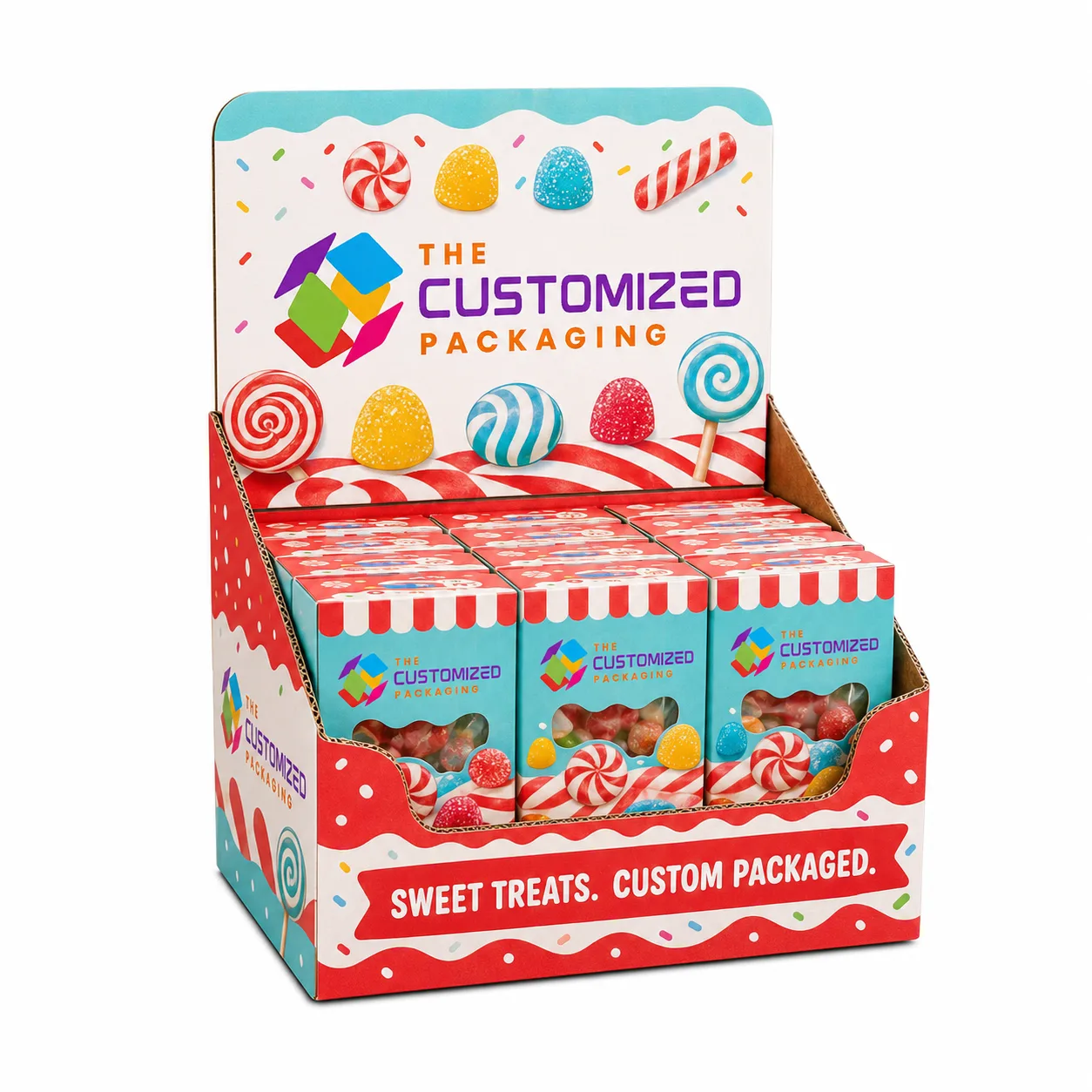
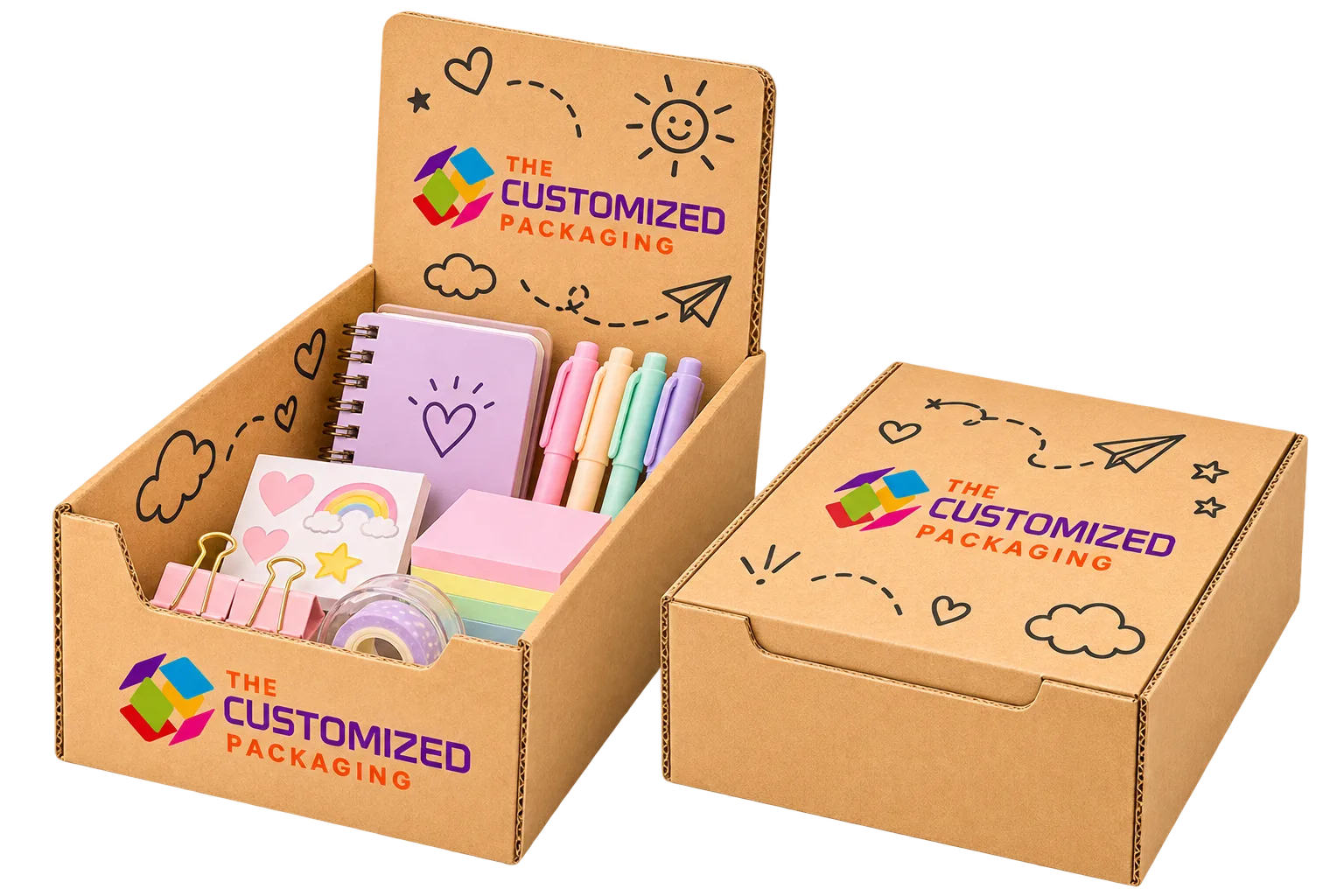
| Display Formats | Countertop PDQ displays, shelf-ready trays, floor displays, and dump bins |
| Material | Corrugated board with flute grade selected according to display size and product weight |
| Custom Dimensions | Based on product footprint, facing count, shelf or counter limits, and store requirements |
| Design Features | Open fronts, tiered trays, front lips, header cards, wings, and dividers |
| Printing | Custom graphics, logos, product information, promotional artwork, and brand colors |
| Print Surfaces | Trays, side panels, headers, and other printable display areas |
| Liner Options | White or kraft corrugated liner surfaces |
| Packing Formats | Flat-packed, partially assembled, or prefilled configurations as specified |
| Retail Applications | Checkout counters, retail shelves, promotional aisles, club stores, and product launches |
| Product Configuration | Single-SKU and multi-SKU displays with defined facing arrangements |
| Quote Requirements | Product size, units per display, placement, board preference, printing, assembly method, and quantity |
Corrugated Display Boxes Built for Counter, Shelf, and Floor Visibility
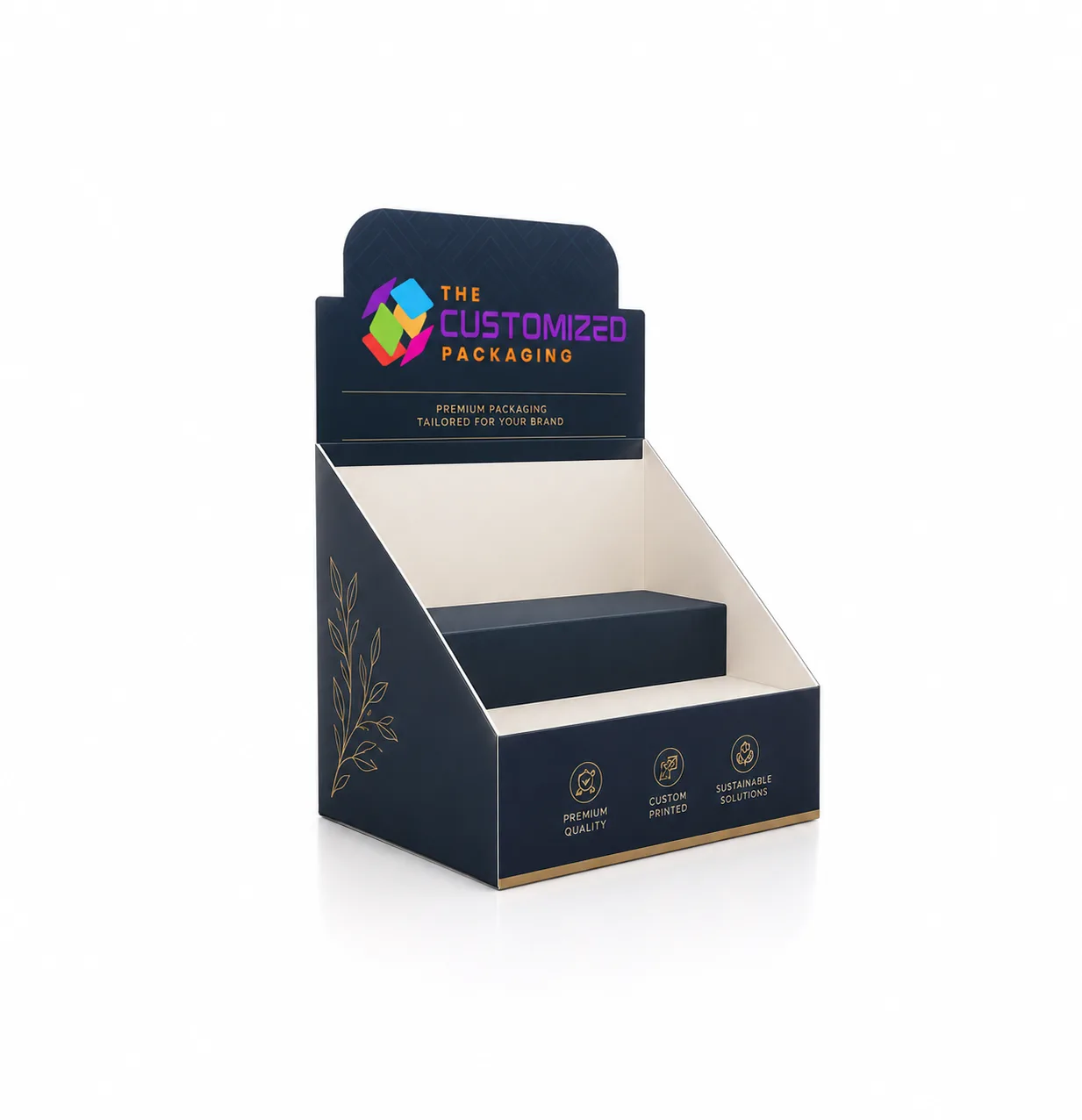
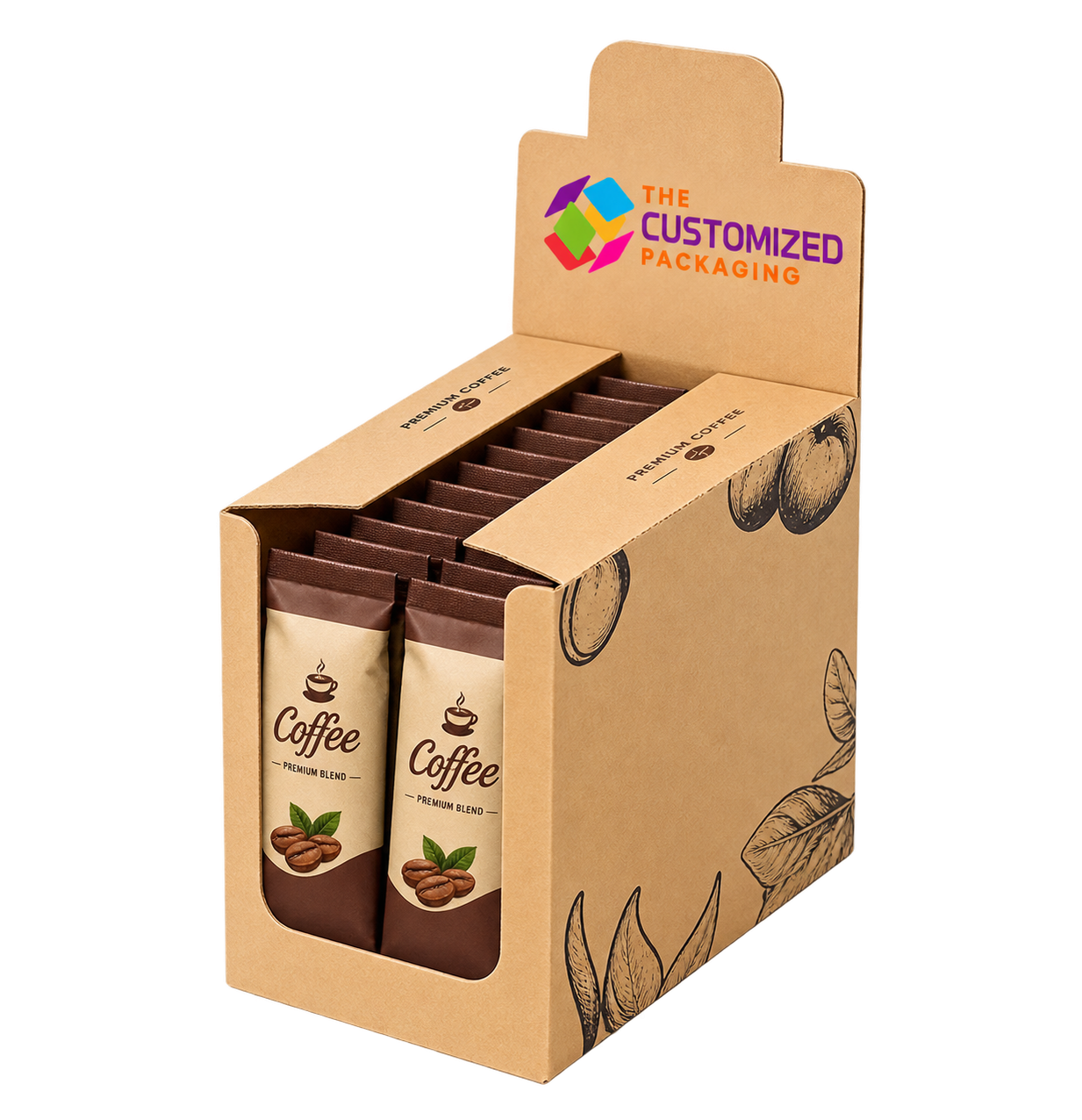
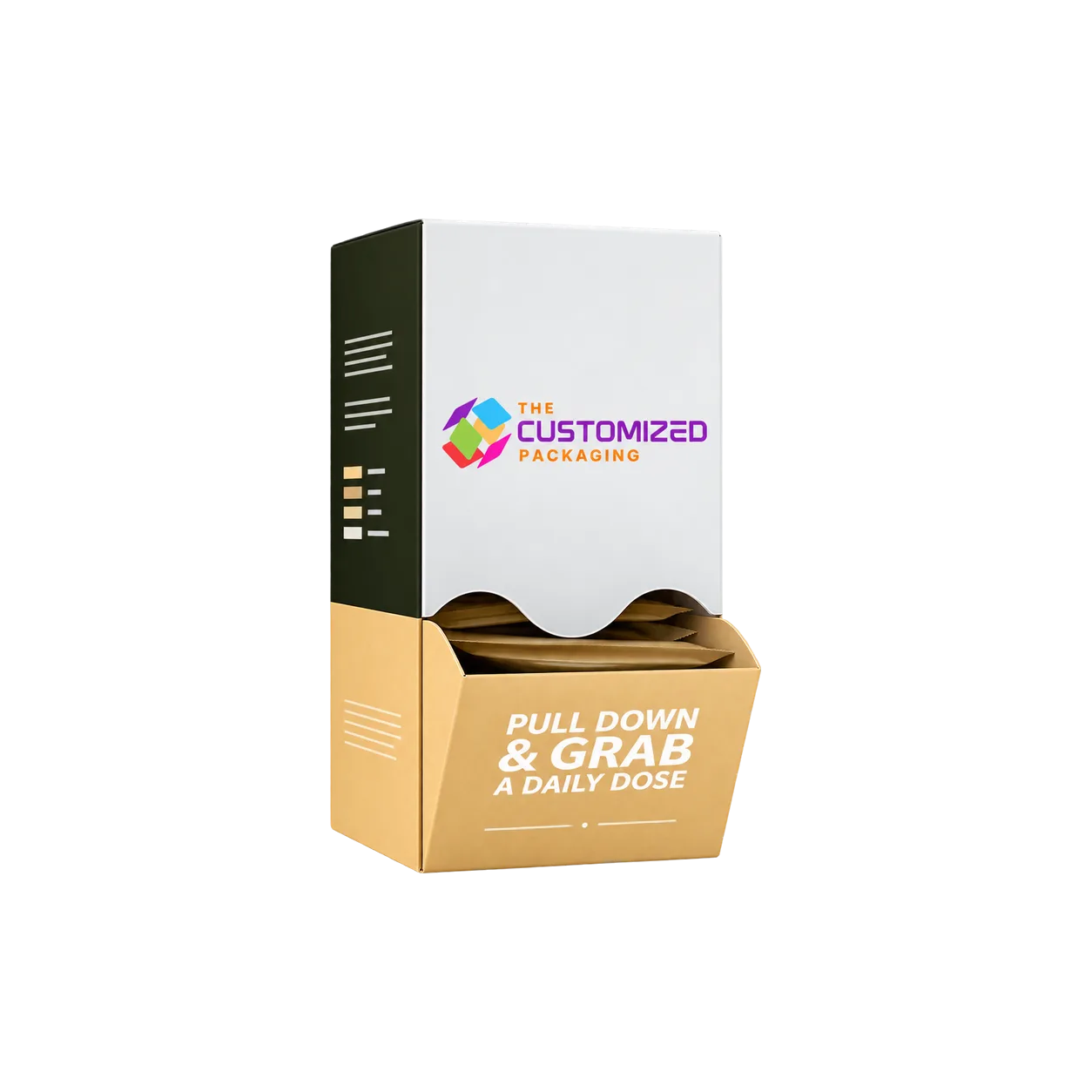
Custom Corrugated Display Boxes turn corrugated board into a merchandising tool. Brands use them for counter PDQs beside the register, shelf trays that keep SKUs faced forward, and floor stands or dump-bin styles when a launch needs a dedicated footprint. The job is visibility and easy shopper access, not only transit survival.
Start from the retail position. A counter display needs a small footprint and a header that reads at arm length. A shelf tray needs height that fits the bay and a front lip that holds product without hiding the label. A floor display needs base stability and clear branding from aisle distance. Prefilled shipper-displays can combine transit and merchandising when the channel allows.
Keep this structure distinct from general corrugated shipping cartons and from material-led display siblings that are not corrugated. Quote corrugated display when fluted board, print panels, and retail facing geometry are the point. Related retail paths such as generic display packaging should not replace a corrugated PDQ brief when flute strength and ship-flat assembly matter.
Display Styles, Facings, and Header Cards
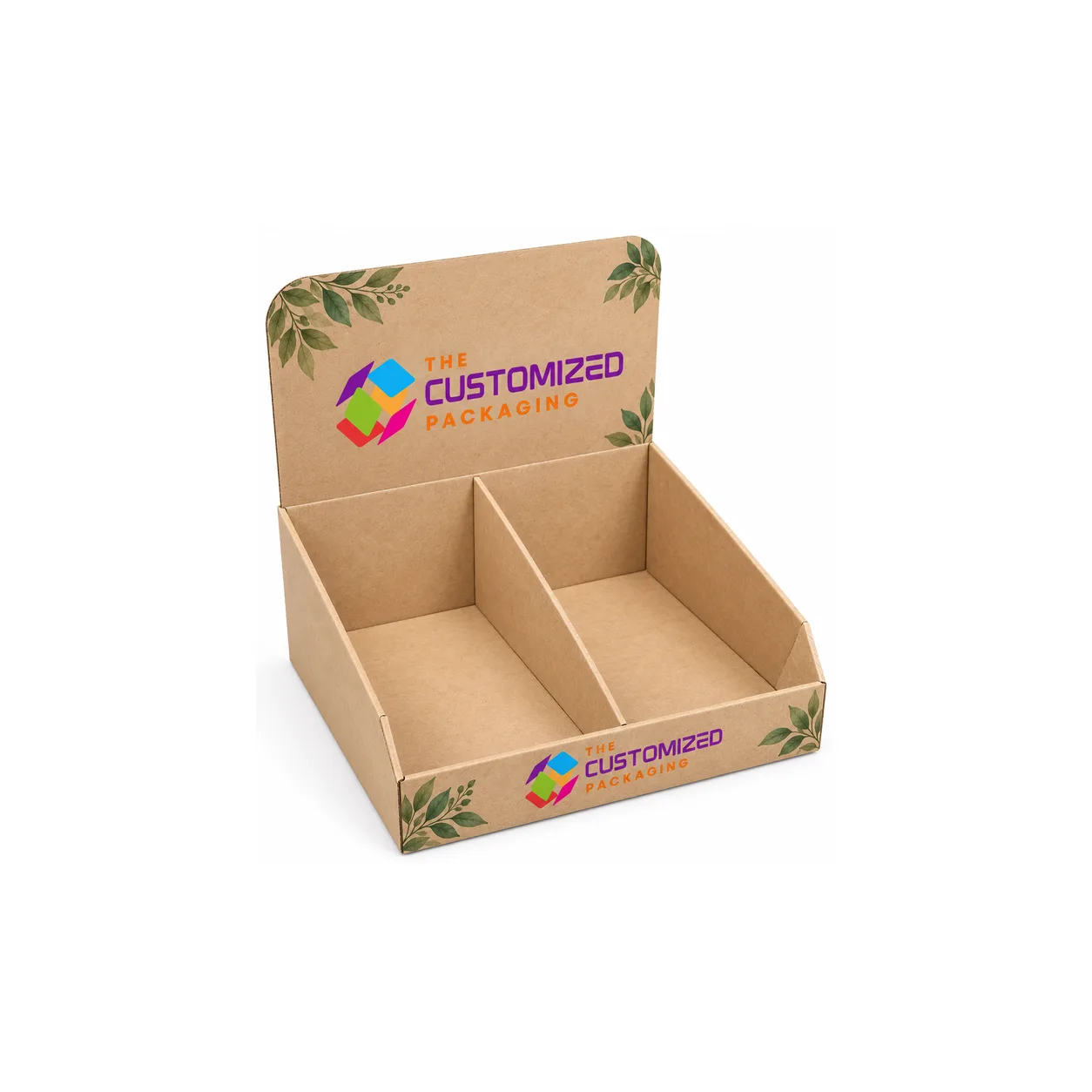
Open-front trays showcase single SKUs or short assortments. Tiered trays create height for mixed sizes. Hook or punch panels can support carded goods. Header cards and side wings carry offer copy, brand marks, and compliance lines. Decide units per facing and rows deep before locking tray depth.
- Map unit footprint and pack count per facing before outer size.
- Choose counter, shelf, or floor based on store placement.
- Add header or wing panels only when copy needs that space.
- Confirm whether displays ship flat, semi-erected, or prefilled.
- Plan easy shopper access so front lips do not hide labels.
| Retail Position | Display Style | Priority | Watch For |
|---|---|---|---|
| Checkout Counter | Small PDQ tray with header | Compact footprint | Height and sightlines |
| Shelf Bay | Open-front tray | Facing alignment | Shelf height limits |
| Aisle Floor | Floor stand or dump bin | Stability and visible branding | Base footprint requirements |
| Club or Promotion | Prefilled shipper display | Transit and merchandising | Retailer approval |
Board, Printing, and Assembly Options
Flute selection follows product weight and how long the display must stand in store. Lighter snack or beauty units may use lighter corrugated board; heavier bottles need stronger walls and bases. Print can cover trays, headers, and side panels with brand colors, SKU names, and promotional messages. Soft-touch and specialty finishes are less common on corrugated displays than on folding cartons, so focus on print quality and resistance to handling at busy counters.
White or kraft liners change both the appearance of printed graphics and the overall brand presentation. Choose the liner with the campaign artwork in mind, not only with cost.
If the same structure will be used across multiple stores, confirm that assembly steps are clear without complicated tools or fixtures. Retail labor and available setup time vary, so simple construction can make installation easier.
Many programs ship flat for store assembly. Include an assembly diagram when retailers need clear guidance. Prefilled displays reduce in-store loading but add packing and freight considerations. State which model you need when requesting a quote.
If the display will experience frequent customer handling, consider the appropriate board grade, sidewall structure, and corner reinforcement. Graphics should remain readable after products are partially sold. Header cards and side wings can keep brand messaging visible even as the display empties.
Corrugated Display Boxes Versus Shipping Cartons
A corrugated shipping carton prioritizes stacking and protection with limited shopper access. A corrugated display prioritizes product visibility, graphics, and convenient removal. Some designs combine both roles as shipper-displays, but their suitability depends on dimensions, corrugated board selection, product weight, and retail channel requirements.
| Format | Primary Purpose | Best Application |
|---|---|---|
| Corrugated Display / PDQ | Retail product visibility and shopper access | Counter, shelf, or floor promotions |
| Corrugated Shipper | Product movement, transit, and stacking | Closed cartons for distribution and storage |
| Shipper-Display Hybrid | Transport and retail presentation | Approved club-store or promotional programs |
A standard closed shipping carton should not be treated as a retail display without reviewing how customers will see and access the products. Openings, headers, removable panels, and shelf-facing arrangements are important parts of display construction.
Get a Quote for Custom Corrugated Display Boxes
Provide the packaged product dimensions, number of units per display, retail placement, header requirements, print areas, and preferred footprint. Specify whether the display will arrive flat, partially assembled, or prefilled.
For early planning, you can use our Custom Box Packaging Cost Calculator to explore preliminary box costs. A final corrugated display quotation must account for the actual board grade, display geometry, printing, and assembly requirements.
When multiple products share one display, provide a facing map that shows which SKU belongs in each position. For programs involving different retailers, include any store-specific shelf dimensions or merchandising guidelines. A shared structure with interchangeable header artwork may work for some multi-account campaigns.
Heavy glass bottles and liquid products require particular attention to base strength and weight distribution. Lightweight snacks, cosmetics, or pouch products may place greater emphasis on graphic space and shopper access. Select the board and base geometry around the actual filled display rather than an empty sample.
Whether you need countertop PDQ displays, printed shelf-ready trays, or freestanding corrugated displays for promotional launches, The Customized Packaging can review your product assortment and recommend a structure suited to your retail presentation.
Corrugated display boxes are designed to present products to shoppers using open fronts, display trays, header cards, and printed branding. Regular shipping boxes mainly contain products for transportation and storage. Some structures can combine both functions when designed as shipper-displays.
Yes. Corrugated displays can be configured as countertop PDQ trays, shelf-ready displays, or larger floor-standing units. The appropriate structure depends on the retail location, product size, filled weight, and available display footprint.
Many corrugated display designs can ship flat for assembly at the retail location. Other programs may use partially assembled or prefilled displays. The packing method depends on the structure, retailer requirements, and fulfillment process.
Provide product dimensions, the number of items per display, desired shelf or floor footprint, artwork requirements, and preferred assembly method. Include retailer guidelines, product weight, and any required header or divider features.
Yes. Corrugated display trays can be designed with multiple facings, tiers, or compartments for different products. A facing map showing each SKU's size and position helps determine suitable tray dimensions and printed graphics.
Related Products



Order Custom Corrugated Display Boxes from The Customized Packaging
We manufacture Custom Corrugated Display Boxes for businesses that need reliable product protection, accurate printing, and professional packaging for retail, ecommerce, storage, or shipping. Each box can be customized by size, material, structure, printing, coatings, finishes, inserts, and order quantity.
Share your artwork and quantity targets for Custom Corrugated Display Boxes and we will recommend the most cost-effective structure for your timeline. or speak with a packaging expert. Browse custom rigid boxes, packaging inserts, and use our Custom Box Packaging Cost Calculator.