
| Specification | Available Options |
|---|---|
| Product Name | Custom Coffee Cup Sleeves |
| Suitable Applications | Cafe, coffee shop, bakery, restaurant, hotel, food-truck, catering, event, and takeaway beverage service |
| Cup Compatibility | Specified to the actual cup top diameter, bottom diameter, taper, and available wall height |
| Custom Dimensions | Wrap height and circumferences cut to the approved cup sample or drawing |
| Common Cup Capacities | 8 oz, 12 oz, 16 oz, and 20 oz as labels only; confirm fit on the cup mold in use |
| Material Options | Kraft paperboard, white or SBS paperboard, recycled-content paperboard where documented, corrugated or micro-flute wraps |
| Kraft Options | Natural kraft print face or kraft-backed wraps as specified for the order |
| Corrugated Options | Fluted or micro-flute wraps when a thicker band or textured grip is required |
| Paperboard Options | Single-wall paperboard wraps selected by caliper, stiffness, and print surface |
| Sleeve Structure | Die-cut wrap-around band with glued overlap or locking tab |
| Printing Methods | Digital, CMYK, Pantone / spot, and selected one-color or limited-coverage print |
| Color Options | Board-face color plus the approved ink set for the artwork |
| Branding Areas | Outer wrap face; keep-out at the glue flap, lid line, and lower scuff edge |
| Coatings | Uncoated, aqueous, varnish, or other approved surface treatments called on the quote |
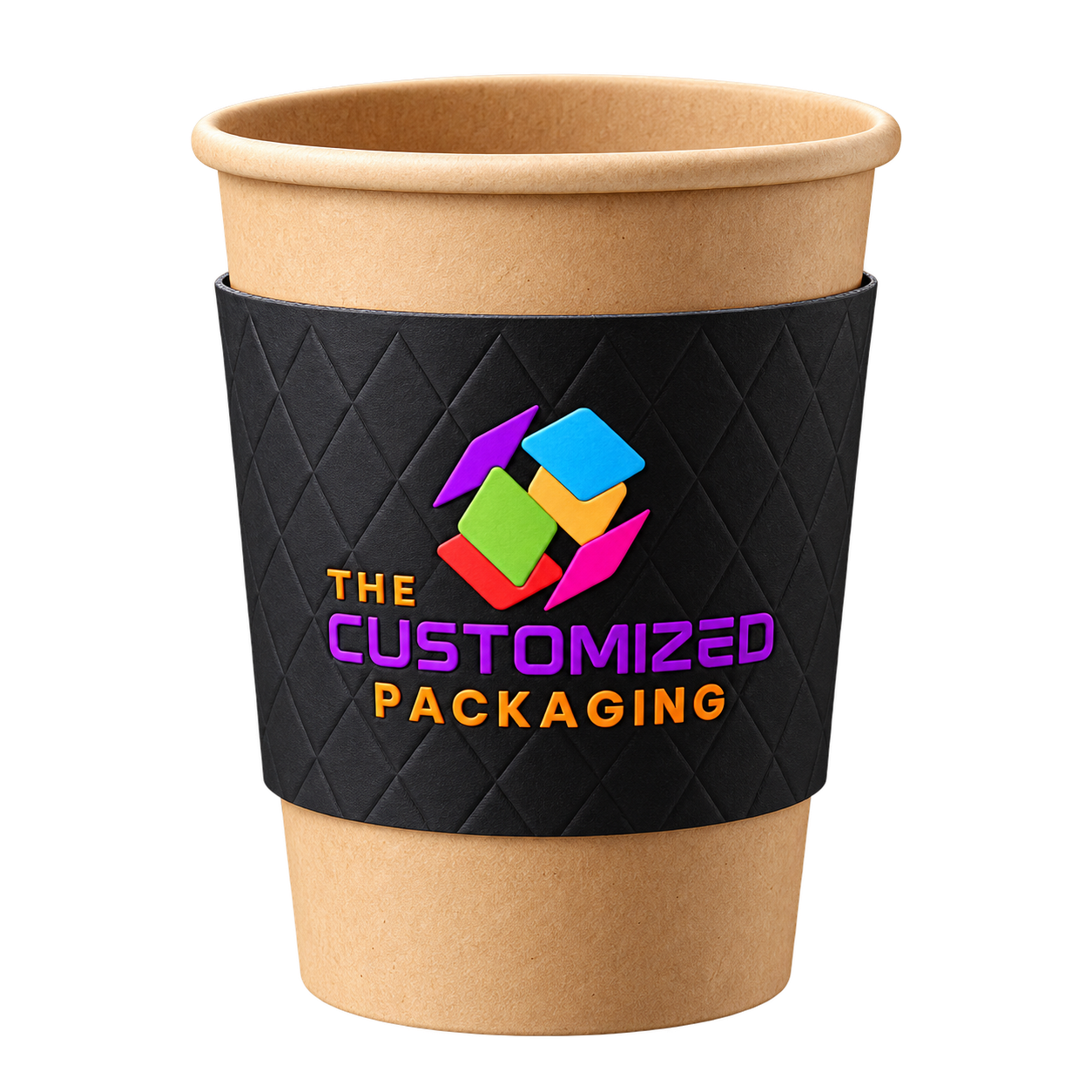
| Finishes | Embossing, debossing, spot UV, and selected decorative work where the caliper allows |
| Die Cutting | Custom wrap outline, tab, and glue flap from the approved dieline |
| Embossing | Raised mark on a suitable board caliper, clear of the join |
| Debossing | Pressed mark on a suitable board caliper, clear of the join |
| Spot UV | Local gloss on selected artwork; listed as part of the finished construction |
| Fit Testing | Dieline review plus a wrap on the production cup; filled-cup check when temperature or fill line matters |
| Lid Clearance | Upper wrap edge set below the lid skirt so the lid can seat |
| Artwork Requirements | Print-ready AI, EPS, PDF, or PSD on the sleeve dieline, fonts outlined, bleed as specified |
| Proofing | Digital proof and optional white or printed wrap sample |
| Product Protection / Handling Role | Additional paper layer and gripping surface around the cup wall; not a shipping carton and not a substitute for the cup or lid |
Custom Coffee Cup Sleeves Built Around Cup Fit and Branding
Custom Coffee Cup Sleeves are a wrap that goes around a beverage cup, not a carton that ships cups and not a sleeve-and-tray box. The production quote starts with the cup that will actually be filled: top diameter, bottom diameter, wall angle, fill height, lid style, and where the hand holds the cup during service.
A sleeve can add a paper layer between the hand and the cup wall and can give the fingers a more stable gripping surface. How warm the cup feels still depends on the cup construction, sleeve board, how tightly the wrap sits, beverage temperature, fill level, and how the drink is carried. A sleeve does not make a cup fully insulated and does not remove the need to handle hot drinks with care.
Broader coffee cartons and takeaway cups are specified elsewhere. Use this page to lock sleeve dimensions, board, print, and a physical fit check before artwork is released.
What to Measure Before Choosing a Sleeve
Stated fluid ounces are a starting label, not a finished size. Two 12 oz cups from different suppliers can need different wraps because the rim, taper, and wall height are not the same.
Record these values from the cup you will run, or send a physical sample:
- Top outside diameter at the height where the sleeve will sit
- Bottom outside diameter at the lower edge of the wrap
- Straight-wall height available between the lid skirt and the cup base
- Wall taper, or the difference between the two diameters
- Lid type and how far the lid hangs over the rim
- Whether cups are stacked, sleeved on the line, or wrapped after filling
The wrap should follow the taper closely enough to stay in place during normal service. A wrap that is too open can slide or rotate. A wrap that is too tight can crease, fight the applicator, or press on the cup wall.
Cup Capacity Compared With Fit
Capacity helps the buyer describe the drink size. Fit is confirmed by the diameters and height above. The rows below are typical cafe sizes, not a promise that one wrap fits every cup in that ounce band.
| Stated cup capacity | What to measure on the cup | Sleeve decision |
|---|---|---|
| 8 oz | Top and bottom diameters plus usable wall height | Shorter wrap; confirm the lid skirt does not cover the print |
| 12 oz | Taper between rim and mid-wall | Most common cafe starting size; still needs a cup-specific dieline |
| 16 oz | Hold zone and remaining space above the base | Taller artwork area; check stacking and dispenser clearance |
| 20 oz | Lower diameter and wrap stiffness | May need a firmer board so the band keeps its shape |
| Custom / proprietary cup | Supplier drawing or a physical cup | Do not reuse another brand’s sleeve dieline |
If one shop runs several cup molds, treat each mold as its own sleeve SKU unless a fit sample shows the same wrap works on every cup in the set.
Board and Wrap Construction
Board is chosen after the cup and print plan are known. A natural kraft face, a white print face, and a fluted wrap are different constructions. Naming a board color is not a material specification.
| Construction | Usually considered when | What to confirm |
|---|---|---|
| Kraft paperboard wrap | A natural paper face and simpler print coverage | Caliper, stiffness, and whether the face is the print surface |
| White or SBS paperboard wrap | Detailed logos, light backgrounds, or tight registration | Ink holdout, coating, and crease quality at the taper |
| Single-wall paperboard wrap | A thin band is enough for grip and branding | Cup wall type; a thin wrap on a thin cup still feels hot |
| Corrugated or micro-flute wrap | A thicker band or a textured grip is required | Flute direction, bulk in the dispenser, and lid clearance |
| Recycled-content paperboard | A documented fiber mix is part of the order | Supplier percentage and whether it applies to the production lot |
Die-cut wrap-around sleeves are typically joined with a glued overlap or a mechanical lock. The join must sit where it will not fight the applicator or hide required artwork. Coatings, laminations, and adhesives become part of the finished construction and affect how the wrap should be described at end of life. Local collection rules vary; do not print a disposal claim until the approved board, coating, ink, and adhesive are known.
Printing, Branding Area, and Finishes
The printable face is a curved, tapered panel. Type, logos, and QR codes should be built on the approved dieline, not on a flat rectangle. Keep critical marks away from the glue flap, the upper edge under the lid, and the lower edge that can scuff in a sleeve dispenser.
| Option | What it is used for | Production note |
|---|---|---|
| Digital printing | Short runs, versions, or campaigns | Confirm color range on the selected board face |
| CMYK process | Photographs and multi-color marks | Review a proof on the actual board family |
| Pantone / spot color | A required brand color | Call the ink and the board in the same specification |
| Embossing or debossing | A raised or pressed mark | Needs enough caliper and a clear keep-out from the join |
| Spot UV | A glossy mark on a selected area | Treat as an added surface; do not assume it is unnoticed at disposal |
One-color and limited-coverage designs are often enough for a cafe mark. Full-panel ink is available when the brand needs it. Foil or heavy coverage should be called out before the quote, because they change makeready and can change how the wrap is described.
Lid Clearance, Grip, and Service Handling
Leave a clear band under the lid skirt so the lid can seat and so the top of the artwork is not hidden. Leave enough wall below the wrap so the cup still sits stably in a carrier or on a counter.
Grip comes from wrap height, board stiffness, and surface texture. A taller wrap gives more print area and a larger hold zone. It also uses more board and can interfere with stacked cups or a tight dispenser. Set height from the way the drink is handed across the counter, not from the tallest artwork file on hand.
Staff should still treat a freshly poured drink as hot. The sleeve is a wrap and a print surface. It is not a substitute for the correct cup wall, a fitted lid, or ordinary handling.
Fit Samples and What to Send for a Quote
A digital dieline shows panel size and print position. A white or printed wrap on the real cup shows whether the band sits, rotates, or hits the lid. Fit-check the filled cup when the drink temperature and fill line matter to the program.
To quote Custom Coffee Cup Sleeves, send:
- Cup sample or top diameter, bottom diameter, and available wall height
- Lid style, if the lid overlaps the print area
- Preferred board family: kraft paperboard, print-side paperboard, or corrugated wrap
- Print method, colors, and any embossing, debossing, or spot UV
- Artwork or brand marks and the number of versions
- How sleeves are applied: by hand, on a line, or pre-applied
- Quantity and ship-to location
If you also need the cup itself, specify custom coffee cups as a separate item. Industry browsing stays on the Coffee & Tea category. Other wrap and tray structures stay on Sleeve and Tray. For a planning range across styles and quantities, use the Custom Box Packaging Cost Calculator, then request a production quote from the approved cup sample and dieline.
Measure the cup’s top diameter, bottom diameter, and the wall height that will stay clear of the lid. Stated ounce size is only a label. Send a cup sample or those three measurements so the wrap can follow the taper without sliding or creasing.
Typical options are kraft paperboard, white or SBS paperboard, documented recycled-content paperboard where available, and corrugated or micro-flute wraps. The board is chosen after the cup fit and print coverage are known.
Yes. Digital, CMYK, and Pantone printing can be used on the outer wrap face. Artwork should be built on the sleeve dieline so logos and QR codes stay clear of the glue flap, lid line, and lower edge.
A sleeve can add a paper layer between the hand and the cup wall and may improve grip. How warm the cup feels still depends on the cup, sleeve board, fit, beverage temperature, fill level, and handling. It does not make the cup fully insulated.
Only when a fit sample shows the same wrap sits correctly on each cup mold. Different suppliers’ 12 oz cups often need different dielines. Treat each mold as its own sleeve unless testing proves otherwise.
Related Products










Configure Custom Coffee Cup Sleeves for Your Cups
Custom Coffee Cup Sleeves are specified around the cup diameter, taper, height, lid clearance, sleeve position, material, and printable area. Choose kraft paperboard, paperboard, or corrugated sleeve constructions based on the required fit, handling, and branding presentation.
Share the cup size or physical sample, artwork, preferred material, printing requirements, and order quantity so the sleeve can be sized and quoted for the intended cup. or speak with a packaging expert. For related beverage packaging, browse our custom coffee cups and Coffee & Tea packaging, or use the Custom Box Packaging Cost Calculator for general packaging cost planning.