
| Specification | Available Options |
|---|---|
| Product Name | Custom Hoodie Boxes |
| Primary Use | Packaging, presenting, storing, gifting, and shipping folded hoodies |
| Size | Fully customizable according to folded hoodie dimensions |
| Length and Width | Manufactured according to the final folded garment size |
| Depth | Adjusted according to hoodie thickness, fabric weight, and quantity |
| Capacity | One hoodie or multiple hoodies per box |
| Paperboard Material | SBS paperboard, coated paperboard, uncoated paperboard, recycled paperboard |
| Corrugated Material | E-flute, B-flute, F-flute, single-wall corrugated board |
| Rigid Material | Greyboard, chipboard, paper-wrapped rigid board |
| Kraft Material | Natural kraft, white kraft, recycled kraft |
| Material Thickness | Selected according to box dimensions, hoodie weight, and required strength |
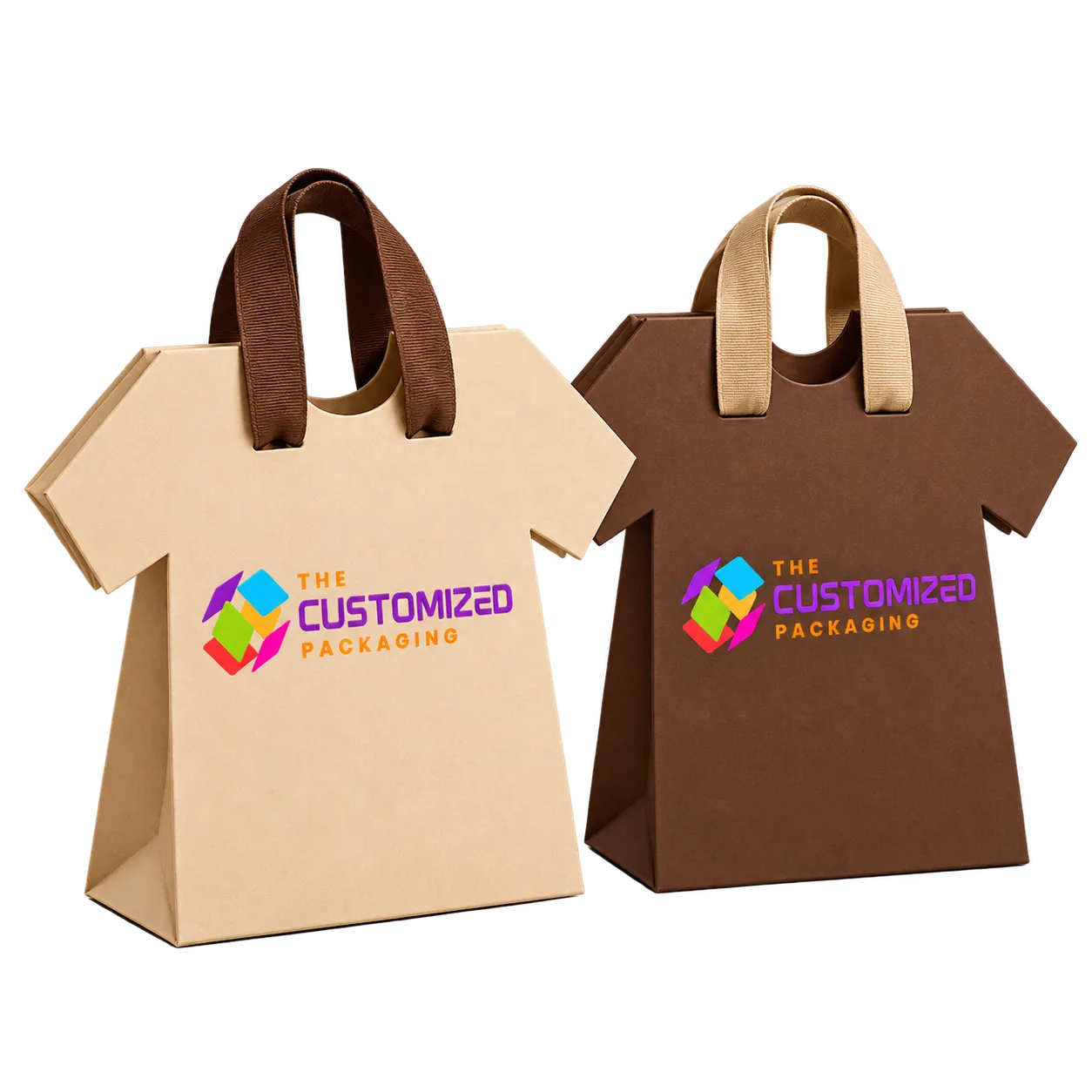
| Box Styles | Mailer-style, lid and base, drawer and sleeve, magnetic closure, tuck-end, handle-top |
| Exterior Printing | One-color, two-color, CMYK full-color, Pantone color matching |
| Interior Printing | Plain, single-color, full-color, patterns, messages, or branded graphics |
| Logo Application | Printed logo, foil-stamped logo, embossed logo, debossed logo, spot UV logo |
| Surface Finishes | Matte lamination, gloss lamination, soft-touch lamination, aqueous coating |
| Decorative Finishes | Foil stamping, spot UV, embossing, debossing, textured paper |
| Window Option | Custom die-cut window with or without a clear protective film |
| Handle Option | Integrated paperboard handle or reinforced carrying handle |
| Insert Options | Cardboard supports, folded platforms, paper bands, protective sheets, ribbon lifts |
| Interior Accessories | Tissue paper, printed cards, sealing stickers, care cards, thank-you cards |
| Closure Options | Tuck closure, locking tabs, magnetic closure, sleeve closure, lid closure |
| Color Options | Custom exterior and interior colors |
| Artwork Format | Vector artwork preferred for logos, text, and structural alignment |
| Sustainability Options | Recyclable stock, recycled content, FSC-certified paper, water-based coatings |
| Supply Format | Flat-packed or pre-assembled depending on structure |
| Sample Options | Structural sample, plain sample, digital sample, printed production sample |
| Minimum Order Quantity | Depends on material, dimensions, printing, and construction |
| Production Time | Determined after approval of size, artwork, material, and final specifications |
| Delivery | Available according to final quantity, destination, and shipping requirements |
Custom Hoodie Boxes Made for Secure and Branded Presentation
Custom Hoodie Boxes provide a practical and professional way to package folded hoodies for retail presentation, online order delivery, branded gifting, special collections, and direct customer shipping. Each box can be manufactured according to the folded length, width, thickness, fabric weight, and presentation requirements of the hoodie.
Hoodies are usually thicker than standard garments because of their hoods, sleeves, drawstrings, fleece lining, zippers, embroidery, and printed areas. Packaging them inside an incorrectly sized box can compress the fabric, disturb the fold, or leave too much empty space around the garment. A properly measured Custom Hoodie Box keeps the hoodie organized while creating a cleaner and more valuable presentation.
The dimensions, material, opening style, printing, finishes, and interior arrangement can all be customized. This gives hoodie brands control over both product protection and the customer’s unboxing experience.
What Are Custom Hoodie Boxes?
Custom Hoodie Boxes are specially manufactured packaging boxes designed around the dimensions and weight of folded hoodies. Instead of forcing the garment into a standard stock size, the box is produced according to the actual hoodie measurements.
The exterior can display the brand logo, color palette, patterns, size details, care information, campaign artwork, QR codes, and promotional messages. Interior panels can also be printed to continue the brand experience after the box is opened.
Depending on the required strength and presentation, hoodie boxes can be made from paperboard, corrugated stock, rigid board, or kraft material. The final choice should reflect how the hoodie will be stored, displayed, carried, gifted, or shipped.
Why Accurate Hoodie Box Sizing Matters
The correct size helps maintain a clean fold without placing unnecessary pressure on the fabric. It also minimizes excessive movement during transportation.
To calculate the right dimensions, the hoodie should first be folded exactly as it will be packed. The folded length, width, and total thickness should then be measured. Space for tissue paper, a protective sheet, an insert, or more than one hoodie should be added separately.
A well-fitted Custom Hoodie Box can help:
-
Maintain the intended garment fold.
-
Prevent unnecessary compression.
-
Protect embroidery and printed graphics.
-
Organize hoods, sleeves, zippers, and drawstrings.
-
Reduce movement during shipping.
-
Improve the appearance of the hoodie at delivery.
-
Avoid unnecessary packaging material and empty space.
-
Create a more consistent packing process.
Best Materials for Custom Hoodie Boxes
Material selection affects strength, print quality, storage requirements, appearance, and overall cost. The following options can be adjusted according to the size and weight of the hoodie.
| Hoodie Box Material | Best Use | Main Advantages | Important Considerations |
|---|---|---|---|
| Corrugated Board | Shipping and heavier folded hoodies | Strong structure, compression resistance, protective fluted layer | Flute thickness should match hoodie weight and box size |
| SBS Paperboard | Retail presentation and lightweight packaging | Smooth printing surface, clean folds, supports detailed graphics | May require additional outer protection for shipping |
| Recycled Paperboard | Retail and branded presentation | Paper-based construction with recycled content options | Thickness must be selected according to hoodie weight |
| Rigid Board | Premium hoodie presentation and special releases | Strong shape, high-end appearance, reusable construction | Usually supplied assembled and requires more storage space |
| Natural Kraft | Minimal and natural-looking presentation | Recyclable appearance, suitable for simple branding | Printed colors may appear more muted on brown stock |
| White Kraft | Brighter printed hoodie packaging | Combines a kraft-based structure with a lighter printing surface | Board strength should be confirmed through sampling |
Corrugated Hoodie Boxes
Corrugated board is suitable when the hoodie box will be transported directly to the customer. The fluted layer between the outer liners improves resistance to pressure and movement during shipping.
E-flute and F-flute can provide a relatively smooth printing surface with a thinner construction. B-flute may be considered when additional strength or cushioning is required. The appropriate flute should be selected according to the hoodie weight, box dimensions, delivery method, and stacking conditions.
Corrugated Custom Hoodie Boxes can include printed exterior panels, a printed interior lid, locking tabs, reinforced edges, dust flaps, and secure closing panels.
Paperboard Hoodie Boxes
Paperboard provides a smooth surface for detailed printing, brand colors, product information, and promotional artwork. It can be manufactured in different thicknesses depending on the size and weight of the folded hoodie.
This material is particularly effective when the box is intended for controlled retail presentation or when additional shipping protection will be used. Matte, gloss, soft-touch, foil, embossing, and spot UV finishes can be applied to improve its appearance.
Rigid Hoodie Boxes
Rigid board creates a stronger and more premium presentation. It is suitable for limited hoodie releases, special collaborations, premium collections, influencer packages, corporate hoodie presentation, and high-value customer orders.
The rigid board can be wrapped with printed paper, textured stock, solid-colored paper, or soft-touch material. Magnetic closures, separate lids, drawer constructions, ribbon lifts, and printed interior panels can also be incorporated.
Kraft Hoodie Boxes
Kraft material provides a natural paper appearance and can support simple one-color, two-color, or selected full-color printing. Natural brown kraft is often used for minimal branding, while white kraft offers a brighter surface for printed designs.
The final material should be tested with the folded hoodie to make sure it maintains its structure and supports the required presentation.
Custom Hoodie Box Styles
The opening style influences packing speed, structural strength, customer experience, storage, and presentation. Each style should be selected according to the hoodie’s weight and the purpose of the packaging.
| Hoodie Box Style | Structure | Best Use | Customization Options |
|---|---|---|---|
| Mailer-Style Box | Attached hinged lid with side flaps | Shipping, online orders, and branded unboxing | Inside-lid printing, locking tabs, tear strips, stickers |
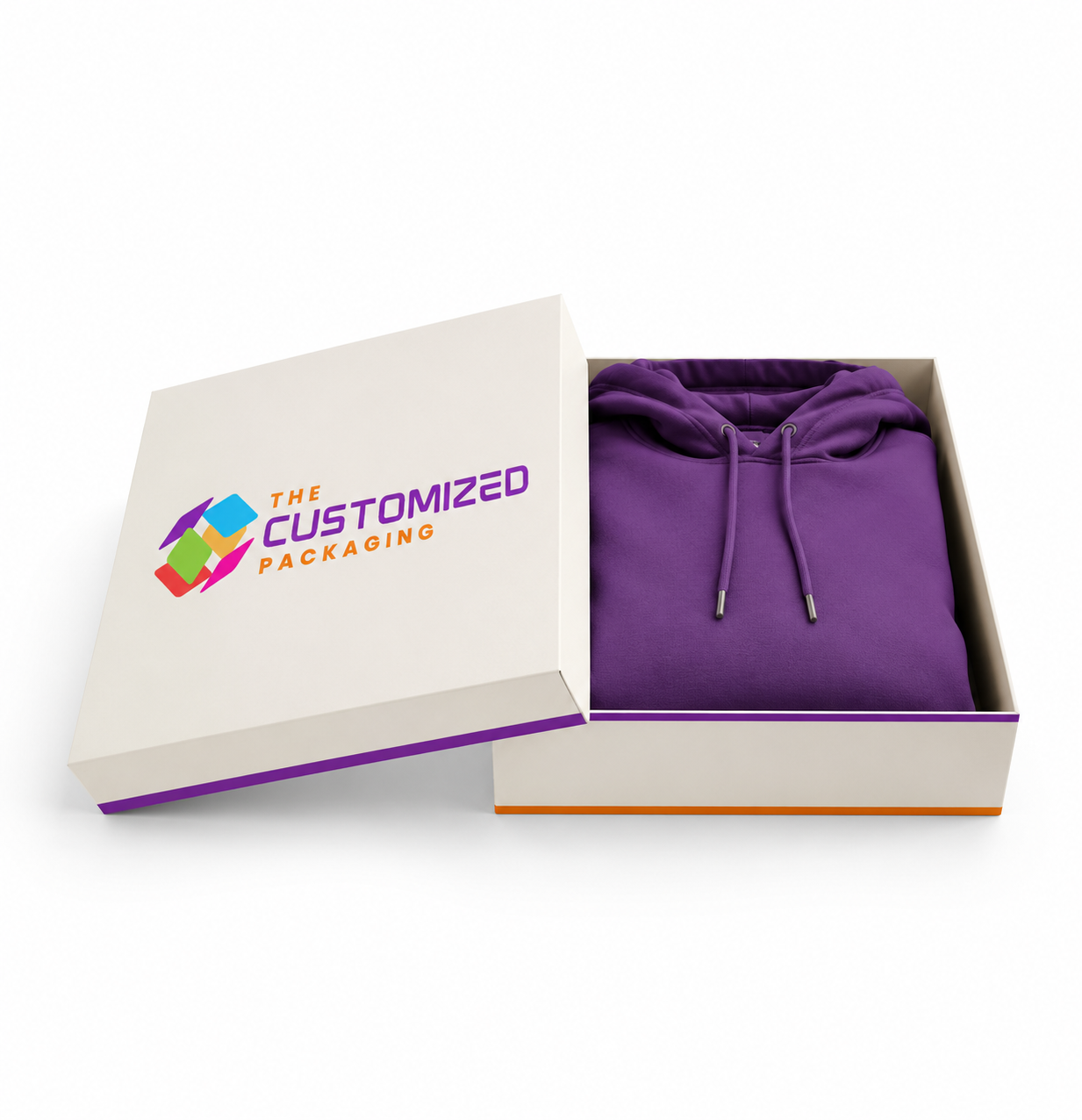
| Two-Piece Lid and Base | Separate top lid and bottom base | Retail, gifting, and premium hoodie presentation | Full-depth lid, shallow lid, contrasting colors, tissue paper |
| Drawer and Sleeve Box | Sliding inner tray with outer sleeve | Special releases and controlled product reveal | Ribbon pull, thumb notch, contrasting drawer, printed sleeve |
| Magnetic Closure Box | Hinged rigid structure with concealed magnets | Premium collections and branded gifting | Magnetic flap, ribbon lift, printed interior, foil logo |
| Tuck-End Box | Folding carton with closing flaps | Lightweight retail presentation | Straight tuck, reverse tuck, locking bottom, window cutout |
| Roll-End Box | Folded side walls with attached lid | Stronger paper-based presentation | Locking tabs, dust flaps, interior printing |
| Handle-Top Box | Integrated or reinforced carrying handle | Carry-away presentation | Die-cut handle, reinforced handle area, closing tabs |
| Collapsible Rigid Box | Foldable premium structure | Premium presentation with reduced storage needs | Magnetic panels, adhesive corners, printed wrapping |
Mailer-Style Custom Hoodie Boxes
Mailer-style boxes are made with an attached lid and supporting side panels. They provide a secure structure while allowing the hoodie to be presented immediately after opening.
The exterior can feature the main logo and shipping-safe branding, while the interior lid can contain a thank-you message, launch story, hoodie care guidance, social media information, or a QR code.
This style can be manufactured from corrugated stock or strong paperboard depending on the required protection.
Two-Piece Hoodie Boxes
A two-piece structure consists of a separate lid and base. The hoodie is placed in the bottom section before the lid is fitted over it.
The lid can completely cover the base or use a shorter depth to reveal part of the lower section. Different colors can be selected for the lid and base to create visual contrast. Tissue paper, wrapping sheets, and paper support platforms can be placed inside.
Drawer-Style Hoodie Boxes
Drawer-style Custom Hoodie Boxes create a sliding opening experience. The folded hoodie rests inside an inner tray that moves in and out of an outer sleeve.
The drawer can include a ribbon pull, paper pull tab, thumb notch, or finger cutout. The sleeve and inner tray may display different colors, patterns, or messages. This style can be made from paperboard or rigid board depending on the required strength.
Magnetic Closure Hoodie Boxes
Magnetic closure boxes provide a secure and premium opening experience. Concealed magnets are placed within the closing panel so the box remains closed without visible locking tabs.
This style is generally manufactured from rigid board. The outside can feature foil stamping, embossing, debossing, or spot UV, while the inside can include printed messages, tissue paper, paper supports, or a ribbon lift.
Tuck-End Hoodie Boxes
Tuck-end structures use folding flaps to close the box. They can be supplied flat and assembled during packing, which can help reduce storage requirements.
The dimensions and board thickness must be carefully selected because hoodies are thicker and heavier than lightweight garments. A reinforced bottom may be needed for larger or heavier folded hoodies.
Printing Options for Custom Hoodie Boxes
Printing can be applied to the exterior, interior, lid, sleeve, base, drawer, closing flap, or selected panels. The method should be chosen according to artwork complexity, material, quantity, and required color accuracy.
| Printing Method | Suitable Artwork | Main Benefit | Hoodie Box Application |
|---|---|---|---|
| CMYK Printing | Full-color graphics, patterns, photographs, gradients | Supports detailed multicolor artwork | Exterior and interior branding |
| Pantone Printing | Specific brand colors and solid shades | Helps maintain consistent brand colors | Logos, backgrounds, and brand elements |
| Digital Printing | Shorter quantities and changing artwork | Flexible setup for selected order sizes | Limited hoodie releases and samples |
| Offset Printing | Detailed and consistent printed designs | Clean image and color reproduction | Larger printed hoodie box quantities |
| Screen Printing | Bold and limited-color designs | Strong solid-color coverage | Logos and minimal hoodie branding |
| Inside Printing | Messages, patterns, and campaign details | Extends branding after opening | Interior lid, base, sleeve, and drawer |
Branding can include:
-
Hoodie brand logo.
-
Collection name.
-
Custom color palette.
-
Repeating patterns.
-
Size or fit details.
-
Hoodie care instructions.
-
Campaign graphics.
-
Launch information.
-
QR codes.
-
Website details.
-
Social media information.
-
Inside-lid messages.
-
Limited-release numbering.
-
Promotional wording.
Artwork should be prepared according to the final box dieline so logos, patterns, text, and graphics remain correctly positioned after folding and assembly.
Finishing Options for Hoodie Packaging
Finishes can improve the visual appearance, surface protection, and tactile quality of Custom Hoodie Boxes.
Matte Lamination
Matte lamination creates a smooth and non-reflective surface. It works well with minimal branding and can create a refined appearance.
Gloss Lamination
Gloss lamination produces a reflective finish that makes printed colors appear brighter. It can be applied across the box or selected printed surfaces.
Soft-Touch Lamination
Soft-touch lamination provides a smooth, velvet-like texture. It is suitable for premium hoodie boxes where tactile presentation is important.
Spot UV
Spot UV applies a raised or flat glossy coating to selected design areas. It can highlight the logo, hoodie collection name, pattern, or campaign artwork against a matte surface.
Foil Stamping
Foil stamping adds metallic or pigmented detail to the packaging. Gold, silver, copper, holographic, or custom foil colors can be used for logos and selected graphics.
Embossing and Debossing
Embossing raises the selected artwork from the surface, while debossing presses the design inward. These treatments can give the logo a more dimensional appearance.
Interior Options for Custom Hoodie Boxes
The internal presentation should hold the folded hoodie without pressing against raised graphics, embroidery, zippers, or drawstrings.
Available interior options include:
-
Plain tissue paper.
-
Custom printed tissue paper.
-
Protective wrapping sheets.
-
Paper support platforms.
-
Folded cardboard supports.
-
Paper bands around the hoodie.
-
Ribbon lifts.
-
Printed care cards.
-
Size identification cards.
-
Thank-you cards.
-
Tissue-sealing stickers.
-
Promotional cards.
-
Printed interior bases.
-
Printed inside lids.
The use of heavy foam should be evaluated carefully because it can add unnecessary thickness. Paper-based supports are often sufficient when the primary goal is to maintain the fold and presentation of the hoodie.
Custom Hoodie Boxes with Windows
A die-cut window can be added when part of the hoodie needs to remain visible without opening the packaging. The window shape can follow the logo, a geometric pattern, the hoodie graphic area, or another custom outline.
The opening can remain uncovered or be fitted with a clear film. The size and placement should be planned so the box retains enough strength to hold the folded hoodie.
Large windows should be avoided when they weaken the lid or side panels. A structural sample can help confirm that the window design performs correctly.
Packaging Oversized and Heavy Hoodies
Oversized hoodies, heavyweight fleece hoodies, zip-up hoodies, embroidered hoodies, and hoodies with thick drawstrings require additional depth and material strength.
The box should be measured using the actual folded garment. Compressing the sample during measurement can lead to a box that is too tight during production.
For heavier hoodies, consider:
-
Stronger corrugated board.
-
Increased paperboard thickness.
-
Reinforced bottom panels.
-
Double side walls.
-
Stronger locking tabs.
-
Additional depth for the hood.
-
Protective paper around zippers.
-
Clearance around embroidery.
-
Paper supports that maintain the fold.
Single and Multiple Hoodie Packaging
Custom Hoodie Boxes can be designed for one hoodie or multiple folded hoodies. When more than one hoodie is included, the combined weight and thickness must be considered.
Multiple hoodies can be separated with tissue paper, wrapping sheets, cardboard dividers, or paper bands. The box should not be overfilled because excessive pressure can affect the folds and make the box difficult to close.
Sustainable Custom Hoodie Packaging
Paper-based hoodie boxes can be manufactured with recyclable and recycled-content materials. The level of sustainability depends on the selected stock, coatings, adhesives, decorative finishes, and internal components.
Available options can include:
-
Recyclable corrugated board.
-
Recycled paperboard.
-
Natural kraft stock.
-
White kraft stock.
-
FSC-certified paper.
-
Water-based coatings.
-
Soy-based inks.
-
Right-sized dimensions.
-
Reduced plastic components.
-
Paper-based interior supports.
-
Reusable rigid construction.
Sustainability claims printed on the box should match the actual materials and production specifications selected for the order.
Flat-Packed or Pre-Assembled Hoodie Boxes
Paperboard and corrugated hoodie boxes can often be supplied flat. This reduces storage space before assembly and can be suitable for brands packing larger quantities.
Traditional rigid boxes are normally supplied assembled because their solid structure does not fold flat. Collapsible rigid constructions may be selected when a premium appearance and reduced storage volume are both required.
The preferred format should be chosen according to storage space, packing speed, labor availability, order quantity, and box structure.
Sampling Before Production
A sample helps confirm that the Custom Hoodie Box fits the garment correctly before the complete order is produced.
A structural sample can be used to evaluate:
-
Internal dimensions.
-
Hoodie folding position.
-
Material thickness.
-
Box strength.
-
Lid fit.
-
Closing mechanism.
-
Window placement.
-
Insert position.
-
Ease of packing and removal.
A printed sample can also be used to review logo placement, colors, artwork alignment, finishes, and interior printing.
The actual hoodie should be tested inside the sample, especially when it is oversized, heavily embroidered, fleece-lined, zippered, or produced from thick fabric.
Estimate the Cost of Custom Hoodie Boxes
The cost of Custom Hoodie Boxes depends on the finished dimensions, selected material, board thickness, box style, printing coverage, finishing treatments, interior components, quantity, delivery destination, and supply format.
A large rigid magnetic hoodie box will generally require more material and production processes than a flat-packed paperboard structure. Full interior printing, foil stamping, embossing, custom inserts, windows, and specialty wrapping papers can also influence the final price.
Higher order quantities may reduce the average cost per box because production setup expenses are distributed across more units. However, the final quotation should always be based on the actual hoodie dimensions and approved packaging specifications.
For an accurate quotation, provide:
-
Folded hoodie length.
-
Folded hoodie width.
-
Folded hoodie thickness.
-
Hoodie weight.
-
Number of hoodies per box.
-
Required quantity.
-
Preferred material.
-
Preferred box style.
-
Exterior printing requirements.
-
Interior printing requirements.
-
Finishing preferences.
-
Insert or tissue requirements.
-
Delivery destination.
Order Custom Hoodie Boxes Built Around Your Hoodie
Custom Hoodie Boxes combine garment protection, accurate sizing, branded printing, and a controlled unboxing experience. By selecting the correct material, structure, dimensions, print method, finish, and internal arrangement, brands can package hoodies without relying on oversized or poorly fitted stock boxes.
Every detail should be planned around the actual folded hoodie. This ensures that the packaging protects the fabric, supports the garment’s weight, displays the brand professionally, and gives customers a clean presentation when the box is opened.
The correct box size should be based on the hoodie after it has been folded into its final packing position. Measure the folded length, width, and total thickness without compressing the fabric excessively. Additional space should be included for tissue paper, inserts, printed cards, or multiple hoodies when required.
Corrugated material is generally the most suitable choice when the hoodie box will be used for direct shipping. Its fluted structure provides better compression resistance and protection during handling. The flute type and board thickness should be selected according to the box size, garment weight, and shipping conditions.
Yes. Printing can be applied to both the exterior and interior surfaces. The outside may display the logo, colors, patterns, and product information, while the inside can include messages, instructions, campaign artwork, social media details, or repeating brand graphics.
Yes. The dimensions and board strength can be adjusted to hold multiple folded hoodies. The final construction should account for the combined thickness and weight. Cardboard separators, paper bands, protective sheets, or individual tissue wrapping can be added to keep each hoodie organized.
Yes. A structural sample can be produced to test the dimensions, folding method, material, and hoodie fit. Printed samples may also be requested to review colors, branding, logo placement, finishes, and the overall opening experience before approving the complete production quantity.
Related Products

Order Custom Hoodie Boxes from The Customized Packaging
We manufacture Custom Hoodie Boxes for businesses that need reliable product protection, accurate printing, and professional packaging for retail, ecommerce, storage, or shipping. Each box can be customized by size, material, structure, printing, coatings, finishes, inserts, and order quantity.
Share your artwork and quantity targets for Custom Hoodie Boxes and we will recommend the most cost-effective structure for your timeline. or speak with a packaging expert. Browse custom rigid boxes, packaging inserts, and use our Custom Box Packaging Cost Calculator.