
| Specification | Available Options |
|---|---|
| Product Type | Custom candy bags and confectionery pouches |
| Suitable Products | Gummies, hard candy, jelly beans, mints, caramels, taffy, wrapped chocolates, coated sweets |
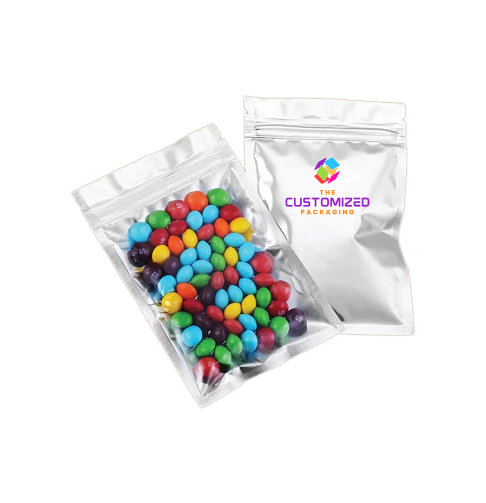
| Bag Styles | Flat, stand-up, side-gusseted, window, resealable, tin-tie, hanging, favor |
| Materials | Natural kraft, white kraft, coated paper, glassine-style paper, selected barrier structures |
| Dimensions | Custom around candy size, fill weight and volume |
| Capacity | Sample, snack, retail, family-size, favor, custom |
| Gussets | None, side gusset, bottom gusset, stand-up base |
| Closures | Zipper, tin tie, adhesive seal, fold-over, tear-open |
| Opening Features | Tear notch, pull tab, easy-open feature |
| Window Options | Rectangular, circular, oval, heart, candy-shaped, logo-shaped |
| Display Options | Shelf-standing, round hang hole, euro slot |
| Printing | CMYK, Pantone, digital, flexographic |
| Print Areas | Front, back, gussets, closure area, window border |
| Branding | Logos, flavor names, product information, barcodes, QR codes |
| Finishes | Matte, gloss, aqueous coating, selected specialty finishes |
| Personalization | Names, event dates, monograms, variable designs |
Custom candy bags can be developed around the candy type, piece dimensions, fill weight, serving size, product sensitivity, and retail presentation.
A small mint pack needs a different structure from a family-size gummy pouch or a side-gusseted bag filled with individually wrapped caramels. Bag dimensions, gusset depth, material, closure, and window placement should therefore be selected around the actual confectionery product.
Key Customization Options
- Custom dimensions and fill capacities
- Flat, gusseted, and stand-up formats
- Kraft and coated paper options
- Selected barrier structures
- Transparent viewing windows
- Resealable zipper closures
- Tin ties and adhesive seals
- Hang holes and euro slots
- Tear notches
- Flavor and variety identification
- Interior and exterior branding
Candy Bag Styles
| Bag Style | Best Suited For |
|---|---|
| Flat Candy Bag | Samples, mints, individual sweets and favors |
| Stand-Up Pouch | Gummies, jelly beans, sour candy and mixed assortments |
| Side-Gusseted Bag | Taffy, caramels, hard candy and larger quantities |
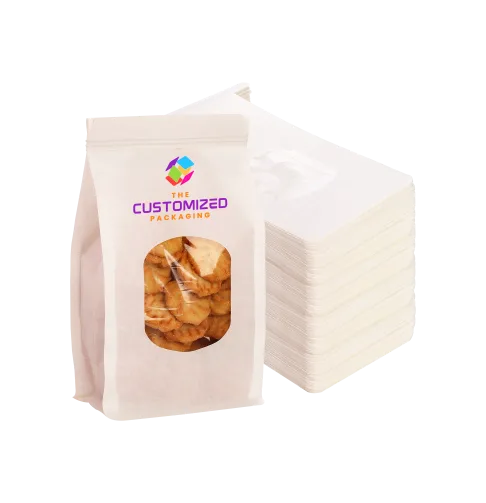
| Window Candy Bag | Colorful candy and visible confectionery |
| Resealable Candy Bag | Multipiece and family-size products |
| Tin-Tie Bag | Artisan confectionery and wrapped chocolates |
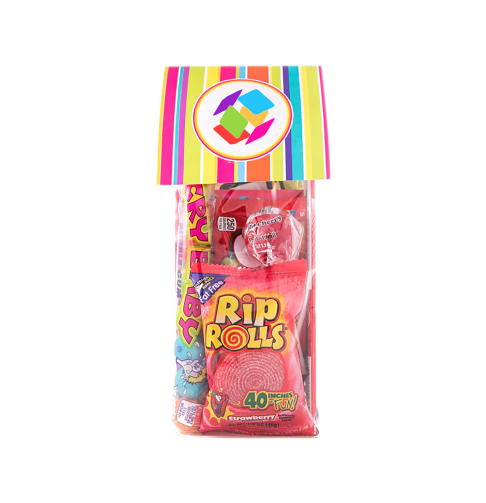
| Hanging Candy Bag | Peg-hook and impulse retail displays |
| Favor Candy Bag | Weddings, parties, events and promotional sweets |
Materials for Candy Bags
Natural Kraft Paper
Natural kraft provides a brown paper appearance for artisan confectionery, handmade sweets, favors, and simple branded packaging.
White Kraft Paper
White kraft provides a brighter printable surface for colorful candy graphics, illustrations, flavor coding, and logos.
Coated Paper
Coated paper provides a smoother surface for more detailed graphics and premium confectionery presentation.
Glassine-Style Paper
Translucent paper can provide partial product visibility for selected individually wrapped sweets, favors, and lightweight confectionery applications.
Selected Barrier Structures
Candy that is sensitive to moisture, grease, aroma transfer, or other environmental conditions may require a specifically selected barrier structure rather than ordinary paper alone.
The exact packaging material should be matched to the actual confectionery and its intended storage conditions.
Stand-Up Candy Pouches
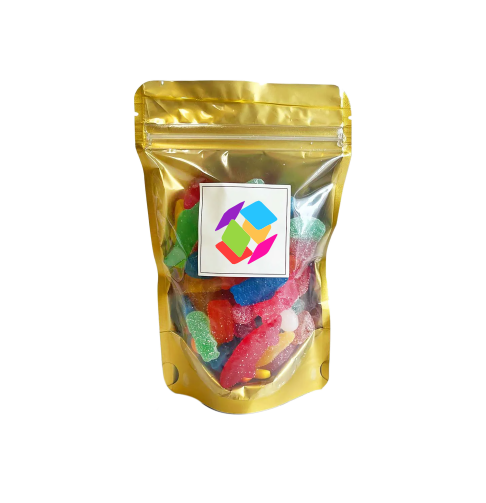
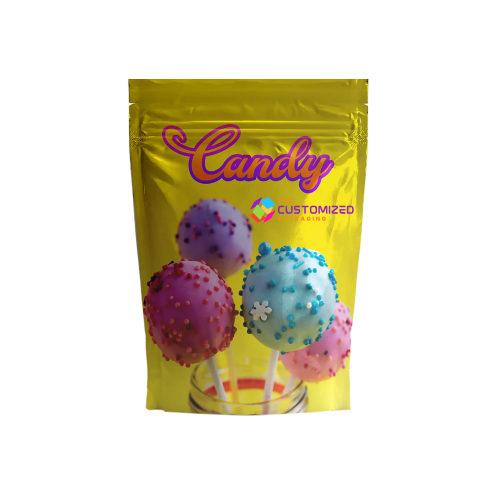
Stand-up pouches use a bottom gusset that expands when filled, creating a stable base for retail shelves.
They work particularly well for:
- Gummies
- Jelly beans
- Sour candy
- Hard candy
- Coated sweets
- Mixed assortments
The front and back panels provide space for branding, flavors, product information, and required labeling.
Side-Gusseted Candy Bags
Side gussets expand outward as the bag fills, making them useful for larger or bulkier candy quantities.
They can accommodate wrapped chocolates, taffy, caramels, hard candy, and mixed confectionery collections.
Gusset depth should be based on the intended fill volume so the finished package maintains a balanced shape.
Resealable Candy Bags
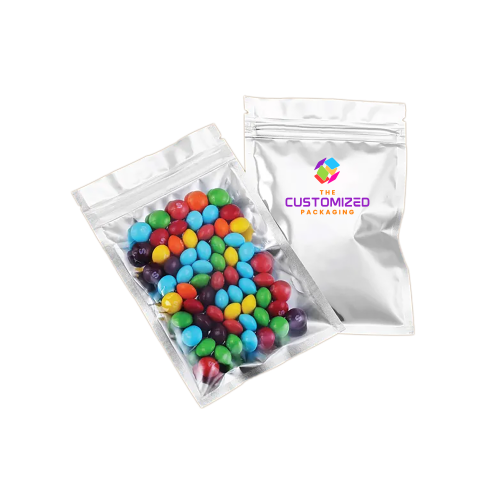
Press-to-close zipper systems can provide repeated access to products consumed over several occasions.
Resealable structures work well for gummies, mints, hard candy, jelly beans, and larger snack portions.
A tear notch may also be added above the zipper to create an initial opening point.
The closure and complete package should still be evaluated for the actual product and intended shelf-life requirements rather than assuming a zipper alone provides a particular barrier performance.
Tin-Tie Candy Bags
Tin-tie formats use a fold-over top that can be opened and closed again.
They can work well for wrapped chocolates, caramels, taffy, artisan sweets, and confectionery assortments where a paper-based presentation is preferred.
The closure can be combined with kraft or printed paper and a viewing window.
Candy Bags With Windows
A transparent window helps shoppers see candy colors, shapes, and product quantity before opening the package.
Window shapes can include:
- Rectangular
- Square
- Circular
- Oval
- Heart-shaped
- Candy-shaped
- Logo-shaped
- Custom die-cut
Window placement should avoid important seams, gussets, zipper areas, and hang-hole reinforcement.
Hanging Candy Bags
Retail candy bags can include a round hang hole or euro slot for peg-hook merchandising.
This format works particularly well for smaller sweets, mints, gummies, promotional candy, and impulse-purchase products.
The hanging section should be designed around the filled weight of the package.
Candy Packaging by Product Type
Gummies and Jelly Beans
Stand-up pouches, resealable formats, and transparent windows are useful where product color and shape are important to presentation.
Hard Candy
Flat, gusseted, and stand-up formats can hold individually wrapped or suitably contained hard candies.
The material should account for the product weight and any sharp edges that could place stress on the package.
Caramels and Taffy
Individually wrapped products can be arranged in kraft, gusseted, window, or tin-tie bags.
Wrapped Chocolates
Branded outer bags can organize individually wrapped chocolate pieces or assortments. Depending on the application, liners or other suitable structures may be required.
Mints and Small Sweets
Compact flat bags and resealable pouches work well for hospitality, promotional, event, and retail applications.
Flavor and Variety Identification
Candy brands often use the same bag structure across several flavors.
Variants can be distinguished with:
- Color coding
- Flavor names
- Illustrations
- Window graphics
- Labels
- Stickers
- Variable artwork
- QR codes
Keeping the structural dimensions consistent while changing the artwork can help create a coordinated product family.
Custom Printed Candy Bags
Custom printed candy bags can carry branding and product information across the front, back, gussets, and selected closure areas.
Artwork may include:
- Brand logo
- Product name
- Flavor
- Candy illustrations
- Ingredient information
- Allergen statements
- Net quantity
- Nutrition information
- Barcode
- QR code
- Lot or date area
Required food-label information should be supplied and approved by the responsible food business before production.
Candy Favor Bags
Small candy bags can be personalized for weddings, birthdays, showers, corporate events, celebrations, and seasonal campaigns.
Personalization may include names, dates, monograms, thank-you messages, event colors, or promotional artwork.
Flat bags, window bags, compact pouches, and paper formats work particularly well for favors.
Food-Contact Considerations
Where candy directly contacts the bag, film, coating, adhesive, ink-related layer, or another packaging component, the complete material system needs to be appropriate for that intended food-contact use. FDA treats packaging and its components that contact food as food-contact substances, and intended use matters when determining regulatory status.
For wrapped candy, the branded outer bag may instead function as secondary packaging depending on the product configuration.
Designing the Right Candy Bag
The strongest design starts with the actual candy.
Piece size and fill weight determine bag dimensions. Product volume determines gusset depth. Product sensitivity influences material selection, while retail presentation determines whether the package needs a window, zipper, tin tie, or hang hole.
Designing the bag style, material, gusset, closure, window, and artwork together creates candy packaging that remains focused on the actual confectionery product.
Yes, our candy bags are made from food-grade materials, and resealable options are available to keep candies fresh.
Absolutely! We offer full customization, including printing, finishes, and window cutouts to match your branding.
A flat bag has no expanding bottom, while a stand-up pouch uses a bottom gusset that expands to create a base when filled.
We provide a wide range of options, including flat bags, gusseted bags, and stand-up pouches to fit different needs.
Yes. Round holes or euro slots can be incorporated into suitable retail bags for peg-hook display.
Related Products





Order Custom Candy Bags from The Customized Packaging
We manufacture Custom Candy Bags for businesses that need reliable product protection, accurate printing, and professional packaging for retail, ecommerce, storage, or shipping. Each box can be customized by size, material, structure, printing, coatings, finishes, inserts, and order quantity.
Share your artwork and quantity targets for Custom Candy Bags and we will recommend the most cost-effective structure for your timeline. or speak with a packaging expert. Browse custom rigid boxes, packaging inserts, and use our custom box cost estimator.