
| Specification | Available Options / Requirements |
|---|---|
| Product Name | Custom Holographic Bags |
| Packaging Type | Flexible holographic pouches and bags, not rigid boxes |
| Primary Applications | Selected retail products, accessories, samples, and gift packaging |
| Bag Formats | Flat, stand-up, gusseted, zipper, and heat-seal styles |
| Dimensions | Custom width, height, and gusset depth where applicable |
| Capacity | Determined by product size, volume, and filled weight |
| Material Options | Selected PET, BOPP, metallized, or compatible multilayer films |
| Holographic Effect | Specified reflective or color-shifting film appearance |
| Film Gauge | Selected according to the complete pouch specification |
| Closure Options | Heat seal, compatible resealable zipper, or selected opening systems |
| Opening Features | Optional tear notches and compatible opening details |
| Gusset Options | Bottom or selected side gussets subject to structure |
| Display Features | Optional hang holes, headers, or shelf-standing formats |
| Printing | Compatible custom logo, artwork, and information printing |
| Print Areas | Front, back, and approved gusset panels |
| Artwork Requirements | Approved dieline, logo files, and print coverage instructions |
| Finish Options | Selected holographic coverage, opaque print areas, and compatible treatments |
| Barrier Performance | Subject to complete laminate and seal specifications |
| Product Contact | Material suitability requires verification for the intended contents |
| Environmental Claims | Require evidence for the specific finished material structure |
| Order Quantity | Wholesale quantity quoted according to the approved design |
| Delivery | USA shipping destination and production timeline confirmed in quotation |
Custom Holographic Bags for Retail Packaging and Gift Presentation
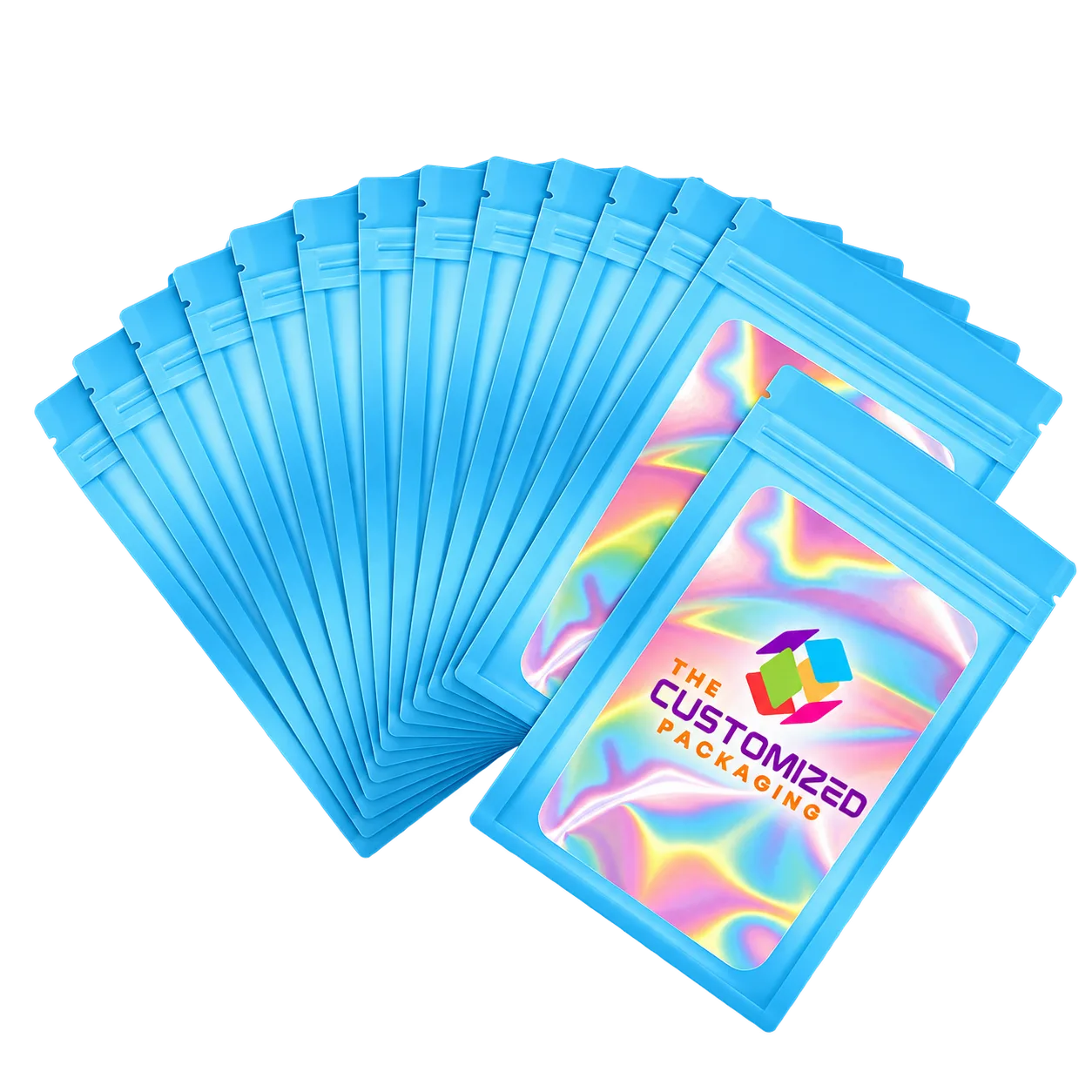
Custom Holographic Bags are flexible packaging pouches designed with a reflective, color-shifting surface. Their appearance changes with the viewing angle and available light, creating a distinctive printed package for selected retail products, branded accessories, samples, and gift presentations.
These bags should be specified as flexible packaging rather than rigid boxes. The holographic surface is a visual feature; the actual strength, barrier level, seal performance, and product suitability depend on the complete film construction and finished pouch design.
Flat holographic pouches, stand-up bags, zipper pouches, and heat-seal formats can be evaluated around the product dimensions, fill quantity, weight, and intended display. Custom printing can combine the holographic background with logos, product names, illustrations, and the information required for the particular product.
Choose a Holographic Bag Style That Fits the Product
Different bag constructions serve different packaging tasks. A flat pouch can be suitable for compact products and samples, while a stand-up format uses an expandable base to support selected shelf displays. Zipper bags can provide convenient reopening when the closure is compatible with the contents and film.
A heat-seal pouch may be preferable when the product requires an initial sealed opening. The correct seal construction and any protective barrier requirements must be confirmed independently of the reflective appearance.
Holographic Bag Style Comparison
| Bag Style | Potential Application | Important Consideration |
|---|---|---|
| Flat holographic pouch | Small accessories, samples, and compact products | Usable internal space and sealed edges |
| Stand-up holographic pouch | Retail products requiring upright presentation | Bottom gusset and filled-package stability |
| Resealable zipper pouch | Products intended to be reopened | Zipper position and compatibility with the film |
| Heat-seal holographic bag | Selected single-opening or sealed products | Heat-seal area and required seal performance |
| Holographic hang-hole bag | Lightweight merchandise on retail pegs | Hang-hole position and supported weight |
| Gusseted holographic bag | Bulkier products needing additional pouch volume | Expanded depth and filled dimensions |
| Holographic gift pouch | Wrapped gifts, accessories, and event giveaways | Closure method and presentation requirements |
The options above are construction possibilities, not guaranteed stock specifications. Film type, minimum size, closures, and available accessories should be confirmed for the proposed manufacturing design.
Measure the Product Before Selecting Holographic Bag Dimensions
Custom holographic bag sizes should be based on the complete product rather than a nominal bag measurement. Flexible pouches require space for their seals, closure features, and the thickness or volume of their contents.
A product may have sufficient clearance when the bag is laid flat but still require additional width or gusset depth once filled. When the pouch uses a zipper, enough space must remain between the product and the closure for practical opening and resealing.
Measurements Needed for a Custom Pouch
- Product length and width: Measure the widest dimensions of the actual packed item.
- Product thickness or fill volume: Include the space the contents occupy when packed.
- Filled weight: Identify the expected load of the complete package.
- Seal allowance: Reserve suitable areas for side, top, and bottom seals.
- Zipper clearance: Account for the closure position and accessible opening space.
- Gusset dimensions: Confirm the expanded base or side depth when applicable.
- Display requirements: Identify whether the package must stand, hang, or lie flat.
When exact product dimensions are difficult to estimate, samples or photographs with measurements can help establish a more practical pouch layout. The final dieline should reflect the chosen film structure and filling method.
Holographic Film Materials and Laminated Pouch Construction
The reflective appearance of a holographic bag can be produced through selected film or laminate structures that create a diffraction or color-shifting visual effect. The specific material composition must be confirmed for the manufacturing project.
Potential structures may involve PET, BOPP, metallized layers, or other compatible laminated films. However, the presence of a holographic effect does not identify the exact material, thickness, recyclability, or barrier performance of the finished bag.
Film Selection Considerations
| Film or Structure | Potential Role | What Must Be Verified |
|---|---|---|
| Holographic surface film | Creates the reflective, color-shifting appearance | Visual effect and production compatibility |
| PET-based laminate | Possible component of a printed flexible structure | Layer specification, gauge, and suitability |
| BOPP-based structure | Selected packaging and printed-film applications | Sealing compatibility and complete construction |
| Metallized film layer | Metallic visual appearance and potential functional role | Actual barrier data and laminate arrangement |
| Heat-sealable inner layer | Provides a compatible sealing surface where specified | Seal temperature and contacting product requirements |
| Selected multilayer laminate | Combines different film properties | Complete material specification and performance testing |
Not all holographic films have the same construction. Materials should be chosen using the actual product, intended contact conditions, shelf-life requirements, filling equipment, and applicable packaging specifications.
Holographic Pouches with Zippers and Heat-Seal Closures
The closure is a functional part of the package and should be selected according to how the product will be filled, opened, and used. A standard zipper provides a different user experience from a heat-sealed top, and the two can sometimes be combined in a suitable design.
For example, a resealable pouch may use a top heat seal for its initial opening, followed by a zipper for subsequent access. The arrangement must be compatible with the specified film and production process.
Closure and Opening Options
- Heat-sealed top: Suitable for designs requiring an initial sealed opening, subject to seal validation.
- Press-to-close zipper: Supports repeated opening and closing in compatible pouch designs.
- Tear notch: Provides a defined point for opening the specified sealed area.
- Hang hole: Allows selected lightweight packages to be displayed on retail pegs.
- Header section: Creates additional display or information space where feasible.
- Rounded corners: May be considered to adjust the finished shape or handling experience.
A resealable zipper is not automatically airtight, leakproof, child-resistant, or tamper-evident. Those functions require separate design and performance requirements. Any applicable child-resistance or other regulatory requirements must be verified for the complete finished package.
Stand-Up Holographic Bags with Bottom Gussets
Stand-up holographic pouches incorporate a bottom gusset that expands as the bag is filled. The gusset can provide a wider base for a selected shelf presentation, but the finished package must be evaluated for its contents and weight distribution.
The bag's actual standing performance depends on the gusset design, film stiffness, fill level, product shape, and center of gravity. A stand-up format should not be described as stable under all loading conditions.
If your packaging requirement centers on a flexible pouch that stands upright, compare our custom stand-up pouches. That page focuses on gusseted pouch construction, while this product emphasizes the holographic surface and how it integrates with different bag formats.
Custom Printed Holographic Bags with Logos and Product Artwork
Custom printed holographic bags can feature logos, product names, illustrations, promotional graphics, and brand color combinations. Printing should be developed around the way the holographic surface reflects light.
Some graphics benefit from allowing the reflective film to remain visible, while other areas may require an opaque white underprint or another approved treatment to improve text and color contrast. The exact printing sequence depends on the material and printing method.
Holographic surfaces can change the appearance of ink colors under different lighting conditions. A digital image may not show the finished effect accurately, so an appropriate printed proof or material sample may be useful where color and reflectivity are critical.
Artwork Planning Checklist
- Vector logo and approved brand artwork
- Desired holographic coverage and opaque printed areas
- Product information and labeling panels
- Barcode placement and readable contrast
- QR code position and finished-size testing
- Zipper, notch, gusset, and heat-seal clearance
- Required artwork variations and production quantity
Important text should be kept away from sealing areas, folds, and other regions where distortion may occur. QR codes and barcodes must remain readable on the actual printed and assembled pouch.
Full Holographic Coverage Versus Printed Holographic Accents
A brand may want the entire package to have a reflective finish, or it may prefer a smaller holographic area combined with conventional printing. Both approaches should be evaluated against the intended presentation and required information areas.
Full holographic coverage can provide a strong color-shifting appearance, but readability is still important. Product information and small text may need opaque panels or other contrast treatments.
Partial reflective details may help emphasize a logo or graphic while keeping other areas visually simpler. The exact combination of materials, printing, and effects depends on what the manufacturer can produce for the approved design.
Holographic Bags for Retail Accessories, Samples, and Gifts
Holographic flexible packaging can be considered for suitable wrapped accessories, lightweight retail products, samples, and promotional gifts. The correct format depends on whether the package needs to be displayed on a shelf, hung from a retail peg, or handed to a customer.
Small accessories may fit in flat heat-seal bags, while collections of several items may require gusseted or resealable formats. Any sharp edges, heavy hardware, or irregular components should be identified before selecting the film and bag dimensions.
For gifts where a paper carry bag with a handle is the primary requirement, a different product is usually more appropriate. Explore our custom gift bags for that format. Holographic flexible pouches should not be confused with paper shopping bags or rigid gift boxes.
Holographic Bags for Cosmetics and Beauty Samples
Cosmetic samples, sealed beauty products, and compact accessories may use holographic secondary packaging for retail or promotional presentation. However, the bag's suitability depends on whether it directly contacts the product or simply surrounds an existing primary container.
When the contents are in a separate sealed container, the holographic pouch can function as an outer presentation layer. If a cosmetic formula or other substance touches the film directly, the finished material must be evaluated for the specific product and contact conditions.
Holographic film should not be assumed resistant to oils, solvents, fragrances, or other cosmetic ingredients without appropriate material information and testing.
Barrier Performance, Product Contact, and Storage Conditions
A reflective holographic finish is not a measure of moisture, oxygen, aroma, or light-barrier performance. These properties depend on the complete film structure, layer arrangement, seals, and finished pouch design.
For products that require a controlled barrier, the packaging brief should identify the actual storage conditions, exposure concerns, and required performance. Relevant testing or supplier data may be needed before approving the material.
Food, cosmetic, medical, and other regulated products can also have specific material-contact and labeling requirements. The responsible product business should confirm the suitability of the finished pouch for its intended contents and sales market.
No holographic bag should be represented as universally food-grade, waterproof, airtight, odor-proof, UV-blocking, or suitable for every regulated product without evidence supporting the complete packaging specification.
Recyclability and Material Claims for Holographic Packaging
Holographic appearance does not establish that a package is recyclable, reusable, biodegradable, or compostable. These claims depend on the actual film composition, laminate layers, coatings, labels, and available collection or processing systems.
Some flexible packaging structures may have different recovery or disposal options, but the specific construction must be assessed before making environmental statements. A bag made from multiple laminated films should not automatically be described as a recyclable mono-material package.
Where a business requires particular material content or environmental documentation, those requirements should be included in the project specification before production.
Heat Sealing, Filling, and Quality Checks
The manufacturing design should account for how the holographic bags will be filled and sealed. Manual filling, selected packaging machinery, and resealable configurations may require different pouch dimensions or seal allowances.
Film gauge, sealing surfaces, zipper placement, and pouch geometry should be evaluated as one system. A decorative reflective layer should not interfere with necessary heat-seal performance or the intended filling workflow.
Relevant quality checks may include finished dimensions, print registration, closure alignment, visual appearance, and any performance testing required by the product. Testing requirements depend on the actual package and its intended application.
Wholesale Holographic Bag Pricing and Production Requirements
The cost of wholesale custom holographic bags depends on the dimensions, film structure, gauge, pouch style, closure, printing coverage, artwork complexity, order quantity, and delivery destination.
A flat heat-seal pouch with simple branding may have different production requirements from a stand-up zipper pouch with a complex holographic design. Multiple artwork versions, hang holes, or specialty structural details can also affect pricing.
Details Required for a Holographic Bag Quote
- Actual product measurements and approximate filled weight
- Flat, stand-up, gusseted, zipper, or heat-seal format
- Preferred bag width, height, and gusset dimensions
- Whether the film directly contacts the contents
- Any required barrier or sealing performance
- Holographic coverage and printable artwork areas
- Closure, tear notch, or hang-hole requirements
- Order quantity, artwork versions, and USA delivery destination
For general initial packaging budgeting, visit our Custom Box Packaging Cost Calculator. Because holographic flexible pouches may require film-specific and sealing specifications beyond a box estimate, the final price must be confirmed through a project-specific quotation.
Request a Quote for Custom Holographic Bags
A successful holographic pouch combines a suitable flexible structure with the intended reflective appearance. The packaging should be sized around the real contents, allow practical filling and opening, and provide readable branding without making unsupported durability or barrier claims.
Request a custom holographic bag quote by sharing your product dimensions, preferred pouch style, film requirements, artwork, quantity, and shipping destination. These details allow the reflective design, closure, and complete packaging structure to be evaluated together.
Custom holographic bags are flexible packaging pouches used for suitable retail products, samples, small accessories, and gift presentations. They feature a reflective surface that changes appearance under different lighting conditions. The pouch structure should be chosen around the contents and intended use.
Yes. Holographic pouches can be developed with compatible resealable zippers, heat-sealed tops, tear notches, and selected opening features. The availability and performance of each closure depend on the specified film and finished pouch design.
Yes. Custom holographic bags can include printed logos, product information, graphics, and selected promotional artwork. Opaque printed areas may be required for readability, and the final colors should be reviewed against the actual reflective film.
No. The holographic appearance does not establish waterproofing, barrier performance, recyclability, or biodegradability. These properties depend on the complete material structure, closures, coatings, and applicable material documentation.
Provide the product dimensions, expected filled weight, bag style, closure preference, required film or barrier specifications, artwork, quantity, and delivery destination. These details help determine the appropriate construction and project-specific price.
Related Products
Order Custom Holographic Bags from The Customized Packaging
We manufacture Custom Holographic Bags for businesses that need reliable product protection, accurate printing, and professional packaging for retail, ecommerce, storage, or shipping. Each box can be customized by size, material, structure, printing, coatings, finishes, inserts, and order quantity.
Share your artwork and quantity targets for Custom Holographic Bags and we will recommend the most cost-effective structure for your timeline. or speak with a packaging expert. Browse custom rigid boxes, packaging inserts, and use our Custom Box Packaging Cost Calculator.