
| Specification | Available Options |
|---|---|
| Product Name | Custom Condom Boxes |
| Primary Function | Secondary packaging for organizing, identifying, displaying, and distributing individually sealed condom wrappers |
| Suitable Products | Individually sealed latex condoms, non-latex condoms, lubricated products, textured products, size variations, samples, variety packs, clinic packs, and approved sexual-wellness assortments |
| Primary Package | Product-owner-approved foil wrapper, film wrapper, sealed pouch, or another validated individual unit package |
| Main Applications | Pharmacies, healthcare retailers, clinics, ecommerce, subscriptions, hospitality programs, promotional campaigns, private-label brands, convenience retail, and wholesale distribution |
| Pack Counts | One sample, three-count, six-count, twelve-count, twenty-four-count, thirty-six-count, variety pack, dispenser pack, clinic pack, or custom count |
| Wrapper Arrangement | Single stack, double stack, divided rows, upright arrangement, flat arrangement, tray mounted, dispenser loaded, or custom configuration |
| Materials | SBS paperboard, folding boxboard, white kraft, natural kraft, selected recycled paperboard, coated board, F-flute corrugated, E-flute corrugated, rigid board, and specialty paper |
| Box Styles | Straight tuck-end, reverse tuck-end, seal-end, snap-lock, auto-lock bottom, sleeve-and-tray, drawer, dispenser, hang-tab, counter display, corrugated mailer, rigid box, and shelf-ready case |
| Dimensions | Customized according to sealed-wrapper length, width, thickness, edge seal, count, leaflet, insert, and final packing arrangement |
| Board Thickness | Selected according to carton size, wrapper count, leaflet thickness, insert, display method, stacking, and packing equipment |
| Loading Method | Top loading, bottom loading, side loading, tray loading, drawer loading, dispenser loading, manual kitting, or automated packing |
| Closure Options | Straight tuck, reverse tuck, seal end, auto-lock base, snap-lock base, glued flap, tear strip, locking tab, paper band, security label, or custom closure |
| Dispenser Options | Front opening, side opening, bottom opening, perforated access panel, controlled single-unit slot, tear-away section, or custom dispenser |
| Hang-Tab Options | Reinforced euro slot, round hanging hole, integrated paperboard tab, retailer-specific hanger, or no hang tab |
| Insert Materials | Folded SBS board, kraft paperboard, corrugated board, layered paperboard, wrapped tray, or custom smooth-edged insert |
| Insert Layouts | Wrapper rows, divided product types, individual channels, removable tray, leaflet pocket, accessory section, product map, or open interior |
| Leaflet Placement | Above the wrappers, beneath the stack, side pocket, rear pocket, divided compartment, attached foldout, or separate approved insert |
| Printing Methods | Digital, offset, flexographic, screen, CMYK, Pantone matching, white ink, metallic ink, and one-color printing |
| Printing Areas | Front, back, sides, top flap, bottom flap, interior, tray, insert, sleeve, dispenser panel, display header, and shipping case |
| Branding Options | Full-color logo, one-color logo, Pantone-matched logo, repeating pattern, foil-stamped logo, embossing, debossing, spot UV, or interior branding |
| Information Panels | Product identity, count, size, material, lubrication details, directions, warnings, storage guidance, manufacturer details, and customer support |
| Expiration Area | Principal display panel, rear panel, side panel, top flap, bottom flap, dedicated coding zone, or another approved location |
| Lot and Batch Coding | Inkjet, laser, thermal transfer, emboss coding, digital variable printing, label application, or customer-specified method |
| Barcode Options | UPC, EAN, SKU, case barcode, DataMatrix, QR code, retailer code, or another verified scannable format |
| Variable Data | Lot number, expiration date, product code, language, store location, campaign, serial number, unique QR code, or market-specific information |
| Tamper-Indicating Options | Adhesive seal, paper band, glued end, tear strip, perforated tab, security sticker, serialized label, or custom feature |
| Anti-Counterfeit Options | Serialization, microtext, covert mark, holographic label, authentication code, UV feature, controlled QR code, or customer-specified system |
| Discreet Retail Options | Restrained graphics, compact product identification, neutral color palette, limited imagery, and organized information hierarchy |
| Discreet Ecommerce Options | Plain corrugated mailer, neutral exterior, limited product description, secure closure, interior branding, and controlled shipping-label area |
| Counter-Display Options | Branded header, retaining lip, product divider, price area, refill access, product-count panel, and QR code |
| Shelf-Ready Options | Tear-away front, display tray, case count, product code, lot and expiration information, retailer label, and replenishment access |
| Interior Printing | Product map, approved directions, brand story, thank-you message, subscription information, customer-support details, or QR code |
| Surface Finishes | Uncoated board, aqueous coating, matte coating, gloss coating, varnish, scuff-resistant coating, soft-touch coating, or spot UV |
| Decorative Finishes | Foil stamping, embossing, debossing, metallic ink, white ink, paper band, printed seal, label, or controlled specialty finish |
| More Responsible Options | Right-sized cartons, verified recycled-content board, natural kraft, recyclable corrugated material, paper inserts, reduced ink coverage, and fewer mixed components |
| Flat-Pack Options | Tuck cartons, auto-lock boxes, seal-end blanks, sleeves, dispenser cartons, displays, corrugated mailers, dividers, and inserts |
| Manual-Packing Features | Easy opening, clear orientation, accurate wrapper count, leaflet access, secure closure, coding area, and inspection guidance |
| Automated-Line Features | Controlled caliper, precise creasing, consistent glue seam, wrapper-loading clearance, leaflet insertion, coding zones, and equipment tolerances |
| Proofing | Digital proof, color proof, plain structural sample, wrapper-fit sample, insert prototype, dispenser test, barcode scan, coding test, or finished sample |
| Testing | Wrapper-fit assessment, closure test, insert-retention review, dispenser trial, barcode verification, tamper-feature review, compression assessment, or packing-line test |
| Artwork Files | AI, EPS, PDF, PSD, or another approved print-ready format with outlined fonts, bleed, dieline alignment, product codes, and controlled revision |
| MOQ | Flexible or low-minimum options may be available for selected digitally printed cartons, samples, promotional programs, and private-label launches |
| Wholesale Quantities | Available for brands, pharmacies, healthcare retailers, clinics, ecommerce businesses, hospitality programs, private-label suppliers, and distributors |
| Turnaround | Confirmed after dimensions, count, material, style, inserts, coding, artwork, security features, quantity, proof approval, and destination are finalized |
| Delivery | Available throughout the USA and other supported destinations |
| Pricing | Determined by dimensions, material, count, carton style, inserts, leaflets, coding, tamper features, security options, print coverage, quantity, and delivery |
Secondary Packaging Built Around Individually Sealed Condoms
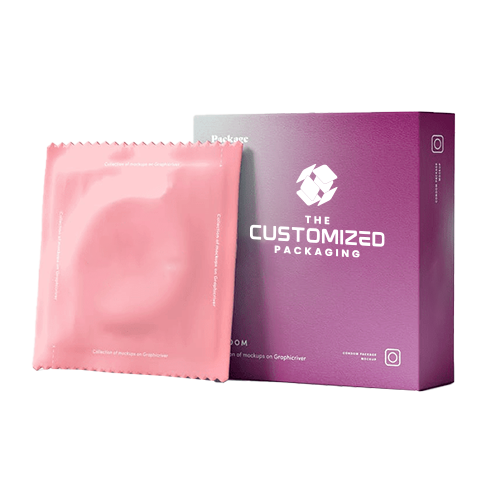
Custom Condom Boxes organize individually sealed condom wrappers into retail multipacks, variety packs, clinic packs, promotional kits, dispensers, subscription assortments, and shelf-ready cases. The outer carton should be developed around the actual foil or film wrapper, product count, folded instruction leaflet, coding area, insert, packed weight, retail format, and packing process.
The carton is a secondary package. Each condom should remain inside the properly sealed primary wrapper specified by the product manufacturer. That primary wrapper provides the main unit seal and barrier function. The paperboard box can organize the sealed units, carry approved information, improve retail presentation, and reduce avoidable movement, but it should not be described as making the product sterile, hygienic, leakproof, or medically compliant by itself.
A well-planned carton also makes artwork control easier. Product identity, count, size or variation, material information, directions, warnings, expiration details, lot coding, barcode data, and brand messaging need defined panel space before decorative graphics are finalized.
What the Outer Carton Should Accomplish
-
Hold the intended number of sealed wrappers without bending, puncturing, scraping, or tightly compressing their sealed edges.
-
Keep an instruction leaflet, product guide, or approved insert accessible without hiding or damaging the unit packs.
-
Provide clear areas for product identification, coding, expiration information, warnings, barcodes, and market-specific copy.
-
Close securely for retail handling while supporting tamper-indicating seals, dispenser openings, hang tabs, or shelf-ready presentation where required.
-
Fit the manual or automated packing process used by the product owner.
The most decorative structure is not always the best choice. Wrapper integrity, readable information, packing accuracy, retail use, storage, and distribution should remain the primary design considerations.
Treat the Sealed Wrapper as the Primary Product Package
The foil or film pouch should remain intact from packing through consumer use. The outer carton should not contain sharp die-cut edges, exposed staples, aggressive adhesive, rough insert tabs, or excessive internal pressure that could mark or damage the unit wrappers.
Carton materials should not be promoted as “medical-grade” merely because the box is used for a medical device. The responsible product owner must select and approve the full packaging system, product labeling, storage instructions, shelf-life data, quality controls, and market-specific requirements.
Windows are usually unnecessary for this product because the printed carton can communicate the pack contents without exposing the unit wrappers. When a window is requested, its position, film, adhesive, panel strength, privacy, and interaction with required copy should be reviewed carefully.
Material Options for Custom Condom Boxes
| Material | Best Applications | Main Advantages | Planning Considerations |
|---|---|---|---|
| SBS paperboard | Pharmacy cartons, retail multipacks, samples, and detailed branded artwork | Smooth white surface, accurate color reproduction, and clean scoring | Caliper should match the wrapper count, leaflet, and closure |
| Folding boxboard | High-volume retail cartons and packing-line applications | Good stiffness-to-weight balance and consistent folding | Grain direction and crease quality affect automated performance |
| White kraft board | Modern retail and private-label packaging | Bright printable surface with a paper-based appearance | Confirm surface, caliper, and coating for the intended route |
| Natural kraft board | Minimal branding, clinic programs, and simple promotional packs | Natural appearance and efficient one- or two-color printing | Light colors and fine photographic artwork reproduce differently |
| Recycled paperboard | Selected secondary-packaging projects | Recycled-content options and flexible converting | Grade, odor, surface consistency, and cleanliness should be reviewed |
| F-flute or E-flute corrugated | Larger multipacks, mailers, shelf-ready cases, and subscription kits | Added compression and stacking support | Fine graphics may require a suitable liner and printing process |
| Rigid board | Premium variety sets and reusable organizers | Strong shape and controlled opening experience | Higher cost, storage volume, and shipping weight |
| Specialty paper or wrap | Limited editions and premium wellness collections | Textured, metallic, or distinctive visual finish | Barcodes, small copy, adhesives, and coding need testing |
Material selection should be based on the assembled pack, not on appearance alone. Heavy coatings, foil, windows, security labels, and inserts can affect folding, coding, recycling, and production-line performance.
Carton Styles for Retail, Clinics, and Distribution
| Box Style | Recommended Use | Opening Experience | Key Consideration |
|---|---|---|---|
| Straight tuck-end carton | Three-, six-, twelve-, and other retail multipacks | Simple top-and-bottom flap access | Efficient flat storage and familiar packing process |
| Reverse tuck-end carton | Lightweight retail packs and samples | Opposing tuck closures | Product orientation should remain consistent during packing |
| Auto-lock bottom carton | Larger counts and packs with leaflets or accessories | Preformed base with top loading | Base strength should be tested at full packed weight |
| Seal-end carton | High-volume automated packaging | Glued ends with controlled opening | Requires accurate equipment and artwork planning |
| Sleeve-and-tray box | Premium variety packs and private-label collections | Sliding reveal | Tray movement must not scrape sealed wrappers |
| Drawer box | Organized home storage or premium assortments | Pull-out tray | Stop features and pull access need testing |
| Dispenser carton | Clinics, hospitality, counters, and larger multipacks | One sealed wrapper removed at a time | Opening must not bend or damage wrapper edges |
| Hang-tab carton | Pharmacy pegs and convenience retail | Suspended retail display | Hanger area must support the packed load |
| Counter display | Multiple retail packs or individually sealed units where appropriate | Open retail access | Product retention and replenishment need planning |
| Corrugated mailer | Ecommerce and subscription fulfillment | Discreet shipping-ready opening | Interior restraint and privacy should be tested |
| Shelf-ready case | Wholesale distribution and retail replenishment | Tear-away display conversion | Case coding, pack count, and tear lines must remain accurate |
Design the Carton Around the Sealed Wrapper Stack
Nominal condom size does not determine the carton dimensions. The box should be sized from the sealed wrapper’s outside length, width, thickness, edge seals, crimp profile, and natural stacking behavior. A twelve-count pack may be arranged in one stack, two rows, divided groups, or a tray, and each layout produces a different carton.
The folded leaflet can add more thickness than expected. Include the leaflet, coupons, cards, security labels, inserts, and any approved accessories when calculating internal dimensions. Too much free space may allow wrappers to shift and create an untidy opening. Too little space may bend wrappers, stress seals, make the carton bulge, or prevent the flaps from closing correctly.
A plain wrapper-fit sample is recommended before a wholesale order, especially for larger counts, mixed assortments, dispenser openings, or automated packing.
Multipacks, Variety Packs, and Sample Cartons
Retail cartons can be developed for one sample, three-count, six-count, twelve-count, twenty-four-count, thirty-six-count, or another verified quantity. The final count should appear consistently across the principal panels, barcode data, case labels, and packing instructions supplied by the responsible brand.
Variety packs may separate different sizes, materials, textures, or other product versions through dividers, color coding, symbols, product maps, or numbered rows. The outer artwork should not make claims that conflict with the individual wrappers or approved labeling.
Sample and promotional cartons can carry campaign details and educational information, but they should still retain the approved directions, warnings, expiration data, and product identification required for the intended distribution program.
Inserts, Leaflet Pockets, and Dispenser Openings
Folded paperboard inserts can hold wrappers in rows, separate product versions, create a leaflet pocket, or present an assortment in a fixed order. Inserts should use smooth folds and adequate clearance. Narrow tabs or raw edges should not press against the wrapper seals.
Leaflets may sit above, below, beside, or behind the product stack. The opening sequence should allow the customer to find the directions without scattering the contents. A leaflet pocket can keep printed information separate while preserving the usable product area.
Dispenser slots should release one sealed unit without requiring the user to bend or drag the wrapper through a tight opening. A refillable or reusable dispenser should be developed only when its cleanliness, durability, loading method, and labeling remain appropriate for the intended program.
Keep Regulatory Artwork Separate from Promotional Design
Condom cartons may require substantial product and safety information. The responsible manufacturer or brand should provide final approved copy and confirm which information belongs on the principal display panel, secondary panels, unit wrapper, leaflet, and shipping case.
For applicable latex products, expiration dating and natural-rubber-latex caution wording may need prominent placement on higher levels of packaging as well as the immediate package. Non-latex, spermicidal, natural-membrane, and market-specific products may follow different requirements. The packaging supplier should reproduce approved artwork accurately rather than create or independently validate medical, performance, or legal claims.
Use a controlled artwork process with product codes, revision numbers, dieline versions, language variants, barcode verification, and sign-off responsibilities. Promotional graphics should never crowd out required copy or reduce its readability.
Coding, Barcodes, and Security Features
Dedicated coding panels can hold lot numbers, expiration dates, production references, retailer labels, DataMatrix codes, barcodes, or variable QR codes. These areas should remain flat, high contrast, and free from heavy texture, reflective foil, deep embossing, seams, or closure tabs.
Tamper-indicating options include paper seals, adhesive labels, tear strips, glued ends, perforated tabs, serialized stickers, and security bands. They can provide visible evidence that the outer carton has been opened, but they should not be described as completely tamper-proof.
Anti-counterfeit features may include serialization, covert marks, microtext, verification codes, holographic labels, or controlled specialty printing. Their value depends on the brand’s authentication system and supply-chain procedures, not on the decorative feature alone.
Discreet Retail and Ecommerce Packaging
Retail packaging can be professional and restrained while still identifying the product clearly. Neutral colors, compact branding, organized typography, and limited imagery can support discretion without removing essential product information.
Ecommerce orders may place the printed retail carton inside a plain corrugated mailer. The shipper can keep branding and product descriptions private from casual view while protecting corners, seals, coding, and retail artwork from labels and abrasion. The mailer should control movement without compressing the retail pack.
Subscription and curated wellness kits may combine sealed condom packs with separately packaged products or printed materials. Each item should remain in its own suitable primary package, and dividers should prevent bottles, devices, or hard accessories from pressing against the condom wrappers.
Packing-Line and Quality-Control Planning
High-volume cartons may need automatic erection, product loading, leaflet insertion, flap closing, sealing, coding, vision inspection, and case packing. Board caliper, crease quality, glue-seam position, flap geometry, opening force, and dimensional tolerances should match the equipment.
Manual packers need clear orientation, easy opening, accurate count control, secure closure, and accessible coding areas. Packing instructions should define wrapper direction, leaflet position, insert placement, seal location, inspection criteria, and case quantity.
A production trial with the actual sealed wrappers is more reliable than approving the box from a digital rendering alone.
More Responsible Outer-Packaging Choices
Paper-based options may include right-sized cartons, verified recycled-content board, natural kraft, recyclable corrugated material, paper inserts, reduced ink coverage, and structures with fewer mixed components.
Environmental claims should describe the finished outer package. Lamination, foil, holograms, security labels, adhesives, windows, inks, coatings, and local recycling or composting systems can affect the appropriate claim. The primary foil or film wrapper should be considered separately rather than included in an unsupported whole-package claim.
MOQ, Wholesale Pricing, and Production Planning
Pricing depends on wrapper dimensions, product count, leaflet size, carton style, material, insert, dispenser opening, hang tab, coding method, security feature, print coverage, artwork versions, quantity, proofing, and delivery destination.
Selected digitally printed tuck cartons and promotional packs may support lower quantities. Seal-end cartons, automated-line projects, specialty security printing, rigid structures, several language versions, and large retail programs may require higher minimums or additional testing.
Information Needed for an Accurate Quote
-
Sealed-wrapper outside dimensions, thickness, crimp profile, photographs, and physical samples where available.
-
Product count, stack arrangement, leaflet dimensions, inserts, approved accessories, and total packed weight.
-
Preferred carton style, opening method, dispenser slot, hang tab, tamper feature, coding area, and shipping format.
-
Final approved artwork, barcode data, product codes, language versions, variable fields, and revision controls.
-
Packing method, equipment requirements, order quantity, delivery destination, target date, and required proofing or testing.
Estimate Your Condom Packaging Budget
Use the Custom Box Packaging Cost Calculator to create an early estimate for custom condom cartons. Enter the approximate dimensions, quantity, material, structure, printing, inserts, and finishing requirements to compare possible configurations.
The calculator is a planning tool. Final pricing should be confirmed after the sealed wrappers, leaflet, dieline, artwork, coding, security features, packing process, production quantity, and delivery requirements have been reviewed.
Why Choose The Customized Packaging?
The Customized Packaging develops condom cartons around individually sealed wrappers, approved artwork, retail requirements, and the packing process rather than applying one generic box to every product.
Businesses can request tuck-end cartons, seal-end boxes, sleeve-and-tray packs, dispensers, hang tabs, inserts, leaflet pockets, coding panels, tamper-indicating seals, discreet mailers, counter displays, and shelf-ready cases.
Share the sealed-wrapper dimensions, count, leaflet, artwork, quantity, and distribution requirements to receive a recommended structure for pharmacies, healthcare retailers, clinics, ecommerce, hospitality, private-label programs, promotions, and wholesale supply throughout the USA.
Yes, we provide both discreet and branded packaging options depending on your business needs.
Absolutely, our condom boxes are crafted from medical-grade, FDA-compliant materials to ensure safety.
Yes, we offer full customization for logos, usage info, compliance labeling, and graphics.
Yes, we offer recyclable, biodegradable, and sustainable packaging options.
Yes, we accept bulk orders with wholesale pricing and flexible minimum order quantities.
Related Products




Order Custom Condom Boxes from The Customized Packaging
We manufacture Custom Condom Boxes for businesses that need reliable product protection, accurate printing, and professional packaging for retail, ecommerce, storage, or shipping. Each box can be customized by size, material, structure, printing, coatings, finishes, inserts, and order quantity.
Share your artwork and quantity targets for Custom Condom Boxes and we will recommend the most cost-effective structure for your timeline. or speak with a packaging expert. Browse custom rigid boxes, packaging inserts, and use our Custom Box Packaging Cost Calculator.