11 Ways to Reduce Packaging Costs Without Lowering Quality
Discover 11 practical ways to reduce packaging costs by optimizing box dimensions, materials, printing, inserts, quantities, fulfillment, testing and product protection.
 Published April 03, 2026
Updated August 04, 2026
8 min read
How to Reduce Packaging Costs Without Lowering Quality
Packaging costs include more than the price of the box. Materials, printing setup, inserts, packing labor, storage, damaged products, and shipping volume can all affect the real cost of packaging. The most effective packaging cost reduction strategy is not to choose the cheapest box, but to remove unnecessary costs while maintaining suitable product protection and presentation.
The following 11 methods can help ecommerce businesses, retailers, manufacturers, subscription brands, and startups improve custom packaging costs in the USA.
11 Practical Ways to Lower Packaging Costs
1. Right-Size Every Package
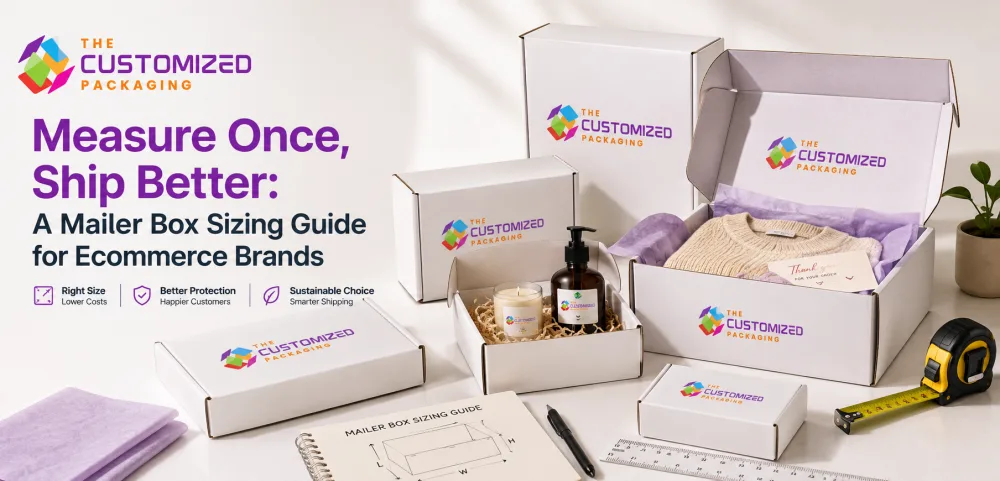
An oversized box uses more board, takes up more storage space, may require additional void fill, and can increase shipping volume. Begin with the product’s complete packed dimensions rather than estimating the box from the product alone. Include primary containers, caps, accessories, instructions, and the insert.
Right-size packaging should leave enough space for safe packing and necessary protection without creating avoidable empty volume. For a product range, compare whether several items can safely use one standardized box size before creating a separate dieline for every SKU.
2. Compare Total Cost, Not Box Price Alone
A low unit price can become expensive when the packaging is slow to assemble, requires several separate components, occupies excessive warehouse space, or fails during delivery. Compare the complete landed and operating cost.
| Cost area | What to review |
|---|---|
| Production | Box, printing, tooling, finishes and inserts |
| Fulfillment | Assembly, taping, labeling and packing time |
| Storage | Flat-packed or assembled volume |
| Shipping | Packed dimensions, weight and destination |
| Failure | Damage, returns, replacements and repacking |
This packaging cost analysis gives purchasing teams a more accurate basis for comparing structures and suppliers.
3. Match the Material to the Product
The strongest or most luxurious material is not always the right choice. Folding paperboard can suit lightweight retail products, while corrugated board is commonly selected for ecommerce delivery and heavier items. Kraft paperboard can support a natural presentation, and rigid board may be appropriate when premium presentation helps justify the product’s selling price.
Choose material according to packed weight, fragility, stacking, handling, delivery method, moisture exposure, retail requirements, and brand position. Over-specifying the board adds cost, while under-specifying it can lead to damage and returns.
4. Simplify the Box Structure
Complex shapes, multiple glued sections, unusual closures, and difficult assembly can add tooling, material, production, and labor costs. A standard mailer, tuck-end carton, sleeve-and-tray box, or regular shipping carton may accomplish the same purpose more efficiently.
Ask whether each structural feature improves protection, packing speed, retail display, or customer experience. When a feature does not produce a clear benefit, simplifying it may reduce the cost of custom boxes.
5. Remove Unnecessary Components
Tissue, sleeves, cards, labels, ribbons, filler, and secondary cartons can create an attractive presentation, but each component adds purchasing, inventory, and packing requirements. Review the complete packaging system and give every part a defined role.
A printed interior may replace a separate message card. A properly designed insert may reduce loose filler. Printed instructions may remove an additional leaflet. Consolidating components can lower material use and make fulfillment more consistent.
6. Select Inserts for Protection, Not Decoration Alone
A well-designed insert can reduce movement, abrasion, breakage, and inconsistent presentation. However, an insert that is heavier or more complex than the product requires can add unnecessary cost.
Compare folded paperboard, corrugated partitions, molded pulp, divider grids, and selected foam options based on the product. The right custom packaging inserts should protect critical areas, support quick packing, and use material efficiently.
7. Choose Printing for the Artwork and Quantity
Printing cost depends on artwork, colors, coverage, substrate, setup, and run size. Digital printing may be practical for shorter runs, variable versions, or market testing, while offset and other production methods may become more efficient for larger quantities and consistent repeat orders.
Do not select a printing process from quantity alone. Ask the packaging supplier to compare suitable methods using the actual artwork, material, finish, and order volume.
8. Use Premium Finishes Selectively
Foil stamping, embossing, debossing, spot UV, soft-touch finishes, windows, and specialty wraps can strengthen product presentation, but using several effects together increases production steps.
Choose one or two finishes that support the most important brand element. For example, a focused foil logo or embossed mark may create a stronger result than applying premium effects across every panel. Selective finishing can preserve a premium appearance while controlling custom printed box pricing.
9. Plan Order Quantities Around Real Demand
Larger production runs often lower the average unit cost because setup and tooling are distributed across more boxes. However, ordering more packaging than the business can use creates storage costs and risks obsolete inventory after product, artwork, ingredient, compliance, or branding changes.
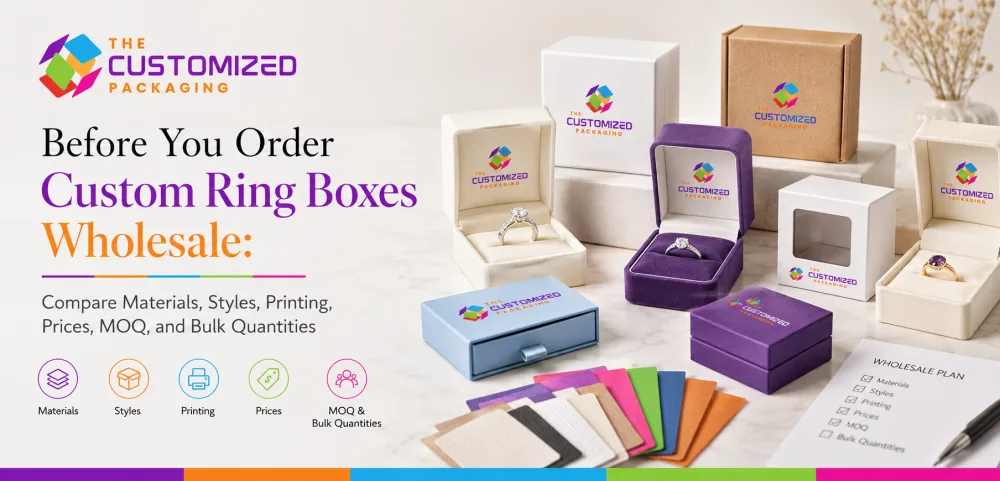
Compare expected sales, reorder time, available storage, cash flow, and design stability before choosing a quantity. The MOQ generally starts at 100 units for most custom packaging styles, while higher quantities can provide better per-unit value when demand is predictable.
10. Standardize Packaging Across Product Lines
Standardization can reduce the number of dielines, materials, inserts, cartons, and packing instructions a business manages. Similar products may share one outer box while using labels, sleeves, printed variants, or adjustable inserts to distinguish individual SKUs.
Standardization is most effective when it does not compromise fit or protection. Test the largest, smallest, heaviest, and most fragile product before approving one structure for multiple items.
11. Test Before Committing to a Large Run
A digital proof can confirm artwork placement, but it cannot fully demonstrate fit, assembly, closure strength, insert performance, or delivery protection. A structural or printed sample can reveal issues before they are repeated across a wholesale order.
Test product loading, removal, stacking, closure, label placement, barcode and QR-code readability, and the complete shipping configuration. Sampling adds an upfront step but can prevent larger losses caused by an incorrect size, weak structure, or unsuitable insert.
Where Packaging Savings Usually Come From
The best savings normally result from several moderate improvements rather than one dramatic cut. A smaller box may reduce material, filler, storage, and shipping volume at the same time. A simpler structure may reduce tooling and packing labor. A suitable insert may reduce damage without adding excessive components.
| Business goal | Packaging decision to compare |
|---|---|
| Lower shipping volume | Smaller exterior dimensions and reduced void space |
| Lower unit price | Quantity, board grade, print method and finishes |
| Faster fulfillment | Simpler assembly and fewer loose components |
| Reduce damage | Better fit, board strength and movement control |
| Reduce inventory | Shared structures and planned reorder quantities |
| Maintain premium appeal | Focused branding and selective finishes |
How to Compare a Custom Packaging Quote
An accurate quote should identify the internal or external dimensions, box style, material, printing coverage, finishes, insert, quantity, delivery destination, and production assumptions. Confirm whether tooling, samples, assembly, shipping, duties, or special handling are included.
Use the Custom Box Packaging Cost Calculator to compare preliminary combinations of size, material, printing, finish, and quantity. An estimator supports budget planning, but final pricing should be confirmed after the artwork, structure, packed product, destination, and schedule are reviewed.
Why Work With The Customized Packaging?
The Customized Packaging LLC develops cost-effective custom packaging for ecommerce, retail, food, cosmetics, apparel, electronics, gifts, and other product categories across the USA. Projects can include custom dimensions, structural dielines, material recommendations, printed branding, fitted inserts, proofs, finishing options, and delivery planning.
Standard production generally takes 8–12 business days after final artwork, specifications, payment, and proof approval. Rush production may be available for eligible projects. Free standard USA shipping is available on eligible orders, and the team aims to provide an initial response within one business day.
Frequently Asked Questions
How can a small business reduce packaging costs?
Start by correcting the box dimensions, reducing unnecessary components, selecting a suitable material, limiting premium finishes, and comparing several realistic quantities. Test the structure before placing a larger order.
Do larger packaging orders cost less per box?
They often have a lower average unit cost because fixed setup and tooling costs are spread across more units. The best quantity still depends on demand, storage, cash flow, and the risk of future artwork or product changes.
Can smaller boxes lower shipping costs?
They can reduce packed volume and unnecessary material, but the final shipping price depends on the carrier, packed dimensions, weight, service, and destination.
Is cheaper packaging always more profitable?
No. Packaging that causes damage, slow packing, excess shipping volume, or poor presentation can create costs beyond the box price. Compare the complete packaging system rather than only the box price.
What information is needed for an accurate quote?
Provide the product and box dimensions, packed weight, box style, material, printing, finishes, inserts, quantity, artwork status, destination, and required deadline.
Calculate and Compare Your Packaging Options
Compare several packaging configurations before selecting a final specification. Use the custom packaging cost calculator for preliminary budgeting, then submit your dimensions, artwork, quantity, destination, and deadline for a project-specific quotation.