How Custom Rigid Boxes Improve Product Protection, Luxury Presentation, and Brand Value
Custom rigid boxes are widely used for premium products because they combine strong structure, luxury presentation, and a refined customer experience. This guide explains rigid box materials, styles, printing options, industry uses, protection benefits, wholesale considerations, and packaging cost factors in a purely informational way.
 Published July 06, 2026
Updated July 06, 2026
25 min read
Published July 06, 2026
Updated July 06, 2026
25 min read
Custom rigid boxes are one of the most recognized packaging formats for premium product presentation because they offer a stronger structure, a more polished appearance, and a better tactile experience than many standard folding cartons. They are commonly used when a product needs to feel valuable before the customer even opens the package. This is why rigid packaging is often connected with cosmetics, fragrances, candles, jewelry, electronics, gift items, watches, apparel accessories, luxury sweets, and limited-edition products.
The main value of rigid packaging comes from the way it combines protection and presentation. A rigid box is usually made from thick paperboard or chipboard that does not fold flat like a regular carton. This gives the package a firm shape, better pressure resistance, and a more premium feel in the customer’s hands. When the structure is combined with high-quality wrapping paper, printing, finishing, inserts, and closure styles, the box can become part of the product experience rather than only a container.
Packaging has become especially important in ecommerce, retail, gifting, and luxury product markets. Customers often judge product quality from the first physical impression. A weak or poorly fitted box can make even a good product feel ordinary. A well-structured rigid box can make the same product feel more secure, more giftable, and more valuable. This is why businesses often use rigid packaging when the product’s appearance, price point, or customer expectation requires something stronger than standard packaging.
What Makes Rigid Boxes Different from Standard Packaging?
Custom rigid box packaging is different from regular folding cartons because it is built with a thicker and more stable board. A folding carton is usually made from thinner paperboard and is shipped flat before assembly. It is practical for lightweight retail products, but it may not provide the same sense of strength or luxury. Rigid boxes are generally pre-formed, wrapped, and finished into a more durable structure.
The firmness of rigid boxes affects how customers perceive the product. When a package has weight, clean edges, strong corners, and a smooth finish, it creates a more premium impression. This is especially useful for products that are purchased as gifts or displayed in retail settings. The packaging does not only protect the item; it supports the story of the product.
Another difference is flexibility in presentation. Rigid boxes can be made in two-piece styles, magnetic styles, drawer styles, shoulder-neck styles, book-style boxes, collapsible formats, and custom insert-based structures. Each style creates a different opening experience and level of presentation.
Why Rigid Packaging Supports Product Protection
Rigid boxes packaging is often selected for products that need better physical support during handling, display, storage, or delivery. The thick board helps the box maintain its shape under normal pressure. This can reduce bending, crushing, and deformation compared with lightweight cartons.
However, protection is not created by board thickness alone. The best protection comes from the full packaging system. This includes the outer box, the inner insert, product fit, closure style, material thickness, and shipping method. A glass candle jar, for example, may need a rigid outer box with a fitted insert. A perfume bottle may need a cutout holder. A jewelry product may need a velvet-style insert or paperboard tray. A gift set may need dividers to prevent products from moving inside the box.
The purpose of rigid packaging is to keep the product stable and presentable. If the product shifts inside the box, the customer may open the package and see a messy layout. Even if the item is not damaged, poor arrangement can reduce the premium feeling. A properly designed rigid box keeps the item secure and improves the moment of opening.
Rigid Setup Boxes and Structural Strength
Rigid setup boxes are boxes that are already formed into their final shape during production. They are not folded flat like regular cartons. This gives them a strong structure and makes them suitable for premium presentation, retail display, gift packaging, and product protection.
The word “setup” usually refers to the fixed structure of the box. Because the box is already assembled, it feels more solid and stable. This makes it common for jewelry boxes, fragrance packaging, luxury candle boxes, cosmetic kits, electronics accessories, premium sweets, and corporate gift packaging.
The advantage of a setup box is the immediate premium feel. The customer does not see a thin or collapsible package. Instead, the product arrives in a firm box with clean edges and a more substantial appearance. This structure can make the product feel more valuable and carefully presented.
Material Choices for Rigid Boxes
Rigid box materials affect strength, appearance, printing quality, weight, cost, sustainability, and customer perception. The outer look of a rigid box may appear simple, but the construction usually includes several layers. The core board gives the box strength, while the wrapping paper or printed sheet creates the visible surface.
Material selection should be based on product weight, fragility, design style, finishing requirements, and customer expectation. A high-end jewelry box may need textured paper and a soft insert. A cosmetic gift set may need smooth printed paper with foil details. A candle jar may need a thicker board and a fitted holder. A corporate gift box may need a clean matte finish and strong presentation.
| Material Component | Common Use | Main Benefit | Consideration |
|---|---|---|---|
| Greyboard / Chipboard | Main rigid box structure | Provides strength and firm shape | Thickness should match product weight |
| Printed Art Paper | Outer wrapping surface | Supports full-color branding and graphics | Needs accurate artwork setup |
| Textured Paper | Luxury and specialty packaging | Adds premium touch and tactile value | May limit detailed color printing |
| Kraft Wrapping Paper | Natural or minimal packaging | Gives a simple, organic look | Not always suitable for luxury categories |
| Specialty Paper | Perfume, jewelry, gift, and premium boxes | Creates unique surface appearance | Usually increases cost |
| Coated Paper | Retail and cosmetic packaging | Smooth surface for clear printing | Coating choice affects recyclability |
| Velvet / Fabric Inserts | Jewelry, watches, gifts | Adds soft premium support | Higher cost and more delicate handling |
| Paperboard Inserts | Candles, cosmetics, bottles, kits | Holds products in place | Must be designed around product dimensions |
The best material is not always the most expensive one. The correct material is the one that supports the product, matches the brand style, and performs well in handling or shipping conditions.
Luxury Rigid Boxes and Premium Presentation
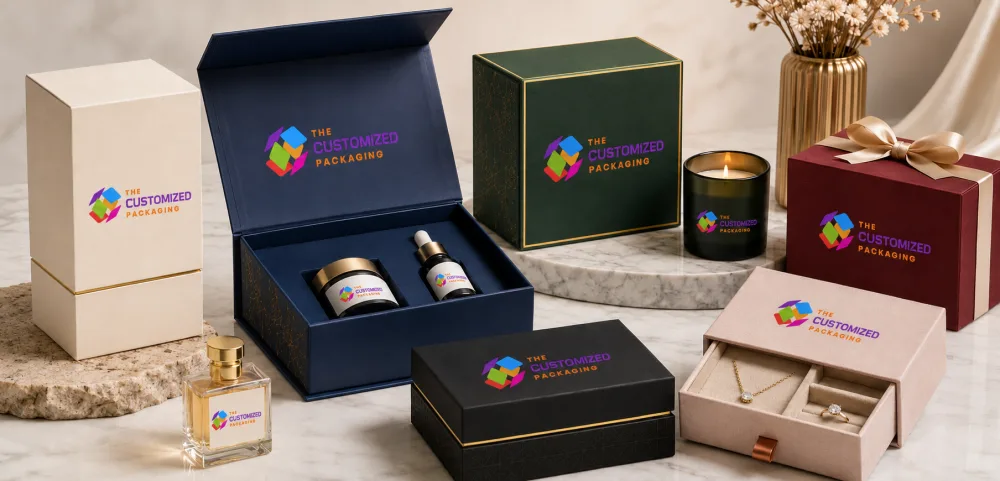
Luxury rigid boxes are used when packaging needs to communicate a higher level of value. This type of packaging is common for premium cosmetics, perfumes, candles, jewelry, watches, fashion accessories, electronics, limited-edition products, and gift sets. The box becomes part of the product’s perceived worth.
Luxury packaging is not created only by using expensive materials. It comes from the combination of structure, proportion, color, texture, finish, and opening experience. A minimal black rigid box with a small foil logo can feel more luxurious than a crowded design with too many colors. A soft-touch surface can make the box feel smooth and high-end. A magnetic closure can create a satisfying opening and closing experience.
The goal is to make the product feel intentional. Every detail should support the customer’s expectation. If the product is elegant, the packaging should feel refined. If the product is modern, the design should feel clean. If the product is giftable, the box should feel complete enough to present without additional wrapping.
Rigid Box Styles and Their Uses
Rigid boxes can be made in different styles depending on the product type, presentation goal, budget, and storage requirement. Each style affects how the box opens, how the product sits inside, and how the customer experiences the packaging.
| Rigid Box Style | Best For | Opening Experience | Main Advantage |
|---|---|---|---|
| Two-Piece Rigid Box | Jewelry, candles, cosmetics, gifts | Lid lifts off from base | Classic, gift-ready presentation |
| Magnetic Closure Box | PR kits, luxury gifts, cosmetics, apparel | Flap opens and closes with magnets | Premium and reusable feel |
| Drawer Rigid Box | Watches, jewelry, accessories, chocolates | Product slides out like a drawer | Elegant reveal and strong presentation |
| Shoulder-Neck Box | Perfumes, luxury gifts, watches | Lid lifts with inner neck support | Strong luxury structure |
| Book-Style Rigid Box | Corporate gifts, influencer kits, electronics | Opens like a book | Large branding surface and premium reveal |
| Collapsible Rigid Box | Ecommerce, corporate gifts, bulk packaging | Folds flat and assembles when needed | Saves storage and shipping space |
| Window Rigid Box | Retail display and gift products | Product is partly visible | Helps product visibility |
| Sleeve Rigid Box | Gift sets and retail products | Outer sleeve slides over box | Adds layered presentation |
A product should not be forced into a style only because the style looks attractive. The structure should match the item’s weight, fragility, size, and customer use. A fragile glass product may need inserts. A luxury gift set may need compartments. A premium apparel accessory may need a wider box with tissue or fabric lining.
Two-Piece Rigid Boxes
A 2 piece rigid box is one of the most common rigid packaging styles. It includes a separate lid and base. The customer removes the lid to reveal the product inside. This structure is simple, familiar, and strongly connected with gift packaging.
Two-piece rigid boxes are often used for jewelry, watches, apparel accessories, candles, chocolates, sweets, cosmetics, and premium gifts. They can be designed with a plain exterior, printed artwork, textured wrapping paper, foil stamping, embossing, or a custom insert.
This style works well when the product needs a classic presentation. It feels stable and elegant without requiring a complicated structure. The lid and base can also create a sense of anticipation because the customer must lift the top piece to see the product.
Magnetic Closure Rigid Boxes
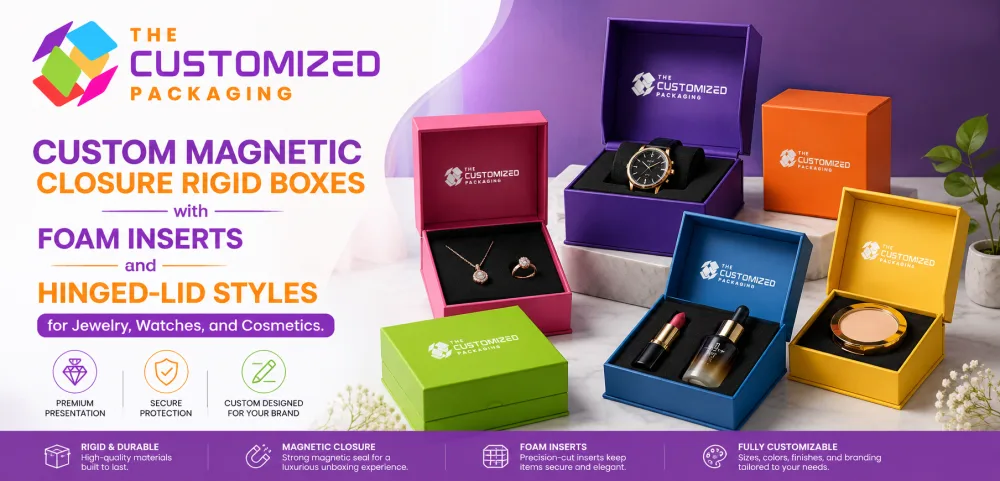
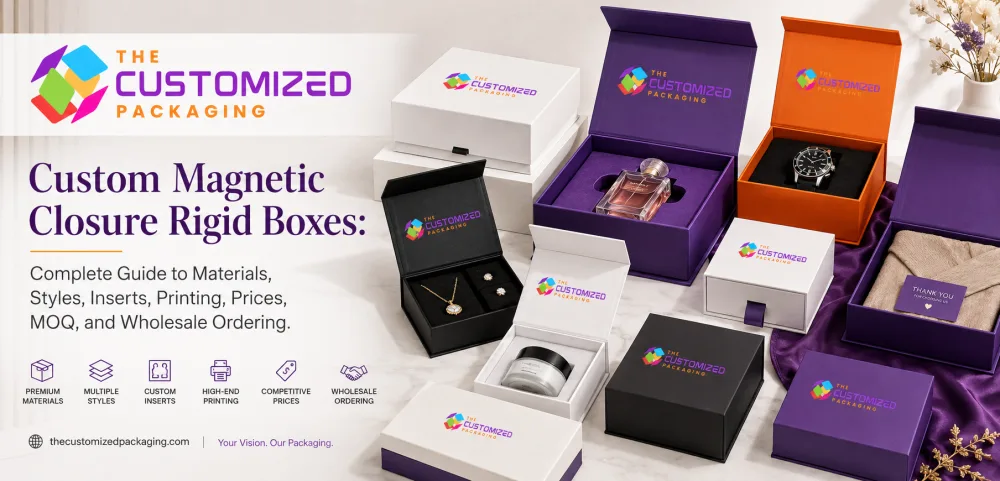
Magnetic closure rigid boxes are popular for products that need a more premium opening experience. Hidden magnets are placed inside the flap and base, allowing the box to close smoothly. The result is a clean and reusable structure that feels more valuable than a basic tuck or lift-off closure.
This style is commonly used for cosmetics, perfumes, jewelry, corporate gifts, influencer kits, apparel accessories, luxury candles, and electronics. It works especially well when the product is part of a gift set or unboxing experience.
The magnetic closure also gives the box a storage value. Customers often keep magnetic boxes because they feel strong and useful. This can extend brand visibility after the original purchase.
Magnetic Rigid Boxes and Reusability
Magnetic rigid boxes are closely connected with premium retail and gift packaging because they feel secure, structured, and reusable. The magnetic flap gives the package a refined opening and closing motion, which can make the product feel more carefully presented.
These boxes are useful for industries where customers expect packaging to look polished. Beauty sets, jewelry pieces, luxury accessories, fragrance kits, and promotional gifts often use magnetic rigid structures because they combine protection with presentation.
A magnetic rigid box can also support printed interiors, dividers, foam alternatives, paperboard inserts, ribbon pulls, and layered product arrangements. This makes it suitable for multi-item kits where organization matters.
Collapsible Rigid Boxes
Collapsible rigid boxes are designed to provide the premium appearance of rigid packaging while reducing storage and shipping volume. Traditional setup boxes are delivered already formed, which means they take up more warehouse space. Collapsible formats can be folded flat and assembled when needed.
This style is helpful for ecommerce brands, corporate gift companies, subscription campaigns, retail promotions, and businesses that need premium boxes in larger quantities but have limited storage space. Collapsible rigid packaging can reduce freight volume and make inventory handling easier.
The structure must still feel strong after assembly. If the folding panels, adhesive areas, or magnets feel weak, the box may lose its premium impression. A well-designed collapsible rigid box should feel stable when assembled and should not look like a temporary structure.
Custom Rigid Gift Boxes
Custom rigid gift boxes are used when the packaging needs to feel complete, presentable, and suitable for gifting. A gift box must do more than hold a product. It should create anticipation, protect the item, and make the recipient feel that the product was carefully prepared.
Rigid gift boxes can include two-piece lids, magnetic flaps, drawer openings, sleeves, inserts, ribbons, printed interiors, and specialty papers. These features help create a more finished look compared with basic packaging.
Gift packaging is especially important for holidays, corporate events, product launches, limited-edition sets, retail promotions, and ecommerce gift orders. A rigid gift box can make the product feel ready to present without requiring extra wrapping.
Wholesale Rigid Gift Packaging
Rigid gift boxes wholesale is a keyword often connected with bulk planning, seasonal packaging, corporate gifting, and retail product launches. From an informational perspective, wholesale planning matters because rigid boxes usually require more material, more production steps, and more storage space than flat folding cartons.
A larger quantity can reduce the per-unit cost, but it also requires careful planning. Businesses should confirm the final dimensions, artwork, insert layout, material, and product fit before producing large volumes. If the product changes later, unused rigid boxes may become difficult to repurpose.
Wholesale gift packaging also needs timeline planning. Rigid boxes with foil stamping, magnetic closures, custom inserts, or textured paper may require more production time than simpler cartons. Businesses preparing for holiday sales, events, or retail launches should account for design approval, production, packing, and shipping time.
Wholesale Rigid Boxes for Packaging Planning
Rigid boxes wholesale planning is useful for businesses that need consistent packaging across retail shelves, ecommerce orders, gift sets, or product campaigns. Wholesale planning can improve consistency and reduce unit cost, but it should not be done before proper testing.
A sample or prototype helps confirm whether the product fits well, whether the insert holds the item properly, whether the opening experience feels right, and whether the artwork prints correctly. Testing is especially important for fragile items, high-value products, and multi-piece sets.
Wholesale rigid packaging also affects storage. Traditional setup boxes take up more space because they are not flat. Collapsible styles can reduce storage needs, but they may have different assembly requirements. The right approach depends on the business model, product volume, warehouse space, and delivery method.
Custom Rigid Packaging and Brand Identity
Custom rigid packaging allows a brand to shape the customer’s physical experience with the product. Brand identity is not only created through a logo. It is also created through color, material, texture, structure, typography, finish, opening style, and product arrangement.
For example, a premium skincare brand may choose soft neutral tones, clean typography, and matte lamination. A fragrance brand may use deep colors, foil stamping, and a shoulder-neck box. A jewelry brand may use a small two-piece box with a soft insert. A candle brand may use strong board, a fitted holder, and warm color tones.
When the packaging matches the product’s identity, it makes the brand feel more consistent. Customers can understand the product’s position more easily because the box supports the same message as the product itself.
Custom Printed Rigid Boxes
Custom printed rigid boxes are used when the packaging needs to carry visual branding, product information, decorative artwork, or campaign graphics. Printing can appear on the exterior, interior, lid, base, sleeve, insert, or wrapping paper.
Printed rigid packaging is common in cosmetics, fragrances, candles, sweets, electronics, gift items, and limited-edition products. A printed surface can make the box more recognizable and more connected to the product line.
Print quality is important because rigid boxes are often associated with premium products. Blurry artwork, incorrect colors, poor alignment, or low-quality finishing can reduce the value of the packaging. Artwork should be prepared carefully with correct dimensions, safe zones, color mode, and finishing placement.
Rigid Box Printing and Finishing
Rigid box printing includes the methods and surface treatments used to create the final appearance of the package. Printing and finishing choices affect both design and perceived quality. A simple printed box can look clean and modern, while a finished box with foil, embossing, or spot UV can feel more premium.
| Printing / Finish Option | Informational Purpose | Common Use |
|---|---|---|
| CMYK Printing | Full-color artwork and graphics | Cosmetics, candles, gifts, retail products |
| PMS Color Matching | More accurate brand colors | Luxury and brand-sensitive packaging |
| Matte Lamination | Smooth, non-gloss surface | Premium cosmetics, candles, apparel gifts |
| Gloss Lamination | Bright and shiny surface | Retail products and colorful packaging |
| Soft-Touch Coating | Smooth, velvet-like feel | Luxury rigid boxes and premium kits |
| Foil Stamping | Metallic logo or details | Jewelry, fragrance, gift packaging |
| Embossing | Raised logo or pattern | Premium brand marks and textures |
| Debossing | Pressed-in logo or detail | Minimal luxury packaging |
| Spot UV | Gloss contrast on selected areas | Modern retail and cosmetic boxes |
| Textured Paper | Tactile premium surface | Jewelry, watches, gift packaging |
Finishing should support the design rather than overwhelm it. A luxury package does not always need every premium finish. Sometimes one strong detail, such as foil stamping or embossing, creates a cleaner and more refined result than several effects used together.
Industry-Wise Uses of Rigid Boxes
Rigid boxes are used across many industries because they can be adapted to different product needs. The same box structure may not work for every category, so industry-wise planning is important. Product fragility, customer expectation, shelf presentation, shipping conditions, and price point all affect the best packaging choice.
| Industry | Common Rigid Box Use | Main Packaging Need | Suitable Style |
|---|---|---|---|
| Cosmetics | Skincare kits, makeup sets, beauty tools | Premium look and organized inserts | Magnetic, drawer, two-piece |
| Fragrance | Perfume bottles and sample kits | Luxury presentation and bottle support | Shoulder-neck, magnetic, two-piece |
| Candles | Glass jars, tins, gift candle sets | Protection and scent-based branding | Two-piece, magnetic, insert-based |
| Jewelry | Rings, necklaces, bracelets, watches | Soft inserts and premium feel | Two-piece, drawer, shoulder-neck |
| Apparel | Scarves, ties, lingerie, accessories | Gift-ready presentation | Magnetic, book-style, two-piece |
| Electronics | Gadgets, accessories, devices | Secure structure and insert protection | Drawer, magnetic, book-style |
| Food Gifts | Chocolates, sweets, luxury treats | Presentation and compartment layout | Two-piece, drawer, sleeve |
| Corporate Gifts | Promotional kits and executive gifts | Organized multi-item presentation | Magnetic, book-style, collapsible |
| Retail Products | Shelf-ready premium goods | Visual branding and durability | Printed rigid, window, sleeve |
| Subscription Kits | Curated recurring products | Unboxing and item organization | Magnetic, collapsible, insert-based |
This industry-wise view shows that rigid packaging should be matched to the product category. A candle box needs different protection than a jewelry box. A fragrance box needs bottle support. A corporate gift box may need several compartments. A cosmetic kit may need both branding and product organization.
Rigid Candle Boxes for Home Fragrance Products
Rigid candle boxes are used when candles need both protection and premium presentation. Candles are often packed in glass jars, ceramic vessels, tins, or decorative containers. These products may be fragile or heavy, so packaging must support the item properly.
A rigid candle box can include a fitted insert to keep the jar from moving. The thick outer board helps resist pressure, while the design can reflect the candle’s scent, mood, and price point. For example, a luxury candle may use dark colors, foil stamping, and matte lamination. A natural candle may use textured paper or kraft-style wrapping. A seasonal candle may use decorative artwork and gift-ready presentation.
Candle packaging also affects how customers understand the fragrance before opening the jar. Color, typography, and finish can suggest warmth, freshness, calmness, luxury, or seasonal value. This makes rigid candle packaging both functional and emotional.
Rigid Boxes for Cosmetics and Beauty Products
Cosmetic and beauty products often use rigid packaging because presentation strongly affects perceived quality. Skincare sets, makeup kits, serums, perfumes, beauty tools, and premium cosmetic bundles need packaging that looks clean, organized, and trustworthy.
Rigid boxes allow beauty brands to use inserts, compartments, and printed interiors. These features help arrange multiple items neatly. A customer opening a skincare kit should see bottles and jars placed properly, not moving loosely inside the package.
Cosmetic packaging also benefits from premium finishes such as soft-touch coating, foil stamping, embossing, and matte lamination. These finishes can communicate cleanliness, luxury, or modern beauty depending on the design direction.
Rigid Boxes for Fragrance and Perfume Packaging
Fragrance packaging needs a strong connection between scent, bottle design, and presentation. Perfume bottles are often made from glass and may have unique shapes, caps, or finishes. The packaging must protect the bottle while also matching the emotional identity of the fragrance.
Rigid boxes work well for fragrance products because they can include custom inserts, shoulder-neck structures, magnetic closures, and luxury finishes. A fragrance box may use deep colors, metallic foil, textured paper, or minimal typography to create a premium impression.
The opening experience is especially important in fragrance packaging. The box should create anticipation before the bottle is revealed. When the product is positioned neatly inside the box, the entire experience feels more refined.
Rigid Boxes for Jewelry and Watches
Jewelry and watches often require packaging that feels elegant, secure, and gift-ready. Rigid boxes are suitable because they can hold soft inserts, velvet trays, satin lining, foam alternatives, or molded supports. These inserts keep delicate products in position and improve the presentation.
For rings, necklaces, bracelets, and watches, the inside of the box is as important as the outside. The customer expects the item to be centered, protected, and displayed beautifully. A strong rigid box with a soft interior can make a small product feel more valuable.
Finishing choices such as foil stamping, debossing, textured paper, and matte surfaces are common in jewelry packaging because they support a luxury feel without needing excessive graphics.
Rigid Boxes for Apparel and Fashion Accessories
Apparel and fashion accessories use rigid boxes when the product is giftable, premium, delicate, or part of a luxury experience. Scarves, ties, lingerie, wallets, belts, gloves, and designer accessories can feel more valuable when presented in a structured box rather than a simple mailer or folding carton.
Rigid packaging can include tissue paper, ribbons, printed interiors, sleeves, or magnetic flaps. These details make the package feel more complete and suitable for gifting. For fashion brands, packaging also supports brand identity because color, typography, and material can match the product’s style.
A high-end apparel accessory may not need heavy protective inserts, but it still benefits from a clean layout and strong presentation.
Rigid Boxes for Electronics and Premium Accessories
Electronics and premium accessories often require packaging that protects the product and organizes components. Small devices, headphones, chargers, watches, cables, smart accessories, and tech gift sets can use rigid packaging with inserts, trays, or compartments.
The packaging should keep items separated and prevent movement. It should also make the product easy to understand when opened. Instruction cards, compartments, and layered trays can improve the opening experience.
Tech packaging often uses clean design, minimal colors, matte finishes, and precise insert layouts. The goal is to make the product feel organized, modern, and reliable.
Rigid Boxes for Sweets, Chocolates, and Gift Foods
Premium sweets, chocolates, truffles, cookies, and confectionery gifts often use rigid boxes because presentation matters in food gifting. A rigid box can make edible products feel more special and suitable for holidays, events, corporate gifting, and retail display.
Food gift packaging may include dividers, trays, sleeves, windows, or printed interiors. The box should protect the products from movement and help them appear organized when opened. For chocolates and sweets, compartment layout is especially important because the customer sees the arrangement immediately.
Material selection must also consider food contact requirements. If the food touches the packaging directly, proper food-safe liners, trays, or inner wraps may be needed.
Product Inserts and Interior Presentation
A rigid box without a proper interior can still feel incomplete. Inserts help control how the product sits inside the package. They reduce movement, improve protection, and create a cleaner opening experience.
Inserts may be made from paperboard, corrugated board, molded pulp, fabric-covered board, foam alternatives, or specialty materials. The best insert depends on product shape, weight, fragility, and presentation needs.
For multi-item kits, inserts create order. For fragile products, they reduce movement. For luxury products, they improve display. For ecommerce shipping, they help the product arrive in the intended position.
Cost Factors in Rigid Box Packaging
Rigid boxes usually cost more than lightweight cartons because they require thicker board, wrapping material, assembly, finishing, and sometimes inserts or special closures. Cost planning is important because the final price depends on several variables.
| Cost Factor | Why It Matters | Example Impact |
|---|---|---|
| Box Size | Larger boxes use more board and wrapping paper | Increases material cost |
| Board Thickness | Thicker board improves strength | May increase unit cost |
| Box Style | Magnetic, drawer, and collapsible styles require different construction | Affects production complexity |
| Printing Coverage | Exterior and interior printing require more setup | Increases printing cost |
| Finishing | Foil, embossing, spot UV, and soft-touch add steps | Raises premium appearance and cost |
| Inserts | Custom holders improve presentation and protection | Adds material and labor |
| Quantity | Larger runs may reduce unit cost | Requires more storage |
| Shipping Volume | Setup boxes take up more space | Affects freight and storage planning |
| Timeline | Rush production may require extra scheduling | Can increase cost |
The lowest-cost option is not always the most practical one. A weak package can lead to product damage or poor presentation. An overly expensive package may not fit the product’s price point. Good planning balances protection, presentation, and budget.
Rigid Box Cost Calculator Section
A rigid box cost calculator helps estimate how different packaging choices affect the final budget. It is useful because rigid packaging has many variables, including box size, board thickness, structure, printing, finishing, inserts, quantity, and shipping volume.
To estimate cost properly, the first step is to measure the product and decide how much space is needed for inserts or wrapping. The next step is to choose the box style. A two-piece rigid box may have a different cost from a magnetic closure box, drawer box, or collapsible rigid box. The third step is to select material, printing, and finishes.
A calculator-style approach helps compare options. For example, reducing the box size may lower material use. Choosing a simpler finish may reduce production cost. Increasing the quantity may lower the unit price, but it may require more storage. Using a collapsible structure may reduce shipping volume but may involve a more complex design.
The purpose of a cost calculator is not only to find the cheapest option. It helps identify the best balance between protection, appearance, quantity, and budget.
Common Mistakes in Rigid Box Planning
One common mistake is choosing a rigid box style only because it looks premium. The structure must fit the product. A large empty box can make the product move inside. A tight box can make the item difficult to remove. Poor fit can damage both protection and presentation.
Another mistake is using too many decorative finishes. Foil, embossing, spot UV, textured paper, and soft-touch coating can all look attractive, but too many effects together can make the design look crowded. Strong luxury packaging often uses restraint.
A third mistake is forgetting the shipping journey. A rigid box may look beautiful, but it can still be scratched, dented, or damaged if shipped without proper outer protection. Ecommerce rigid packaging may require an outer shipping box to preserve the premium surface.
Another mistake is skipping sample testing. Rigid packaging should be tested for fit, opening experience, insert strength, print quality, and product stability before full production.
How to Choose the Right Rigid Box
Choosing the right rigid box starts with the product. The product’s size, weight, fragility, price point, and customer expectation should guide the structure. A perfume bottle may need a different style from a bracelet. A candle jar may need stronger support than a scarf. A corporate kit may need compartments for several items.
The next step is choosing the opening experience. A two-piece box feels classic. A magnetic box feels premium and reusable. A drawer box creates a reveal effect. A collapsible box supports storage efficiency. A shoulder-neck box feels refined and stable.
Material and finishing should come after the structure is clear. The surface should match the brand and product category. A luxury product may need matte lamination, foil, or textured paper. A natural product may need simpler material. A modern product may need clean printing and minimal color.
The final step is cost and logistics. Rigid boxes take up more space and often require more production planning. The best choice is the one that fits the product, protects it properly, supports presentation, and remains practical for storage and delivery.
Final Thoughts
Rigid boxes improve product protection, luxury presentation, and brand value because they combine strong structure with a refined customer experience. Their thick board construction helps products feel more secure, while their design flexibility supports premium presentation across many industries.
The value of rigid packaging comes from the full system: material, structure, insert, printing, finish, size, and industry fit. A two-piece rigid box may be ideal for classic gift packaging. A magnetic closure box may support luxury unboxing. A collapsible rigid box may help with storage efficiency. A rigid candle box may protect fragile glass while improving shelf appeal.
When planned correctly, rigid packaging does more than hold a product. It shapes the customer’s first impression, improves the opening experience, protects the item, and supports the product’s perceived value. For premium products, gift items, retail collections, and luxury ecommerce packaging, rigid boxes remain one of the most effective packaging formats.