

| Specification | Available options |
|---|---|
| Product type | Croissant Boxes — bakery cartons sized for croissants |
| Primary use | Counter display, pickup carry, short delivery, multipacks, and light gift assortments |
| Pastry format | Plain, butter, filled, glazed, almond, chocolate, and other topped croissants |
| Pack count | Single croissant or multipack arrangements (e.g. 2 / 4 / 6) sized to layout |
| Custom size | Internal cavity from curved length, widest width, topping height, and arrangement |
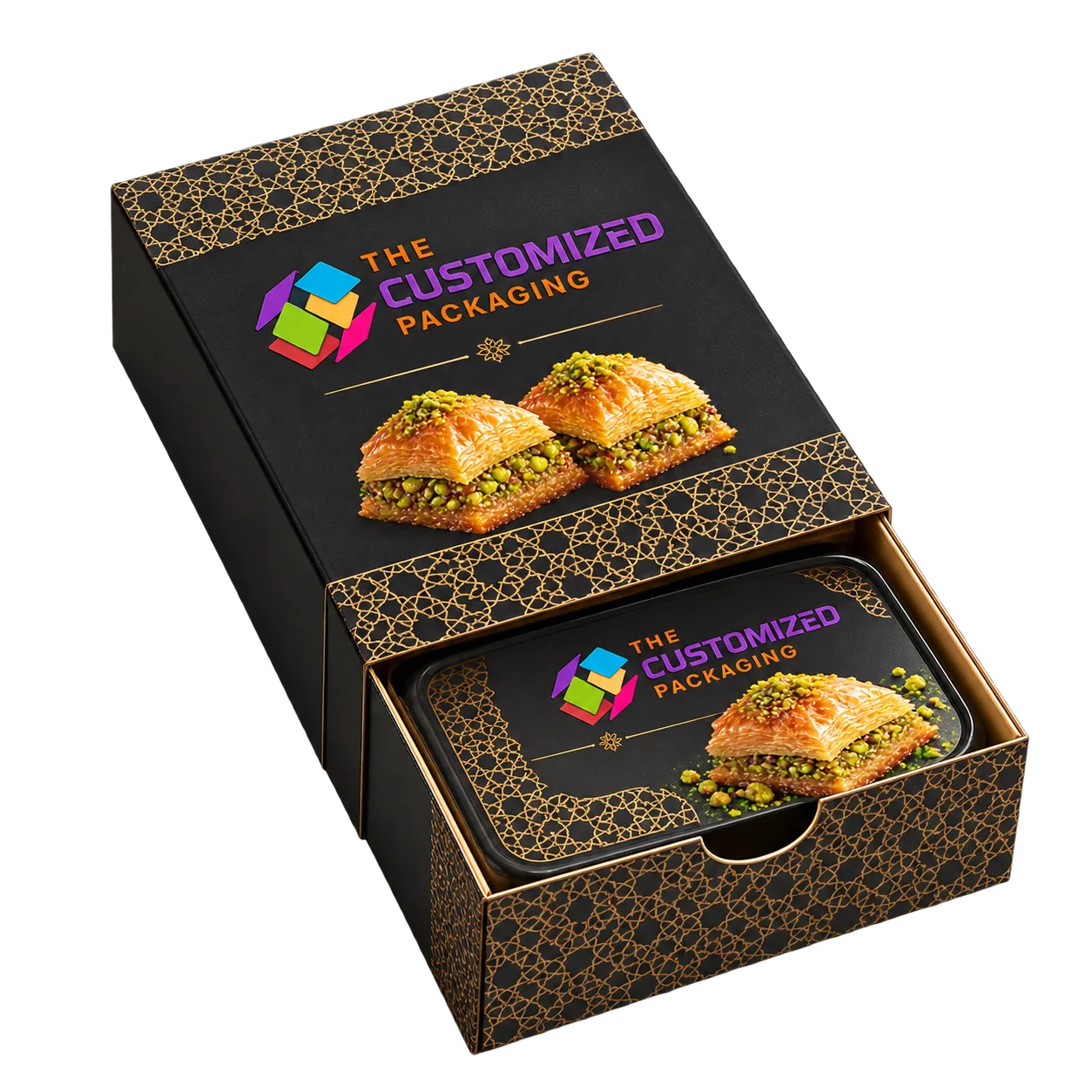
| Box styles | Tuck-top, auto-lock, two-piece, window carton, gable, sleeve-and-tray, mailer-style where needed |
| Materials | Paperboard / kraft options and light corrugated where pack weight requires; confirm for application |
| Window options | Optional top, front, or custom aperture with structural border retained |
| Interior options | Dividers, compartments, die-cut bases, folded trays, raised-edge inserts |
| Liner / tissue allowance | Plan cavity for bakery tissue, wrap, or tray when used; confirm food-contact path |
| Printing | CMYK, Pantone, digital, or offset on exterior panels; interior print only where specified |
| Label areas | Variety name, bakery mark, allergen/handling notes, barcode/SKU panels |
| Finishes | Matte/gloss/aqueous; foil, emboss/deboss, spot UV where board allows and application permits |
| Artwork | Print-ready files with dieline, bleed, and outlined fonts |
| Quote inputs | Pastry L/W/height, piece count/layout, liner vs direct contact, window/vents, structure, print/artwork, quantity, delivery location |
Match Cavity to Croissant Curve and Height
Croissants are not rectangular pastries. The packing cavity has to follow the crescent’s longest curve, the widest middle section, and the tallest point—including almonds, glaze, or chocolate that sit above the dough. A lid that looks fine on a flat Danish can press the top layers of a butter croissant and leave flake on the board.
Measure without squeezing the pastry. Then decide orientation: one piece laid along the length of the carton, or several pieces in rows. This PDP is for croissant-shaped bakery packs inside TCP’s Bakery Boxes range—narrower than general Custom Pastry Boxes and distinct from round-pastry cartons such as Custom Donut Boxes.
- Maximum curved length of the largest croissant in the SKU
- Widest width across the middle of the pastry
- Center / topping height with glaze or nuts included
- Number of croissants and the planned row layout
- Tissue, liner, or divider thickness added to the stack
- Extra lid clearance so toppings do not touch the window film
One Pastry Cartons Versus Shared Bakery Trays
A single-croissant carton stays compact for grab-and-go and premium unit sales. Shared trays for two, four, or six pieces need a longer footprint, a stronger base for combined weight, and usually a divider or compartment so filled or glazed pieces do not smear each other in transit.
Size the shared carton from the largest pastry in the assortment, not from an average. Almond and chocolate croissants often need more lid height than a plain butter croissant of the same length. Lock piece count and arrangement before you choose tuck-top, auto-lock, two-piece, or sleeve-and-tray.
| Croissant pack format | Fit consideration | Useful structure |
|---|---|---|
| Single croissant | Curve length + topping clearance | Compact tuck-top or shallow window carton |
| Two-piece pack | Side-by-side width + light separation | Wider tuck carton with optional divider |
| Four- or six-piece tray | Row layout + base strength | Auto-lock or two-piece with compartment insert |
| Filled / cream croissant | Filling stability + board oil load | Snug cavity plus specified liner or coating |
| Topped / glazed croissant | No lid contact on toppings | Deeper lid; window border kept away from peaks |
| Assorted bakery mix | Largest piece sets shared dimensions | Divided tray or adjustable compartments |
Windows Without Crushing Flaky Layers
A top or front window shows color and shape at the counter without opening the pack. Keep a solid board border around the cut so the lid still carries when the carton holds several pieces. Oversized openings look generous on a mockup and then flex when staff stack boxes on a busy morning.
Place the aperture where glaze and almonds stay visible, and leave enough internal height so the pastry does not press the window film. Film type and any plastic-free window option should be confirmed with the same food-contact review as the board—visibility alone is not a material specification.
Liners, Dividers, and Butter-Heavy Pack-Outs
Butter-rich croissants can mark untreated board. Barrier needs vary by recipe and holding time, so do not assume one stock works for every croissant. Confirm whether pastries sit on a bakery tissue or liner, rest in a tray, or touch the carton face, then specify coating or liner for that pack-out. Direct-contact requirements are project-specific—not assumed on this page.
Dividers and die-cut bases stop sideways slide in multipacks. Keep insert walls high enough to separate pieces, low enough for clean removal, and clear of the tallest topping. Warm croissants should be cooled to your bakery’s packing temperature before the lid closes if condensation is a concern; optional side vents can be sampled when your process needs airflow.
- Single pastry carton for unit sales and samples
- Two-piece bakery pack with a light center divider
- Four- or six-piece row tray with compartments
- Window presentation carton for counter display
- Tray-and-sleeve format for controlled reveal or gift assortments
Counter Display, Pickup Carry, and Assortment Gifting
Counter programs prioritize a readable lid, optional window, and fast tuck or auto-lock assembly. Pickup and short delivery runs may need a stronger base or a gable handle so customers can carry the pack upright. Assortment gifts often use two-piece lids or sleeve-and-tray reveals so the arrangement stays neat until opening.
Match the structure to the route: a delicate window lid that works on a café counter may need a secondary outer for courier drops. Keep croissant geometry as the sizing driver even when the outer format looks like a general bakery mailer.
| Bakery use | Packaging priority | Useful feature |
|---|---|---|
| Café / retail counter | Visibility and quick pack-out | Window tuck-top; clear variety label area |
| Customer pickup | Carry stability | Auto-lock base or gable handle |
| Short local delivery | Compression and slide control | Dividers; stronger board or light flute |
| Gift / assortment | Presentation and separation | Two-piece or sleeve-and-tray with compartments |
| Wholesale bakery supply | Flat shipping and consistent cavities | Repeatable tuck/auto-lock dieline family |
Bakery Print Panels and Product Labels
Useful print zones include the lid for bakery mark and variety name, side panels for allergen or handling notes, and a quiet area for barcode or SKU. CMYK or Pantone can brand kraft or white board faces; foil, emboss, or spot UV may highlight logos on gift structures where the board and coating allow. Keep decorative finishes off surfaces that will contact pastry unless those finishes are approved for that application.
For a first-pass cost range before final dielines, use the Custom Box Packaging Cost Calculator. Then confirm fit with a white structural sample using real croissants—plain, filled, and topped pieces often need different lid heights even at the same length.
Quote inputs that speed production: croissant L/W/height, piece count and layout, liner or direct-contact preference, window/vent needs, structure shortlist, print colors or artwork, quantity, and delivery location.
Measure the longest curved length, widest middle width, and tallest point including toppings without compressing the pastry. Arrange the intended piece count as packed, then add clearance for liners, dividers, and lid height.
Yes. Two-, four-, and six-piece layouts are common when the footprint, base strength, and dividers match the arrangement. Size shared cartons from the largest croissant in the assortment.
Yes. Top or front windows can show shape and glaze while the pack stays closed. Keep a solid board border around the cut and enough internal height so toppings do not press the window film.
Yes. Tissue, liners, trays, and compartment inserts can be planned into the cavity. Confirm board, coating, liner, and food-contact requirements for whether pastries touch the carton or sit on a liner.
Share croissant L/W/height, piece count and layout, liner versus direct-contact preference, window or vent needs, structure preference, print or artwork, quantity, and delivery location. A white sample with real pastries confirms lid clearance.
Related Products




Order Croissant Boxes from The Customized Packaging
We manufacture Croissant Boxes for businesses that need reliable product protection, accurate printing, and professional packaging for retail, ecommerce, storage, or shipping. Each box can be customized by size, material, structure, printing, coatings, finishes, inserts, and order quantity.
Share your artwork and quantity targets for Croissant Boxes and we will recommend the most cost-effective structure for your timeline. or speak with a packaging expert. Browse custom rigid boxes, packaging inserts, and use our Custom Box Packaging Cost Calculator.