
Premium Customized Bakery Boxes for Fresh and Attractive Packaging
Explore how bakeries can combine accurate sizing, food-appropriate components, windows, inserts and branded printing for fresher, more attractive bakery packaging.
 Published April 10, 2026
Updated August 05, 2026
11 min read
Published April 10, 2026
Updated August 05, 2026
11 min read
Fresh bakery products create a packaging challenge that ordinary retail goods do not. A box must protect delicate icing, crisp edges, soft fillings and carefully arranged toppings while still presenting the product attractively.
That does not mean one decorative carton can preserve every cake, cookie or pastry in the same way. Freshness depends on the product, packing temperature, storage conditions, direct-contact materials and the time between preparation and consumption.
Custom bakery boxes allow bakeries to coordinate these requirements instead of forcing every product into a generic stock carton. The dimensions, board strength, window, liner, insert and printing can be selected around the baked item and the way it will be sold.
Freshness and Presentation Must Be Planned Together
Bakery packaging often focuses too heavily on one of two extremes.
Some boxes look attractive but provide poor support. Others protect the product but hide it inside a plain container that does little for the bakery’s identity.
Effective custom bakery packaging should handle both priorities:
| Packaging goal | What supports it |
|---|---|
| Protect product shape | Correct dimensions, stable base and suitable board strength |
| Manage grease or moisture | Appropriate liner, tray, wrap or documented contact surface |
| Prevent movement | Inserts, dividers, cake boards or fitted cavities |
| Improve visual appeal | Windows, organized layouts and clear branding |
| Support handling | Secure closure, carrying method and practical assembly |
| Communicate useful details | Product name, storage guidance, allergens and reheating instructions |
The correct balance changes according to the product. A cupcake box must protect frosting height, while a cookie box must reduce breakage and rubbing. A cake carton needs a stable base, but a pastry assortment may need individual sections.
A Bakery Box Does Not Create Freshness by Itself
The phrase “keeps products fresh” is often used too casually in bakery packaging.
A paperboard box can protect food from dust, handling, crushing and external contact. It may also support airflow or hold a separate barrier component. However, it does not automatically control oxygen, moisture, aroma or temperature.
The complete packaging system may include:
-
A direct-food-contact liner, cup, tray, wrap or bag
-
A cake board or product-support insert
-
A branded outer carton
-
A delivery carrier or shipping container
A crisp cookie intended for several days of storage may need an inner bag or wrap. A glazed donut may require a suitable grease-resistant surface. A chilled cheesecake needs packaging that remains stable under refrigeration.
The bakery should tell the packaging manufacturer whether the product will touch the box directly and whether it is dry, oily, moist, chilled, frozen or packed while warm.
Match the Box to the Bakery Product
The visual style should follow the food’s physical requirements.
| Bakery product | Useful packaging direction | Main design concern |
|---|---|---|
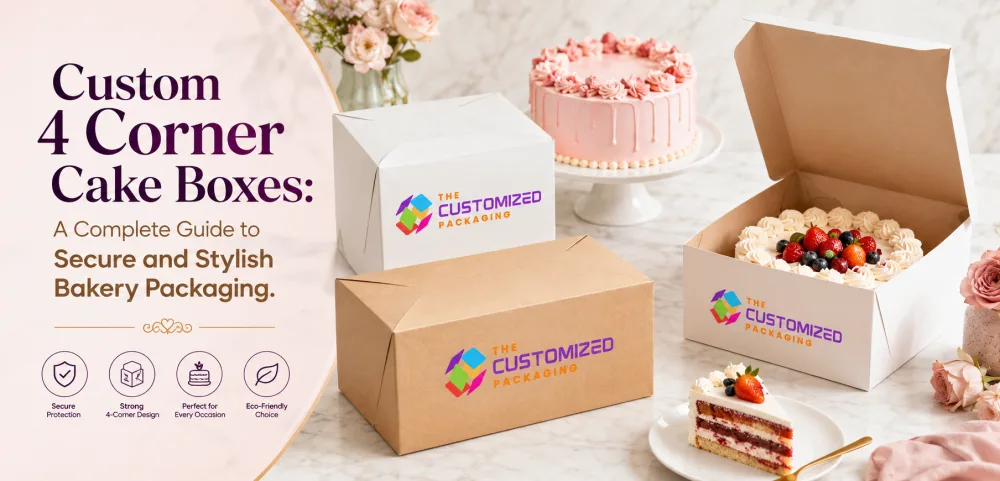
| Decorated cakes | Four-corner, auto-lock or corrugated cake box | Height, cake-board support and side clearance |
| Cupcakes | Folding carton with fitted insert | Frosting clearance and cavity size |
| Cookies | Window carton, sleeve-and-tray or divided box | Breakage, stacking and texture |
| Donuts | Shallow tuck-top or window box | Topping clearance and grease management |
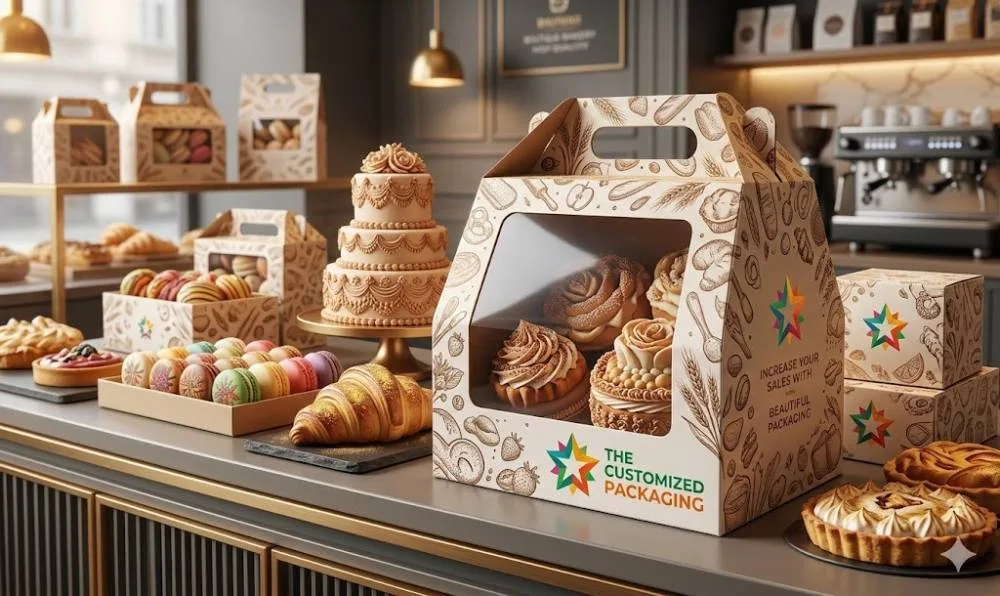
| Pastries | Window box, tray-and-sleeve or gable carton | Surface protection and movement |
| Brownies | Compact tray, tuck carton or divided assortment box | Grease, portion arrangement and fit |
| Macarons | Fitted tray, sleeve box or rigid presentation box | Rolling, collision and cavity size |
| Bread | Sleeve, carton or box around an inner bag | Shape, moisture and intended selling period |
These structures are starting points rather than universal rules. The final choice should be tested with the actual baked product.
Measure the Finished Product, Not the Recipe Size
Packaging dimensions should be based on the product after baking, decorating and placing it on any board, tray or liner.
An eight-inch cake may need considerably more internal space when it includes piped sides, a larger cake board, a tall topper or decorative elements. A cupcake measurement must include the widest part of its wrapper and the completed frosting height.
Before requesting customized bakery boxes, record:
-
Final product length, width and height
-
Packed weight
-
Cake board, tray or liner dimensions
-
Decoration and topping clearance
-
Normal quantity per order
-
Required insert thickness
-
Packing and removal method
The box should provide intentional clearance without becoming excessively large. Too little space damages decoration; too much space allows the product to slide and increases material and delivery volume.
Use Windows to Show the Right Part of the Product
Bakery products are highly visual. A window can help customers inspect colors, toppings, textures and product arrangement without opening the package.
The window should be positioned around the product rather than added as a generic rectangle.
For example, a cupcake window should reveal the frosting instead of the paper cups. A cookie-box opening should show a complete decorated cookie rather than an empty section of the tray. A cake-box window should not weaken an area that supports the lid or handle.
Window planning should consider:
-
Product position
-
Condensation and fogging
-
Film and adhesive placement
-
Panel strength
-
Storage temperature
-
Direct-contact conditions
-
Disposal or separation instructions
A smaller, well-positioned window can be more effective than removing most of the board from the front panel.
Inserts Should Protect the Product, Not Fill Space
Inserts are useful when they prevent a specific packaging problem.
Cupcake inserts hold each cake around the lower wrapper. Macaron trays stop products from rolling into one another. Dividers keep pastry flavors separated, while cake boards distribute weight across the base of the box.
An insert should be easy for staff to assemble and easy for customers to use. Complicated folds can slow service during busy bakery hours.
Useful bakery insert options include paperboard platforms, cupcake cavity inserts, corrugated dividers, pastry trays and individual compartments. Foam is generally unnecessary for normal bakery products and should not be used around unpackaged food without a properly planned separation system.
Design for the Way the Order Will Travel
Packaging that performs well at a bakery counter may not survive local delivery or parcel shipping.
Counter and Pickup Orders
Counter packaging should open quickly, close securely and store efficiently before use. Staff should not need several complicated steps to assemble each box.
A stable carrying position is particularly important for cakes, cupcakes and mixed pastry orders.
Local Delivery
Local delivery introduces vibration, braking, turns and stacking. Products should be tested inside the box using the actual delivery method.
Cupcakes need properly fitted cavities. Cakes may need a nonslip base and stronger walls. Donuts and pastries may require dividers so toppings do not transfer between products.
Ecommerce Shipping
An attractive bakery carton should not automatically be treated as a courier-ready shipping box.
Shelf-stable cookies, brownies, biscotti and packaged bakery products may need an inner barrier, fitted retail box, cushioning and corrugated shipping carton. The complete system should be tested before accepting larger online order volumes.
Build a Recognizable Bakery Packaging Family
Custom printed bakery boxes should help customers recognize the bakery across different products and box sizes.
The structural format may change between cakes, cookies and pastries, but key identity elements can remain consistent:
-
Logo position
-
Brand colors
-
Typography
-
Illustration style
-
Product-information hierarchy
-
Interior message
-
Website or QR-code placement
A consistent system is often more effective than applying an unrelated design to every bakery item.
Seasonal collections can use sleeves, labels, belly bands, ribbons or limited-edition artwork while retaining the same tested box structure. This reduces the need to develop a new dieline for every holiday.
Use the Available Print Area for Useful Information
A bakery box can carry more than a logo.
Depending on the sales format, the panels may include the product name, flavor, quantity, storage instructions, reheating guidance, ingredients, allergen details, order number, website, social media information, barcode or QR code.
The most important information should be easy to find. A customer should not have to rotate the package repeatedly to identify the flavor or storage direction.
Premium effects such as foil stamping, embossing, debossing and spot UV can emphasize the bakery name or a selected design element. They should not make important text harder to read or interfere with labels, folds and handling areas.
What Makes Bakery Packaging Look Premium?
Premium presentation does not require covering every panel with decorative effects.
A bakery box can look refined through:
-
Precise product fit
-
Clean structural folds
-
Controlled use of color
-
A well-positioned window
-
Organized product arrangement
-
Consistent logo placement
-
One carefully selected finish
-
A concise interior message
For a modern patisserie, a soft matte surface with restrained branding may be appropriate. A cookie-gift business may use a sleeve-and-tray box with individual compartments. A rustic bakery may prefer natural-looking paperboard with a one-color printed design.
The packaging should feel connected to the bakery rather than copied from a general luxury-box trend.
Avoid Broad Sustainability Claims
Terms such as recyclable, biodegradable, compostable and plastic-free should only be used when they accurately describe the finished package and its intended disposal conditions.
A paperboard carton may contain a plastic window, coating, adhesive, liner or laminated finish that affects how it should be handled after use.
A more practical approach begins with reducing unnecessary material:
-
Use dimensions that fit the product
-
Avoid inserts that have no protective purpose
-
Limit oversized windows
-
Use one structure for several related products where practical
-
Reduce excessive decorative layers
-
Provide clear separation or disposal guidance
The simplest package that protects the food and supports the brand can often be more effective than a heavily layered design.
Test Samples Under Real Bakery Conditions
A digital proof confirms artwork placement, but it does not confirm product fit or packaging performance.
Place the actual product inside a physical sample and review:
-
Loading and removal
-
Decoration clearance
-
Base strength
-
Closure security
-
Insert fit
-
Grease or moisture transfer
-
Window fogging
-
Refrigerated performance where applicable
-
Stability during carrying and delivery
-
Barcode and QR-code scanning
The sample should be packed at the same product temperature and handled for a similar period to a normal customer order.
Ordering Wholesale Custom Bakery Boxes
The cost of wholesale bakery boxes depends on the dimensions, structure, material, printing, window, coating, inserts, quantity and delivery destination.
Before requesting pricing, prepare:
-
Bakery product type
-
Finished product and board dimensions
-
Number of items per box
-
Direct-food-contact arrangement
-
Box style
-
Material preference
-
Window requirements
-
Insert or divider layout
-
Printing and finish
-
Number of artwork versions
-
Quantity
-
Delivery location
-
Required date
Most custom box styles begin at 100 units. Larger quantities can reduce the average production cost, but bakeries should avoid ordering more packaging than they can store or use before branding and product details change.
Why Choose The Customized Packaging?
The Customized Packaging creates bakery boxes with logo for bakeries, cafés, dessert businesses, home bakers, food brands, caterers and event suppliers.
Available options include custom cake boxes, cupcake carriers, cookie cartons, pastry boxes, donut packaging, macaron boxes, window structures, paperboard inserts, corrugated delivery boxes and premium gift packaging.
Each project can be customized with specific dimensions, materials, artwork, windows, inserts and finishes. Standard production generally takes 8–12 business days after final approval, with rush service available for eligible projects.
The buyer remains responsible for confirming that the complete packaging system, direct-contact components and labeling are appropriate for the food and its intended market.
Frequently Asked Questions
Do custom bakery boxes keep baked products fresh?
They can support freshness by protecting products from handling, crushing and external exposure. However, moisture, grease, oxygen and temperature control may require an appropriate liner, wrap, tray, bag or storage system.
Which material is best for bakery boxes?
The correct material depends on the product weight, moisture, grease, temperature, direct-contact arrangement and delivery method. Paperboard may suit lightweight counter products, while corrugated board can provide greater support for cakes and delivery orders.
Can bakery boxes be printed with a logo?
Yes. Logos, brand colors, product information, storage guidance, QR codes and seasonal artwork can be printed on the available outer and inner panels.
Are windows suitable for every bakery box?
No. Windows work best when product visibility supports the sale and the opening does not weaken the structure or conflict with temperature, moisture and food-contact requirements.
What details are needed for an accurate quote?
Provide the finished product dimensions, packing quantity, box style, material, window, inserts, artwork, order volume, delivery destination and required date.
Create Packaging That Protects What Customers See
Attractive bakery packaging only works when the product still looks appealing after packing, carrying and delivery.
The strongest premium bakery boxes are designed from the baked item outward. They provide enough clearance for decoration, control movement, use appropriate supporting components and show the product in a way that reflects the bakery’s identity.
By combining product-specific protection with disciplined branding, custom bakery boxes can help cakes, cookies, pastries and desserts reach customers in a fresh-looking, organized and professional presentation.