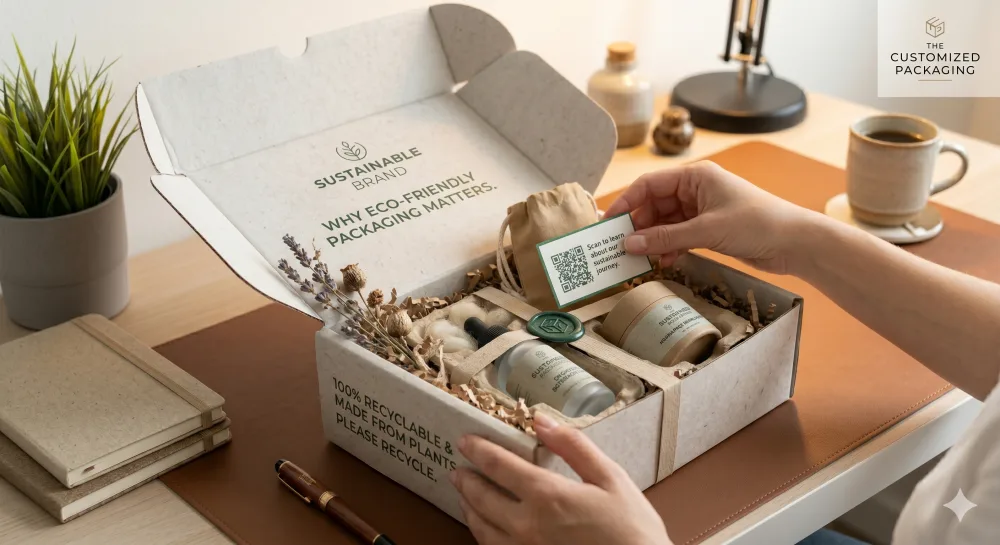

How Premium Custom Packaging Boxes Boost Ecommerce Sales and Build Brand Loyalty
Premium packaging does not automatically create loyal customers. Discover which packaging decisions may influence delivery satisfaction, repeat orders and ecommerce profitability and how to track the results.
 Published May 16, 2026
Updated August 05, 2026
13 min read
Published May 16, 2026
Updated August 05, 2026
13 min read
Premium packaging is often described as a shortcut to more sales, better reviews and stronger customer loyalty. The reality is more nuanced.
A beautifully printed delivery box cannot fix a weak product, slow shipping or poor customer service. Packaging can, however, influence what happens after the order is placed: whether the product arrives safely, whether the delivery feels consistent with the online store and whether the customer remembers the brand when they are ready to buy again.
Premium ecommerce packaging should therefore be evaluated as part of the complete customer journey—not simply as a more decorative shipping container.
The important question is not, “Does custom packaging look better?” It is:
Which customer or operational outcome should the packaging improve, and how will the brand measure whether that improvement occurred?
Packaging Influences Different Stages of the Customer Journey
Packaging cannot affect a customer before purchase when it is never shown on the product page, in advertisements or in social content. Its strongest influence normally begins after checkout.
| Customer stage | Potential packaging role |
|---|---|
| Before purchase | Product-page photography, gifting presentation and brand positioning |
| Fulfillment | Faster packing, fewer errors and consistent product arrangement |
| Delivery | Protection from crushing, movement, scratching and moisture exposure |
| Unboxing | Product organization, instructions and controlled presentation |
| Product use | Storage guidance, care information and easier identification |
| Repeat purchase | Brand recall, reorder prompts and consistent experience |
| Advocacy | Review content, referrals and voluntary social sharing |
This distinction matters because packaging cannot be credited for every sales increase.
A better product photo featuring an attractive box may affect the initial conversion rate. A stronger mailer may reduce damage claims. A clear reorder QR code may support repeat purchases. These are separate outcomes and should be measured separately.
Define What “Premium” Means for an Online Order
Premium does not necessarily mean rigid board, magnetic closures, foil or several layers of tissue.
For ecommerce, a premium package is one that feels intentionally designed for the product and delivery method.
It may include:
-
A box sized closely around the order
-
Enough strength for the packed weight
-
An insert that prevents damaging movement
-
Clean and consistent printing
-
Clear opening and product-use instructions
-
A sensible return or resealing method
-
A restrained brand presentation
-
An outer surface that reaches the customer in good condition
A compact corrugated mailer with one-color printing can feel more premium than an oversized luxury box filled with unnecessary material.
The structure should solve the delivery problem before decorative finishes are considered.
Better Protection Can Improve the Economics of Each Order
One of the clearest ways packaging may support ecommerce performance is by reducing preventable product damage.
Damage can lead to replacement products, refunds, customer-service time, additional shipping and negative reviews. The packaging cost should therefore be compared with the potential cost of failed deliveries.
Review where damage currently occurs:
-
Product movement inside the carton
-
Pressure on fragile components
-
Crushed corners
-
Scratched retail packaging
-
Broken glass or ceramic products
-
Bent apparel or printed goods
-
Leaking bottles
-
Opened closures
-
Moisture exposure
-
Excessive empty space
The correct solution may be a smaller box, stronger corrugated board, a fitted paperboard platform or better separation between products.
Adding more material everywhere is not the goal. Protection should be applied where testing shows it is needed.
Track Packaging Performance with Real Ecommerce Metrics
Packaging effectiveness should be evaluated using business data rather than customer compliments alone.
| Metric | What it may reveal |
|---|---|
| Damage rate | Whether the structure protects the product adequately |
| Packaging-related return rate | Whether damage, leakage or presentation causes returns |
| Refund and replacement cost | Financial impact of packaging failures |
| Customer-service contacts | Recurring complaints about opening, damage or missing parts |
| Review sentiment | Whether customers mention condition, presentation or waste |
| Repeat purchase rate | Whether customers return after receiving the new packaging |
| QR-code scans | Interaction with care, reorder or referral content |
| Referral-code use | Purchases connected to package-based referrals |
| Packing time per order | Whether the structure helps or slows fulfillment |
| Packaging cost per shipment | Complete cost of the box, insert and packing materials |
| Shipping cost per parcel | Whether the final dimensions affect delivery charges |
One metric should not be interpreted in isolation.
For example, repeat purchases may rise after a packaging update, but they may also be influenced by advertising, promotions, seasonality, product changes or faster delivery.
The safest conclusion is that packaging contributed to the outcome when several related indicators improve together.
Compare Packaging Versions Instead of Relying on Opinion
A structured comparison can help an online brand decide whether a packaging upgrade is worth the cost.
Start with a clearly defined change. Examples include:
-
Plain mailer versus branded mailer
-
Oversized carton versus right-sized carton
-
Loose product versus fitted paperboard support
-
Standard interior versus printed interior
-
Generic thank-you card versus tracked reorder card
-
Lightweight board versus reinforced construction
Keep the product, offer and customer group as similar as practical. Record which packaging version each order receives, then compare the relevant metrics over a meaningful number of shipments.
Do not change the box, discount, product photography, email campaign and delivery service simultaneously. Too many changes make the result difficult to interpret.
Brand Recognition Requires Consistency
Ecommerce boxes with logo can support recognition when the same visual system appears across the website, product labels, emails and physical delivery.
The box does not need to repeat the logo on every panel. A stronger system may keep several elements consistent:
-
Logo position
-
Main colors
-
Typography
-
Illustration style
-
Opening message
-
Product-information format
-
Interior treatment
-
Printed card design
Customers are more likely to connect the delivery with the online store when these elements feel familiar.
The shipping layer can remain restrained when privacy or theft visibility is a concern. More expressive branding can appear inside the mailer, on the retail carton or through a printed sleeve.
The Unboxing Experience Should Help the Customer
An ecommerce unboxing experience should not be judged by how many layers the customer removes.
It should make the order easy to understand and use.
Useful details may include:
-
Products arranged in a logical order
-
A clear opening point
-
Instructions placed where they are first needed
-
Accessories separated from the main product
-
A care or setup guide
-
Simple return guidance
-
A QR code leading to a relevant page
-
A short message appropriate to the purchase
A customer should not need to search through tissue, cards and filler to find an essential component.
The strongest reveal is often the one that presents the product immediately while protecting it throughout delivery.
Use Inserts Only When They Improve Fit or Function
Ecommerce packaging inserts may reduce movement, separate accessories or support a fragile component. They should not be added simply because inserts appear premium.
Possible options include folded paperboard, corrugated supports, molded pulp, dividers and product-specific trays.
Before adding one, ask:
-
What movement or damage does it prevent?
-
Can a smaller box solve the same problem?
-
Does it make packing faster or slower?
-
Can the customer remove the product comfortably?
-
Does it materially increase parcel dimensions?
-
Is it needed for every product variation?
A fitted support can improve both delivery protection and presentation. A decorative insert with no clear purpose adds cost and material without improving the order.
Packaging Can Support Repeat Purchases Without Becoming Promotional Clutter
Packaging may help a previous customer return when it provides a relevant next step.
That could include:
-
A QR code leading to the correct reorder page
-
Care instructions that extend product usefulness
-
A refill or replacement reminder
-
A referral code
-
A loyalty-program explanation
-
A product-registration link
-
Information about compatible products
The call to action should match the purchase.
A skincare order may link to a usage routine. A candle box may provide burn and refill guidance. An electronics package may direct the customer to setup instructions and accessories.
Generic messages such as “Follow us everywhere” or several competing discount codes can weaken the experience.
Tracked links and campaign-specific QR codes allow the brand to measure whether customers engage with the content printed inside the package.
Social Sharing Should Be Treated as a Bonus
Attractive packaging may appear in customer photos or videos, but voluntary sharing cannot be guaranteed.
Customers are more likely to create content when the complete experience gives them something worth discussing: a strong product, an organized reveal, attractive presentation or useful personalization.
Brands should not overspend on decorative features based solely on the hope of going viral.
A more practical social strategy is to ensure that:
-
The logo is visible without dominating the product
-
The interior looks organized from common camera angles
-
Loose components do not obscure the main product
-
The box opens without collapsing
-
A campaign hashtag is short and relevant
-
Any invitation to share remains optional
User-generated content should be measured through tagged posts, campaign codes and referral activity rather than assumed from the packaging design.
Choose the Structure According to the Order
Different ecommerce products require different packaging systems.
| Product or order type | Practical packaging direction |
|---|---|
| Apparel and soft goods | Corrugated mailer, folding carton or branded shipping bag |
| Cosmetics and skincare | Mailer with dividers or fitted retail cartons |
| Jewelry and accessories | Presentation box inside an outer shipping carton |
| Candles and glass products | Corrugated structure with vessel support |
| Electronics | Static-appropriate primary packaging with fitted transit protection |
| Subscription products | Repeatable mailer with organized compartments |
| Food products | Product-appropriate primary packaging inside a shipping system |
| Multiple-item orders | Adjustable dividers or modular carton sizes |
A luxury presentation box should not automatically be used as the courier container. Premium surfaces and retail cartons often need a separate shipping layer.
Similarly, custom mailer boxes should be tested for the packed product weight and delivery route rather than selected because they are popular with online brands.
Right-Sizing Can Protect Both Margin and Presentation
Oversized cartons create more internal movement and may require additional filler. They also occupy more storage space and can affect shipping charges depending on the carrier and service.
An online brand should develop a small packaging range around common order profiles rather than using one large box for everything.
For example:
-
Small single-product order
-
Standard multiproduct order
-
Fragile-product configuration
-
Gift-ready order
-
Large or high-value shipment
Each size should accommodate the product and required protection without excessive unused volume.
This approach can improve packing consistency while keeping the unboxing experience proportional to what the customer purchased.
Avoid Unsupported Environmental Messages
Paper-based custom ecommerce packaging is not automatically recyclable, biodegradable or environmentally preferable.
Lamination, windows, foil, adhesives, labels, tape, cushioning and mixed-material inserts all affect the finished package.
Instead of using a broad “eco-friendly packaging” statement, communicate a specific verified decision:
-
Box dimensions reduced by a stated amount
-
Verified recycled-content board
-
Plastic insert replaced with paperboard
-
Window removed
-
Reusable return format
-
FSC-certified material used for the specific production
-
Clear local disposal instructions
Environmental messaging should reflect the completed packaging system, not only the outer box material.
Calculate Packaging ROI Beyond the Box Price
The lowest unit price does not always create the lowest cost per successful delivery.
A practical packaging assessment should include:
-
Box and insert cost
-
Assembly labor
-
Storage space
-
Packing time
-
Shipping charges
-
Damage and replacement costs
-
Return-related expenses
-
Unused packaging inventory
-
Artwork-change risk
-
Measured repeat-order or referral activity
A more expensive structure may be justified when it measurably reduces damage or packing time. A decorative upgrade that produces no operational or customer improvement may not be worth repeating.
The decision should be based on the complete order economics rather than the box price alone.
Test Before Moving to Wholesale Production
A digital mockup cannot confirm shipping performance, packing speed or customer usability.
Test a physical sample with the real product, accessories, printed materials and outer shipping layer.
Review whether:
-
The product remains in position
-
The box survives normal handling
-
Corners and printed surfaces remain presentable
-
Staff can assemble it efficiently
-
The opening point is clear
-
Customers can remove the product easily
-
Returns can be handled where required
-
Barcodes and QR codes scan correctly
-
The package uses an appropriate amount of material
For a major redesign, send a limited production run before changing every order.
Information Needed for an Ecommerce Packaging Quote
For accurate pricing on wholesale ecommerce boxes, provide:
-
Product dimensions and packed weight
-
Number of products per order
-
Common order combinations
-
Existing damage or packing problems
-
Preferred box style
-
Required board strength
-
Insert or divider needs
-
Exterior and interior artwork
-
Printing and finishing requirements
-
Quantity per size
-
Shipping destination
-
Required date
Most custom packaging styles begin at 100 units. Brands using several box sizes should provide the required quantity for each version rather than only the combined order volume.
Why Choose The Customized Packaging?
The Customized Packaging develops product packaging for online stores around the product, fulfillment process and delivery method.
Available options include corrugated mailers, custom shipping cartons, folding retail boxes, rigid presentation packaging, paperboard dividers, molded supports and branded interior printing.
Projects can be developed for apparel, cosmetics, jewelry, candles, electronics, subscription products, food items and multiproduct orders.
The objective is not to add decoration to a standard carton. It is to create packaging that fits the product, supports efficient packing and arrives in the condition the brand intended.
Frequently Asked Questions
Does premium packaging automatically increase ecommerce sales?
No. Packaging may influence product presentation, delivery satisfaction, reviews and repeat purchases, but sales are also affected by the product, pricing, marketing, delivery and customer service. The effect should be measured.
Which packaging metrics should an online store track?
Useful metrics include damage rates, packaging-related returns, refund costs, packing time, review sentiment, QR-code scans, repeat purchases and packaging cost per successful shipment.
Are printed mailer boxes necessary for every ecommerce brand?
No. Some businesses benefit from exterior branding, while others need a discreet shipping surface. Branding can also appear inside the mailer or on the retail package.
Do premium ecommerce orders need rigid boxes?
Only when the product position and customer experience justify them. Many online orders perform better in accurately sized corrugated or paperboard packaging.
How can a brand test packaging ROI?
Compare controlled packaging versions, assign a code to each version and track relevant operational and customer metrics without changing too many other variables at the same time.
Treat Packaging as a Measurable Customer Touchpoint
Packaging can contribute to ecommerce growth, but it should not be treated as an automatic sales generator.
Its value comes from protecting the order, maintaining brand consistency, helping customers use the product and creating a clear path toward the next interaction.
When an online brand defines the outcome it wants, tests the structure and tracks the relevant data, branded shipping boxes can become a measurable part of customer retention rather than an unverified marketing expense.