
Custom Printed Boxes vs Plain Packaging: When Should an Ecommerce Brand Upgrade?
Plain packaging can be the right choice for a new ecommerce store, while custom printed packaging may make more sense once products, branding and order patterns become stable. Compare both options using a practical framework built around cost, flexibility, fulfillment and customer experience.
 Published May 16, 2026
Updated September 01, 2026
17 min read
Ecommerce brands often reach a point where a plain shipping box starts to feel disconnected from the website, product photography and brand identity customers saw before placing an order.
That does not automatically mean it is time to switch to fully printed packaging.
The decision between custom printed boxes vs plain packaging should be based on more than appearance. Order volume, product dimensions, SKU stability, storage space, packing speed, brand maturity and the role packaging plays after delivery all affect whether custom printing makes practical sense.
For some businesses, plain packaging remains the smarter option. For others, custom printed packaging becomes a useful part of a more established fulfillment and branding system.
The right question is therefore not:
Which box looks better?
It is:
Which packaging approach fits the current stage of the ecommerce business?
The Short Answer: Neither Option Is Always Better
Plain packaging and custom printed packaging solve different problems.
Plain boxes provide flexibility. They are useful when products, order volumes or branding are still changing.
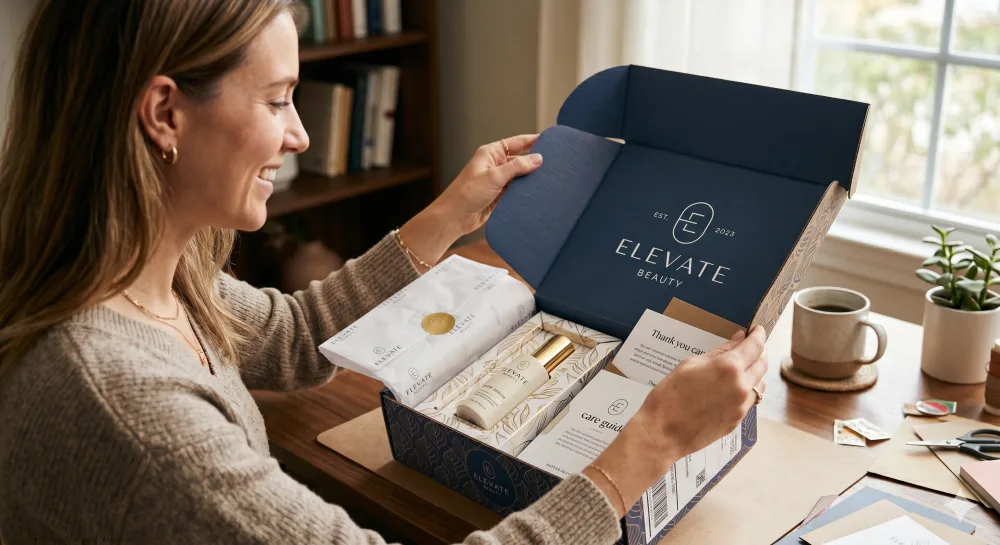
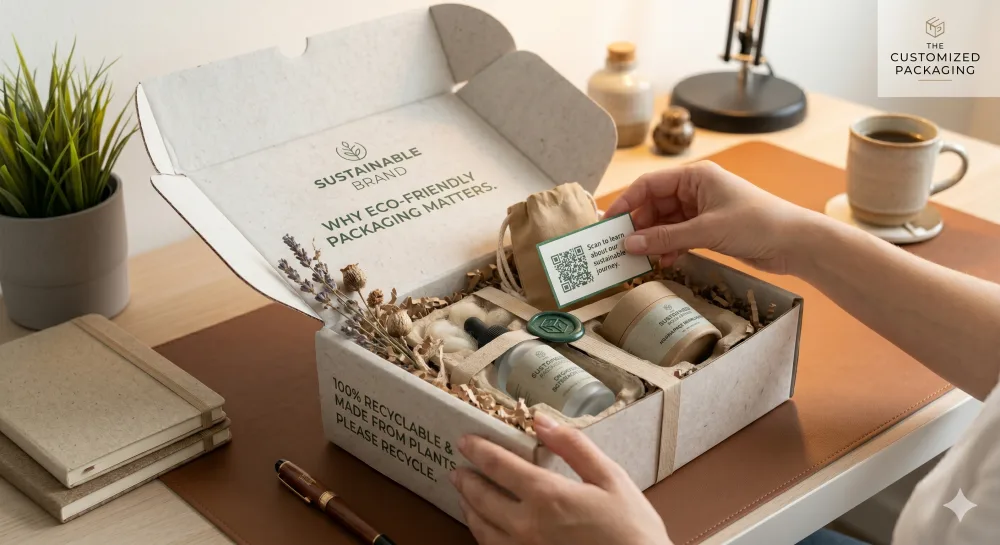
Custom printed boxes provide more control over the customer-facing appearance of the package. They can make the delivery visually consistent with the brand and provide permanent space for logos, instructions, QR codes or other useful information.
Neither option automatically causes an ecommerce business to grow faster.
Packaging works alongside product quality, price, customer service, delivery performance, marketing and many other factors.
The goal is to upgrade when the additional branding and control are valuable enough to justify the additional planning and inventory commitment.
What Counts as Plain Packaging?
Plain packaging generally means a box, mailer or carton without brand-specific printing.
It may still be:
-
Correctly sized
-
Made from suitable corrugated board
-
Kraft or white
-
Protective
-
Professionally packed
-
Sealed with branded tape
-
Finished with a logo sticker
-
Used with printed cards or tissue
Plain does not mean poor quality.
A well-fitted unprinted corrugated mailer can provide a cleaner customer experience than a beautifully printed box that is oversized, difficult to close or poorly suited to the product.
This distinction matters when comparing plain packaging vs custom printed boxes.
Printing is only one part of the packaging system.
What Makes a Box Custom Printed?
Custom printed packaging incorporates brand-specific artwork directly onto the box or its printed wrap.
That may include:
-
Logo
-
Brand colors
-
Patterns
-
Product information
-
Opening instructions
-
QR codes
-
Return information
-
Interior messages
-
Campaign artwork
The structure may also be custom sized, but custom printing and custom sizing are not the same thing.
A business can use a custom-sized plain box.
It can also print a standard-sized box.
Those two decisions should be evaluated separately.
Custom Printed Boxes vs Plain Packaging: Quick Comparison
| Decision Factor | Plain Packaging | Custom Printed Packaging |
|---|---|---|
| Initial commitment | Usually lower | Usually higher |
| Branding flexibility | High with labels, tape or inserts | Artwork is built into the box |
| SKU changes | Easier to accommodate | Old printed inventory may become outdated |
| Brand visibility | Limited on the box itself | Stronger direct branding |
| Inventory planning | More flexible | Requires more forecasting |
| Artwork preparation | Minimal | Required |
| Packaging consistency | Depends on applied branding | Easier to standardize |
| Seasonal changes | Easy with stickers or sleeves | May require separate printed runs |
| Fulfillment | Simple | Can be equally simple once finalized |
| Customer-facing information | Usually added separately | Can be printed directly |
| Best stage | Testing or rapidly changing products | More stable product and brand systems |
The important difference is not simply “cheap versus premium.”
It is flexibility versus commitment.
Plain Packaging Makes Sense When the Business Is Still Changing
Early-stage ecommerce brands often change quickly.
You may still be testing:
-
Product sizes
-
Bundles
-
Shipping methods
-
Brand colors
-
Logo variations
-
Product names
-
Fulfillment partners
-
Order volumes
Ordering a large quantity of printed boxes before those decisions stabilize can create obsolete packaging inventory.
For example, if a product dimensions change after 1,000 printed mailers arrive, the business may be left with boxes that no longer fit correctly.
Plain packaging provides more flexibility while these variables are still changing.
Stay With Plain Boxes If Your Dimensions Are Not Stable
Product fit matters more than printing.
If your business is still adjusting:
-
Product dimensions
-
Product bundles
-
Protective inserts
-
Number of items per order
-
Shipping configurations
it may be too early to lock in a printed box.
First determine which package dimensions actually work.
Once the size has proven reliable across real orders, printing can be considered separately.
This avoids spending money branding the wrong structure.
Plain Packaging Can Also Be a Deliberate Brand Choice
Not every unprinted package is temporary.
Some brands intentionally use natural kraft or minimal plain packaging because it supports their visual identity.
In those situations, branding may come through:
-
Printed tape
-
Logo labels
-
Tissue paper
-
Product cards
-
Sleeves
-
Stamps
-
Interior components
A plain exterior can therefore still be part of a coordinated brand system.
The decision should reflect the brand rather than the assumption that every professional ecommerce company needs full-color exterior printing.
When Does Custom Printed Packaging Start Making More Sense?
The strongest signal is usually stability.
Custom printing becomes easier to justify when:
-
Product dimensions are established
-
Common order combinations are known
-
Branding is unlikely to change immediately
-
Packaging is being reordered consistently
-
The customer regularly sees the shipping box
-
Operational label positions are established
-
Storage requirements are understood
-
The business can forecast packaging usage more confidently
The smartest packaging upgrade is usually triggered by operational stability, not by a desire to look more established.
Stable Order Patterns Make Customization Easier
Suppose an ecommerce brand has ten products but discovers that most orders fit into three packaging formats.
That creates an opportunity to standardize.
Instead of buying printed boxes for every SKU, the business could develop:
Small: compact single-item orders
Medium: common multi-item orders
Large: larger bundles
A well-designed packaging family can then use consistent branding across those three formats.
This is much easier to manage than producing a different printed box for every individual product.
Brand Stability Matters Too
Changing a logo after custom packaging has been produced can leave the business with outdated inventory.
The same applies to changes in:
-
Website address
-
Social handle
-
Tagline
-
Product claims
-
Color palette
-
Company name
-
QR-code destination
Before moving from plain to printed packaging, consider whether the artwork is stable enough to remain useful for the expected life of the inventory.
Avoid printing information that is likely to change frequently.
Permanent print should usually contain relatively stable brand elements.
Custom Printing Is Most Valuable on Customer-Facing Packaging
Not every box needs branding.
A carton used only for warehouse transfers may gain little from full custom printing.
Customer-facing packaging has greater opportunity to carry useful brand information because the buyer actually sees it.
Potential customer-facing applications include:
-
Ecommerce mailers
-
Subscription boxes
-
Retail cartons
-
Gift packaging
-
Product boxes
-
Direct-to-consumer shipping cartons
Even here, the level of print should match the role of the package.
A simple one-color logo may be enough for a shipping carton.
A highly visual subscription package may justify interior and exterior artwork.
Do Not Confuse More Printing With Better Packaging
A custom box does not need every panel covered with artwork.
Good printed packaging can be very simple.
A box might use only:
-
One logo
-
One brand color
-
Opening instructions
-
A small interior message
That can create stronger consistency than a package filled with slogans, social handles, promotional copy and multiple calls to action.
The package should remain easy to understand.
A customer receiving an ecommerce order usually wants to identify the brand, open the package and reach the product without confusion.
Consider a Hybrid Stage Before Full Custom Printing
The choice between custom printed boxes vs plain packaging does not have to be all-or-nothing.
A growing ecommerce business can use a hybrid system while determining whether direct box printing is justified.
Possible combinations include:
-
Plain custom-sized box + printed logo tape
-
Plain mailer + branded sticker
-
Plain exterior + printed product card
-
Stock box + custom belly band
-
Plain corrugated shipper + branded inner product box
-
Plain box + seasonal sleeve
This approach can provide recognizable branding while preserving packaging flexibility.
It is particularly useful when products or campaigns change frequently.
Custom Sizing May Be a Better First Upgrade Than Printing
If a business is using oversized stock cartons, improving box dimensions may provide more operational value than adding artwork.
Right-sizing can help create:
-
Better product fit
-
Less unnecessary empty space
-
More consistent packing
-
Reduced need for some filler
-
Cleaner presentation
-
More predictable box selection
This is an important distinction.
A custom-sized plain box can sometimes be a smarter first investment than a printed stock box.
Solve structural and fulfillment problems first.
Then add printing when it has a clear role.
Compare Total Packaging Cost, Not Just Box Price
When comparing plain and printed packaging, businesses often look only at the purchase price per box.
That can be misleading.
The actual packaging cost per shipped order can include:
box + printing/setup allocation + insert or filler + packing labor + storage + obsolete inventory + sealing materials + shipping effects
A lower box price does not automatically create the lowest overall packaging cost.
For example, an inexpensive stock box that requires additional filler and takes longer to pack may behave differently operationally from a correctly sized custom box.
Likewise, a custom printed box that becomes outdated before it is fully used can create avoidable inventory waste.
Compare the complete system.
Include Inventory Risk in the Decision
Printed packaging is inventory.
Once artwork is applied, the box becomes specific to that brand, campaign or product system.
Before ordering, ask:
-
How quickly will these boxes be used?
-
Could the branding change?
-
Could the product dimensions change?
-
Is this a seasonal design?
-
Where will the boxes be stored?
-
Will several SKUs share the same structure?
-
What happens to unused inventory after a redesign?
This is especially important for fast-moving ecommerce brands that launch new products frequently.
Storage Space Can Change the Economics
Some ecommerce businesses focus on unit price without considering warehouse space.
Packaging inventory can occupy significant room, especially when several sizes are stored at once.
Before upgrading, estimate how the printed packaging will fit into the existing fulfillment area.
The business needs enough room for:
-
Flat packaging stock
-
Inserts
-
Tape or labels
-
Completed orders
-
Different box sizes
-
Seasonal packaging
Custom printing works best when inventory can be managed without creating operational problems elsewhere.
Fulfillment Should Get Easier, Not Harder
A packaging upgrade should not create unnecessary complexity at the packing station.
Test the complete workflow.
Can staff quickly identify the correct box?
Does the artwork show where the shipping label belongs?
Are the closing tabs easy to use?
Does interior printing remain visible after the products are loaded?
Does the package require additional tape or stickers?
A custom printed box that slows every order may need structural or artwork changes.
Branding should fit into fulfillment, not fight against it.
Reserve Space for Shipping Labels
Exterior artwork should account for real ecommerce operations.
Carrier labels can cover a large portion of a package.
If no label zone is planned, the final shipment may place a large white shipping label directly over the logo or campaign artwork.
Choose a practical area before completing the graphics.
The packaging seen in a digital mockup should resemble the package customers actually receive.
Think Carefully About Exterior vs Interior Printing
Some brands benefit from keeping the shipping exterior restrained while using more branding inside.
A simple outside can remain practical for labeling and handling.
The interior can then introduce:
-
Brand colors
-
Product message
-
Thank-you copy
-
QR code
-
Instructions
-
Collection artwork
This can be an effective middle ground between completely plain packaging and a heavily printed exterior.
It also places more decorative content in an area that is less exposed during delivery.
Printed Packaging Can Improve Brand Consistency Without Promising Growth
One advantage of custom printing is control.
The same logo, colors, typography and messaging can appear consistently on every shipment.
That can help connect the physical package with the customer's previous experience on the website, advertising or product page.
However, packaging alone does not determine:
-
Repeat purchase rate
-
Customer lifetime value
-
Conversion rate
-
Customer acquisition cost
-
Sales growth
Those metrics are affected by many variables.
Printed packaging should therefore be evaluated as one part of the customer experience, not treated as a guaranteed growth mechanism.
If You Want to Measure Packaging, Define the Metric First
A packaging test becomes more useful when the business decides what it wants to learn.
Possible questions include:
Operational:
Does the new box reduce packing time or filler?
Branding:
Do customers recognize the package more easily?
Engagement:
Do customers scan a packaging-specific QR code?
Customer experience:
Does feedback about packaging improve?
Inventory:
Can the company manage the new packaging efficiently?
Financial:
What is the total packed-order cost compared with the previous system?
Different metrics answer different questions.
Do not use social-media likes as proof that packaging has improved shipping efficiency, or a lower box cost as proof that the customer experience is better.
Use Trackable Packaging Elements Where Useful
If you want to understand whether printed packaging creates engagement, make some interactions measurable.
For example, a unique QR code can lead to:
-
Product instructions
-
Reorder page
-
Review page
-
Loyalty program
-
Product registration
-
Collection page
A packaging-specific landing page or code can help separate those interactions from general website traffic.
This does not prove that the box caused additional sales, but it can show whether customers are using the printed element.
Run a Controlled Packaging Trial Before a Large Rollout
A business does not need to redesign every package at once.
Start with one:
-
High-volume product
-
Common mailer size
-
Subscription format
-
Gift set
-
Repeat-purchase product
Then evaluate how the new packaging performs.
Check:
-
Product fit
-
Packing speed
-
Shipping-label placement
-
Closure
-
Customer access
-
Print durability
-
Warehouse storage
-
Inventory usage
-
QR engagement where used
-
Customer feedback
The purpose of the trial is to learn whether the packaging works operationally and visually before expanding it across the catalog.
Do Not Change the Product, Box and Marketing Offer at the Same Time if You Want a Clean Comparison
If a brand simultaneously changes:
-
Product
-
Price
-
promotion
-
website
-
shipping speed
-
packaging
it becomes very difficult to understand what influenced the result.
When evaluating a packaging upgrade, keep the rest of the customer experience as consistent as reasonably possible.
This will not create a perfect laboratory experiment, but it can produce more useful business feedback than simply assuming every improvement came from the new box.
When Plain Packaging Is Still the Better Choice
Plain packaging may remain appropriate when:
-
Monthly volume is unpredictable
-
Product dimensions are changing
-
Branding is being redesigned
-
Many temporary SKUs are launched
-
The box is not customer-facing
-
Seasonal artwork changes frequently
-
Storage space is limited
-
A minimalist plain-kraft aesthetic is intentional
-
Stickers or tape already provide enough branding
There is no business milestone where every ecommerce company suddenly needs custom printing.
Upgrade when it solves a real need.
When Custom Printed Boxes Are Easier to Justify
Printed packaging becomes more practical when:
-
Core products are stable
-
Packaging sizes are proven
-
Order patterns are predictable enough for planning
-
Branding is established
-
Customers regularly see the box
-
Packaging is reordered consistently
-
The business wants standardized brand presentation
-
Useful permanent information belongs on the package
-
The operational team can manage printed inventory
These conditions reduce the risk of investing in packaging that quickly becomes obsolete.
A Practical Upgrade Framework
Use this decision sequence before switching.
Step 1: Confirm the Structure
Does the current box protect the product and fit the order correctly?
If not, fix the structure first.
Step 2: Confirm the Dimensions
Are the packaging sizes stable across real orders?
If not, continue testing.
Step 3: Confirm the Brand
Are the logo, colors and key brand elements unlikely to change soon?
If not, use flexible branding methods.
Step 4: Confirm the Volume
Is the packaging being used consistently enough to justify dedicated inventory?
There is no universal order threshold. The answer depends on box type, print method, storage and economics.
Step 5: Define the Purpose of Printing
What should printing actually accomplish?
Brand recognition? Instructions? Product identification? A QR-driven action? Interior presentation?
If there is no clear purpose, full custom printing may not yet be necessary.
Step 6: Compare Total Cost
Include inventory, fulfillment and storage—not only the unit price.
Step 7: Sample and Test
Use the actual products and fulfillment process before approving the larger run.
This sequence reduces the chance of printing the wrong box simply because custom packaging looked like the next stage of growth.
Frequently Asked Questions About Custom Printed Boxes vs Plain Packaging
Are custom printed boxes better than plain boxes for ecommerce?
Not automatically. Custom printed boxes provide more direct branding and information space, while plain packaging offers greater flexibility and often requires less commitment. The right choice depends on the business stage, products, order patterns and customer-facing needs.
When should a small ecommerce business switch to custom printed packaging?
Consider switching after product dimensions, packaging sizes and branding have become reasonably stable and the business can forecast packaging usage with greater confidence. There is no universal order-volume threshold.
Is plain packaging bad for branding?
No. Plain boxes can be combined with branded tape, labels, sleeves, tissue, cards and other elements. Some businesses also intentionally use a minimal kraft appearance as part of their brand identity.
Does custom printed packaging increase sales?
Printed packaging can support brand consistency, product presentation and customer engagement, but packaging alone does not determine sales or repeat purchases. Those outcomes depend on many parts of the business.
Should I custom-size my boxes before custom printing them?
Often, yes. If the existing packaging does not fit the products properly, solving dimensions and structure first prevents the business from printing an inefficient box.
Is custom printed packaging always more expensive?
Custom printing generally adds production requirements, but the complete cost comparison should also consider quantity, packaging size, filler, labor, storage and obsolete inventory. Compare total packed-order cost rather than box price alone.
Can I use plain boxes while testing my branding?
Yes. Stickers, printed tape, sleeves and inserts can provide flexible branding while the business is still refining its permanent packaging artwork.
How can an ecommerce brand test custom printed packaging?
Start with a representative product or common box size and evaluate product fit, fulfillment speed, printing, customer access, storage, inventory usage and any trackable engagement features before expanding the packaging system.
Upgrade When the Business Is Ready, Not Because the Box Is Plain
The comparison between custom printed boxes vs plain packaging is not really a contest between professional and unprofessional packaging.
Both approaches can work.
Plain packaging offers flexibility while products, branding and order patterns are still developing. Custom printed packaging becomes more useful when the business has enough stability to benefit from a repeatable branded system.
Before upgrading, make sure the box fits correctly, the dimensions are proven, the artwork is stable and the inventory commitment makes sense.
Then decide what printing should actually accomplish.
When those decisions are made in the right order, custom printed packaging becomes a deliberate part of the ecommerce operation rather than an expensive assumption about what a growing brand is supposed to do.
The Customized Packaging develops plain and custom printed ecommerce boxes around your product dimensions, order profiles, branding and fulfillment requirements. Share your box size, quantity, artwork and shipping needs to compare packaging options built around the way your orders are actually packed and delivered.