
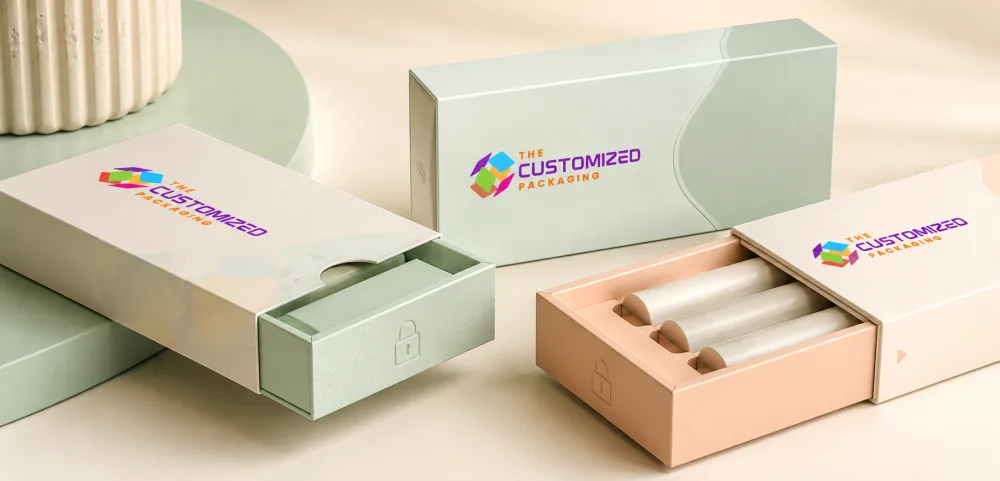
How Custom Child Resistant Blunt Packaging Boxes Build Trust and Brand Value
Learn how child-resistant blunt packaging can support customer trust through accurate claims, clear opening instructions, consistent branding, organized product presentation, tamper evidence, and reliable packaging performance.
 Published June 17, 2026
Updated August 08, 2026
10 min read
Published June 17, 2026
Updated August 08, 2026
10 min read
Trust in packaging is built through consistency between what a package says and what it actually does.
For adult-use products, customers may notice the opening method, printed information, product organization, material quality and overall presentation before they evaluate the product itself. Child-resistant blunt packaging can support that experience when access control, usability and branding are planned together.
That does not mean packaging automatically creates loyalty, increases sales or proves product quality. Its role is more practical: it can give customers clearer information, a more deliberate opening experience and recognizable brand presentation.
What Creates Trust in Blunt Packaging?
Customers cannot verify every packaging specification simply by looking at a box. They can, however, notice whether the package appears intentional and whether its visible features work as expected.
Clear Information Reduces Uncertainty
A well-organized package makes it easier to understand what the product is, how the package opens and where supporting information can be found.
Depending on the product and market, the layout may need space for:
-
product identity;
-
quantity;
-
warnings;
-
storage information;
-
opening instructions;
-
batch or lot details;
-
barcode or QR code;
-
manufacturer or responsible-business information.
The responsible product company should provide and approve the final wording.
Packaging Claims Should Match the Actual Specification
Trust can be damaged when packaging uses terms that are broader than the available evidence.
Words such as child-resistant, certified, tested, tamper-evident, airtight, odor-proof or compliant should only be used when the exact packaging system and supporting documentation justify them.
Child-Resistant Does Not Mean Childproof
A child-resistant package is designed to make access significantly more difficult for young children while remaining usable by adults.
It should not be described as impossible for a child to open.
For products subject to U.S. Poison Prevention Packaging Act requirements, special packaging is evaluated through defined child and adult testing procedures rather than appearance alone.
Controlled Access Can Communicate Deliberate Design
A coordinated opening action can show that the packaging structure was developed around access rather than relying on an ordinary tuck flap.
Opening Instructions Matter as Much as the Closure
A sophisticated mechanism is not useful if the intended adult customer cannot understand it.
Instructions may use:
-
short written directions;
-
arrows;
-
pressure-point icons;
-
opening diagrams.
They should sit near the actual release area whenever possible.
Instructions Must Match the Mechanism
A push-and-slide box should not use the same instructions as a squeeze-and-pull structure simply because both are described as child-resistant packaging.
The artwork should reflect the actual package being supplied.
Reclosing Performance Matters for Reusable Packages
Some packages are intended to be opened once, while others are designed for repeated access.
Where repeated opening is part of the packaging concept, the closure should continue to align and close correctly during its intended use.
A locking feature that becomes difficult to operate or noticeably loose after initial use can undermine the professional experience the design was intended to create.
Brand Recognition Comes From Consistency
A logo is only one part of branded blunt packaging.
Recognition can come from repeating a clear design system across several products.
Keep Core Brand Elements Consistent
A brand may keep the same:
-
logo position;
-
typography;
-
warning layout;
-
structural style;
-
information hierarchy;
while changing secondary colors, product names or small graphic elements between varieties.
This allows custom blunt boxes to look related without making every SKU visually identical.
Blunt Boxes With Logo Should Still Prioritize Readability
A large logo does not automatically create a stronger package.
The front panel should establish product and brand identity while side, rear or interior surfaces can handle supporting information.
Avoid Using Decorative Finishes on Critical Information
Foil, embossing, spot treatments and metallic printing may work well for brand elements.
Warnings and opening instructions, however, should remain easy to read.
A decorative effect that lowers contrast or makes essential text harder to understand works against the trust the packaging is supposed to support.
Product Organization Can Reinforce a Professional Presentation
A product moving freely inside an oversized package can make even expensive printing feel poorly planned.
Inserts Should Keep Products Organized
A fitted insert, tray or channel can provide a consistent position for individual products or multipacks.
Depending on the structure, an insert may help with:
-
alignment;
-
separation;
-
elevation;
-
product presentation.
The insert should be designed around actual product dimensions.
More Packaging Is Not Automatically Better
Complex foam systems, oversized rigid boxes and multiple packaging layers can increase material use and cost without necessarily improving the customer experience.
Use the Simplest Structure That Solves the Problem
If a paperboard holder provides sufficient organization, a more elaborate insert may be unnecessary.
Packaging can look deliberate because it is well fitted—not because it contains the maximum number of components.
Tamper Evidence Can Provide a Visible Inspection Cue
Child resistance and tamper evidence are different packaging functions.
Tamper Evidence Indicates Possible Prior Opening
A tamper-evident feature is intended to provide visible evidence that a package may already have been opened.
Possible approaches can include seals, tear-away components, perforations or other appropriately designed indicators.
Child Resistance Controls Access
Child-resistant packaging is concerned with restricting straightforward access by young children.
Do Not Treat One Feature as Proof of the Other
A locking carton is not automatically tamper-evident.
Likewise, a security seal does not automatically make packaging child-resistant.
When both are required, each function should be specified and communicated separately.
Material Quality Should Match the Brand Position
Material influences how a package feels, prints, folds and operates.
A premium brand does not always require rigid packaging, and a kraft appearance does not automatically make a package environmentally preferable.
Folding Paperboard
Paperboard can provide a clean printed surface while remaining efficient to store before assembly.
It may suit many lightweight custom blunt packaging applications.
Rigid Board
Rigid construction can create a more substantial presentation for selected premium collections.
It also increases material, storage and shipping requirements.
Kraft Paperboard
Kraft-colored materials can support a natural visual identity.
Do Not Turn Kraft Appearance Into an Environmental Claim
Brown paper does not by itself prove that the finished package is recyclable, biodegradable, compostable or sustainable.
Claims should reflect the exact material, coatings, adhesives, inserts and other components used.
Specific information builds more credibility than broad environmental language.
Ecommerce Trust Starts With the Complete Shipment
The customer-facing box is only one part of an ecommerce order.
A finished shipment may include:
product → primary package → branded retail box → shipping package
The Retail Box Should Not Automatically Be the Shipping Carton
A decorative folding or rigid box may need a separate outer mailer or corrugated carton for distribution.
The complete shipment should be evaluated for product movement, compression and handling.
Delivery Quality Can Affect Brand Perception
A damaged decorative carton, misaligned insert or broken closure can create a poor presentation even when the product itself remains usable.
That does not mean better packaging guarantees reviews, referrals or repeat purchases.
It means brands should evaluate the packaging customers actually receive—not only the pristine sample photographed for the website.
Trust Depends on Honest Child-Resistant Claims
This is particularly important for this product category.
Federal Rules Do Not Apply Identically to Every Adult-Use Product
Under the Poison Prevention Packaging Act, CPSC requires special packaging for certain regulated household substances. The specific product determines whether those federal requirements apply.
Other products may be governed by separate state, local or product-specific rules.
Brands should establish the requirements for the exact product and sales market before approving packaging claims.
Secondary Boxes Require Extra Caution
For substances actually regulated under the PPPA, CPSC guidance explains that special-packaging requirements apply to the primary or immediate package containing the regulated substance. A secondary carton alone does not satisfy that federal requirement.
Packaging Suppliers Do Not Receive CPSC Approval
CPSC does not pre-approve, certify or endorse individual child-resistant package designs.
Where PPPA certification applies, responsibility rests with the manufacturer of the finished product.
That makes wording such as CPSC-approved box inappropriate.
How Packaging Can Support Brand Value Without Overpromising
Brand value is broader than packaging.
It also reflects the product, service, reputation, availability, pricing, customer support and many other factors.
Packaging can contribute by creating consistency between the company's visual identity and the physical product experience.
Useful Brand Signals Include
-
consistent structure across products;
-
accurate printing;
-
readable information;
-
dependable opening instructions;
-
organized product placement;
-
appropriately selected materials;
-
accurate product and packaging claims.
These signals can make the brand presentation easier to understand.
What Packaging Cannot Guarantee
Even excellent packaging cannot guarantee:
-
repeat purchases;
-
customer loyalty;
-
positive reviews;
-
social-media sharing;
-
increased sales;
-
premium pricing.
Use Supportive Rather Than Guaranteed Language
Instead of:
Packaging increases customer loyalty.
Use:
Consistent packaging can help customers recognize the brand across different products.
Instead of:
Premium packaging increases perceived value.
Use:
Material, structure and finishing can help align the package presentation with a premium product position.
This language is more credible and more useful.
Keep This Article Focused on Trust
The broader structural details of blunt packaging belong in the main child-resistant blunt-packaging guide.
This article should remain focused on how customers encounter packaging signals such as:
clarity, consistency, usability, accurate claims, controlled access and presentation.
That gives this page a distinct informational purpose rather than making it another comprehensive product guide.
How The Customized Packaging Supports Branded Packaging Projects
The Customized Packaging develops custom printed blunt boxes and secondary packaging around product dimensions, artwork, structure and presentation requirements.
Available options can include folding cartons, sliding structures, rigid presentations, fitted inserts, interior printing and selected security features.
For projects requiring child-resistant terminology, the applicable requirements and supporting documentation should be established for the exact finished packaging configuration before those claims appear in artwork or marketing.
Most custom styles begin at 100 units. Pricing varies according to dimensions, structure, material, printing, finishing, inserts, quantity and delivery requirements.
Frequently Asked Questions
How Can Packaging Help a Blunt Brand Appear More Consistent?
Consistent structure, typography, logo placement and information hierarchy can help different products look like part of the same brand family.
Are Child-Resistant Boxes Automatically Compliant?
No. A difficult-to-open box is not automatically compliant with a particular regulation. Requirements depend on the finished product, applicable law and supporting package testing or documentation.
Does CPSC Approve Child-Resistant Boxes?
No. CPSC states that it does not approve, certify or endorse individual special-packaging designs.
Is Tamper-Evident Packaging the Same as Child-Resistant Packaging?
No. Tamper evidence helps indicate possible prior opening, while child-resistant packaging is intended to make access significantly more difficult for young children.
Do Premium Materials Automatically Increase Brand Value?
No. Premium materials may help align packaging with a higher-end product position, but brand value depends on far more than the box material.
Can Custom Blunt Packaging Include QR Codes?
Yes. QR codes can provide access to supplemental product information, instructions or digital content. They should not replace information that must remain physically printed on the package.
Should Every Blunt Product Use a Rigid Box?
No. Folding cartons or sleeve-and-tray structures may be more practical depending on the product, budget, storage requirements and presentation goals.
Trust Starts With Packaging That Says Only What It Can Support
The most credible child-resistant blunt packaging is not necessarily the package with the most expensive finish or the most complicated opening mechanism.
It is the package in which the structure, information, branding and claims agree with one another.
Choose a structure that fits the product, provide clear instructions, keep essential information readable and avoid claims that cannot be substantiated.
That gives the package a more useful role in brand building: helping the physical product experience feel consistent with what the company communicates elsewhere.


