Custom Jewelry Packaging: Boxes, Inserts and Branding Guide
Learn how to choose custom jewelry packaging by comparing box styles, materials, fitted inserts, printing, branding, ecommerce protection, MOQ and pricing.
 Published April 15, 2026
Updated August 04, 2026
8 min read
Published April 15, 2026
Updated August 04, 2026
8 min read
Why Custom Jewelry Packaging Matters
Custom jewelry packaging protects delicate pieces, organizes presentation, communicates brand quality, and shapes the customer’s first physical experience with a jewelry purchase. For rings, necklaces, earrings, bracelets, watches, and coordinated sets, the box structure and insert should be selected around the product rather than appearance alone.
Well-designed custom jewelry boxes can support retail, gifting, ecommerce, proposals, weddings, exhibitions, and wholesale distribution. The most effective package combines product fit, brand consistency, practical opening, and suitable protection.
How Jewelry Packaging Builds Brand Value
Jewelry is often purchased for emotional occasions, so presentation can influence how the product is perceived before it is worn. A consistent packaging system helps customers recognize the brand through repeated colors, logo placement, typography, materials, and opening details.
A box should communicate the same positioning as the product. Minimal paper wraps, restrained typography, and subtle embossing can support a modern brand. Metallic foil, textured papers, deep colors, and layered structures may suit a more decorative luxury identity. Jewelry boxes with logo may also remain in use for storage, gifting, travel, or display after purchase.
Matching the Box to the Jewelry Type
Different jewelry products need different dimensions, insert features, and opening styles.
| Jewelry type | Packaging priorities | Suitable structures |
|---|---|---|
| Rings | Secure slot, stone clearance and focal presentation | Hinged, two-piece or shoulder-and-neck |
| Earrings | Paired positioning and pierced holder | Hinged, drawer or folding carton |
| Necklaces | Chain control and pendant positioning | Long two-piece, drawer or book-style |
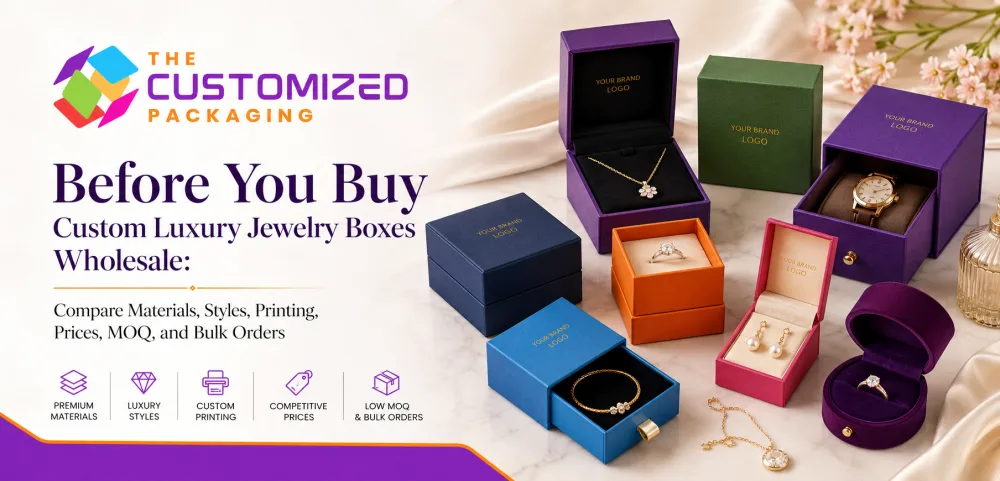
| Bracelets and watches | Cushion, curved support and accessory space | Magnetic, sleeve-and-tray or rigid drawer |
| Jewelry sets | Separate compartments and balanced reveal | Collection, book-style or compartment box |
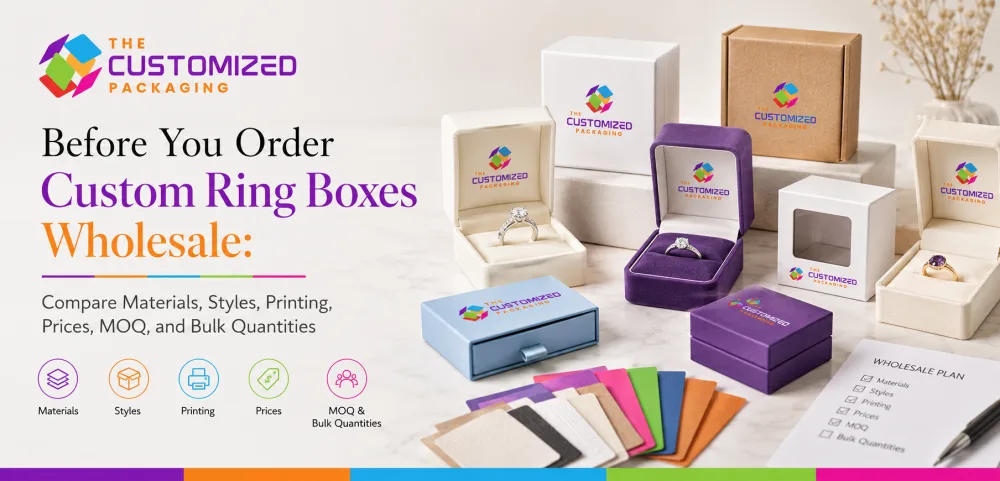
Custom ring boxes should account for band width, stone height, and viewing angle. Necklace packaging needs hooks, channels, or lower pockets that help prevent tangling. Bracelet and watch boxes may require pillows, curved supports, or wider cavities. Multiproduct sets should keep pieces separated so surfaces, stones, and clasps do not rub together.
Choosing the Right Jewelry Box Style
Two-Piece Jewelry Boxes
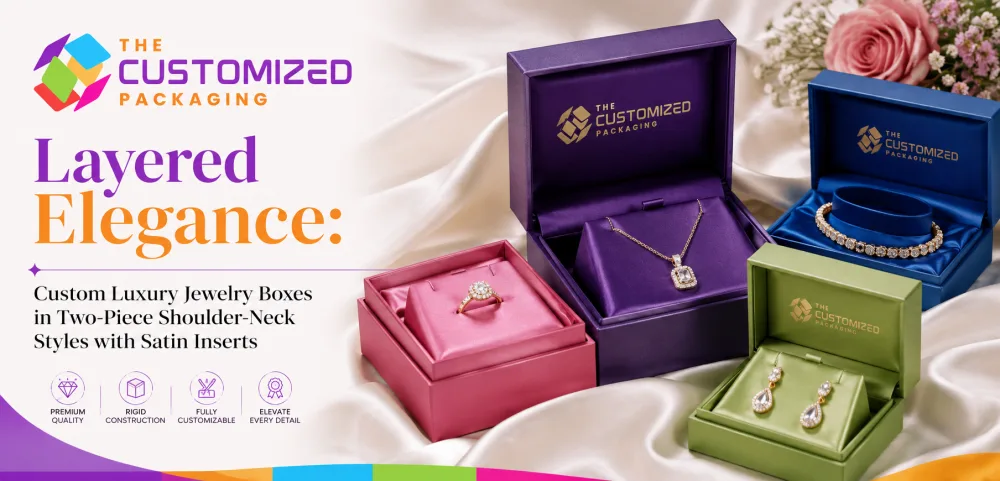
A two-piece box uses a separate lid and base. It offers a classic reveal and can be manufactured as a lightweight folding structure or a rigid setup box. It works well for earrings, pendants, rings, bracelets, and gift sets.
Magnetic, Hinged and Drawer Boxes
Magnetic and hinged structures create a controlled opening and keep the lid connected to the base. They are commonly used for luxury jewelry packaging, bridal collections, watches, and high-value sets.
Drawer boxes create a gradual reveal and can include ribbon pulls, thumb notches, printed messages, or divided inserts.
Folding and Display Cartons
Folding paperboard cartons suit fashion jewelry, promotional collections, craft markets, and higher-volume retail programs. They store flatter than rigid boxes and can include windows, hanging features, printed interiors, or paperboard holders.
Display packaging is intended for counters, shelves, showcases, or exhibitions. Transparent windows, open lids, raised platforms, or angled cards can improve visibility, but the design must also consider handling, security, and product information.
Materials and Surface Options
Rigid board provides shape retention and a substantial presentation. Folding paperboard offers accurate printing, efficient storage, and lighter construction. Kraft board can create a natural appearance, while corrugated board is more appropriate for outer mailers and shipping protection.
Exterior wraps may include printed art paper, uncoated paper, kraft, metallic stock, pearlescent paper, or textured materials. Interior surfaces can match the exterior or use a contrasting color, pattern, care message, or brand story.
Material claims should describe the complete package. A paper box may also contain magnets, foam, fabric-style inserts, window film, lamination, adhesives, ribbons, or metallic layers that affect recyclability and disposal.
Jewelry Inserts and Product Protection
The insert controls how the product sits, how it is revealed, and whether it moves during handling. Custom jewelry box inserts may include ring slots, necklace hooks, earring holes, bracelet cushions, watch pillows, chain channels, paperboard platforms, molded pulp, EVA foam, soft foam, elastic loops, ribbons, or divided compartments.
The insert and box should be developed together. A tight insert can damage delicate surfaces or make removal difficult, while a loose insert can allow movement and tangling. Finger notches, ribbon lifts, and suitable clearance improve usability.
A decorative jewelry box is not automatically suitable for parcel shipping. Ecommerce orders may also need a corrugated outer mailer, discreet carton, cushioning, corner protection, or tamper-evident seals based on product value and fragility.
Printing, Logos and Premium Finishes
Custom printed jewelry boxes can display a logo, collection name, website, QR code, authenticity information, care instructions, warranty details, proposal message, wedding date, or gift note.
CMYK printing supports multicolor artwork, while Pantone colors can control important brand shades. Digital printing may suit selected shorter runs or multiple artwork versions. Other methods may be more practical for larger quantities or specialty materials.
Foil stamping, embossing, debossing, spot UV, soft-touch finishes, metallic papers, ribbons, and interior printing can create emphasis. Use them selectively. A focused logo, border, monogram, or interior message often produces a clearer premium result than applying several finishes to every surface.
Designing a Memorable Unboxing Experience
A good unboxing sequence should feel simple and intentional. The customer should understand how to open the box, see the jewelry positioned correctly, and remove it without pulling against chains, stones, clasps, or delicate settings.
The exterior creates recognition, while the interior delivers the reveal. Opening style, lid resistance, insert angle, contrast, product orientation, and interior messaging should support one clear sequence. Extra layers should only be added when they improve protection, organization, storytelling, or gift presentation.
For ecommerce, the shipping package and presentation box should work as one system. The outer package protects the decorative box, while the inner package delivers the branded experience.
MOQ, Production Time and Pricing
The minimum order quantity generally starts at 100 units for most custom jewelry packaging styles. Higher minimums may apply to rigid structures, specialty wraps, complex inserts, personalization, magnets, or multiple finishes.
Standard production generally takes 8–12 business days after final artwork, specifications, payment, and proof approval. Shipping time is separate. Rush production may be available for eligible projects after the specifications and deadline are reviewed.
The price of wholesale jewelry boxes depends on dimensions, structure, board, wrap, printing, insert complexity, closures, finishes, assembly, quantity, and destination. Larger quantities may lower the average unit cost, but businesses should also consider storage, cash flow, seasonal artwork, and product changes.
How to Brief a Jewelry Packaging Supplier
For an accurate recommendation, provide the jewelry type, product dimensions, weight, stone height or chain length, number of pieces, preferred style, insert requirements, artwork, quantity, sales channel, destination, and deadline.
Before full production, review the dieline, artwork proof, insert layout, opening sequence, logo placement, barcode or QR-code areas, and any structural sample required for the project.
Why Choose The Customized Packaging?
The Customized Packaging LLC develops custom jewelry boxes in the USA for jewelry brands, boutiques, ecommerce sellers, bridal businesses, independent designers, retailers, exhibitions, and wholesale programs.
Options include folding cartons, rigid setup boxes, magnetic boxes, drawer boxes, two-piece boxes, display packaging, kraft jewelry boxes, fitted inserts, custom printing, and premium finishes. The team can review product dimensions, artwork, quantity, destination, and deadline before recommending a structure.
Frequently Asked Questions
What is the best material for jewelry boxes?
The best material depends on product value, weight, sales channel, presentation, storage, and budget. Rigid board supports premium presentation, paperboard suits lighter retail packaging, and corrugated board is commonly used for outer shipping protection.
Do custom jewelry boxes need inserts?
Not every package needs a complex insert, but rings, necklaces, watches, sets, and delicate pieces usually benefit from product-specific positioning and movement control.
Can jewelry packaging be used for ecommerce shipping?
The presentation box can be used inside an ecommerce order, but it may require a protective corrugated outer package, cushioning, or security features.
What is the minimum order for custom jewelry packaging?
The MOQ generally begins at 100 units for most styles. The final minimum depends on the structure, material, insert, printing, finishes, and production requirements.
What affects the price of custom jewelry boxes?
Pricing is based on dimensions, structure, material, wrapping paper, printing, inserts, closures, finishes, assembly, quantity, and delivery destination.
Request Custom Jewelry Packaging Pricing
Explore custom jewelry packaging, compare rigid and folding structures, review fitted packaging inserts, or use the Custom Box Packaging Cost Estimator for preliminary planning.
Submit your jewelry dimensions, preferred style, artwork, quantity, destination, and deadline for project-specific pricing.