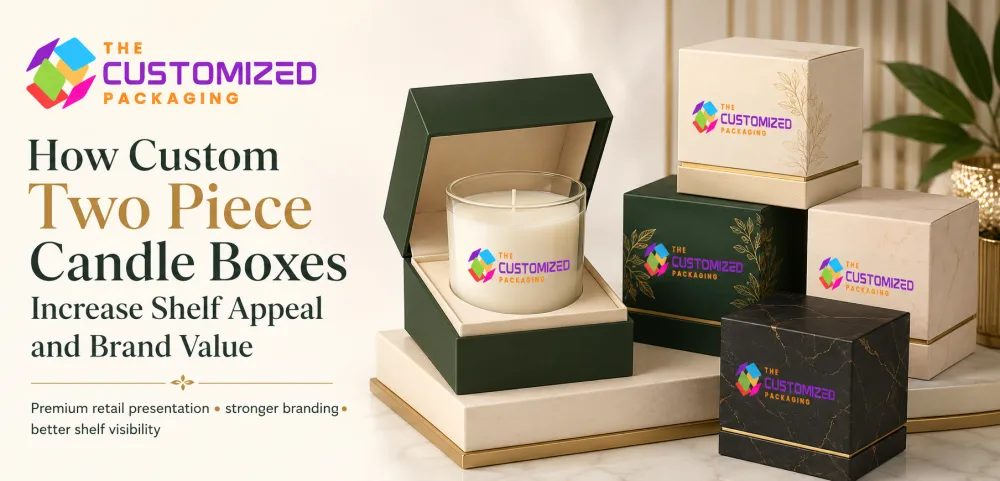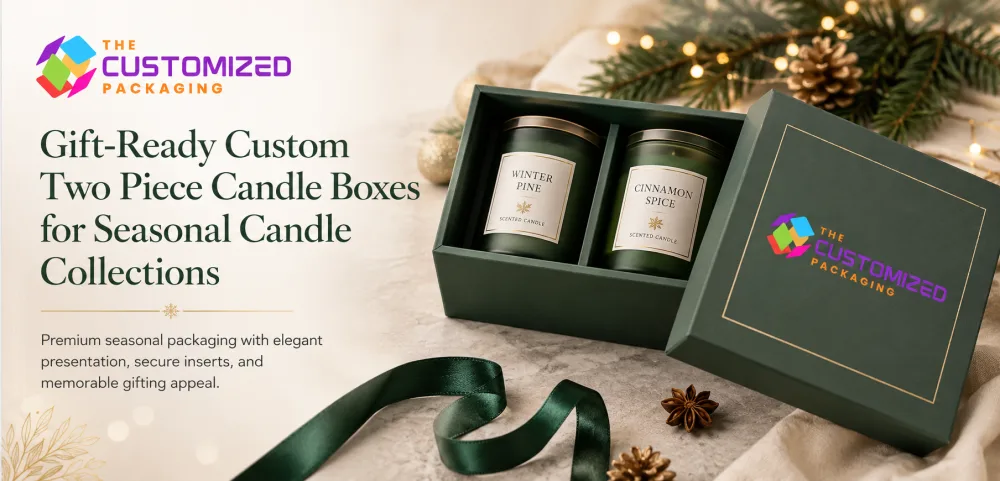

Lift the Lid: How Custom Two Piece Candle Boxes Improve the Unboxing Experience
Discover how the lid, base, insert and product position work together to create a controlled and gift-ready candle reveal.
 Published June 15, 2026
Updated August 05, 2026
11 min read
Opening a candle package should feel simple, but not careless. The lid should lift without sticking, the base should remain steady and the candle should appear in the position the brand intended.
That sequence is what makes custom two piece candle boxes different from ordinary tuck cartons. Their separate lid-and-base construction allows the reveal to happen gradually rather than through a quickly opened flap.
The experience does not improve merely because a package has two pieces. Lid depth, fit, vessel clearance, insert position and interior design must work together. A poorly fitted lid can become difficult to remove, while a loose top may separate during handling.
For a broader explanation of this structure, link once to the main guide about how two-piece candle packaging supports protection, presentation and branding.
The Lid Controls the Pace of the Reveal
The most distinctive feature of a two-piece package is the movement required to open it.
A shallow lid exposes the base quickly. A deeper cover creates a slower reveal because it travels farther before the candle becomes visible. Neither direction is automatically better.
| Lid configuration | Opening experience | Suitable application |
|---|---|---|
| Shallow lid | Quick and uncomplicated | Everyday retail candles |
| Half-depth lid | Balanced reveal | Boutique and gift collections |
| Full telescope lid | Slower, more controlled opening | Premium jars and limited editions |
| Shoulder-and-neck lid | Layered reveal with a visible internal border | Formal or luxury presentation |
The choice should reflect the candle’s price level, vessel weight and intended customer experience.
A small handmade jar may not need an elaborate full-telescope structure. A heavy ceramic candle or limited-edition fragrance may benefit from a slower, more substantial opening.
Lid Fit Should Feel Controlled, Not Difficult
The space between the lid and base determines how the package opens.
Too little clearance can create excessive friction. The customer may need to pull forcefully, shake the box or turn it upside down. Too much clearance can make the top feel unstable or allow it to lift during storage and delivery.
The final fit can be affected by:
-
Board thickness
-
Paper wrap
-
Lamination
-
Printed ink coverage
-
Corner construction
-
Manufacturing tolerance
-
Product weight
-
Humidity and storage conditions
A blank structural sample provides useful information, but the printed and wrapped version should also be checked. Decorative paper and coatings can change the way both sections move against one another.
The Base Must Stay Stable While the Lid Is Lifted
The customer normally holds the base with one hand while removing the lid with the other. The lower section must therefore remain firm enough to support the candle’s complete weight.
Heavy glass, ceramic and concrete vessels can place considerable pressure on the bottom panel. The base construction and insert should distribute that load rather than allowing the jar to sit against one small area.
The box should also remain balanced when placed on a table. A candle positioned too close to one edge may cause the package to feel unstable during opening.
For larger vessels, structural testing should include the filled candle—not an empty jar.
Position the Candle for the First View
The first visible view should look deliberate.
The front label may face the customer, the lid may align with a printed message or the candle may sit centrally within a contrasting insert. These details help the reveal look planned instead of accidental.
Before finalizing the interior, decide:
-
Which side of the vessel should face forward
-
Whether the candle lid remains attached
-
How much of the jar should be visible
-
Whether a card appears above or beside it
-
How the customer will remove the product
-
Whether the empty package should remain attractive afterward
A centered candle is not always the only solution. An offset arrangement can create space for matches, a care card or a small accessory, but the visual balance should remain clear.
Use an Insert to Control Movement and Alignment
A candle that rotates inside the package may no longer face the intended direction when the lid is removed.
A fitted support can hold the vessel at the base or around its lower walls. Depending on the jar and project, this may be made from folded paperboard, corrugated board, molded pulp, wrapped board or foam.
| Insert direction | Useful for |
|---|---|
| Folded paperboard platform | Lightweight and medium retail jars |
| Corrugated support | Heavier vessels and added transit strength |
| Molded pulp cavity | Shaped support with a natural appearance |
| Wrapped rigid platform | Premium retail and gifting |
| Foam cavity | Fragile or unusually shaped vessels |
The support should secure the jar without gripping it so tightly that removal becomes difficult.
Complex cushioning is not always necessary. A correctly sized paperboard platform may be enough for a straightforward glass vessel.
Plan a Comfortable Product-Removal Method
The reveal is incomplete until the customer can remove the candle safely.
A vessel placed inside a tight circular cavity may be difficult to grip. Customers may pull on the candle lid, scrape the label or turn the complete package over.
Better removal options include:
-
Finger spaces on opposite sides
-
A ribbon placed beneath the jar
-
A raised platform
-
An open section around the vessel
-
A removable paperboard collar
The clearance should be wide enough for practical use but not so wide that the candle moves during transportation.
A ribbon can be useful for deeper bases, although it should support the candle’s weight and remain positioned correctly after packing.
Coordinate the Inside Lid with the Candle
The interior surface becomes visible immediately after opening, which makes it useful for information that should appear at the moment of discovery.
Possible content includes:
-
A short fragrance description
-
A collection name
-
A thank-you message
-
Candle-care guidance
-
A gifting message
-
A concise brand statement
-
A QR code leading to a verified care or fragrance page
The interior should not repeat every word printed on the outside.
A restrained exterior can introduce the brand, while the inside reveals the fragrance story or usage information. This creates progression without adding multiple loose cards.
Decide Whether Loose Components Improve the Experience
Tissue, fragrance cards, care instructions and dust covers can be useful, but they should not be included automatically.
Each component should answer a specific need:
| Component | Useful purpose |
|---|---|
| Fragrance card | Explains scent notes or collection inspiration |
| Care card | Provides wick, burn and safety guidance |
| Dust cover | Protects the exposed wax surface before use |
| Tissue paper | Provides light wrapping or surface separation |
| Gift note | Supports personal, wedding or corporate orders |
| QR card | Connects to digital care, refill or product information |
Adding every available element may make the package feel cluttered. A printed interior and one well-designed care card may create a stronger experience than several overlapping pieces of paper.
Keep Candle-Care Information Accessible
The opening experience should prepare the customer to use the candle properly.
Important instructions may include keeping the candle within sight while burning, maintaining an appropriate distance from flammable objects and following the product brand’s verified wick and burn guidance.
Essential safety information should not appear only on a loose card that can be discarded. It should remain on the candle, its permanent label or another appropriate part of the complete package.
The outer presentation can reinforce this information, but it should not replace product-specific labeling.
Match the Material to the Intended Experience
A lid-and-base structure can be manufactured from different board systems.
Folding Paperboard
Lightweight paperboard versions can suit small retail candles and higher-volume promotions. They may use folded walls rather than thick setup board.
Rigid Board
A rigid construction provides firmer walls and a more substantial opening. It suits heavy jars, ceramic vessels, gift collections and premium fragrances.
Kraft Board
Natural brown paperboard can support understated, handmade or botanical branding. However, its appearance alone does not prove that the finished package is recyclable, biodegradable or environmentally preferable.
Coatings, wraps, windows, adhesives and inserts should be considered before making environmental claims.
Use Finishes to Support the Opening Sequence
The customer interacts with the package through both sight and touch. Finishes should strengthen that interaction without competing with the candle.
Useful treatments include:
-
A foil or debossed mark on the lid
-
Matte or textured wrapping paper
-
A contrasting interior
-
Spot gloss around the fragrance name
-
A printed edge or shoulder
-
A subtle pattern inside the cover
One exterior finish and one interior surprise are often enough.
A dark matte surface may look refined but can show fingerprints and rubbing. Textured papers can create depth but should be checked around wrapped corners and lid edges.
A production sample is important when appearance depends on tactile material.
Build Gift Presentation Without Excessive Layers
Custom candle gift boxes should feel complete without requiring the purchaser to add improvised wrapping.
A lid-and-base format naturally supports gifting because the recipient can lift the cover and discover the product arranged inside. A message, ribbon, sleeve or small card can adapt the same structure for different occasions.
Gift variations may include:
-
Weddings
-
Corporate appreciation
-
Seasonal collections
-
Hotel amenities
-
Housewarming gifts
-
Subscription upgrades
-
Limited fragrance releases
Brands can retain one tested box and change the sleeve, card or interior message for each occasion. This reduces the need for a new structural design every time.
Keep the Presentation Box Separate from the Shipper
A decorative two-piece jar candle box is not automatically suitable for direct courier delivery.
The removable lid can separate if the complete package moves inside an oversized shipping carton. Wrapped corners and printed surfaces may also become scratched or marked.
For ecommerce orders, place the presentation package inside an appropriate corrugated shipping layer. Test:
-
Movement within the outer carton
-
Pressure on the lid
-
Jar movement inside the insert
-
Corner and surface damage
-
Lid separation
-
Condition after realistic handling
The presentation layer controls the customer reveal. The shipping layer protects that experience until delivery.
Test the Unboxing Before Approving Production
Artwork approval cannot show how the finished package will feel in the customer’s hands.
Review a complete sample containing the actual candle and all planned components. Check whether:
-
The base remains stable.
-
The lid lifts smoothly.
-
The candle appears in the intended direction.
-
Cards remain in position.
-
The vessel can be removed comfortably.
-
The insert does not damage the label.
-
The box closes again correctly.
-
The presentation survives delivery testing.
-
Printed information remains readable.
-
Packing staff can assemble it consistently.
Several people should open the sample without instructions. Their reactions can reveal whether the lid is too tight, the jar is difficult to remove or the intended opening point is unclear.
Plan Wholesale Orders Around the Finished Structure
The price of wholesale candle boxes depends on the dimensions, board system, lid depth, insert, wrapping paper, printing, finishes and quantity.
Before requesting a quotation, prepare:
-
Vessel dimensions and filled weight
-
Candle-lid dimensions
-
Preferred box depth
-
Required presentation angle
-
Insert type
-
Interior and exterior artwork
-
Printed cards or dust covers
-
Number of fragrance variations
-
Quantity for each design
-
Delivery destination
-
Required date
Most custom packaging projects begin at 100 units. Several fragrances may share one structural size, but each printed variation should be listed separately for accurate planning.
Why Choose The Customized Packaging?
The Customized Packaging develops custom two piece candle boxes around the vessel, intended reveal and sales channel.
Available options include folding and rigid structures, shallow or full-depth lids, shoulder-and-neck designs, fitted paperboard supports, corrugated inserts, printed interiors, specialty wraps and selected premium finishes.
Projects can be created for individual jar candles, ceramic vessels, seasonal releases, wedding favors, corporate gifting and premium fragrance collections.
The final structure should be approved with the actual candle before full production so the lid movement, product position and removal method can be evaluated together.
Frequently Asked Questions
How tight should a two-piece candle-box lid be?
It should remain secure during normal handling while lifting smoothly without shaking or excessive force. Final clearance depends on the board, wrap, coating and box dimensions.
Does every candle need an insert?
No. Small and lightweight candles may only need an accurately sized base. Heavier, fragile or decorative vessels usually benefit from additional support.
Is rigid board always the best material?
No. Rigid construction works well for premium and heavy products, while folding paperboard can be more practical for lighter candles and higher-volume retail packaging.
Can one structure be used for several fragrances?
Yes, when the candles use the same vessel dimensions. Artwork, sleeves, labels or interior cards can distinguish each fragrance.
Should the gift box be used as the shipping carton?
Usually not. A separate corrugated shipping package helps protect the removable lid, printed surfaces and candle vessel during delivery.
Make the Lid Part of the Product Experience
The most effective candle unboxing does not depend on adding as many decorative layers as possible.
It depends on a stable base, a lid that moves correctly, a vessel that appears in the intended position and a removal method that feels natural. Interior printing and selected supporting components can then add information without distracting from the candle.
When the lid, base, insert and vessel are developed together, lid and base candle boxes can create a controlled reveal that feels considered from the first touch to the moment the candle is removed.