Let the Bracelet Shine: Window Custom Bracelet Boxes in Two-Piece Paperboard Styles
Explore how window placement, bracelet positioning and two-piece paperboard construction work together to create visible, gift-ready jewelry packaging.
 Published June 29, 2026
Updated August 05, 2026
11 min read
Bracelets are often purchased for their visible details: polished links, colored beads, stones, charms, engraved surfaces and decorative metalwork. Packaging that hides these features completely can delay the customer’s connection with the product.
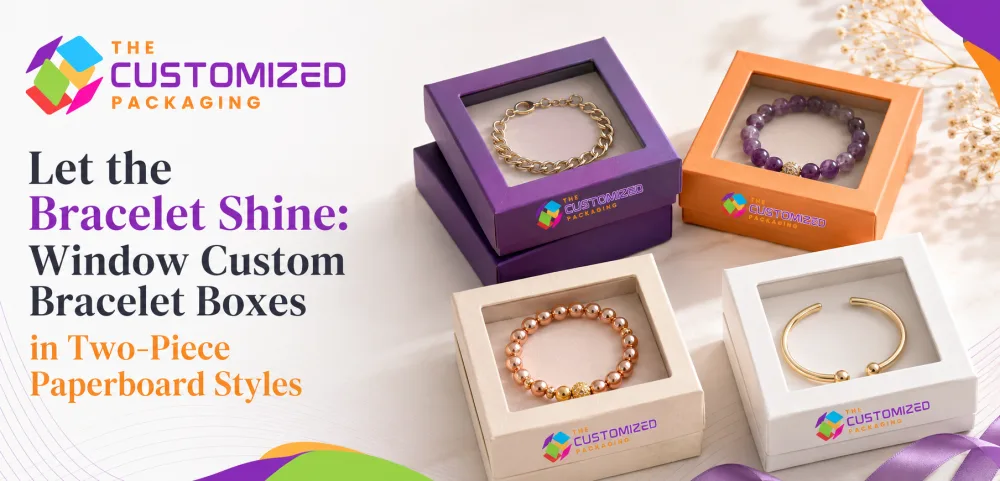
Custom bracelet boxes with windows allow the jewelry to become part of the presentation before the lid is removed. A clear or open-cut panel reveals selected details, while the paperboard frame provides room for branding and product information.
The window alone does not create an effective display. The bracelet must remain centered, the insert must prevent movement and the lid must retain enough strength to protect the contents during normal handling.
A successful structure treats the window, box and insert as one display system.
Why Product Visibility Works for Bracelet Packaging
Bracelets are naturally visual products. Their color, shape and construction can often be understood more quickly through direct viewing than through a photograph printed on the box.
A visible presentation can help customers:
-
Compare colors and materials
-
Identify charms or decorative details
-
See the width of a cuff or bangle
-
Evaluate chain and stone arrangements
-
Confirm the product before opening the package
Visibility is particularly useful in boutiques, gift stores, craft markets and jewelry displays where several designs are shown together.
The opening should reveal enough of the product to attract attention without exposing the complete bracelet to unnecessary dust, touching or impact.
Two-Piece Paperboard Creates a Gift-Like Structure
A two-piece format uses a separate lid and base. The bracelet sits inside the lower section, while the removable top frames the product through a transparent or die-cut opening.
This construction can provide a more gift-oriented experience than a standard tuck carton without requiring the weight and storage volume of a traditional rigid setup box.
A paperboard lid-and-base package can offer:
-
A broad upper panel for the window
-
Defined space for logo placement
-
Contrasting lid and base colors
-
A removable gift-style cover
-
Flat or space-efficient production options
-
Custom dimensions for different bracelet types
The board grade must still be strong enough to support the window cutout. Removing too much material from the lid may cause bending, especially around corners and narrow borders.
Select the Window Around the Bracelet Shape
The opening should follow the way the jewelry is positioned inside the package.
| Bracelet presentation | Suitable window direction |
|---|---|
| Bangle or circular beaded bracelet | Round or square centered opening |
| Chain bracelet | Long rectangular display |
| Tennis bracelet | Narrow window following the stone line |
| Wide cuff | Larger geometric opening |
| Charm bracelet | Broad viewing area around the charms |
| Multiple bracelets | Several openings or one organized top window |
A circular window may naturally frame a bangle, while a long opening can show the shape and detail of a chain.
A decorative custom cut can support a themed collection, but the shape should not make production unnecessarily complex or hide important parts of the product.
A simple opening that aligns correctly with the bracelet is usually more effective than an elaborate shape that does not match the insert.
Full Clear Lid or Partial Window?
A full transparent top creates maximum visibility and makes the package resemble a small display case. It can work well for colorful fashion jewelry, statement cuffs and coordinated bracelet sets.
However, a large clear panel provides less paperboard space for printing and may show scratches, fingerprints or glare more easily.
A partial opening creates a more balanced structure. It leaves enough board around the product for:
-
Logo placement
-
Collection name
-
Printed borders
-
Product details
-
Foil or embossed elements
-
Structural support
For many brands, a centered or slightly offset opening offers a better balance between product exposure and visual identity.
Clear Film and Open Die-Cut Windows Serve Different Needs
A transparent film covers the opening while keeping the product enclosed. An open die-cut window removes the film and leaves the display area uncovered.
Clear Film Window
A clear panel helps reduce direct contact with the bracelet and can limit dust entering through the opening. It is suitable for retail displays and products that need to remain visible while enclosed.
The film must be attached cleanly so adhesive does not show around the edges.
Open Die-Cut Window
An uncovered opening creates a simpler material arrangement but offers less protection from dust and handling. It may work when the bracelet is placed inside a separate transparent pouch or positioned deeply inside the box.
The packaging specification should clearly identify the window material instead of using broad phrases such as “plastic-free” or “fully recyclable” without considering the complete construction.
Position the Insert Before Cutting the Window
The bracelet’s visible position should be established before the final opening is designed.
A window placed without reference to the insert may reveal an empty area, hide a clasp or cut across the most decorative part of the jewelry.
The structural development should follow this order:
-
Measure the bracelet.
-
Choose its display shape.
-
Design the insert.
-
Position the jewelry.
-
Mark the visible area.
-
Develop the window around that position.
This sequence reduces alignment problems and creates a stronger connection between the product and exterior artwork.
Inserts Keep the Display Neat
Because the customer can see inside the box, product movement becomes immediately noticeable.
Loose chains may twist, bangles may rotate and charms may overlap. Bracelet boxes with inserts prevent these problems by holding the jewelry in a repeatable position.
Suitable interior options include:
| Insert type | Suitable use |
|---|---|
| Slotted paperboard platform | Lightweight chains and fashion bracelets |
| Circular recessed support | Bangles and beaded designs |
| Padded cushion | Cuffs, bangles and premium pieces |
| Covered foam or EVA | Heavier or higher-value bracelets |
| Hook-and-channel arrangement | Chain and tennis bracelets |
| Divided tray | Sets containing several bracelets |
The insert should secure the product without placing excessive tension on chains, clasps, stones or flexible materials.
A removal notch or accessible edge can help customers lift the bracelet without pulling directly on delicate components.
Different Bracelet Types Need Different Displays
Chain and Tennis Bracelets
Chain designs usually look best when presented in a straight line or controlled curve. Small hooks, tabs or channels can prevent twisting while keeping the clasp visible.
A dark insert can create contrast around diamonds, stones or polished metal, but the material should not scratch or react with the product.
Bangles
A circular recess or fitted cushion can maintain the bangle’s natural shape. The window should leave enough clearance around raised stones, engraving or decorative edges.
Cuffs
Wide cuffs may need a deeper base and stronger support. The open ends should not press against the walls of the box.
Charm and Beaded Bracelets
These products benefit from a broad visible area because individual charms and bead colors often influence the purchase decision. The insert should stop decorative elements from overlapping excessively.
One universal box may support several related products through interchangeable interior platforms, provided the visible area remains aligned.
Use Contrast to Make the Product Stand Out
The insert and paperboard frame should support the jewelry rather than compete with it.
Black interiors can highlight silver, gold, pearls and bright stones. Ivory, beige or blush may create a softer setting for bridal and delicate jewelry. Bold colors can work for fashion collections when they remain consistent with the brand.
The window border can also guide attention through:
-
A thin printed frame
-
A restrained foil outline
-
A contrasting lid color
-
Minimal product naming
-
An asymmetrical layout
-
A subtle pattern around the opening
The bracelet should remain the brightest or most visually important element within the composition.
Keep Branding Away from the Clear Viewing Area
Custom bracelet boxes with logo need enough visible brand identity to remain recognizable when several products are displayed together.
The logo can appear above, below or beside the window. It may also be printed on the base, side wall or interior.
Avoid placing text or decorative effects over the clear area unless they serve a specific purpose. Excessive printing on the film can obstruct the product and weaken the main reason for using a window.
A practical hierarchy may include:
-
Brand logo
-
Collection or product name
-
Material or finish
-
Size information
-
Barcode or SKU
-
Care or website details
The customer should be able to identify the brand and product without the artwork surrounding the bracelet becoming crowded.
Test Glare, Scratching and Visibility
A window that appears perfectly clear in a digital mockup may perform differently under store lighting.
Overhead lights can create glare that hides the bracelet. Dust, fingerprints and scratches may also become more noticeable on large clear panels.
Test the sample under:
-
Bright retail lights
-
Natural daylight
-
Product-photography lighting
-
Darker boutique environments
-
Typical ecommerce photography conditions
The bracelet should remain easy to see without requiring the customer to rotate the package repeatedly.
A removable protective film may help during manufacturing and packing, but staff should know whether it must be removed before the box reaches the customer.
Plan for Gift and Retail Use Differently
Bracelet gift boxes and retail display packaging can use the same general structure, but their priorities may differ.
Gift packaging may emphasize:
-
A slower lid removal
-
Interior message
-
Personalized sleeve
-
Ribbon or card
-
Contrasting internal color
Retail packaging may prioritize:
-
Fast product identification
-
Barcode access
-
Stackability
-
Consistent facing
-
Reduced handling
-
Clear differentiation between styles
The structure should be selected according to the main sales channel rather than attempting to satisfy every use with one oversized package.
Protect the Window During Ecommerce Delivery
A transparent panel can scratch, bend or detach if shipped without adequate protection.
The presentation box should normally be placed inside a corrugated mailer or shipping carton. The outer package should restrict movement without pressing directly against the clear lid.
Check whether:
-
The removable lid remains in place
-
The clear panel stays attached
-
The bracelet remains aligned
-
The insert does not move
-
The window avoids contact with sharp objects
-
The paperboard corners remain undamaged
A tissue wrap, paper sleeve or protective layer may help keep the display clean until the customer opens the shipping carton.
Avoid Unsupported Environmental Claims
Paperboard may form most of the box, but a clear film, adhesive, laminate, foil or foam insert can change the finished material system.
A kraft appearance does not automatically mean the package is environmentally preferable. Similarly, a paperboard structure should not be described as fully recyclable unless the complete package and disposal conditions support that statement.
More responsible design decisions may include:
-
Right-sizing the box
-
Limiting the window to the required viewing area
-
Using paperboard supports where suitable
-
Selecting removable components
-
Avoiding decorative layers with no clear function
-
Providing accurate disposal instructions
Claims should describe verified materials rather than rely on the visual appearance of the package.
Prepare the Project Before Requesting Pricing
The final quotation depends on the complete structure, not only the outside dimensions.
Provide:
-
Bracelet type
-
Product dimensions
-
Display position
-
Box length, width and depth
-
Window shape and size
-
Transparent or open-cut preference
-
Insert material
-
Exterior and interior artwork
-
Number of product variations
-
Required quantity
-
Delivery destination
-
Required date
Most custom packaging projects begin at 100 units. When several bracelet styles use different artwork or inserts, the required quantity for each version should be listed separately.
Why Choose The Customized Packaging?
The Customized Packaging develops two-piece bracelet boxes for jewelry brands, boutiques, handmade sellers, gift businesses and ecommerce retailers.
Available options include paperboard lids and bases, transparent display panels, open die-cut shapes, custom inserts, printed interiors, contrasting colors, foil details and product-specific dimensions.
Packaging can be developed for chain bracelets, bangles, cuffs, tennis designs, charms, beads and coordinated jewelry sets.
The final sample should be reviewed with the actual bracelet so the window position, insert fit, lid movement and product visibility can be approved together.
Frequently Asked Questions
Which window shape is best for a bracelet box?
The best shape depends on the bracelet’s display position. Circular openings suit bangles, while long rectangular windows work well for chains and tennis bracelets.
Does every window need transparent film?
No. Open die-cut windows are possible, but they provide less protection from dust and handling. The product may need a separate pouch or deeper insert.
Can paperboard two-piece boxes hold heavy bracelets?
They can, provided the board grade, base and insert are selected for the product’s weight. Heavy cuffs and bangles should be tested inside a physical sample.
What type of insert keeps a bracelet visible?
Paperboard platforms, cushions, foam cavities, hooks and recessed channels can all work. The correct option depends on the bracelet’s shape, weight and material.
Are window bracelet boxes suitable for online orders?
Yes, but the decorative package usually needs a separate shipping carton to protect the clear panel, paperboard edges and jewelry during delivery.
Make the Product Part of the Packaging Design
The window should not be treated as an empty opening added after the box is designed.
Its size and position should respond to the bracelet, while the insert should keep the most important details visible. The paperboard frame then provides the branding, structure and protection needed around that view.
When these elements are planned together, window bracelet boxes can turn the jewelry itself into the main visual feature without sacrificing organization or presentation.