How Custom Two Piece Candle Boxes Create Premium Packaging for Modern Candle Brands
Explore how modern candle brands can select the right lid, base, material, insert and artwork for retail products, gift sets and ecommerce orders.
 Published June 15, 2026
Updated August 05, 2026
13 min read
Published June 15, 2026
Updated August 05, 2026
13 min read
Modern candle brands often invest considerable attention in fragrance, wax, vessel design and label artwork. The package surrounding the finished candle deserves the same product-specific planning.
A lightweight travel tin, heavy glass jar and irregular ceramic vessel cannot be protected effectively by identical structures. Their dimensions, weight distribution, surfaces and presentation requirements differ.
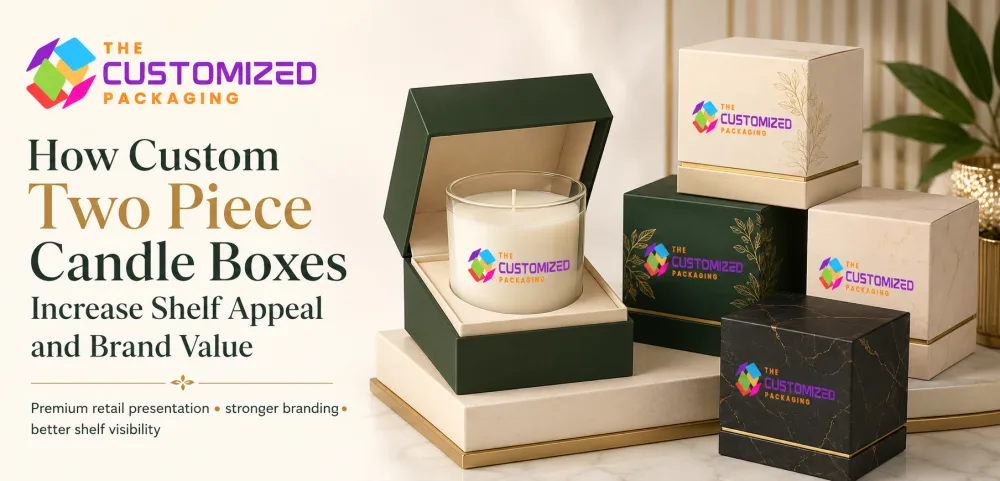
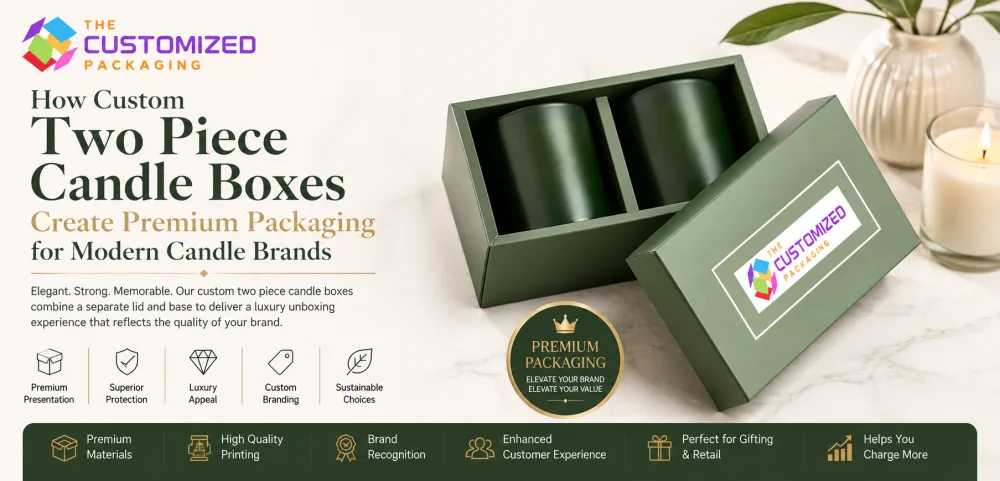
Custom two piece candle boxes provide a separate lid and base that can be developed around those differences. The construction offers a clear product reveal, broad branding surfaces and room for fitted supports without requiring every candle to use magnetic or drawer packaging.
The structure only feels premium when it fits correctly. Precise lid movement, stable product positioning and readable information matter more than the number of decorative finishes applied to the box.
What Is a Two-Piece Candle Box?
A two-piece package consists of a removable lid and a separate lower base. The candle sits inside the base, and the lid fits over part or all of the lower section.
This simple construction can be adapted through several variables:
| Structural element | Available direction | What it changes |
|---|---|---|
| Lid depth | Shallow, partial or full telescope | Reveal speed and base visibility |
| Board system | Folding paperboard or wrapped rigid board | Weight, storage and presentation |
| Inner support | Platform, collar, cavity or divider | Product position and protection |
| Lid-and-base contrast | Matching or different colors | Collection identification |
| Inner neck | Hidden or exposed shoulder | Layered presentation |
| Product access | Finger space, pull tab or ribbon | Ease of removal |
The structure can be used for everyday retail candles, luxury collections, corporate gifts and multiproduct sets. The final specification should follow the candle rather than a general assumption that all lid-and-base boxes are premium.
Begin with the Finished Candle
Packaging should be measured around the completed product—not an empty vessel or the advertised wax weight.
Record:
-
Maximum vessel width or diameter
-
Full height with the candle lid
-
Filled product weight
-
Label thickness and position
-
Raised decoration or textured surfaces
-
Dust-cover clearance
-
Required insert depth
-
Space needed for comfortable removal
A jar supplier may list a standard diameter, but applied labels, rolled rims, decorative lids and normal production tolerances can change the maximum measurement.
The filled weight is equally important. Two vessels with similar dimensions may require different base construction when one is lightweight metal and the other is thick glass.
A physical product-fit sample should be approved before a larger manufacturing run.
Match the Lid Depth to the Opening Experience
Lid depth controls how much of the base remains visible and how quickly the customer reaches the candle.
Shallow Lid
A shallow top covers only the upper portion of the base. It creates a faster reveal and leaves more room for a contrasting lower color.
This direction can work for lightweight tins, event favors and approachable retail collections.
Partial-Telescope Lid
A partial-telescope cover extends farther down the base while leaving a visible lower band. It balances secure closure with an intentional color or material contrast.
This is a versatile option for jar candles, boutique collections and gifting.
Full-Telescope Lid
A deep cover extends over most or all of the lower section. The longer lift creates a slower reveal and a more enclosed appearance.
It may suit tall jars, collector editions and formal gift packaging. The fit must be tested carefully so the lid does not scrape the wrap or become difficult to remove.
Shoulder-and-Neck Structure
An inner neck rises from the base and meets the removable lid. The neck can remain hidden or appear as a contrasting border between the two outer sections.
This construction provides an additional visual layer for limited editions and fragrance-led gift products.
Choose Paperboard or Rigid Construction Deliberately
The term two-piece describes the structure, not the material.
Folding Paperboard
Paperboard candle packaging can suit smaller jars, travel candles, tins and higher-volume retail collections. Selected constructions may be supplied flat, reducing storage requirements before assembly.
The board grade should be chosen according to the product dimensions and weight. Heavier candles may need reinforced folded walls or a stronger base.
Wrapped Rigid Board
Rigid construction uses thick setup board covered with printed or specialty paper. It creates permanent walls, defined corners and a more substantial feel.
Rigid candle boxes are appropriate for heavier jars, ceramic vessels, corporate gifts and limited releases. They normally arrive assembled and require more warehouse space than folding cartons.
Thicker construction should be selected because the candle and presentation justify it—not because rigid board automatically makes every product luxurious.
Different Candle Formats Need Different Support
Glass Jar Candles
Glass jars need controlled movement and a base strong enough for their filled weight. The support should keep the label facing the intended direction while preserving clearance around the lid and vessel walls.
For parcel delivery, the presentation box should be evaluated inside a suitable corrugated shipping system.
Ceramic and Concrete Vessels
Handmade ceramic and concrete containers may have small variations, irregular surfaces or raised decoration.
The insert should contact stable areas rather than press against textured sections. Additional dimensional clearance may be required, but excessive space should not allow the vessel to rotate.
Candle Tins
Metal tins are lighter but can dent when compressed. The box should leave enough clearance around rolled rims, slip lids or screw-top closures.
A simple paperboard collar may be sufficient for many tin formats.
Pillar and Sculpted Candles
Uncontained wax products may require a protective wrap, base platform and side support. Their surfaces should not rub directly against rough board or printed areas.
Decorative wax, sculpted edges and coatings need enough clearance to prevent marking during loading and removal.
Use Inserts to Solve a Defined Problem
An insert can center the vessel, distribute weight and make the first view more consistent. It should not be included simply because inserts are associated with premium packaging.
| Support option | Suitable application |
|---|---|
| Folded paperboard platform | Lightweight and medium retail jars |
| Circular collar | Round vessels needing side control |
| Corrugated support | Heavy jars and additional transit strength |
| Molded pulp cavity | Shaped vessels and paper-based presentation |
| Wrapped rigid platform | High-end retail and gifting |
| Foam or EVA cavity | Fragile or technically demanding vessels |
| Divided tray | Several candles or accessories |
The candle should remain secure without becoming difficult to remove. Finger notches, open sides, pull tabs or ribbons may improve access where the base is deep.
Metal wick trimmers, matches and other accessories should have separate positions so they cannot scratch a glass or ceramic vessel.
For detailed insert engineering, link readers to the dedicated guide about two-piece candle boxes with inserts rather than repeating every support configuration here.
Design One System Across the Fragrance Collection
A candle range should look connected even when every fragrance has its own identity.
Keep selected elements consistent:
-
Box dimensions
-
Lid depth
-
Logo position
-
Typography
-
Information hierarchy
-
Insert construction
-
Barcode location
-
Finishing treatment
Then vary fragrance-specific details:
-
Color
-
Scent name
-
Illustration
-
Collection number
-
Base band
-
Sleeve
-
Dust-cover artwork
Using one tested structural size across several fragrances can simplify inventory when the vessels have matching dimensions.
The same structure should not be forced onto products with materially different jar sizes or weights merely to avoid creating another box.
Organize the Artwork by Panel
The lid normally provides the most prominent branding surface, but every visible panel should have a defined role.
A practical hierarchy might be:
| Panel | Suitable information |
|---|---|
| Lid | Brand, fragrance and collection |
| Front or side | Candle type, size or scent family |
| Opposite side | Scent notes or concise product details |
| Base | Barcode, batch information and business details |
| Inside lid | Fragrance story, care message or QR code |
| Insert or card | Supporting instructions or gifting message |
The outside should not attempt to communicate the complete brand story.
A restrained lid can introduce the product, while secondary information appears after the customer lifts it. This creates a clearer sequence and avoids overcrowding.
Reserve Space for Candle and Safety Information
Depending on the product and market, the packaging may need space for net quantity, business identification, fragrance information, care guidance, batch details, barcode and safety warnings.
The candle company should provide and approve the final wording. The packaging supplier’s role is to create adequate print areas and reproduce the supplied artwork accurately.
ASTM F2058 covers fire-safety information placed on candle units of sale and states that the warning should remain visible and unobstructed at the point of sale. CPSC identifies F2058 among the principal voluntary standards used for candle products.
Essential safety information should therefore not be hidden beneath a permanent insert, covered by an outer sleeve or placed only on a loose card that may be discarded.
Keep Interior Components Purposeful
Dust covers, tissue, care cards and fragrance inserts can support the product, but they perform different functions.
A candle dust cover rests above the wax surface before use. It does not center the jar or replace the outer box.
Tissue can prevent light surface rubbing or add a gift layer. It should not be used as the primary protection for a heavy glass vessel.
A care card can carry extended guidance without overcrowding the carton, while the package and candle should retain essential information.
A QR code may link to fragrance notes, verified care instructions, refill guidance or a reorder page. It should direct customers to something useful rather than a generic homepage.
Design for Retail and Ecommerce Separately
A retail package and a shipping package face different conditions.
Retail presentation prioritizes:
-
Shelf footprint
-
Brand identification
-
Fragrance comparison
-
Stackability
-
Repeated customer handling
-
Barcode access
Ecommerce delivery also introduces:
-
Parcel compression
-
Drops and vibration
-
Surface abrasion
-
Moisture exposure
-
Movement inside the shipper
-
Courier labels and tape
A decorative lid-and-base package is not automatically a standalone shipping carton.
For online orders, it may need to sit inside a corrugated mailer with appropriate movement control. Test the candle, insert, presentation box and outer carton together.
The retail box creates the customer-facing experience. The shipping layer protects that experience until delivery.
Create Premium Presentation Without Overbuilding
A package can feel refined through accuracy rather than excess.
Premium qualities include:
-
Smooth lid movement
-
Aligned corners
-
Stable product positioning
-
Consistent wrapping
-
Clear printing
-
Balanced white space
-
An accessible product-removal method
-
A deliberate interior color
Finishes such as foil, embossing, debossing and spot UV can emphasize selected details, but one purposeful treatment is often enough.
Dark matte surfaces may show fingerprints and rubbing. Metallic papers can reveal corner imperfections. Soft-touch coatings may affect friction between the lid and base.
Finishes should therefore be tested on the actual structure instead of selected only from digital mockups.
Use Gift Elements Without Making Every Product Seasonal
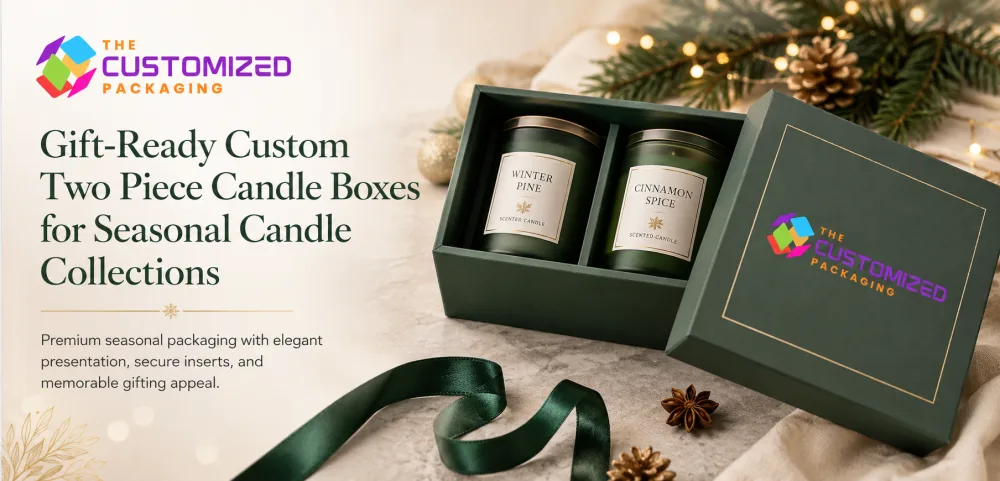
Custom candle presentation boxes can be adapted for weddings, holiday releases, corporate gifting and limited editions without redesigning the entire package.
A permanent box can be updated through:
-
Printed sleeves
-
Event cards
-
Belly bands
-
Personalized labels
-
Ribbons
-
Interior messages
-
Fragrance-specific dust covers
This approach can reduce leftover packaging after a seasonal campaign.
Highly specific dates, recipient names and event details should be limited to components that can be produced in the required quantity without making unused core boxes obsolete.
Describe Environmental Features Precisely
Paper-based packaging is not automatically recyclable, biodegradable or environmentally preferable.
The completed specification may include wraps, coatings, lamination, foil, adhesives, labels, transparent windows and foam inserts.
FTC guidance recommends that environmental claims be specific and supported. It also advises qualifying recyclable claims when appropriate and limiting recycled-content claims to materials actually recovered or diverted from the waste stream.
Rather than saying the complete box is “eco-friendly,” state the verified feature:
-
Made with a documented percentage of recycled board
-
Produced without plastic lamination
-
Uses a paperboard insert instead of foam
-
Designed with reduced external dimensions
-
Manufactured with an eligible certified paper grade
-
Components should be separated before disposal
Right-sizing the package and avoiding unnecessary layers can be more meaningful than applying a broad green label.
Test More Than the Artwork
A digital proof confirms design placement. It cannot confirm structural performance.
Review a complete sample with the actual filled candle and planned interior components.
Check:
-
Lid fit and removal
-
Base stability
-
Product orientation
-
Insert retention
-
Vessel clearance
-
Product removal
-
Print alignment
-
Barcode and QR-code scanning
-
Surface condition after handling
-
Performance inside the shipping carton
For rigid structures and specialty wraps, evaluate a printed prototype rather than relying only on an unwrapped white sample.
Several people should open and repack the box. This may reveal excessive lid friction, unclear access points or insert problems that are easy to miss during visual approval.
Plan Wholesale Quantities by Version
Pricing for wholesale candle boxes depends on more than the total number of units.
A collection may contain several box sizes, fragrance artworks, insert configurations or seasonal sleeves. Each variation can affect setup and production.
Prepare:
-
Completed candle dimensions
-
Filled weight
-
Vessel material
-
Lid style
-
Board construction
-
Insert requirements
-
Exterior and interior artwork
-
Number of fragrance versions
-
Quantity for each version
-
Finishing preferences
-
Retail or ecommerce use
-
Delivery destination
-
Required date
Most custom packaging projects begin at 100 units, but specialized materials, rigid construction and complex inserts may have different production requirements.
The most economical quantity balances unit cost, storage capacity, forecast demand and the risk of artwork becoming outdated.
Why Choose The Customized Packaging?
The Customized Packaging develops lid and base candle boxes for fragrance companies, candle makers, retailers, spas, boutiques, event suppliers and ecommerce brands.
Available options include folding paperboard, natural kraft, corrugated and wrapped rigid construction with shallow, telescope and shoulder-and-neck lid styles.
Projects can include custom sizing, vessel supports, divided gift-set trays, interior printing, fragrance artwork, foil, embossing and specialty wraps.
The structure should be approved around the completed candle rather than selected from a generic size. Standard production generally takes 8–12 business days after structural and artwork approval, with rush service available for eligible projects.
Frequently Asked Questions
Are two-piece boxes only suitable for luxury candles?
No. Folding paperboard versions can work for everyday retail candles, event favors and higher-volume collections. Rigid versions are more appropriate when the candle weight and presentation justify the additional construction.
How much clearance should be left around a candle jar?
There is no universal measurement. Clearance depends on the vessel tolerance, label, filled weight, insert material, packing method and desired removal experience. Confirm it with a physical sample.
Does every jar candle require an insert?
No. Lightweight candles may only require a properly sized base. Heavy, fragile or decorative vessels normally benefit from additional support and movement control.
Can the same box be used for multiple fragrances?
Yes, when the candle vessels share the same finished dimensions and weight requirements. Artwork, sleeves, labels or interior cards can distinguish the scents.
Can a rigid candle box be shipped directly?
It is generally better treated as presentation packaging. A suitable corrugated outer carton can protect its corners, wrap, lid and candle vessel during courier delivery.
What determines the price?
The principal factors are dimensions, board construction, lid depth, insert, printing, finishes, assembly, number of artwork versions, quantity and delivery destination.
Build the Package Around the Candle
A premium structure does not begin with foil, ribbons or thick board.
It begins with the finished candle: its vessel, weight, surface, lid and intended sales channel. The base supports that product, the insert controls its position and the removable top defines how it is revealed.
When those elements are planned together, two-piece candle packaging can provide a clear, adaptable system for retail collections, ecommerce presentation and gift-ready products without unnecessary layers or repeated marketing claims.