
How Custom Candle Boxes with Window Improve Retail Shelf Presentation
Learn how to design custom candle boxes with window for retail shelves by choosing the right window size, placement, box structure, inserts, branding, materials, and product visibility.
 Published June 12, 2026
Updated August 08, 2026
12 min read
Published June 12, 2026
Updated August 08, 2026
12 min read
A window works best when it reveals something useful about the candle.
The goal is not simply to cut the largest possible opening into the front of the carton. Effective custom candle boxes with window balance product visibility with branding space, structural support, product information, and the way the candle will actually sit on a retail shelf.
For candle brands, that means deciding what shoppers should see before choosing the window shape, box style, or decorative finish.
Why Window Packaging Works for Retail Candles
Candle shoppers often evaluate visible details such as the jar, wax color, vessel shape, label, lid, and decorative finish.
A window allows part of that physical product to become part of the packaging design.
Product Visibility and Printed Packaging Work Together
Fully closed packaging relies entirely on graphics to describe the product. An open or clear window adds a view of the actual candle while the surrounding panels still carry branding and product information.
This combination can be particularly useful for:
-
jar candles;
-
decorative candles;
-
colored wax;
-
distinctive vessels;
-
handmade collections;
-
seasonal designs;
-
gift candles.
The window should show something worth seeing rather than simply expose empty space or an unimportant part of the container.
Retail Presentation Is Different From Ecommerce Presentation
On a retail shelf, the package may be viewed from several feet away and surrounded by competing products.
Design for the Actual Shelf Orientation
Before finalizing artwork, confirm whether the box will normally appear:
front-facing, side-facing, stacked, or displayed in a countertop unit.
A front window makes little sense if the retailer usually presents the package from its side.
Window placement should follow the actual merchandising environment.
Decide What the Window Should Reveal
The strongest window design usually begins by identifying the candle's most distinctive visible feature.
Show the Jar Label When It Carries the Product Identity
If the fragrance name, collection name, or visual branding already appears prominently on the jar label, the window can frame that label.
This can reduce duplication between the box artwork and the candle itself.
Align the Candle Before Designing the Opening
The jar must sit consistently in the same position for this approach to work.
If the product rotates or shifts inside the carton, the label may no longer line up with the window.
A fitted platform or insert can help maintain orientation.
Show the Wax When Color or Texture Matters
For candles with distinctive wax colors, layered designs, botanicals, or decorative surfaces, a window can reveal the product rather than only the container.
The visible area should still leave enough paperboard around the opening to support the carton.
Show the Vessel When Packaging Is Part of the Product Story
Ceramic, concrete, tinted glass, embossed, or decorative jars may justify a larger viewing area.
In these cases, the vessel itself contributes to the visual presentation, so the box should not cover the feature customers are intended to notice.
Choose the Window Size Carefully
A bigger window is not automatically a better window.
The opening changes the balance between visibility, print area, carton stiffness, and internal support.
Small Windows
A smaller opening can highlight one controlled detail, such as a label, wax color, or decorative lid.
When Small Windows Work Well
They are particularly useful when:
-
the packaging carries important artwork;
-
only one product feature needs to be revealed;
-
the candle is relatively heavy;
-
a restrained premium appearance is preferred.
A small window also preserves more printable area around the product.
Medium and Large Windows
Larger windows provide a broader product view and can work well for visually distinctive candles.
However, larger openings reduce the amount of surrounding board and may require additional structural planning.
The right size should be determined using the actual candle weight, box dimensions, board specification, and opening position.
Window Shape Should Follow the Product and Brand
A standard rectangle is often the most practical option, but it is not the only choice.
Simple Geometric Windows
Rectangular, square, circular, oval, and arched windows can create a clean presentation without making the packaging overly decorative.
These shapes work across a wide range of candle brands.
Custom Die-Cut Windows
A custom opening can echo a flame, leaf, arch, logo element, or another brand-related form.
Do Not Let the Shape Compete With the Candle
The window should frame the product rather than become a separate visual object demanding more attention than the candle itself.
Complex shapes can also create narrow paperboard areas that require more careful structural evaluation.
Use a custom die-cut because it improves the composition—not simply because custom cutting is available.
Match the Window to the Box Structure
Different window candle boxes create different retail experiences.
Folding Cartons
Folding paperboard cartons are practical for many retail jar candles, votives, wax melts, and smaller products.
They provide ample print space and can usually be supplied flat before assembly.
Best Use
A folding carton works well when the priority is an efficient retail package with a controlled product view.
Sleeve Packaging
A printed sleeve can slide over an inner tray or carton while incorporating a strategically positioned opening.
This provides additional design possibilities because the window can interact with both the sleeve and the product underneath.
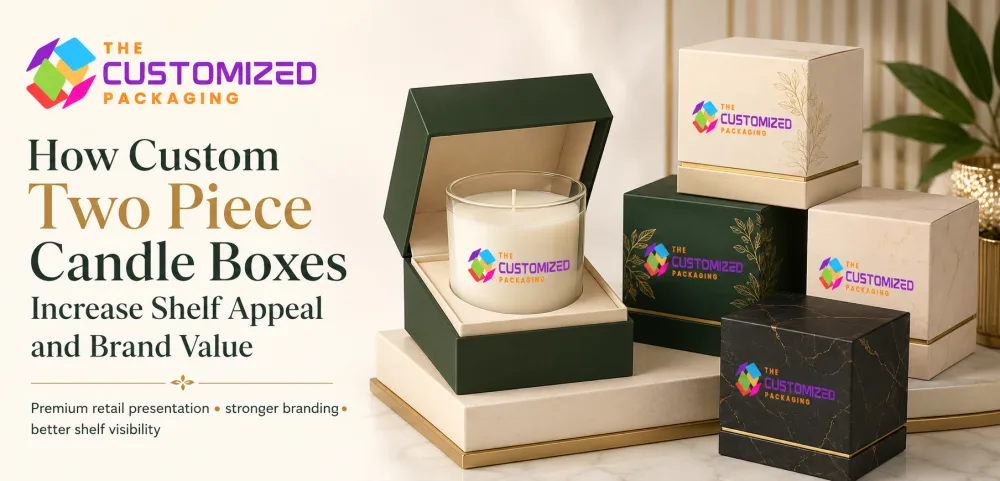
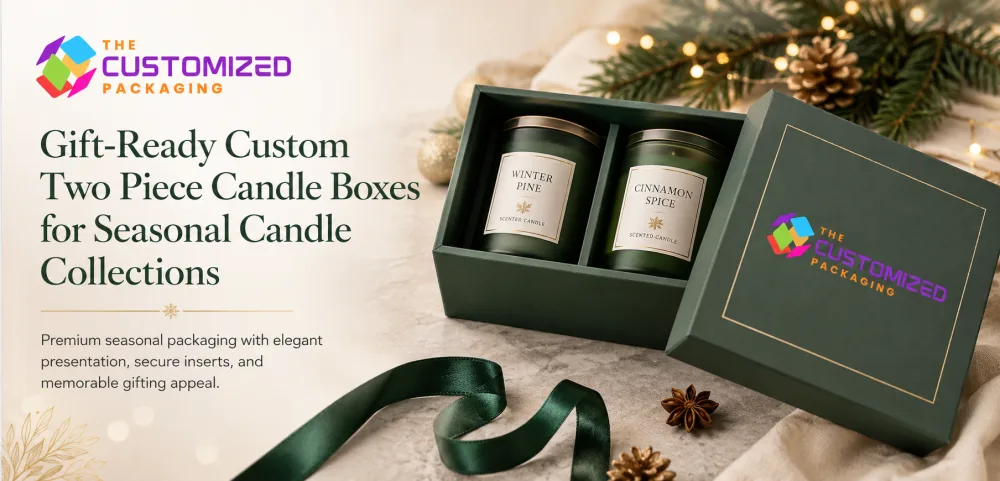
Two-Piece and Rigid Window Boxes
More substantial structures can suit gift collections, higher-value vessels, and premium candle ranges.
Premium Does Not Require the Largest Window
For luxury packaging, a smaller controlled reveal can sometimes feel more intentional than exposing most of the product.
The box structure, materials, typography, and window should operate as one system.
Use Inserts to Keep the Candle Aligned
A well-designed window loses its effect when the candle sits off-center.
Inserts Support Position and Orientation
Candle box inserts can help keep jars in the intended position and reduce unnecessary movement inside the carton.
Paperboard platforms, corrugated supports, molded fiber, or other structures can be selected according to the candle and outer package.
Design the Insert and Window Together
The insert should not be added after the window has already been finalized.
Test the Visible Area With the Real Candle
During sampling, check whether:
-
the label faces the opening;
-
the jar remains centered;
-
the base sits at the intended height;
-
the lid is visible where planned;
-
the window does not expose excessive empty space.
This is much more reliable than evaluating the dieline by itself.
Balance Visibility With Brand Communication
The surrounding carton still has an important job even when the product is visible.
Keep the Front Panel Focused
Custom printed candle boxes can carry the fragrance name, brand identity, candle type, net quantity, and selected product information around the window.
Avoid placing too many competing messages on the front panel.
Candle Boxes With Logo Need Visual Hierarchy
A logo should remain recognizable without overwhelming the candle.
Let the Window and Logo Support Each Other
One effective composition is:
logo → fragrance name → window → supporting product detail
rather than placing large graphics around every edge of the opening.
The product itself can become part of the visual hierarchy.
Choose Window Material According to the Design
Not every die-cut opening requires a clear plastic film.
Open Die-Cut Windows
An open window removes the transparent film and provides direct visual access to the candle.
This can create a simple presentation but leaves the product more exposed to handling and dust.
Clear-Film Windows
A transparent film can cover the opening while keeping the product visible.
Avoid Blanket Material Claims
The exact film should be specified rather than referring to every clear window generically as “PVC.”
Different transparent materials may be available depending on production requirements.
Likewise, a transparent window should not automatically be described as recyclable or environmentally preferable unless the complete material specification supports that claim.
Material Should Match Candle Weight and Display Needs
The candle itself determines much of the structural requirement.
| Material direction | Typical retail consideration |
|---|---|
| Folding paperboard | Lightweight to medium retail candle cartons |
| Kraft paperboard | Natural visual appearance and folding structures |
| Corrugated board | Heavier products or shipping-oriented applications |
| Rigid board | Premium presentation and gift collections |
Natural kraft appearance does not automatically establish sustainability, recyclability, or recycled content. Environmental claims should be based on the actual finished specification.
Printing and Finishes Should Frame the Window
A window already creates a strong visual feature, so additional finishes should be used selectively.
Useful Printing Approaches
Brand colors, fragrance coding, restrained patterns, and clear typography can help customers distinguish products across a candle collection.
Specialty Finishes
Foil stamping, embossing, debossing, matte surfaces, gloss accents, or selective spot effects can be used around the window or logo.
Avoid Decorating Every Available Surface
The goal is visual hierarchy.
A window, foil logo, patterned background, embossed headline, metallic border, and oversized fragrance illustration can compete rather than cooperate.
Choose one or two primary visual features and let the actual candle contribute the rest.
Test the Box as a Retail Display
A digital mockup cannot fully show how a window package behaves on a real shelf.
Review It From Normal Shopping Distance
Place the physical sample on a shelf beside other similarly sized packages.
Check:
-
whether the candle is immediately visible;
-
whether the fragrance name can be read;
-
whether the logo remains recognizable;
-
whether glare affects a clear film window;
-
whether the insert keeps the product centered;
-
whether the box stands correctly.
Review It Under Store Lighting
Reflective clear films, foil, gloss coatings, and glass candle vessels can all respond differently under bright retail lighting.
Check for Glare
If multiple reflective surfaces overlap, the product may become harder—not easier—to see.
A physical sample can reveal this before the full production run.
Use QR Codes for Supplemental Information
Retail packaging has limited physical space.
A QR code can link to fragrance stories, candle-care instructions, collection pages, videos, or other supplemental information.
It should not replace information that needs to appear physically on the package.
Keep the code in a clear area with adequate contrast and test it at final printed size.
Wholesale Window Packaging Needs Consistency
Growing brands often use the same basic packaging system across several fragrances.
Wholesale candle boxes with window can use consistent dimensions, logo placement, window geometry, and structural layout while changing fragrance names, colors, or artwork between SKUs.
This creates a recognizable retail family without making every package identical.
When several candle sizes are involved, confirm whether one box structure can genuinely serve multiple products before standardizing it. Excess internal space can make the candle sit incorrectly behind the window.
What Affects the Cost of Window Candle Boxes?
Adding a window introduces additional structural and production variables.
Key pricing factors include:
| Cost factor | Why it matters |
|---|---|
| Box dimensions | Determine material usage |
| Candle weight | Influences board and insert requirements |
| Window size | Changes cutting and structural design |
| Window shape | Complex die-cuts may require additional tooling |
| Clear film | Adds a separate material/component where used |
| Insert | Helps maintain product position |
| Printing | Artwork and number of designs affect production |
| Finishes | Foil, embossing, coatings, and specialty effects add processes |
| Quantity | Influences average unit pricing |
The most useful quote request includes the candle dimensions, filled jar weight, required box quantity, artwork versions, window preference, and retail presentation requirements.
How The Customized Packaging Supports Window Candle Projects
The Customized Packaging develops custom candle boxes with window around candle dimensions, jar weight, product visibility, printing, and retail presentation requirements.
Projects can include folding cartons, sleeves, two-piece structures, rigid presentations, custom die-cut openings, clear-film windows, and fitted inserts.
For brands planning several fragrances or candle sizes, structural sampling can help establish whether one packaging format can be used consistently across the collection before bulk production.
Frequently Asked Questions
What Part of a Candle Should the Window Show?
The best feature depends on the product. A window may frame the jar label, wax color, decorative vessel, lid, or another visually distinctive detail.
Are Larger Windows Better for Retail Display?
Not always. Large windows provide more visibility but reduce surrounding print area and can affect structural strength. Window size should be evaluated with the actual box dimensions, board, and candle weight.
Can a Window Cover More Than One Panel?
Yes, depending on the structure. Multi-panel windows require careful dieline and structural planning because the opening crosses folds or corners.
Do Window Candle Boxes Need Inserts?
Not every candle requires one. Inserts become useful when the jar needs to remain centered, maintain a particular orientation, or avoid excessive movement inside the box.
Is Clear PVC Required for a Candle Box Window?
No. A window may be left open or use an appropriate transparent film selected for the project. The exact material should be specified instead of assuming every clear window uses PVC.
Are Kraft Window Candle Boxes Automatically Eco-Friendly?
No. Kraft appearance alone does not establish the environmental performance of the complete package. Claims should be based on the specific board, window material, coatings, inks, adhesives, and other components used.
Can Window Boxes Be Used for Luxury Candles?
Yes. Rigid, two-piece, sleeve, or premium folding structures can incorporate windows. The size and placement should fit the desired presentation rather than assuming luxury packaging requires a large opening.
Design the Window Around What the Shopper Needs to See
A successful candle box with window does not reveal the product randomly.
It identifies the part of the candle worth showing, keeps that feature aligned with the opening, preserves enough space for branding and product information, and works with the structure of the finished box.
For retail brands, the most useful design process is therefore:
product → shelf orientation → visible feature → window placement → insert → artwork → physical shelf test.
That sequence produces a more deliberate retail package than choosing a decorative window shape first and trying to fit the candle around it.