How Custom Clothing Subscription Boxes Create a Premium Delivery Experience
Learn how custom clothing subscription boxes can create a more premium delivery experience through right-sized mailers, organized presentation, inside printing, tissue, styling cards, QR codes, seasonal variation, and consistent branding.
 Published June 06, 2026
Updated August 08, 2026
11 min read
Published June 06, 2026
Updated August 08, 2026
11 min read
A premium clothing subscription delivery does not begin with gold foil or an expensive rigid box.
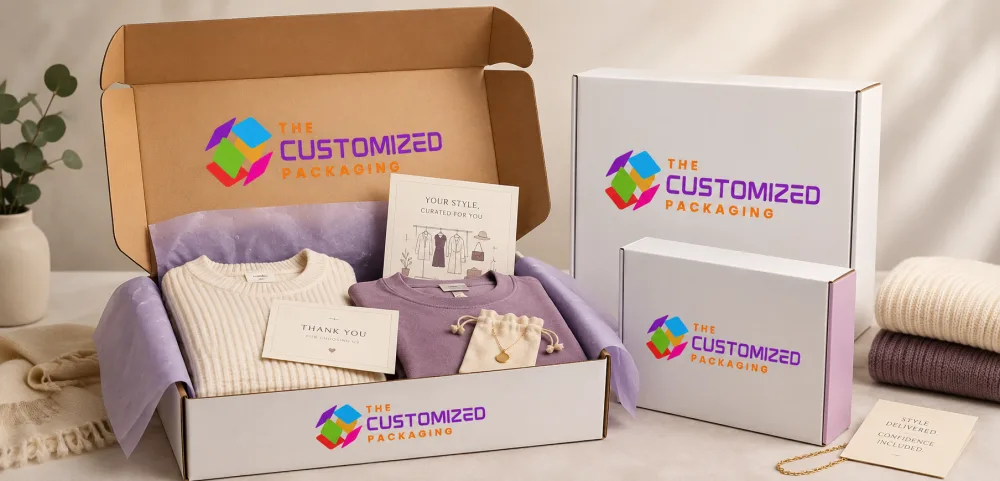
It begins with a package that feels deliberate: the clothing fits properly, products are arranged logically, the box opens cleanly, branding is consistent, and any cards or accessories feel like part of one coordinated experience.
For recurring fashion deliveries, custom clothing subscription boxes can help create that sense of intention without making every shipment unnecessarily elaborate.
What Makes Subscription Packaging Feel Premium?
“Premium” is not one material or finish. It is the combined effect of structure, fit, organization, print quality, and the way the subscriber encounters the products inside.
Start With a Box That Fits the Actual Delivery
A monthly apparel shipment containing one T-shirt needs a different package from a seasonal styling box containing jeans, knitwear, accessories, and printed inserts.
The box should be selected using the packed dimensions rather than a generic subscription-box size.
Avoid Excess Empty Space
Oversized packaging can make clothing move around and may require unnecessary tissue or void fill.
A more appropriate internal size can make even a simple corrugated mailer feel more deliberate because the products appear to belong in the package rather than merely being placed inside it.
Premium Presentation Starts With Order
The first view after opening the box matters.
Folded garments, accessories, cards, and promotional materials should have a clear arrangement rather than competing for space.
A premium-looking delivery is often the result of better organization rather than more packaging components.
Choose the Box Style Around the Subscription Model
Different subscription businesses need different structures.
Corrugated Mailer Boxes for Regular Apparel Deliveries
For many ecommerce and monthly apparel programs, custom subscription mailer boxes provide a practical balance between shipping structure and printable branding space.
They can work for T-shirts, activewear, hoodies, baby clothing, streetwear, scarves, and mixed apparel kits.
Use Board Strength Appropriate to the Packed Order
The structure should be selected according to the packed weight, box size, and distribution conditions.
Do not assume that every mailer board specification is appropriate for every monthly kit.
Folding Cartons for Small Subscription Products
Smaller apparel accessories, socks, ties, scarves, lingerie, or add-on products may not require a full corrugated mailer as the customer-facing package.
A folding carton can provide a cleaner fit for lighter items.
Rigid Boxes for Selected Premium Programs
Rigid packaging can suit luxury styling memberships, seasonal gift subscriptions, limited collections, and high-value apparel sets.
Premium Does Not Automatically Mean Rigid
Rigid boxes require more material and storage space and may still need an outer shipping carton.
Use them when the subscription price point, reuse concept, or presentation genuinely justifies the structure.
Use Inside Printing to Extend the Brand Experience
Outside printing identifies the shipment. Inside printing creates another brand moment when the box opens.
Keep the Message Short
The interior can include:
-
a welcome message;
-
subscription name;
-
seasonal theme;
-
styling prompt;
-
concise thank-you;
-
QR code.
A few purposeful elements usually work better than filling the entire interior with marketing copy.
Clothing Subscription Boxes With Logo Need Consistency
Clothing subscription boxes with logo can reinforce recognition across repeated deliveries when logo position, typography, and core layout remain consistent.
Change Secondary Elements, Not the Entire Identity
A monthly program can vary colors, illustrations, or short messages while preserving the same core visual system.
This helps different deliveries feel fresh without making each box look like it comes from a different company.
Make the Clothing Presentation Feel Curated
Subscription packaging is different from sending a single ecommerce product because customers often receive several coordinated items at once.
Fold Apparel Around the Box Dimensions
The fold should be considered when sizing the box.
Shirts, knitwear, dresses, activewear, and hoodies create different packed heights.
A physical packing test can determine whether the garments stack neatly without excessive compression.
Use Tissue Only When It Has a Purpose
Tissue can separate garments, cover the first layer, or create a cleaner visual reveal.
It does not need to be added around every item.
Branded Tissue Can Be Subtle
A small repeating logo, simple pattern, or carefully selected plain tissue can work with the box rather than competing with it.
More decoration is not automatically more premium.
Use Inserts Selectively
Many clothing subscription deliveries do not require complex inserts because soft garments can be folded and layered.
Inserts Work Better for Accessories and Mixed Kits
A simple paperboard compartment or divider may be useful when the shipment includes:
-
jewelry;
-
belts;
-
fragrances;
-
beauty products;
-
styling tools;
-
cards;
-
small accessories.
The objective is to prevent harder items from becoming mixed with the clothing and to create a clearer layout.
Do Not Use an Insert Just to Fill Space
If the outer box needs a large insert simply because it is oversized, reconsider the box dimensions first.
Styling Cards Add a Service Layer
A clothing subscription differs from a basic ecommerce order when the customer is receiving curation, styling, or a recurring collection concept.
Printed cards can help communicate that service.
Useful Styling Card Content
Depending on the subscription, a card can include:
-
outfit combinations;
-
garment-care guidance;
-
collection notes;
-
product details;
-
size or fit information;
-
accessory pairing ideas.
This can make the box feel more thoughtfully assembled because the printed material explains why the items belong together.
Avoid Filling the Box With Unnecessary Inserts
One well-designed styling card is often more useful than several promotional leaflets.
The printed material should contribute to the subscription experience rather than simply increase the amount of paper inside the package.
QR Codes Can Extend the Experience Beyond the Box
A QR code can connect physical packaging to useful digital content.
Practical QR Destinations
A subscriber might scan to access:
-
styling videos;
-
care instructions;
-
return or exchange guidance;
-
subscriber-only collections;
-
size-management pages;
-
product stories;
-
next-delivery preferences.
Keep Essential Information on the Package Where Needed
A QR code should supplement useful information rather than replace information that needs to remain physically available.
The printed code should also be tested at final production size before the artwork is approved.
Seasonal Variation Can Keep Recurring Packaging From Feeling Static
A subscription arrives repeatedly, so a completely identical experience may eventually feel routine.
That does not mean the brand needs a new structural box every month.
Keep the Structure Consistent
The same dieline and box specification can often be used while changing selected artwork elements.
For example:
spring: lighter accent colors
holiday: seasonal interior message
limited drop: alternate graphic panel
anniversary: special insert card
Avoid Creating Unusable Seasonal Inventory
Date-specific packaging can become difficult to use once the campaign has passed.
Sleeves, Cards, and Interior Print Can Provide Flexibility
Where appropriate, brands can keep the primary box more evergreen while using interchangeable sleeves, stickers, cards, or other secondary elements for temporary campaigns.
This can make seasonal updates easier to manage.
Material Choice Should Support the Intended Experience
Material should be selected around product weight, shipping, printing, and how the subscription is positioned.
Corrugated Board
Corrugated mailers are practical for many direct-to-consumer apparel shipments and provide substantial printable area.
Folding Paperboard
Paperboard can suit smaller or lighter subscription products and can often be supplied flat.
Rigid Board
Rigid structures provide a more substantial presentation for premium programs but require more storage and usually more material.
Kraft Appearance
Natural kraft can create a minimal visual direction.
Kraft Does Not Automatically Mean Eco-Friendly
Brown appearance alone does not establish that a finished package is recyclable, biodegradable, recycled, or environmentally preferable.
Environmental claims should reflect the actual board, coatings, adhesives, inks, and other components used.
Make the Shipping Experience Part of the Design
A beautiful subscription box that arrives crushed or covered in shipping labels may not create the intended presentation.
Decide Whether the Branded Box Is Also the Shipping Box
Corrugated mailers may sometimes serve as both.
Premium rigid or decorative folding structures may require a separate shipping carton.
Consider Where Labels and Tape Will Go
If the branded mailer ships directly, reserve areas for:
-
carrier labels;
-
barcodes;
-
seals;
-
return documentation.
Do Not Put Important Artwork Under the Shipping Label
The production artwork should reflect the actual fulfillment workflow.
A premium presentation depends partly on how the package looks when it reaches the subscriber, not only how it looks before shipping.
Plan for Returns and Exchanges
Clothing subscriptions often involve fit and preference decisions.
Packaging may therefore be opened carefully and used again for a return.
Return-Friendly Features
Depending on the structure, options may include:
-
second adhesive strips;
-
resealable closures;
-
tear strips that preserve the box;
-
clear return instructions.
A return feature should be designed into the package rather than added after production.
Premium Can Also Mean Easy to Use
A package that is visually impressive but awkward to reopen, flatten, return, or dispose of may not provide the best customer experience.
Usability is part of presentation quality.
Keep Packaging Consistent Across Subscription Sizes
Growing programs may offer several tiers or plans.
For example:
| Subscription | Packaging direction |
|---|---|
| One-item monthly box | Compact mailer |
| Standard apparel kit | Medium corrugated mailer |
| Multi-item styling box | Larger mailer with organization |
| Premium seasonal collection | Rigid or presentation structure where justified |
The goal is not to create a unique construction for every variation.
Build a Small Packaging Size System
A few tested sizes can often cover a larger range of subscription combinations.
This can simplify storage and fulfillment while maintaining a consistent appearance.
What Affects the Cost of Clothing Subscription Boxes?
The cost of custom subscription packaging depends on the actual specification.
| Cost factor | Why it matters |
|---|---|
| Box size | Changes material consumption |
| Structure | Mailer, folding, and rigid formats differ |
| Board | Strength and finish affect production |
| Printing | Exterior/interior coverage changes cost |
| Artwork versions | Seasonal variations may require separate setup |
| Inserts | Add material and production steps |
| Finishes | Foil, embossing, or special coatings add processes |
| Quantity | Influences average unit pricing |
| Shipping | Finished volume and destination affect logistics |
When requesting wholesale clothing subscription boxes, separate quantities by box size and artwork version so the quote reflects the real production setup.
How The Customized Packaging Supports Subscription Projects
The Customized Packaging develops custom clothing subscription boxes for apparel, styling, fashion-accessory, boutique, streetwear, activewear, baby-clothing, and other recurring product programs across the USA.
Available structures can include corrugated mailers, folding cartons, rigid presentations, printed interiors, dividers, and selected insert systems.
Projects can be developed around packed garment dimensions, product count, box style, artwork, fulfillment requirements, and order quantity.
Most custom styles begin at 100 units. Standard production generally takes 3–5 business days after final approval, with rush production usually taking 2–4 business days when our team confirms it.
Frequently Asked Questions
What Is the Best Box for a Clothing Subscription?
For many monthly apparel shipments, a corrugated mailer is a practical starting point because it can combine a shipping-oriented structure with branded exterior and interior printing. The correct specification still depends on packed weight and dimensions.
Do Clothing Subscription Boxes Need Inserts?
Not always. Soft garments can often be folded and wrapped without complex inserts. Dividers or holders become more useful when accessories, cards, beauty products, or other hard items are packed with the apparel.
Can a Subscription Box Be Printed Inside and Outside?
Yes. Inside printing can carry a short message, graphics, styling prompts, or other subscriber-focused content while the exterior handles shipping and brand identification.
Are Rigid Boxes Better for Premium Subscriptions?
Not automatically. They can provide a substantial presentation for selected high-end programs, but a well-designed corrugated mailer may be more practical for frequent shipping.
How Can Monthly Packaging Change Without Creating a New Box Every Time?
Keep the structural box and core branding consistent while changing secondary elements such as cards, sleeves, stickers, selected colors, or interior messages.
Can Clothing Subscription Packaging Be Designed for Returns?
Yes. Depending on the structure, return-oriented features such as second adhesive strips, resealable closures, and clear return instructions can be incorporated during structural development.
Premium Subscription Packaging Is About Deliberate Choices
The most effective clothing subscription packaging does not feel premium because every shipment contains the maximum number of finishes, inserts, and printed extras.
It feels considered because the box fits the garments, the presentation is organized, branding is consistent, information is useful, and the packaging works with the subscription's shipping and return process.
Start with the packed products and recurring fulfillment workflow. Then choose the box, printing, tissue, cards, and optional inserts around those needs.
That creates a more coherent delivery experience without making every monthly shipment unnecessarily complex or expensive.