How to Design a Premium Apparel Unboxing Experience
A premium apparel unboxing experience starts with product fit, then builds through box structure, opening sequence, garment presentation, tactile details and purposeful interior components. Learn how to design each stage around the clothing and its market position.
 Published June 04, 2026
Updated September 07, 2026
11 min read
Published June 04, 2026
Updated September 07, 2026
11 min read
A premium apparel unboxing experience is created by controlling how the customer sees, touches and reveals the garment. The strongest packaging starts with accurate product fit, then uses the box structure, opening sequence, interior presentation and selected tactile details to create an experience appropriate to the clothing and its price position.
For brands comparing broader apparel and fashion packaging options, the important distinction is that premium presentation does not come from adding more packaging. It comes from making each component perform a clear job.
Start With the Folded Garment, Not the Box
Apparel packaging should be designed around how the product will actually be packed.
A T-shirt may become relatively flat once folded, while a hoodie, embroidered garment, structured shirt or multi-piece gift set can require considerably more depth. Collars, buttons, fabric thickness, decorative details and accessories also affect the amount of usable interior space required.
An oversized box can allow clothing to shift and make the presentation look empty. A box that is too tight can compress the garment, disturb the fold or make removal awkward.
When developing custom apparel gift boxes, measure the product in its final folded or arranged configuration rather than relying only on the garment's retail size.
| Apparel product | Main fit consideration | Presentation direction |
|---|---|---|
| T-shirts and lightweight tops | Maintain a neat compact fold | Shallow fitted box with restrained presentation |
| Dress shirts | Protect the collar and front fold | Structured box with controlled internal clearance |
| Scarves | Prevent loose movement | Shallow presentation box or drawer structure |
| Dresses | Accommodate a wider folded footprint | Larger box with sufficient depth and clean layering |
| Hoodies and sweatshirts | Allow for fabric bulk | Deeper structure without excessive compression |
| Apparel gift sets | Organize multiple pieces | Defined compartments or deliberate product arrangement |
The correct dimensions create the foundation for every step that follows.
Choose the Structure by the Reveal It Creates
Different box structures change how quickly the product becomes visible and how the customer interacts with the package.
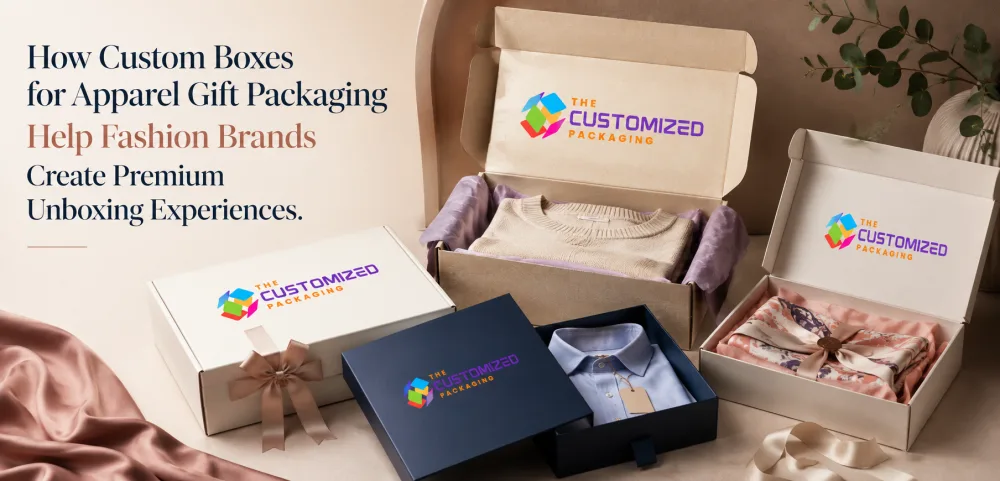
A folding carton creates a direct opening. A mailer exposes a broad interior surface as the lid rises. A two-piece rigid box separates the lid from the base and creates a slower reveal. Drawer packaging reveals the garment progressively, while a magnetic book-style box creates a hinged presentation.
The best choice depends on what should happen when the customer opens the package—not simply on which structure appears most expensive.
| Box structure | Reveal style | Useful apparel applications |
|---|---|---|
| Folding box | Quick and direct | Shirts, lightweight garments and everyday gifting |
| Mailer box | Wide opening with immediate interior visibility | Branded apparel deliveries and gift-ready ecommerce orders |
| Two-piece rigid box | Slow lid-off reveal | Premium shirts, dresses, scarves and fashion gifts |
| Drawer box | Progressive reveal | Scarves, ties, accessories and coordinated sets |
| Magnetic book-style box | Controlled hinged opening | Higher-positioned apparel and presentation-led gift sets |
| Collapsible rigid box | Similar premium reveal with flat-storage advantages before assembly | Programs balancing presentation with storage requirements |
The structure should also suit fulfillment. A beautiful opening mechanism becomes less useful if it slows packing, requires excessive storage space or does not suit the garment.
Design the Unboxing as a Sequence
Premium unboxing is not one visual moment. It is a sequence.
A practical sequence can be planned in five stages:
-
Exterior recognition — the customer identifies the package and brand
-
Opening action — lifting, sliding or unfolding creates the first physical interaction
-
Interior reveal — the inside lid, tissue or garment becomes the first focal point
-
Product access — the customer removes any necessary restraint without unnecessary friction
-
Garment reveal — the apparel appears in the position and condition intended by the brand
These stages do not all require decoration.
A restrained exterior followed by a stronger interior can create contrast. Another brand may use a recognizable exterior but keep the inside almost completely minimal so the garment itself becomes the main visual element.
Brands planning the wider customer journey can connect this approach with their broader apparel packaging strategy for fashion brands, but this unboxing decision should remain focused on what happens between opening the package and reaching the garment.
Control What the Customer Sees First
The first interior view should have a clear focal point.
If the customer opens a premium shirt box, the collar or branded tissue seal may provide the strongest first view. For a scarf, the fabric color or pattern may deserve immediate attention. For a coordinated apparel gift set, the arrangement itself may need to explain how the products belong together.
Large empty areas, shifted garments, loose cards and excessive filler can weaken that first view.
A useful design question is:
What should the customer notice during the first two seconds after opening the box?
Once that is decided, the box dimensions, garment orientation, tissue placement and interior artwork can support that focal point.
Use Tactile Finishes at Meaningful Touchpoints
Premium packaging is experienced through touch as well as sight.
Instead of applying decorative finishes everywhere, identify the surfaces the customer actually handles: the lid, sleeve, pull tab, front edge or closure area.
A textured paper wrap can make the first contact feel different from a smooth folding carton. Embossing or debossing can create tactile emphasis around a logo. Soft-touch finishes alter surface feel, while foil or spot UV can create visual contrast on selected areas.
The finish should support the brand identity and product position.
A minimalist fashion label may achieve a stronger result with one understated tactile treatment than with foil, embossing, gloss effects and complex graphics used together.
Use Interior Components Only When They Improve the Experience
Tissue, inserts, ribbons, cards and other components can improve apparel presentation, but every layer should have a reason to exist.
Tissue can keep a folded garment visually contained before the reveal. A paper band can hold a shirt or scarf arrangement together. An insert or divider can help organize a multi-item set. A care card can provide useful garment information.
For a more detailed breakdown of when to use inserts, tissue paper and ribbons, treat those components as functional parts of the presentation rather than automatic signs of luxury.
Not every garment requires an insert.
Soft apparel often benefits more from accurate sizing and controlled folding than from a rigid internal support. Inserts become more useful when several products need fixed positions, an accessory must stay separated, or the visual arrangement would otherwise move during handling.
Match Packaging Investment to Product Position
Premium does not mean every apparel product needs rigid construction and multiple finishing processes.
Packaging should be proportionate to the product, sales channel, gifting purpose and expected customer experience.
| Product position | Suitable presentation approach |
|---|---|
| Promotional or entry-level apparel | Accurate sizing, clean print and minimal interior components |
| Everyday branded apparel | Custom-sized box with consistent visual identity |
| Boutique gifting | Refined structure with controlled garment presentation |
| Premium fashion | Stronger presentation structure with selected tactile details |
| Limited-edition or high-value collection | Deliberate reveal sequence with tightly controlled materials and finishing |
This prevents brands from spending heavily on features customers may barely notice while underinvesting in dimensions, folding or structure—the decisions that control the actual experience.
Create Contrast Without Creating Clutter
A premium reveal often benefits from visual contrast.
For example, a quiet exterior may open to a stronger interior color. A monochrome box may reveal brightly colored apparel. A highly graphic streetwear exterior may open to a simple garment presentation.
Contrast can come from color, texture, typography, opening direction or the relationship between packaging and product.
It does not require adding more objects.
Too many cards, decorative layers, ribbons, fillers and messages can compete with the garment. The product should remain the reason the package exists.
Design for Presentation and Handling Together
A gift-ready box may still travel through storage, fulfillment and delivery before reaching the customer.
The package therefore has two jobs: preserve the intended arrangement and make the eventual opening feel deliberate.
If a folded garment can slide freely during handling, the carefully designed reveal may disappear before the customer sees it. If the box has excessive empty space, tissue alone may not maintain the arrangement.
Consider the complete packed system:
-
Garment dimensions
-
Box dimensions
-
Orientation during packing
-
Movement inside the package
-
Interior restraint where necessary
-
Ease of opening
-
Ease of removing the garment
-
Outer shipping protection when applicable
The presentation should be tested after realistic handling, not only immediately after the box is packed.
Test the Actual Unboxing Before Production
A dieline can show dimensions and artwork, but it cannot fully demonstrate how the customer will experience the finished package.
Before approving a larger production run, evaluate a representative packed sample with the actual garment or a close equivalent.
Open it exactly as a customer would.
Check whether the opening feels natural, whether the garment remains in position, whether the first visual appears where expected and whether the customer can remove the clothing without disturbing unnecessary components.
Photographing or recording the test can make problems easier to identify.
A packed-sample review should answer four questions:
Does the garment stay where intended?
Is the first reveal visually clear?
Does every interior component have a purpose?
Does the overall experience match the product's positioning?
If one of those answers is no, changing the structure or layout before production is usually more useful than adding another decorative finish.
Common Apparel Unboxing Mistakes
One common mistake is starting with luxury finishes before the basic structure and dimensions have been resolved. A premium surface treatment cannot correct a poorly fitted box.
Another is using an oversized package to make the product appear more substantial. Excess space can instead make the garment look undersized and may require additional material to control movement.
Brands can also overdesign the interior. Multiple cards, ribbons, stickers, inserts and messages can create visual competition rather than a controlled reveal.
A final mistake is selecting a box solely from photographs. The same structure can behave very differently depending on the garment's thickness, folding method and weight.
The physical product should remain the starting point.
A Simple Apparel Unboxing Decision Framework
Before approving a design, determine:
-
What are the dimensions of the product in its final packed configuration?
-
What should the customer see first?
-
Should the product be revealed immediately or progressively?
-
What prevents the garment from moving or losing its presentation?
-
Which tactile or visual feature deserves emphasis?
-
Which interior components genuinely improve presentation or usability?
-
Does the packaging level fit the product's market position?
-
Has the complete packed experience been tested?
Those decisions create a more useful design brief than beginning with a list of finishes.
Frequently Asked Questions
What makes an apparel unboxing experience feel premium?
A premium apparel unboxing experience combines accurate product fit, an intentional opening sequence, controlled garment presentation and a small number of well-selected visual or tactile details. Premium presentation depends more on coordination than on the number of packaging features.
Which box structure is best for premium apparel packaging?
There is no single best structure. Two-piece rigid, drawer and magnetic boxes can create slower, more controlled reveals, while folding and mailer structures can also provide polished presentation when they are correctly sized and designed around the garment.
Do apparel gift boxes need custom inserts?
Not necessarily. Folded soft garments may only need accurate box sizing, tissue or a paper band. Inserts are more useful when multiple pieces need to stay organized or when a specific component must remain in a fixed position.
Should premium apparel packaging use expensive finishes?
Only when the finish adds meaningful visual or tactile value. One carefully positioned embossed logo, textured wrap or foil detail may communicate the intended brand position more effectively than several competing finishing processes.
How much does premium apparel packaging cost?
Cost depends on dimensions, structure, material, printing, finishes, inserts, quantity and delivery requirements. Brands comparing structural options can estimate custom packaging cost before deciding which premium features deserve the available packaging budget.
Build the Unboxing Around the Garment
A premium apparel unboxing experience begins with the clothing itself.
Start with the garment's real folded dimensions and presentation requirements. Select a structure that creates the intended reveal. Control what the customer sees first. Add tactile details where they will actually be experienced, and use interior components only where they improve organization, presentation or usability.
The result should feel intentional rather than complicated.
The Customized Packaging can develop apparel gift packaging around your garment dimensions, preferred opening style, artwork and presentation requirements. Share the product's packed size, quantity and desired box structure to receive a custom packaging recommendation and quote.