
Custom Luxury Jewelry Boxes: How to Build a Premium Packaging System
Luxury jewelry packaging should not treat every product the same. Learn how to match box size, structure, insert, material and finishing to rings, necklaces, bracelets, watches and jewelry sets while maintaining one consistent brand presentation.
 Published June 30, 2026
Updated September 01, 2026
15 min read
Published June 30, 2026
Updated September 01, 2026
15 min read
Luxury jewelry packaging works best when it reflects the value, size and buying experience of the jewelry inside.
That does not mean every item needs the largest rigid box, the thickest insert or several decorative finishes.
A delicate pendant, engagement ring, fashion bracelet and premium watch all need different levels of presentation. What should remain consistent is the brand experience connecting them.
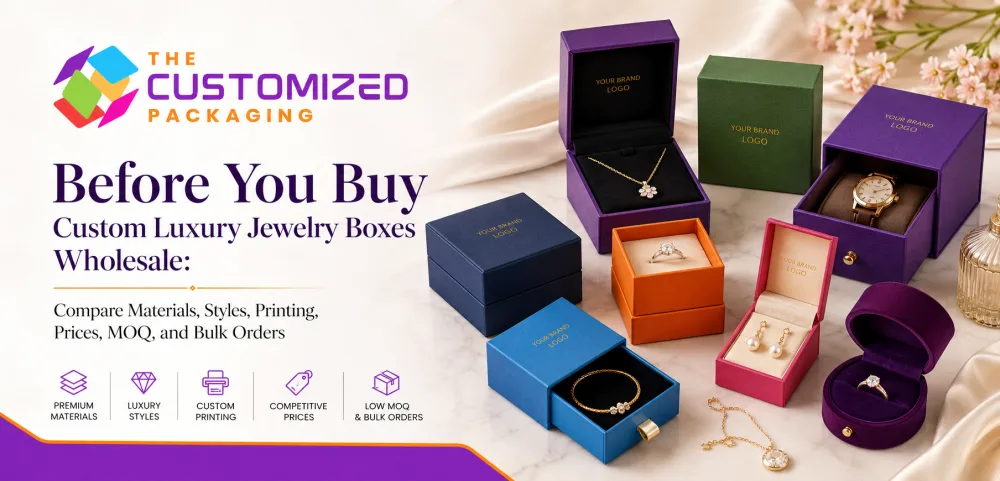
Well-designed custom luxury jewelry boxes create that balance. The packaging changes according to the product while recognizable colors, materials, proportions, typography and interior details keep the collection visually connected.
Think in Packaging Levels, Not One Box for Everything
Jewelry collections often contain products with very different values and dimensions.
Trying to use the same packaging specification for every SKU can create two problems.
Small or entry-level products may become over-packaged, while high-value pieces may not receive enough presentation.
A stronger approach is to create several packaging levels within one brand system.
For example:
| Jewelry Level | Packaging Priority | Typical Presentation Direction |
|---|---|---|
| Small fashion jewelry | Compact and branded | Lightweight premium box with fitted holder |
| Core jewelry collection | Stronger presentation | Structured box with product-specific insert |
| Bridal or fine jewelry | Controlled reveal | Hinged or rigid presentation with refined interior |
| Watches or statement pieces | Depth and support | Substantial structure with fitted cushion |
| Coordinated jewelry sets | Organized hierarchy | Larger presentation box with divided layout |
| Limited editions | Distinctive but recognizable | Existing brand system with selected premium upgrades |
The exact structures may vary, but the customer should still recognize every level as belonging to the same brand.
Start With the Value and Role of the Jewelry
Packaging should support the product's position in the collection.
An engagement ring carries a different emotional and financial meaning from a small fashion pendant. A watch requires more physical support than a pair of stud earrings.
Before choosing the box, consider:
-
Product value
-
Jewelry dimensions
-
Product weight
-
Fragility
-
Gifting importance
-
Retail or ecommerce use
-
Expected storage after purchase
-
Whether the box will be retained by the customer
These factors help determine how much structure and presentation are appropriate.
Luxury is strongest when the packaging feels proportional to what is inside.
Give Rings a Compact but Important Presentation
Rings are small, but many are associated with some of the most important jewelry purchases.
The packaging should therefore create visual importance without using unnecessary size.
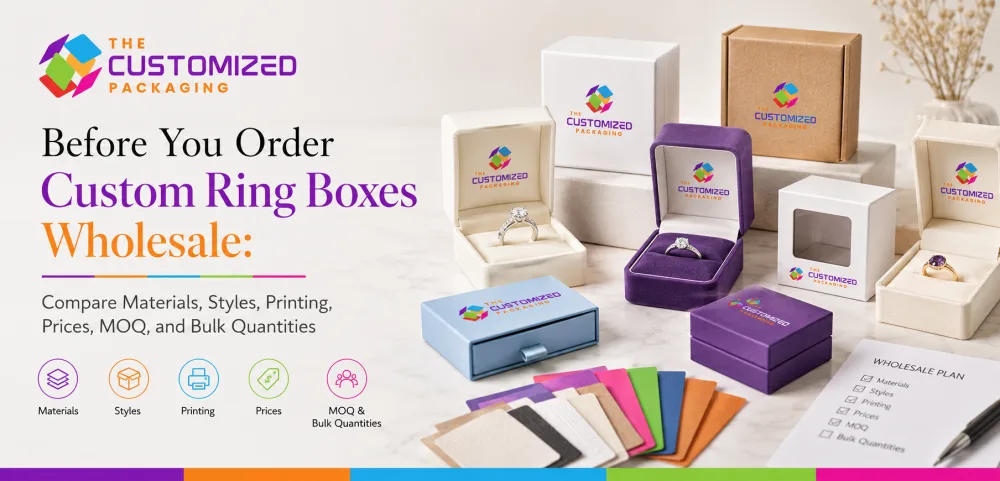
A well-proportioned luxury ring box keeps the setting upright and centered while leaving enough space around the ring to frame it.
For engagement rings and gemstone pieces, pay particular attention to the height of the setting.
The insert should support the band without burying the stone, and sufficient clearance should remain between the top of the ring and the closed lid.
A larger box does not automatically make a ring look more premium.
Compact framing can create a much stronger presentation.
Necklaces Need More Display Area, Not More Empty Space
Necklaces require a different approach because the chain and centerpiece need to be arranged together.
The pendant or decorative center should become the main visual focus.
Attachment points can keep the chain controlled while excess length is directed behind or beneath the display surface.
A luxury necklace box should provide enough room for the necklace to form a natural shape without leaving large areas of unused space.
For higher-value pieces, the interior may use a softer or more refined presentation surface, but the basic function remains the same: center the jewelry and keep the chain organized.
Bracelets Need Packaging That Respects Their Shape
Bracelet packaging should be designed around the type of bracelet.
Fine chains can be positioned horizontally or along a gentle curve.
Bangles and cuffs often need more width so their circular or open form remains recognizable.
Charm and tennis bracelets may need several support points to keep decorative details facing upward.
The insert should control movement without stretching the jewelry or forcing it into an unnatural position.
A consistent exterior can still be used across several bracelet types even when the internal layout changes.
Watches Require More Structural Support
Watches are heavier and more three-dimensional than most jewelry.
The package needs enough depth for the watch face, strap, clasp and cushion.
The cushion should support the complete watch without stretching the band.
The box should also remain stable when lifted because the concentrated weight of the watch changes how the package feels in the hand.
For premium watches, the packaging may reasonably sit at a higher tier than the boxes used for earrings or pendants.
That difference should feel intentional while still carrying the same brand identity.
Jewelry Sets Need a Clear Product Hierarchy
A multi-piece jewelry set should not look like several products placed into unrelated cavities.
The interior should create one composition.
If the necklace is the main piece, it may receive the central or largest display area while earrings, rings or bracelets support it.
Spacing should help customers understand the relationship between the pieces.
Avoid dividing the interior into equally sized compartments when the products themselves have different visual importance.
A good luxury jewelry set box guides the eye from the primary piece to the supporting items.
Keep One Visual Language Across Different Box Sizes
Consistency does not require identical packaging.
A ring box can be compact while a watch box is deeper and a necklace box is wider.
The collection can still feel unified through repeated details such as:
-
Exterior color
-
Wrap material
-
Logo position
-
Typography
-
Interior tone
-
Foil color
-
Edge treatment
-
Opening direction
-
Small branded details
These repeated elements create recognition even when the structures change.
That is more useful than forcing every product into one standard box size.
Choose One Primary Exterior Material Direction
Luxury collections often become visually inconsistent when every product uses a different surface.
One box may use matte paper, another velvet, another linen and another metallic wrap simply because each material is available.
Instead, establish a main material direction.
For example, a contemporary jewelry brand may use smooth matte wraps across the collection. A bridal brand may use soft neutral papers, while a heritage collection may rely on textured surfaces.
Special editions can introduce variations, but the core packaging should remain recognizable.
Material consistency is one of the easiest ways to make several box structures feel like one system.
Use Interior Materials to Separate Product Tiers
The exterior does not always need to change when a higher-value product requires a more premium presentation.
The interior can create the distinction.
A core collection might use a clean paperboard or fitted support, while fine jewelry may use a softer fabric-covered insert or padded presentation.
This allows the exterior brand identity to stay consistent while the experience becomes more refined where appropriate.
The interior should still be selected around the jewelry.
A visually rich material is only useful when it keeps the product correctly positioned.
Build Contrast Around the Jewelry
Interior color should help customers see the product.
Silver, gold, pearls, colored stones and dark jewelry behave differently against the same background.
A dark interior may create strong separation around diamonds and polished silver but provide less contrast with dark stones.
Cream or warm neutral interiors can complement gold and bridal jewelry, while stronger colors may suit fashion or seasonal collections.
Do not select the interior only from a packaging swatch.
Evaluate it with representative jewelry from the collection.
Let the Product Determine Insert Design
The insert is one of the most important differences between packaging levels.
A ring needs a secure slot.
Earrings need aligned attachment points.
A necklace needs chain control.
A bracelet needs support around its natural shape.
A watch typically needs a fitted cushion.
A multi-piece set needs separate but visually connected product positions.
The insert should keep the jewelry stable while allowing comfortable removal.
Customers should not need to pull on delicate chains, stones or clasps simply to remove the product from the box.
Keep High-Value Pieces Away From Hard Contact Points
Fine jewelry may contain polished metals, stones, delicate coatings or surfaces that can be scratched.
The interior should therefore control where the product touches the packaging.
Important product areas should not repeatedly rub against:
-
Hard paperboard edges
-
Exposed fasteners
-
Rough seams
-
Metal hardware
-
Abrasive surfaces
A secure fit is important, but the product should be held through appropriate areas rather than squeezed against its most delicate features.
Use Box Structure to Create the Right Reveal
Different structures create different opening experiences.
A hinged box can present jewelry immediately while keeping the lid attached.
A two-piece box creates a traditional gift reveal.
A drawer structure reveals the jewelry gradually.
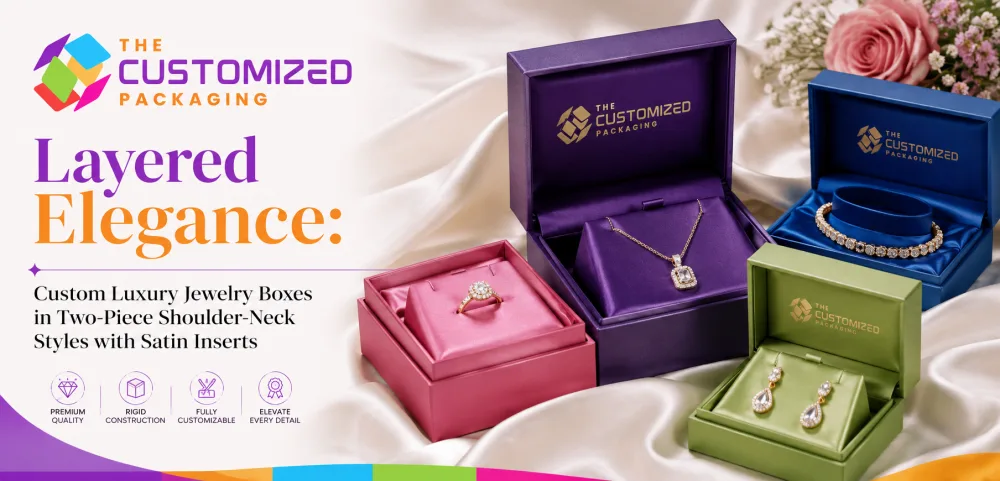
A shoulder-neck structure can create additional depth between the lid and base.
The right choice depends on the product and the experience the brand wants to create.
The structure should not be upgraded simply because it sounds more luxurious.
Smooth movement, accurate alignment and appropriate proportions matter more than unnecessary complexity.
Reserve Signature Structures for the Right Products
Some collections benefit from a recognizable signature package.
For example, bridal jewelry may consistently use hinged boxes while necklaces and bracelets use related two-piece structures.
A watch collection may have its own deeper presentation format.
Creating a signature structure can help customers associate a certain opening experience with a particular product tier.
However, the format should still work physically with the jewelry.
Brand recognition should never require compromising fit.
Keep Exterior Branding Controlled
Luxury jewelry packaging usually works best when the customer sees a clear brand rather than several competing messages.
The exterior may only need:
-
Brand name
-
Logo
-
Collection name
-
One restrained graphic element
Additional storytelling can appear inside the box, on a certificate or on a separate card.
This leaves more visual space around the packaging and allows material, proportion and construction to contribute to the premium impression.
The largest logo is not necessarily the strongest branding.
Use Finishes to Create Hierarchy
Decorative finishes can help separate packaging tiers without redesigning the entire box.
For example, the same exterior color and typography could be used across a collection while selected premium products receive:
-
Metallic foil
-
Embossing
-
Debossing
-
A specialty paper band
-
A subtle interior logo
-
A textured wrap
These additions should support the product level rather than becoming decoration for its own sake.
One carefully selected finish often creates more impact than several competing effects.
Match Packaging Weight to Product Expectations
Physical weight contributes to the perception of a jewelry box.
A substantial rigid structure can make sense around a watch, bridal set or fine jewelry piece.
That same construction may feel excessive around small lower-value fashion earrings.
Packaging should not attempt to make every SKU feel physically identical.
A premium brand can use lighter and heavier packages while maintaining consistency through visual design.
Appropriate variation often feels more considered than forcing every product into the highest-cost structure.
Build a Core Collection and a Premium Tier
A practical luxury packaging program may use two or three main levels.
Core Collection
Suitable for everyday pendants, earrings and lighter bracelets.
The packaging can maintain strong branding while using efficient dimensions and a clean fitted interior.
Premium Collection
Suitable for fine rings, higher-value necklaces and selected bracelets.
This level can use stronger construction, a more refined insert or a controlled premium finish.
Signature or Bridal Collection
Reserved for engagement jewelry, heirloom pieces, watches or limited editions.
The package may use a more substantial reveal, upgraded interior and selected finishing while still sharing the brand's core visual language.
This type of tiering gives customers a sense of progression without making the entry-level products feel disconnected from the brand.
Think About the Box After the Sale
Luxury jewelry packaging often remains useful after purchase.
Customers may keep rings, watches and necklaces inside their original boxes for storage, travel or sentimental reasons.
That means repeated opening and closing can be part of the product experience.
A box designed for long-term use should maintain:
-
Insert stability
-
Closure performance
-
Hinge movement
-
Interior appearance
-
Surface condition
-
Product fit
This is particularly relevant for high-value jewelry where the packaging may become part of the ownership experience.
Keep Retail and Ecommerce Presentation Connected
A customer may first see a piece in a boutique, on social media or through an ecommerce product page.
The packaging should reinforce the same brand identity in each environment.
For retail, the box may be opened repeatedly during consultations.
For ecommerce, the customer may experience the package for the first time after delivery.
The jewelry box itself can remain consistent across both channels while the outer transit packaging changes according to shipping requirements.
This prevents the premium presentation box from being redesigned simply because the product is sold online.
Separate Luxury Packaging From Shipping Protection
A premium jewelry box should not automatically be expected to function as a parcel shipper.
Its job is presentation, product organization and normal handling.
For ecommerce orders, the jewelry box can sit inside an appropriately sized protective outer package.
This helps preserve:
-
Corners
-
Surface wraps
-
Foil details
-
Closures
-
Inserts
-
Presentation quality
The customer should receive the luxury box in the condition intended by the brand.
Make Limited Editions Feel Special Without Starting Over
Limited collections can introduce additional colors, artwork or finishes while using the same structural system.
For example, a seasonal box could retain the standard dimensions, insert and logo position but introduce a different exterior color or foil detail.
This gives the release a distinct identity without making it look unrelated to the core brand.
A strong packaging system should make controlled variation easy.
Review the Collection as a Group
Do not approve luxury jewelry boxes one at a time without comparing them.
Place representative ring, necklace, bracelet and watch boxes together.
Look at:
-
Relative dimensions
-
Color consistency
-
Logo position
-
Interior colors
-
Opening styles
-
Finish levels
-
Overall hierarchy
The boxes should communicate which products belong to different tiers without appearing to come from different companies.
This group view is one of the best ways to identify inconsistency before production.
Test Each Box With the Actual Jewelry
A physical prototype should be evaluated with the intended product inside.
Luxury Jewelry Packaging Checklist
Before approving a packaging system, confirm that:
-
Each box is correctly proportioned to the jewelry
-
Rings remain upright
-
Earrings stay aligned
-
Necklace chains remain controlled
-
Bracelets maintain their intended shape
-
Watches fit the cushion without strain
-
Jewelry does not contact the closed lid
-
Products are easy to remove
-
Interior colors provide suitable contrast
-
Logos appear consistently across box sizes
-
Premium tiers feel different without losing brand identity
-
Closures operate smoothly
-
Several packaging formats look coordinated together
-
Shipping protection is planned separately when required
The objective is not merely to approve several good boxes.
It is to create one good packaging system.
Frequently Asked Questions About Custom Luxury Jewelry Boxes
What makes a jewelry box feel luxurious?
Luxury comes from appropriate proportions, accurate construction, quality materials, controlled product positioning, clear branding and finishes that support the jewelry. A heavy box or metallic logo alone does not automatically create a premium presentation.
Should every jewelry product use the same box style?
No. Rings, necklaces, bracelets, earrings and watches have different dimensions and display requirements. They can use different structures while sharing the same colors, materials, typography and brand details.
How can jewelry brands keep different boxes consistent?
Repeat selected visual elements such as exterior color, logo placement, typography, interior tone, foil color and surface material across different packaging sizes and structures.
Should high-value jewelry use different packaging?
It can. Fine jewelry, bridal pieces, watches and limited editions may justify stronger construction, upgraded interiors or selected premium finishes compared with entry-level products.
What insert works best for luxury jewelry?
The insert should match the product. Rings need secure slots, earrings need aligned holders, necklaces need chain control, bracelets need suitable supports and watches generally need fitted cushions.
Can luxury jewelry packaging be used for ecommerce?
Yes. The presentation box can remain the customer-facing package while an appropriate outer shipping carton protects it during delivery.
Should jewelry boxes be tested with the actual products?
Yes. Product-loaded samples help confirm fit, clearance, insert performance, product removal, closure movement and how the different boxes look together as one collection.
Build a Luxury Packaging System, Not a Collection of Unrelated Boxes
The strongest custom luxury jewelry boxes work as part of a broader brand system.
A ring does not need the same dimensions as a necklace. A watch does not need the same structure as a pair of earrings. Entry-level jewelry does not need the same amount of packaging as an engagement piece.
What should remain consistent is the experience.
Materials, colors, typography, inserts, finishes and opening styles can be organized into clear packaging levels that reflect the value and function of each product while keeping the collection recognizable.
When that system is planned correctly, every box feels appropriate for the jewelry inside—and every product still feels unmistakably part of the same brand.
The Customized Packaging develops custom luxury jewelry boxes around your jewelry dimensions, product tiers, insert requirements and brand presentation. Share your collection specifications and artwork to create a coordinated packaging system for rings, earrings, necklaces, bracelets, watches and jewelry sets.