
How to Turn a Jar Candle Into a Shelf-Ready Boxed Product
A shelf-ready jar candle box must do more than look attractive. Learn how vessel dimensions, filled weight, front-panel hierarchy, product information, fragrance variants and structural testing work together in effective retail candle packaging.
 Published June 13, 2026
Updated August 31, 2026
12 min read
Published June 13, 2026
Updated August 31, 2026
12 min read
A candle can have a beautiful fragrance, an attractive vessel and a carefully designed label, but retail presentation introduces another challenge. The finished product must stand securely, remain easy to identify and look consistent beside other fragrances in the collection.
That is where thoughtful jar candle box design becomes important.
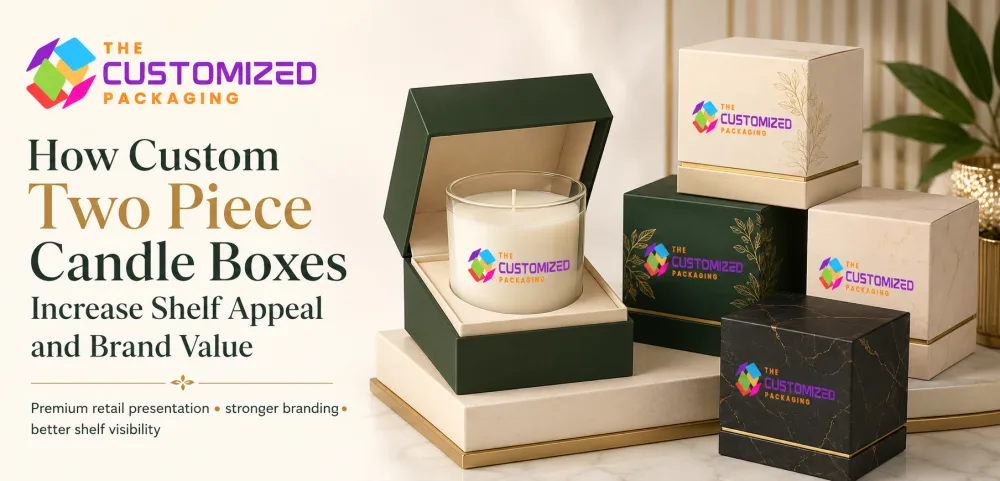
A shelf-ready candle box should be designed around the actual jar, its filled weight and the way customers will see and handle it in a store. Good packaging does more than surround the candle. It turns the vessel into a complete retail product that is easier to display, compare and purchase.
What Makes a Jar Candle Box Retail-Ready?
Retail candle packaging has to perform several jobs at once.
The box needs to support the candle's weight, maintain its shape on the shelf and give the product a clear front-facing presentation. It should also make the brand and fragrance easy to recognize without forcing shoppers to search around the package for basic information.
For candle collections with multiple scents, packaging should create visual consistency while still making each fragrance easy to distinguish.
The best design therefore connects three elements:
-
The physical candle
-
The retail display
-
The information customers need before purchase
When those three elements work together, the packaging feels deliberate rather than decorative.
Start With the Finished Candle Jar
One of the most important steps in developing custom jar candle boxes is measuring the finished candle rather than relying only on the empty vessel dimensions.
The lid, product label and decorative features can all affect the final size.
Measure the candle at its widest point and record its complete height with the lid attached. The filled weight should also be considered because a heavy glass or ceramic candle places more pressure on the bottom of a carton than an empty container.
Why Filled Weight Changes the Packaging
Two candle jars can have similar dimensions but require different packaging if their finished weights are significantly different.
A small but heavy glass jar may need more base support than a larger lightweight vessel. Without enough strength, the bottom of the box can flex or the carton can lose its shape when customers lift it from the shelf.
Testing the packaging with the actual finished candle is therefore more useful than evaluating an empty sample.
Match the Box to the Candle's Shape
Jar candles are available in many different profiles, from short wide vessels to tall narrow jars.
The internal space should reflect the shape of the product.
| Candle Type | Packaging Priority | What to Check |
|---|---|---|
| Short, wide glass jar | Strong base and controlled side space | Side-to-side movement |
| Tall candle jar | Vertical stability | Leaning inside the box |
| Heavy ceramic vessel | Structural support | Bottom-panel strength |
| Jar with a large lid | Top clearance | Contact between lid and box |
| Decorative candle jar | Surface protection | Scratching or scuffing |
| Premium glass vessel | Controlled fit | Label and finish protection |
The outer carton does not need to follow the round shape of the candle. A square exterior can often create a cleaner retail display while the internal fit keeps the jar positioned correctly.
Give the Candle Enough Clearance
A candle box should fit closely without becoming difficult to pack.
Making the dimensions too tight can create problems during production because glass jars, ceramic vessels, labels and folded cartons can all have small manufacturing variations.
If employees have to force the candle into the box, the packaging may crease or the jar label may become scratched.
Too much empty space creates the opposite problem. The candle can move inside the carton and make the package feel poorly fitted.
The goal is controlled clearance: enough room for practical packing and removal without allowing unnecessary movement.
Design the Front Panel for the Retail Shelf
A shopper may see several candle brands and fragrances at the same time.
The front panel therefore needs a clear visual hierarchy.
The brand and fragrance should usually be among the easiest elements to recognize. Supporting information can then be arranged around them without making the front look crowded.
A strong retail jar candle box helps shoppers answer two questions quickly:
Who makes this candle?
Which fragrance am I looking at?
If those answers are difficult to find, the packaging is making the purchase decision harder than necessary.
Avoid Putting Everything on the Front
The front panel does not need to explain the complete candle.
Trying to fit the fragrance story, wax information, candle weight, company details, care instructions and decorative graphics into the same area can weaken the hierarchy.
Keep the main display focused, then use the other panels for additional information.
Use the Other Panels to Complete the Product Story
The sides and back of a jar candle box provide useful space for information customers may want after the package catches their attention.
For example, one side can introduce the fragrance profile and describe the scent experience. Another panel can explain the wax or candle characteristics. The back can accommodate appropriate candle care or safe-use information together with the company's product details.
For candles sold through retail stores, the barcode and SKU should also have a planned location in the artwork.
Planning this information before completing the design produces a cleaner result than trying to fit operational details into whatever space remains at the end.
Make Different Fragrances Easy to Identify
Many candle brands use the same vessel and box dimensions across an entire fragrance collection.
This is good for visual consistency, but the packaging still needs to help customers distinguish one scent from another.
Imagine a collection containing:
-
Cedar & Amber
-
Vanilla Bean
-
Lavender
-
Sea Salt
The brand logo and overall packaging layout can remain consistent while each fragrance receives its own recognizable accent.
That distinction might come from a color, illustration, pattern or typographic treatment.
The goal is not to create four unrelated packages. The goal is to make four fragrances look like members of the same collection while remaining easy to identify individually.
Think About the Box as Part of a Shelf Display
A candle package should not be evaluated only as a single box sitting on a design table.
Retailers may place several units beside or behind each other. Multiple fragrances may also appear together.
Look at how several finished boxes behave as a group.
Do the front panels line up neatly? Are the fragrance names positioned consistently? Does one carton lean while another stands straight? Can the boxes form an organized row without large gaps?
These details contribute to shelf-ready candle packaging because the retailer is displaying a collection, not an isolated package.
Keep Heavy Candle Jars Stable
Glass, ceramic and concrete candle vessels can carry considerable weight relative to their size.
If the candle moves freely inside the carton, that weight can repeatedly hit the walls or lower closure during handling.
For some products, properly sized packaging provides enough control. Other vessels may benefit from internal support that keeps the jar centered and limits movement.
The amount of support should match the actual candle rather than being added simply because an insert looks premium.
A lightweight candle may not need the same internal construction as a heavy ceramic vessel.
Protect Decorative Jars and Labels
The candle jar itself may already contain an important part of the brand presentation.
Printed labels, coated glass, painted containers, textured surfaces and decorative finishes can become marked when they repeatedly rub against the inside of poorly fitted packaging.
The interior should therefore provide enough control to protect these visible surfaces.
This is particularly important when the candle vessel will remain part of the customer's home décor after the box has been discarded.
Protecting the jar is not only about preventing breakage. It is also about keeping the customer-facing product looking clean when the package is opened.
Decide Whether Showing the Jar Improves the Package
Some candles benefit from product visibility, while others look stronger inside a fully printed carton.
A visible section of the jar can make sense when the vessel itself is an important selling point. Decorative glass, distinctive colors, unusual lids or handmade container details may deserve to be seen before purchase.
However, product visibility should have a purpose.
If the most important selling points are the fragrance concept, brand artwork and premium presentation, a closed box may create a stronger visual experience.
The decision should be based on what customers need to see, not simply on adding another packaging feature.
Consider How Customers Handle Candle Boxes
Retail candle packaging is rarely untouched.
Customers may lift a box, turn it around to read the back, compare it with another fragrance and return it to the shelf.
The carton should maintain its shape throughout normal handling.
Pay particular attention to the bottom of heavier candle packages. Also examine the corners, top closure and large printed areas after the box has been handled several times.
A package that photographs beautifully but quickly becomes distorted will not create the same impression on an actual retail shelf.
Keep Retail Packaging and Shipping Protection Separate
A jar candle box for retail is not automatically a parcel shipping box.
The customer-facing carton is designed primarily for product presentation, retail handling and communication. A glass candle shipped directly to a customer may still require an appropriate corrugated shipping box and protective packaging around the retail carton.
Separating these two functions can produce a better result.
The retail package can remain appropriately sized and presentation-focused, while the shipping system handles the impacts and movement associated with delivery.
Build One Packaging System for the Whole Candle Collection
Packaging becomes easier to manage when brands think beyond the first fragrance.
If future candles will use the same vessel, a repeatable box system can simplify the introduction of new scents and collections.
Keep core elements such as the box dimensions, brand position, information hierarchy and overall visual structure consistent. Then use selected design elements to differentiate individual fragrances.
This creates a recognizable family on the shelf and prevents every new candle from requiring a completely unrelated packaging concept.
Test the Jar Candle Box Before Production
A physical sample can reveal issues that are difficult to identify from a flat dieline or digital rendering.
Before approving a larger production run, place the finished candle inside the sample and check the complete experience.
Jar Candle Packaging Checklist
-
Confirm that the finished candle fits without being forced into the carton.
-
Check that the candle can be removed without damaging its label.
-
Make sure the lid has enough clearance.
-
Hold the filled package and confirm that the bottom remains secure.
-
Place the box upright and check that it does not lean.
-
Confirm that the jar stays properly positioned.
-
Make sure the brand and fragrance are easy to recognize from the front.
-
Compare several fragrance variants beside one another.
-
Check the readability of side and back panels.
-
Handle the box several times and look for distortion or surface damage.
-
Test several boxes together as they would appear on a retail shelf.
A successful sample should demonstrate both presentation and function.
Frequently Asked Questions About Jar Candle Box Design
What measurements are needed for a jar candle box?
Measure the finished candle at its widest point and complete height, including the lid. The filled weight and any label, raised decoration or unusual vessel feature should also be considered before the box dimensions are finalized.
Why is the filled candle weight important?
Filled weight affects how much pressure the candle places on the bottom and sides of the package. Heavier glass or ceramic candle jars may require stronger construction or additional internal support.
Should a candle box fit tightly around the jar?
It should provide a controlled fit rather than an excessively tight one. The candle needs enough clearance for practical packing and removal while remaining stable inside the package.
What should appear on the front of a retail candle box?
The most important information should be easy to recognize quickly. For many candle brands, that means making the brand and fragrance prominent while moving secondary information to other panels.
How can different candle fragrances use the same packaging style?
Brands can keep the structure, logo placement and overall layout consistent while changing selected colors, artwork or fragrance identifiers. This creates variation without losing brand consistency.
Should jar candle packaging be tested with the actual candle?
Yes. Testing a production-representative candle inside a physical packaging sample helps confirm fit, weight support, stability, label protection and the overall customer experience.
Can the retail candle box also be used for shipping?
The retail carton may be part of the shipping system, but fragile jar candles commonly need additional outer protection for parcel delivery. The customer-facing box and transit packaging should each be designed for their specific role.
Turn the Candle Jar Into a Complete Retail Product
Good jar candle packaging begins with the candle itself.
Its dimensions determine the fit. Its filled weight influences the structure. Its fragrance and brand determine the information hierarchy. Its retail environment influences how the box should stand, align and perform beside other products.
When these factors are considered before the final artwork is approved, the packaging becomes more than an attractive outer carton.
It becomes a properly designed, shelf-ready presentation built around the candle inside.
The Customized Packaging creates custom jar candle boxes around your finished vessel dimensions, product weight, branding and presentation requirements. Share your candle specifications and artwork to develop packaging suited to your product and retail presentation.