Get premium custom boxes in USA for apparel, retail, and product packaging. The Customized Packaging (TCP) offers high-quality printed boxes with logo, wholesale pricing, and fast turnaround for all business needs.

Get Update

Place your orders now! Enjoy a quick turnaround time and get your orders delivered in just 7 days! Place your orders now ! Enjoy a quick turnaround time and get your orders delivered in just 7 days! Place your orders now ! Enjoy a quick turnaround time and get your orders delivered in just 7 days!
Speak with a Packaging Expert
+1 (213) 712-8070
WhatsApp
Home \ Blog \ Jewelry \ Custom Bracelet Boxes: How Smart Materials and O...
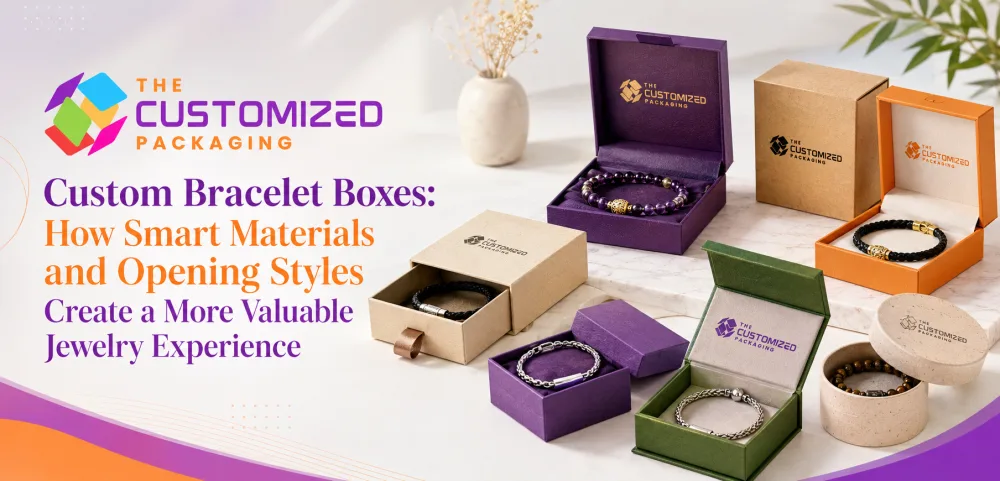
Custom Bracelet Boxes: How Smart Materials and Opening Styles Create a More Valuable Jewelry Experience
Jewelry

Custom Bracelet Boxes: How Smart Materials and Opening Styles Create a More Valuable Jewelry Experience

Excerpt: Discover how smart materials, fitted inserts, opening styles, printing, finishes, and quantity planning can help custom bracelet boxes protect jewelry, strengthen branding, and create a more valuable gifting and unboxing experience.

Published June 29, 2026 33 min read
Free Design Support
Free USA Shipping
Fast Turnaround
Secure Payments
Wholesale Pricing
Custom Sizes & Printing

A bracelet often carries more meaning than its physical size suggests. It may represent a celebration, relationship, milestone, fashion choice, or personal memory, so the packaging should support that emotional value rather than treat the jewelry like an ordinary accessory. Brands that develop custom bracelet boxes around the product’s shape and audience can create a more intentional reveal, while carefully designed premium bracelet packaging helps the item feel protected, complete, and ready to present.

The most successful bracelet packaging combines material, opening style, insert, printing, color, finish, and product fit into one connected experience. A soft chain bracelet may need delicate tabs and a shallow tray, while a rigid cuff may require stronger walls and a shaped cushion. Businesses can compare bracelet box options before selecting a structure, while realistic custom bracelet box pricing helps balance visual impact, protection, storage, and production requirements.

Bracelet Packaging That Makes Jewelry Feel More Valuable

Packaging begins influencing the customer before the bracelet is touched. The weight of the box, the resistance of the lid, the alignment of the logo, and the way the jewelry appears against the interior all contribute to perceived quality. Jewelry brands can improve bracelet presentation through better structure and proportion, while polished custom jewelry packaging solutions can make both affordable and luxury collections feel more carefully considered.

An oversized box can make a bracelet appear smaller and less important, while a properly sized insert brings attention to the clasp, charms, stones, engraving, or metal finish. Businesses can choose fitted bracelet boxes based on exact product measurements, while accurate custom-size jewelry boxes reduce movement and create a more balanced presentation.

Packaging also determines whether the product feels ready for gifting. Customers buying bracelets for birthdays, anniversaries, graduations, weddings, holidays, or romantic occasions often prefer packaging that does not require additional wrapping. Brands can create bracelet gift boxes with ribbons, printed messages, or premium interiors, while attractive gift-ready jewelry packaging adds emotional and visual value.

The package may continue serving the customer long after the first unboxing. Many buyers keep bracelet boxes for storage, travel, organization, or sentimental reasons. Companies can design reusable bracelet packaging with durable interiors, while long-lasting luxury bracelet boxes keep the brand visible beyond the original transaction.

What Are Custom Bracelet Boxes?

Custom bracelet boxes are packaging structures developed around the size, shape, material, presentation needs, and branding of a bracelet or bracelet collection. They can be adapted for chain bracelets, bangles, cuffs, charm bracelets, tennis bracelets, leather bands, beaded jewelry, friendship bracelets, and multi-piece sets. Businesses can create personalized bracelet boxes for individual products, while purpose-built custom bracelet packaging offers a more controlled fit than generic jewelry containers.

The exterior may use paperboard, kraft stock, recycled board, rigid greyboard, specialty paper, fabric wraps, or protective corrugated material. The interior can include foam, EVA, velvet, paperboard, molded pulp, fabric, or padded cushions. Brands can select bracelet box materials according to product value and use, while versatile branded jewelry boxes provide options for both lightweight fashion items and high-end pieces.

Customization can include dimensions, colors, logo placement, artwork, opening mechanism, insert design, closure, finish, and accessories. Companies can personalize bracelet packaging details to match an existing identity, while flexible custom boxes with logo help maintain visual consistency across stores, ecommerce orders, and gift collections.

A well-developed bracelet box should also be practical for assembly, storage, shipping, display, and future reordering. Businesses can plan bracelet packaging specifications before production, while efficient commercial jewelry packaging reduces operational problems after the boxes arrive.

Why Custom Packaging Matters for Bracelets

Bracelets can twist, tangle, overlap, scratch, or move when the interior is not designed for their shape. Chains may collect in one corner, rigid bangles may strike the side walls, and charms may collide with one another. Brands can develop protective bracelet boxes with product-specific supports, while secure bracelet packaging with inserts helps maintain the intended arrangement.

The packaging also communicates the intended market position. Kraft board and simple printing may suit artisan collections, while wrapped rigid board, velvet, foil, and magnetic closures may support luxury positioning. Businesses can match bracelet boxes to brand value, while appropriate premium jewelry packaging options help customers understand the product before reading its full description.

For ecommerce brands, the bracelet box becomes one of the first physical signs of quality. Customers cannot inspect the product before delivery, so packaging helps confirm that the purchase matches the website, photography, and advertising. Companies can strengthen ecommerce unboxing with coordinated materials, while memorable direct-to-consumer jewelry packaging can improve trust and shareability.

For physical stores, packaging must also support repeated handling, customer demonstrations, and quick presentation. Retailers can prepare bracelet boxes for displays and appointments, while durable retail-ready jewelry packaging helps maintain a consistent appearance throughout the selling process.

Smart Materials for Custom Bracelet Boxes

Material selection affects appearance, durability, print quality, weight, storage, shipping volume, and cost. Brands should compare bracelet packaging materials according to the product and customer experience, while detailed bracelet box price options make it easier to understand where each material fits.

SBS Paperboard Bracelet Boxes

Solid bleached sulfate paperboard provides a smooth white surface that supports detailed printing, clean folds, windows, sleeves, and tuck closures. It is lighter than rigid board and can often be delivered flat, making it useful for growing fashion and gift collections. Businesses can choose SBS bracelet boxes for detailed artwork, while versatile printed bracelet packaging offers a polished appearance at practical production quantities.

SBS paperboard works especially well for chain bracelets, beaded jewelry, friendship bracelets, and seasonal collections where artwork may change frequently. Brands can develop folding bracelet cartons with interior platforms or small cushions, while efficient affordable custom jewelry boxes help manage both storage and cost.

Natural Kraft Bracelet Boxes

Kraft paperboard creates a warm, natural, and understated look that suits handmade, artisan, rustic, and environmentally focused brands. Black ink, white printing, metallic foil, paper sleeves, and custom labels can all create strong contrast. Sellers can customize kraft bracelet boxes with restrained branding, while recognizable eco-style jewelry packaging supports a natural visual identity.

Kraft structures can be produced as folding cartons, sleeves, trays, small two-piece boxes, or window packages. Businesses can explore kraft bracelet packaging styles according to product weight, while cost-conscious kraft jewelry box options can support markets, boutiques, online stores, and gift programs.

Recycled Paperboard Bracelet Boxes

Recycled paperboard can support sustainability goals when its thickness, surface quality, and product protection are suitable for the bracelet. It may be covered with printed paper or used in a natural finish depending on the desired appearance. Brands can evaluate recycled bracelet boxes using physical samples, while responsible sustainable jewelry packaging helps reduce reliance on unnecessary mixed materials.

The recycled content should not be considered separately from strength and presentation. Businesses can compare recycled board grades before approval, while reliable eco-friendly bracelet packaging must still protect polished metals, stones, chains, and decorative surfaces.

Corrugated and Microflute Bracelet Packaging

Microflute corrugated board adds structure without the heavy appearance of traditional shipping cartons. It can be useful for bracelet sets, subscription kits, watch-and-bracelet combinations, large gift boxes, and ecommerce packaging. Companies can select microflute bracelet boxes when additional strength is required, while protective corrugated jewelry packaging offers greater resistance to compression and handling.

The corrugated structure can be printed directly or covered with a high-quality printed liner. Brands can develop printed microflute boxes with inside artwork and fitted trays, while structured ecommerce bracelet packaging connects shipping protection with product presentation.

Rigid Greyboard Bracelet Boxes

Rigid greyboard creates firm walls, precise edges, and a substantial feel that suits premium products. It is usually wrapped with printed paper, textured stock, specialty covering material, or fabric. Brands can create rigid bracelet boxes for designer and high-value collections, while refined luxury jewelry packaging supports engraved cuffs, bridal jewelry, limited editions, and premium gifts.

Rigid packaging is commonly used for magnetic, hinged, drawer, book-style, and two-piece boxes. Businesses can compare rigid bracelet box structures before choosing a format, while high-quality bespoke bracelet packaging can remain useful for long-term storage.

Velvet, Linen, and Specialty-Wrapped Boxes

Velvet, linen, leather-like paper, pearlescent stock, metallic paper, and embossed wraps can create a more tactile presentation. These materials should be selected with attention to color consistency, scuff resistance, corner wrapping, and product photography. Brands can review specialty bracelet box samples before production, while tactile designer jewelry packaging can make a collection feel more distinctive.

Specialty coverings are most effective when they reinforce the jewelry’s identity rather than compete with it. Businesses can choose premium surface materials with a restrained design, while elegant high-end bracelet boxes communicate quality through texture and finish.

Bracelet Box Material Comparison

Material Main qualities Best bracelet applications Printing and finishing options Cost and production considerations
SBS paperboard Smooth, lightweight, printable, and compact Fashion bracelets, chains, beaded jewelry, seasonal products Full-color printing, windows, spot UV, matte or gloss coating Efficient for medium and larger quantities and often stores flat
Natural kraft Warm, minimalist, artisan-focused, and recognizable Handmade jewelry, friendship bracelets, sustainable collections Black or white ink, foil logos, labels, sleeves, custom stamps Cost-conscious and visually distinctive
Recycled paperboard Fiber-based, practical, and adaptable Eco-focused jewelry, lightweight bracelets, simple gift packaging Printing, sleeves, labels, uncoated or coated finishes Must be tested for strength, surface quality, and product protection
Microflute corrugated board Protective, structured, and suitable for larger formats Bracelet sets, subscriptions, ecommerce gifts, heavy cuffs Digital printing, litho lamination, inside printing Useful when delivery protection is a major concern
Rigid greyboard Strong, premium, reusable, and substantial Bridal bracelets, luxury cuffs, engraved pieces, limited editions Foil stamping, embossing, debossing, specialty wrapping, interior printing Higher cost and shipping volume but stronger premium positioning
Specialty-wrapped board Textured, decorative, and highly customizable Designer collections, premium gifts, heirloom jewelry Fabric, linen, metallic paper, ribbons, plaques, foil details Decorative covering and hand assembly may increase production cost

The best material depends on the bracelet’s value, weight, shape, customer, and sales channel. Brands can match materials to bracelet collections instead of automatically choosing the thickest board, while balanced custom bracelet packaging solutions provide the required quality without unnecessary expense.

Material samples should be reviewed under realistic lighting and handling conditions. Colors, coatings, velvet, and specialty paper can appear different on screen than in person. Businesses can request physical bracelet box samples, while accurate packaging sample services reduce the risk of unexpected surface or color results.

Popular Opening Styles for Custom Bracelet Boxes

The opening style controls the customer’s first view of the bracelet. It can create an immediate reveal, a sliding sequence, an upright display, or a layered experience. Brands can compare bracelet box opening styles according to product type and brand personality, while thoughtful jewelry packaging structures can turn the opening action into part of the product story.

Two-Piece Bracelet Boxes

Two-piece boxes use a separate lid and base. They are familiar, gift-ready, and adaptable to many materials and price levels. Businesses can create two-piece bracelet boxes with printed lids and fitted interiors, while classic bracelet gift packaging works for chains, bangles, cuffs, and handmade jewelry.

The lid can be shallow for a quick reveal or deeper for a more substantial appearance. Brands can adjust two-piece box proportions based on the product, while flexible custom jewelry box styles make this structure useful across several collections.

Hinged-Lid Bracelet Boxes

Hinged-lid boxes keep the top connected to the base and can hold it at an attractive display angle. The inside lid provides room for a logo, message, pattern, or certificate. Companies can develop hinged bracelet boxes for gifting and consultation, while polished jewelry presentation packaging creates a controlled and professional reveal.

This style works well for bridal bracelets, engraved jewelry, keepsake pieces, and premium cuffs. Brands can choose hinged bracelet packaging with velvet or fabric interiors, while elegant luxury bracelet box designs support both presentation and storage.

Magnetic Closure Bracelet Boxes

Magnetic boxes provide a noticeable opening and closing action that feels secure and substantial. They can be produced in book-style, foldable rigid, or hinged formats. Businesses can select magnetic bracelet boxes for premium collections, while refined high-end jewelry gift boxes can make the product feel more valuable.

The magnets should be strong enough to keep the package closed without making it difficult to open. Brands can test magnetic closure strength during sampling, while reliable premium bracelet packaging creates a smoother customer experience.

Drawer and Sleeve Bracelet Boxes

Drawer boxes use an inner tray and outer sleeve to create a gradual reveal. Ribbon pulls, thumb notches, or printed tray edges can make the opening easier. Companies can design drawer bracelet boxes around the product dimensions, while distinctive slide-out jewelry packaging suits charm bracelets, subscriptions, gift sets, and limited collections.

Sleeve-and-tray structures can also be produced with lighter paperboard when a fully rigid box is not necessary. Businesses can explore bracelet sleeve boxes for growing product ranges, while cost-balanced custom printed bracelet boxes offer a refined experience without excessive material use.

Window Bracelet Boxes

Window boxes display part or all of the bracelet through a clear panel. They work well for colorful beads, charm products, fashion jewelry, and open-shelf displays. Brands can create window bracelet packaging around the product’s shape, while visible display jewelry boxes help customers compare colors and styles quickly.

The window material should be evaluated for scratching, dust, glare, and recycling requirements. Businesses can compare clear window materials before finalizing the design, while practical retail bracelet packaging maintains visibility without reducing protection.

Book-Style Bracelet Boxes

Book-style boxes open from one side like a hardcover book and may use hidden magnets or ribbon ties. The inside cover offers space for storytelling, care instructions, or a personalized message. Brands can develop book-style bracelet boxes for commemorative and premium collections, while sophisticated presentation jewelry packaging creates a layered reveal.

This format can also hold certificates, product cards, or small accessories beside the bracelet. Businesses can plan book-style box interiors around the complete product, while versatile luxury custom boxes support premium gifting and limited editions.

Folding Tuck Bracelet Boxes

Folding tuck boxes provide a lightweight and economical opening style for fashion and promotional jewelry. They may use straight tuck, reverse tuck, auto-lock, or sleeve constructions. Companies can create folding bracelet cartons for changing collections, while efficient affordable jewelry packaging supports practical storage and assembly.

A fitted paperboard platform or light foam insert can improve product positioning without adding heavy components. Brands can customize tuck bracelet boxes with printed interiors and windows, while accessible low-cost custom boxes remain visually professional.

Bracelet Box Opening-Style Comparison

Opening style Customer experience Best applications Branding opportunities Practical considerations
Two-piece lid and base Familiar, clean, and gift-ready Bangles, chains, cuffs, handmade bracelets Printed lid, foil logo, interior message, decorative wrap Flexible across materials and budgets
Hinged lid Controlled reveal and upright presentation Bridal jewelry, engraved bracelets, premium pieces Inside-lid printing, velvet lining, foil details Hinges and lining can increase assembly
Magnetic closure Secure, substantial, and reusable Designer cuffs, luxury gifts, limited editions Wrapped artwork, embossing, foil, inside printing Magnet strength and rigid construction affect cost
Drawer or sleeve Gradual reveal with a sliding motion Charm bracelets, subscriptions, gift sets Printed sleeve, ribbon pull, tray artwork Requires accurate tray and sleeve tolerances
Window box Immediate product visibility Beaded jewelry, colorful bracelets, fashion products Printed frames, custom windows, branded borders Clear surfaces require scratch and dust control
Book-style box Layered and story-focused presentation Keepsakes, commemorative bracelets, premium gifts Large interior branding area, certificate pocket, ribbon details Usually needs more material and hand assembly
Folding tuck box Lightweight, practical, and easy to store Fashion bracelets, promotions, seasonal ranges Full-color printing, windows, coatings, inside artwork Economical and often delivered flat

An opening style should be selected for usability as well as appearance. The box must remain easy to assemble, pack, open, close, display, store, and reproduce. Businesses can test bracelet box mechanisms with physical samples, while reliable custom box engineering prevents attractive designs from becoming operational problems.

Closures for Bracelet Packaging

Closures influence both security and customer interaction. Magnets, ribbons, tuck flaps, sleeves, friction-fit lids, snaps, and adhesive seals each create a different experience. Brands can compare bracelet box closures based on product value and use, while appropriate secure jewelry packaging keeps the box closed during handling without making it frustrating to open.

Ribbon closures create a decorative and gift-focused presentation, while tuck flaps are practical for folding cartons. Businesses can add ribbon or tuck closures according to the style, while versatile custom gift box options support both decorative and functional requirements.

Friction-fit lids are common in two-piece rigid boxes and rely on accurate dimensions to create a smooth opening. Companies can test lid resistance during sampling, while precise premium rigid boxes should feel secure without requiring excessive force.

Tamper-evident stickers or branded seals may be useful for ecommerce, subscription products, or gift sets. Brands can include protective seals where needed, while dependable ecommerce jewelry packaging solutions give customers greater confidence that the product has not been disturbed.

Inserts for Chains, Bangles, Cuffs, and Charm Bracelets

The insert determines how the bracelet appears after the box opens. It should hold the jewelry securely, create visual balance, and allow easy removal. Brands can develop custom bracelet inserts around the exact product, while secure protective jewelry packaging reduces tangling, shifting, and scratching.

Chain bracelets may use tabs, slots, small hooks, card platforms, or soft channels. The clasp should remain accessible, and the chain should not be pulled too tightly. Businesses can design chain bracelet inserts using production samples, while fitted custom chain packaging preserves the intended shape.

Bangles and rigid cuffs often work well with curved cushions, circular pillows, recessed cavities, or shaped foam. Brands can choose bangle box inserts based on diameter and width, while structured bangle presentation packaging supports heavier and more rigid products.

Charm bracelets need enough space for decorative elements to remain visible without striking one another. Companies can create charm bracelet inserts with wider cavities or soft channels, while detailed custom charm packaging helps protect stones, enamel, and metal components.

Foam and EVA can be cut precisely, while velvet and fabric coverings create a softer appearance. Paperboard and molded pulp may support fiber-based designs. Businesses can compare bracelet insert materials before approval, while flexible custom jewelry packaging options allow the interior to match both budget and brand style.

Printing Custom Bracelet Boxes

Printing gives the packaging a recognizable identity. Logos, collection names, patterns, product information, messages, care instructions, website details, and QR codes can all be incorporated. Businesses can print bracelet boxes with logo artwork, while consistent branded bracelet packaging strengthens recognition across physical and digital sales channels.

Digital printing is useful for short runs, seasonal artwork, multiple designs, and test collections. Brands can create digitally printed bracelet boxes with flexible artwork changes, while accessible low-MOQ custom packaging supports launches and developing product lines.

Offset printing provides controlled colors, detailed graphics, gradients, photography, and fine typography. Companies can select offset bracelet box printing for recurring collections, while polished full-color jewelry packaging offers consistency across larger quantities.

Screen printing and flexographic printing may suit selected kraft or corrugated structures depending on artwork and volume. Businesses can compare bracelet box printing methods according to the material, while practical custom printed packaging prices help determine which process provides the best value.

Artwork Planning for Small Jewelry Packaging

Bracelet boxes often have limited surface area, so artwork must remain clear and balanced. A large logo, lengthy message, several icons, and multiple finishes can quickly make a small box feel crowded. Brands can simplify bracelet box artwork before production, while refined minimalist jewelry packaging often communicates more value than an overloaded design.

The dieline should be approved before artwork is finalized. Logos, text, patterns, windows, folds, seams, and finish areas must stay inside the correct production zones. Businesses can prepare bracelet box artwork on dielines, while professional packaging design support helps prevent alignment and trimming problems.

Typography should remain readable at the final printed size, and important details should not sit too close to folds or edges. Companies can review bracelet box proofs carefully, while accurate custom packaging artwork services improve consistency between the digital design and physical box.

Interior artwork should also be planned as part of the complete reveal. A short message, product-care instruction, or collection story can create impact without crowding the exterior. Brands can add inside printing to bracelet boxes, while memorable custom unboxing packaging extends the brand experience after the lid opens.

Foil, Embossing, Debossing, and Luxury Finishes

Foil stamping can add gold, silver, rose gold, copper, holographic, or other specialty accents to logos and decorative details. Businesses can add foil stamping to bracelet boxes when it complements the jewelry, while elegant foil-stamped jewelry packaging can strengthen premium positioning.

Embossing raises artwork above the surface, while debossing presses it into the material. Both can make a simple logo feel tactile and refined. Brands can create embossed bracelet boxes with restrained graphics, while sophisticated luxury branded packaging communicates quality through texture.

Spot UV creates glossy contrast against matte surfaces, while soft-touch lamination provides a smooth, velvety feel. Companies can compare premium bracelet box finishes using physical samples, while durable high-end packaging finishes help control fingerprints, scratching, and scuffing.

Ribbons, metal plaques, fabric tabs, printed sleeves, and specialty labels can add further detail. Businesses should select bracelet box accessories only when they improve the experience, while balanced bespoke jewelry packaging avoids unnecessary visual and production complexity.

Interior Colors and Lining Materials

Interior color affects how clearly the bracelet can be seen. Silver jewelry often stands out against black, navy, burgundy, emerald, or charcoal, while gold can look refined against ivory, cream, deep green, black, or brown. Brands can compare bracelet box lining colors with real products, while coordinated custom jewelry presentation improves contrast.

Rose-gold bracelets may work well with blush, plum, warm grey, cream, or dark neutral tones. Colorful beaded bracelets may need a simpler background. Businesses can develop color-matched bracelet packaging, while distinctive branded box interiors make each collection feel more intentional.

Velvet, flocked paper, satin, linen, microfiber, and printed paperboard all create different visual and tactile effects. Companies can review bracelet lining materials before selecting an interior, while refined premium jewelry box interiors help the product feel more protected.

The target audience should also influence the palette. Bridal collections may use soft neutrals, while men’s bracelets may suit navy, black, brown, grey, or deep green. Brands can personalize bracelet box interiors according to the customer, while tailored jewelry packaging design options support clearer positioning.

Bracelet Boxes for Chain Bracelets

Bracelet Boxes for Chain Bracelets

Chain bracelets need packaging that controls movement without pulling the jewelry too tightly. Slots, small hooks, tabs, and soft channels can help maintain the shape. Brands can develop chain bracelet boxes around the full product length, while secure custom chain jewelry packaging reduces tangling.

A shallow tray can keep the chain close to the top of the box so it remains visible. Businesses can choose fitted chain bracelet packaging with accessible clasps, while professional bracelet display boxes create a cleaner presentation.

Fine chains may also need soft interior materials that reduce scratching and snagging. Companies can compare chain box insert materials, while protective delicate jewelry packaging preserves polished and plated surfaces.

Bracelet Boxes for Bangles and Cuffs

Bangles and cuffs require enough width, depth, and lid clearance to prevent pressure. Circular cushions, curved stands, and recessed platforms can maintain the intended shape. Brands can create custom bangle boxes using exact dimensions, while structured bangle packaging solutions improve both security and presentation.

Heavy cuffs may require rigid walls and stronger inserts to prevent movement. Businesses can develop cuff bracelet packaging around product weight, while durable premium cuff boxes support statement jewelry and designer collections.

Open cuffs should be positioned so the gap remains visible and the product does not rotate inside the box. Companies can test cuff box prototypes before production, while accurate custom-fit jewelry packaging helps maintain the desired angle.

Bracelet Boxes for Charm and Beaded Collections

Charm bracelets need enough interior room for the charms to remain visible without overlapping excessively. Soft channels or wide cavities can help control movement. Brands can design charm bracelet boxes with product-specific spacing, while detailed custom charm packaging protects decorative elements.

Beaded bracelets may be sold individually, stacked, or in color collections. Window boxes, kraft trays, folding cartons, and clear-lid structures can all work depending on the product value. Businesses can customize beaded bracelet boxes for colorful ranges, while attractive fashion jewelry packaging supports gifting and display.

For multi-bracelet sets, separated compartments or removable trays can create a more organized experience. Companies can develop bracelet set packaging with balanced spacing, while spacious custom jewelry set boxes prevent products from becoming tangled.

Bracelet Gift Boxes for Weddings and Special Occasions

Bracelets are commonly selected for bridal parties, anniversaries, birthdays, graduations, holidays, employee recognition, and personal milestones. Brands can create special-occasion bracelet boxes with ready-to-present details, while elegant bracelet gift packaging makes the purchase feel more thoughtful.

Wedding and bridal bracelet packaging may use ivory, blush, white, champagne, gold, or soft neutral interiors. Businesses can personalize bridal bracelet boxes with names, dates, or messages, while refined custom wedding jewelry packaging supports memorable gifting.

Seasonal sleeves, ribbons, belly bands, and printed cards can update a standard box without changing the entire structure. Companies can refresh bracelet packaging for holidays, while flexible promotional jewelry packaging supports short-term campaigns.

Corporate gifting programs may require consistent branding, larger quantities, and space for cards or messages. Brands can plan corporate bracelet gift boxes, while professional bulk gift packaging solutions provide a coordinated experience across recipients.

Bracelet Packaging for Ecommerce Delivery

For ecommerce customers, the bracelet box may be the first physical contact with the brand. It should match the website, photography, and product description. Online sellers can develop custom bracelet packaging for delivery, while memorable ecommerce jewelry packaging helps reinforce trust.

The decorative box should usually sit inside a protective mailer or shipping carton. Businesses can pair bracelet boxes with custom mailers, while dependable protective shipping packaging helps preserve corners, surfaces, and inserts.

The inner and outer packaging should fit together without excessive empty space. Too much room allows movement, while an overly tight fit can damage the presentation box. Brands can create right-sized bracelet shipping boxes, while efficient custom mailer box options reduce filler and parcel volume.

Discreet outer packaging may be useful for gifts and valuable products. The exterior can remain simple, while the inner box carries the full branding. Companies can choose secure jewelry shipping packaging, while thoughtful direct-to-consumer packaging solutions create a stronger unboxing sequence.

Bracelet Presentation for Stores and Displays

Packaging used in stores should remain attractive after repeated handling. Stable bases, secure inserts, durable coverings, and reliable closures help maintain presentation quality. Retailers can prepare bracelet boxes for counters, while functional retail-ready jewelry packaging supports demonstrations and customer comparisons.

The box should open easily without requiring staff to reposition the product after each viewing. Brands can choose reusable bracelet presentation boxes, while polished showroom packaging solutions create greater consistency during consultations.

Shelf packaging may need stronger exterior communication because customers compare several products at once. Collection names, colors, sizes, and brand elements should remain clear. Businesses can develop printed bracelet boxes for shelves, while coordinated retail jewelry box designs create a recognizable product family.

Display trays and individual bracelet boxes can also be designed to work together. Companies can coordinate bracelet box and tray designs, while professional jewelry display packaging supports a more unified store environment.

Sustainable Bracelet Packaging Considerations

Sustainability involves more than selecting brown paper or adding green artwork. Material use, recyclability, component separation, right-sizing, product protection, reuse, storage, and shipping efficiency should all be considered. Brands can develop sustainable bracelet boxes according to realistic goals, while responsible eco-friendly jewelry packaging avoids vague claims.

Right-sized packaging can reduce paper use, filler, shipping volume, and storage requirements. Businesses can create compact bracelet boxes around the actual product, while efficient recyclable packaging options support a more practical material strategy.

Kraft paperboard, recycled board, molded pulp, paper inserts, and uncoated finishes may suit different collections. Brands can compare sustainable bracelet packaging materials, while functional green jewelry packaging solutions must still protect polished surfaces and delicate components.

Reusable rigid boxes may also support sustainability when customers keep them for long-term storage. Companies can design reusable bracelet packaging with durable interiors, while long-lasting premium jewelry boxes offer a different approach from lightweight disposable cartons.

What Determines Custom Bracelet Box Prices?

Box dimensions affect material use, die layout, insert size, packing quantity, storage space, and shipping volume. Brands can estimate bracelet box costs by size, while realistic custom packaging price ranges become clearer after the internal dimensions are confirmed.

Material selection creates another major difference. Folding paperboard, kraft stock, recycled board, rigid greyboard, specialty paper, foam, EVA, velvet, magnets, windows, and ribbons all require different production methods. Businesses can compare bracelet packaging materials by budget, while detailed jewelry box pricing options help identify the best value.

Opening style also influences cost. A folding tuck carton generally requires less material and assembly than a magnetic rigid box or book-style presentation case. Companies can compare bracelet box structures by price, while practical custom jewelry packaging costs should reflect the complete production process.

Printing and finishing can change the final quotation. One-color printing follows a simpler process than full-color wrapped artwork with foil, embossing, spot UV, and soft-touch lamination. Brands can select bracelet box finishes strategically, while balanced premium packaging prices keep decorative features aligned with the product value.

Insert complexity affects material use, cutting, covering, and assembly. A standard cushion is simpler than a multi-level, fabric-covered custom platform. Businesses can request bracelet box pricing with inserts included, while complete custom packaging quotations make comparisons more accurate.

Freight and storage should also be considered. Assembled rigid boxes occupy more space than flat folding cartons, and deep structures increase shipping volume. Brands can compare delivered bracelet packaging costs, while logistics-aware commercial packaging prices reveal the total expense beyond production.

MOQ for Custom Bracelet Boxes

Minimum order quantity depends on the box material, structure, dimensions, printing method, insert, and finish. Digital printing and standard paperboard structures may support smaller quantities than highly customized rigid boxes. Brands can explore low-MOQ bracelet boxes for test launches, while flexible short-run jewelry packaging helps reduce early inventory pressure.

Lower quantities may have a higher unit cost because setup, tooling, design, and production preparation are divided across fewer boxes. Businesses can compare MOQ and unit pricing before deciding, while transparent custom bracelet box prices help explain the relationship between quantity and cost.

Startups, seasonal collections, event products, and limited editions may benefit from smaller runs even when the unit price is higher. Companies can plan bracelet packaging quantities around realistic sales forecasts, while practical low-volume custom packaging protects cash flow and design flexibility.

Established collections may support higher quantities and repeat schedules. Brands can prepare recurring bracelet box runs, while consistent volume jewelry packaging helps maintain quality and unit efficiency over time.

Wholesale Quantities and Price Breaks

Larger quantities can reduce unit pricing because setup and preparation costs are spread across more boxes. Businesses can compare bracelet box price breaks at several quantities, while clear wholesale bracelet box pricing helps identify the most practical production level.

The lowest unit price is not always the best financial choice. Excess inventory may create storage pressure, damaged stock, outdated artwork, and tied-up cash. Brands can balance bulk bracelet packaging quantities against expected sales, while strategic volume packaging options reduce unnecessary overstock.

Multiple bracelet designs may share one exterior size while using different inserts or printed sleeves. Companies can plan standardized bracelet box sizes, while flexible bulk custom packaging solutions simplify storage and future reordering.

Businesses should also ask how cartons are packed, how many boxes fit per case, and whether the boxes arrive flat or assembled. Brands can review wholesale packing details, while accurate commercial packaging logistics help prepare warehouse and fulfillment operations.

How to Compare Bracelet Packaging Quotations

A fair quotation comparison should use the same dimensions, material thickness, box style, insert, printing, finish, quantity, and delivery terms. Businesses can compare bracelet packaging quotes line by line, while detailed custom box pricing proposals reveal whether the options are truly equivalent.

A lower price may use thinner board, simpler inserts, reduced print coverage, fewer finishing processes, or different freight terms. Brands can review bracelet box specifications carefully, while transparent commercial jewelry packaging quotes make hidden differences easier to identify.

Tooling, plates, samples, design support, assembly, and freight may be included in one quotation and separated in another. Companies can confirm all bracelet box charges before approval, while complete packaging cost comparisons reduce unexpected expenses.

Production time and repeat-order consistency should also be considered. Businesses can evaluate bracelet packaging partners based on communication and reliability, while dependable custom box production services support future collections as well as the first run.

Custom Bracelet Boxes Across the USA

Jewelry businesses throughout the United States may need bracelet packaging for ecommerce orders, boutiques, gift stores, subscription programs, bridal collections, craft markets, and national launches. Brands can develop custom bracelet boxes for the USA market according to their sales model, while adaptable USA jewelry packaging solutions support both emerging and established collections.

Delivery planning should consider dimensions, flat or assembled format, carton quantity, warehouse capacity, and launch deadlines. Businesses can prepare bracelet packaging for nationwide delivery, while organized custom box distribution services help reduce inventory and scheduling problems.

Regional proximity is only one factor when choosing packaging support. Design guidance, sampling, material options, communication, repeat consistency, and freight planning are equally important. Brands can compare bracelet packaging services based on complete project support, while dependable custom packaging production helps maintain quality over time.

Want to Estimate Your Bracelet Box Cost?

Try the Custom Box Packaging Cost Calculator

The Custom Box Packaging Cost Calculator can help jewelry brands develop an early budget before every specification is finalized. Businesses can estimate custom bracelet box costs using basic project details, while preliminary bracelet packaging price estimates make it easier to compare materials, opening styles, and quantities.

The calculator can be used for rigid bracelet boxes, kraft cartons, folding paperboard structures, drawer boxes, magnetic closures, inserts, printing, and decorative finishes. Brands can compare potential bracelet packaging costs before choosing a direction, while practical custom jewelry box pricing supports more informed planning.

Want to know the cost of your product’s packaging? Try the Custom Box Packaging Cost Calculator using the approximate dimensions, material, structure, quantity, printing, and customization requirements, while early custom bracelet packaging estimates help identify a realistic budget range.

The calculator provides a planning estimate rather than a guaranteed final production price. Businesses should request a detailed bracelet box quotation after confirming the approved size, material, insert, printing, finish, quantity, packing format, and delivery destination, while complete custom box production pricing reflects the final specifications.

How to Prepare a Custom Bracelet Packaging Project

The process should begin with accurate information about the bracelet. Dimensions, photographs, weight, flexibility, clasp type, product value, intended display position, quantity, and launch date should all be prepared. Brands can submit bracelet packaging requirements for structural planning, while organized custom packaging design services help turn product information into a practical box.

The next stage is selecting the material, opening style, insert, and finish. These decisions should reflect the product, customer, storage needs, and budget. Businesses can compare bracelet packaging specifications before artwork begins, while suitable jewelry box design options reduce unnecessary revisions.

A structural dieline should be approved before final graphics are placed. Logos, patterns, text, folds, windows, seams, and finish areas must remain inside the correct production zones. Companies can prepare bracelet box artwork correctly, while professional custom packaging artwork support helps prevent printing and alignment problems.

Digital proofs confirm artwork, while physical prototypes confirm fit, color, texture, lid movement, insert grip, and handling. Brands should test bracelet box prototypes with the actual product, while detailed pre-production packaging samples reveal issues that digital previews cannot show.

The final project specification should include dimensions, material thickness, structure, insert, lining, printing method, colors, finishes, accessories, packing format, quantity, schedule, and delivery details. Businesses can approve bracelet packaging for production once these elements are documented, while complete custom box specifications improve repeat-order consistency.

Why Choose The Customized Packaging?

The Customized Packaging helps jewelry brands, boutiques, ecommerce sellers, designers, gift businesses, subscription services, and growing product collections create custom bracelet boxes around their jewelry and audience, while versatile custom packaging services support both simple and premium designs.

Available structures include rigid, paperboard, kraft, recycled, corrugated, drawer, magnetic, hinged, two-piece, sleeve, window, book-style, clear-lid, and foldable formats. Businesses can customize bracelet box styles according to product needs, while flexible jewelry packaging solutions support bangles, chains, cuffs, charms, beaded bracelets, and matching sets.

Branding options include digital printing, offset printing, foil stamping, embossing, debossing, spot UV, matte lamination, gloss coating, soft-touch surfaces, interior printing, ribbons, textured papers, specialty coverings, and window designs. Brands can design bracelet boxes with custom finishes, while comprehensive printed packaging options create a consistent visual identity.

Interior choices include foam, EVA, velvet cushions, flocked surfaces, paperboard platforms, molded pulp, fabric coverings, shaped cavities, and separated compartments. Businesses can develop bracelet boxes with fitted inserts, while detailed jewelry presentation packaging keeps products secure, visible, and easy to remove.

Material guidance, structural design, samples, quantity planning, cost estimates, and nationwide delivery can be coordinated around the project. Brands can request custom bracelet packaging details based on their collection, while transparent bracelet box pricing options make it easier to balance appearance, protection, and budget.

Final Thoughts

Custom bracelet boxes create the strongest value when materials, opening styles, inserts, colors, artwork, finishes, and product dimensions work together. Brands can develop bracelet packaging around the jewelry, while thoughtful premium bracelet box solutions protect the product and improve the customer experience at the same time.

Smart material selection provides the physical foundation, while the opening style controls the reveal. Businesses can compare bracelet box materials and structures before making a final decision, while carefully developed custom jewelry boxes support fashion products, handmade collections, bridal jewelry, premium cuffs, charm bracelets, and luxury gifts.

From lightweight printed cartons and natural kraft boxes to velvet-lined rigid cases, magnetic closures, drawer structures, windows, and book-style presentation boxes, brands can customize bracelet packaging for each collection, while versatile custom bracelet box options help balance branding, functionality, and cost.

The Customized Packaging can support projects with structural guidance, custom printing, fitted inserts, physical samples, price planning, and delivery across the United States. Businesses ready to strengthen their jewelry presentation can request bracelet boxes with logo details, while professional custom bracelet packaging solutions make every piece feel more protected, memorable, and valuable.

Turn packaging insights into branded boxes

The ideas in Custom Bracelet Boxes: How Smart Materials and Opening Styles Create a More Valuable Jewelry Experience apply directly when you order Jewelry from Custom Packaging Boxes for Apparel & Retail | The Customized Packaging. We help ecommerce, retail, and subscription brands translate packaging strategy into production-ready boxes with accurate dielines, consistent color, and structures built for real fulfillment.

Our team reviews your product dimensions, weight, and unboxing goals before recommending board grade, closure style, and interior protection. That means fewer damage claims, cleaner retail presentation, and packaging that reinforces your brand instead of looking like a generic shipper.

What you can order after reading this guide

  • Custom mailer boxes, folding cartons, rigid gift boxes, and display packaging with logo printing
  • Material options including corrugated, kraft, SBS, and specialty stocks for food, beauty, and electronics
  • Premium finishes such as foil, embossing, soft-touch coating, and spot UV for stronger shelf presence
  • Free design support, competitive MOQs, and nationwide delivery with schedules aligned to launches

Ready to move from research to production? Contact our packaging experts or request a free quote with your quantities, artwork, and timeline. Browse more guides on our packaging blog.