
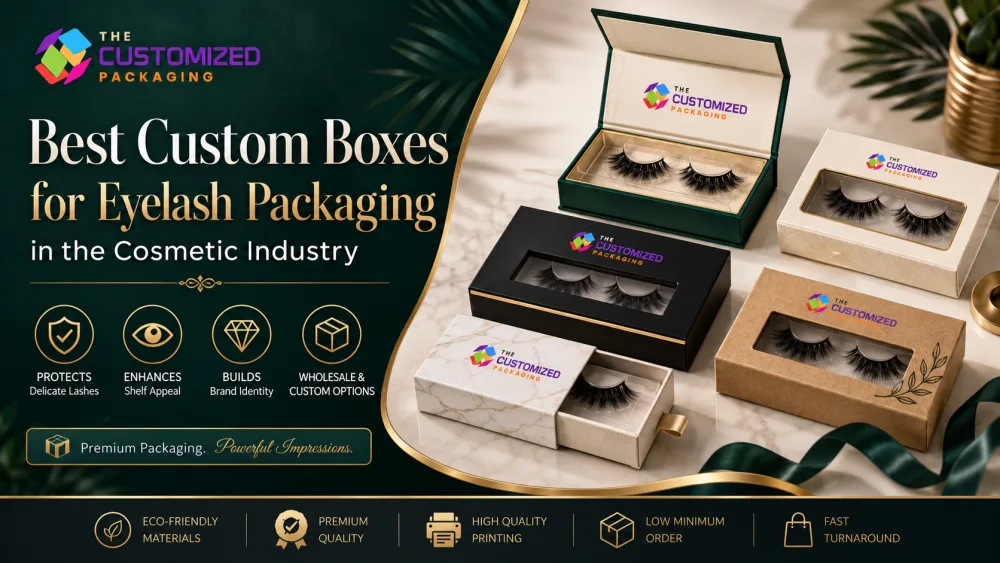
How to Choose Custom Eyelash Packaging Boxes for Tray Fit, Retail, and Shipping
Effective eyelash packaging starts with the lash tray, not the exterior artwork. Learn how to plan tray clearance, windows, materials, box styles, accessory compartments, labeling, retail display, ecommerce protection, samples, and wholesale quantities.
 Published June 03, 2026
Updated July 22, 2026
14 min read
Published June 03, 2026
Updated July 22, 2026
14 min read
Custom eyelash packaging boxes protect delicate lash fibers, hold the tray securely, present the product professionally, and give cosmetic brands enough space for instructions and product information. The best packaging is not selected only by appearance. It should match the lash tray, product type, retail environment, shipping method, and target selling price.
A box designed around the actual product can prevent the tray from sliding, keep long fibers away from the lid, improve visibility through the window, and separate applicators or adhesives from the lashes. It can also help customers identify styles more easily when a brand sells several lash lengths, curls, or collections.
This guide explains how to select the best custom boxes for eyelash packaging in the cosmetic industry. It covers tray measurements, popular box structures, materials, windows, inserts, retail presentation, ecommerce protection, printing, wholesale costs, and sample testing.
For a wider discussion of how packaging supports branding and product presentation, readers can also visit our main eyelash packaging guide.
Why Eyelash Packaging Requires a Product-Specific Box
False eyelashes are lightweight, but they can be damaged easily. Fibers may bend when pressed against the lid, lash bands can lose their intended curve, and trays may shift when the interior dimensions are too large.
The packaging also has to present a product that customers often evaluate visually. Buyers want to see the lash shape, density, length, curl, and overall style before making a decision. For this reason, a clear window or well-arranged tray can be as important as the printed design.
Custom eyelash boxes can also provide separate positions for:
-
Lash applicators
-
Magnetic liner
-
Lash adhesive
-
Removal tools
-
Mirrors
-
Application instructions
-
Several lash pairs
-
Multiple extension lengths
The structure should keep these components organized without allowing hard accessories or liquid containers to move across the lash fibers.
Understand the Complete Eyelash Packaging System
An eyelash package normally contains more than an exterior carton. Each component should perform a specific function.
| Packaging component | Main purpose | Common options |
|---|---|---|
| Lash tray | Holds the lash band in its intended shape | Curved plastic tray, molded fiber tray, or folded paperboard support |
| Protective cover | Prevents dust and accidental contact | Clear tray lid, enclosed box, or window film |
| Outer box | Adds protection, branding, and product information | Folding carton, sleeve, drawer, rigid box, or book-style box |
| Accessory insert | Separates tools and companion products | Paperboard divider, fitted cavity, applicator slot, or bottle compartment |
| Retail display | Organizes multiple products | Hanging carton, counter display, or shelf-ready tray |
| Shipping package | Protects the retail box during delivery | Corrugated mailer, shipping carton, or paper cushioning |
A standard pair of strip lashes may only need a curved tray, protective cover, and folding carton. A magnetic lash kit may need a larger drawer or hinged box with separate sections for lashes, liner, and an applicator.
Using more packaging components does not automatically create a better product. Each layer should improve protection, presentation, identification, or customer use.
Measure the Lash Tray Before Selecting the Box
The lash tray should be measured before the outer box is designed. Do not rely only on measurements supplied in a product catalog, because raised tray edges, curved corners, protective covers, or tabs may affect the actual fit.
Measure the finished tray at its:
-
Maximum length
-
Maximum width
-
Maximum depth
-
Highest curved edge
-
Widest outer lip
-
Total height with lashes attached
The box needs enough clearance for the tray to load and remove smoothly, but it should not provide so much space that the tray moves freely.
Check Lash Fiber Clearance
The tray dimensions alone do not represent the complete product. Long, dramatic, wispy, and high-volume lashes may extend beyond the tray surface.
Measure the highest point of the finished lash fibers. Leave sufficient space between the fibers and the lid or window so the lashes are not flattened.
A box that fits an empty tray may still damage the completed lash product.
Check Tray Retention
Turn and gently shake the filled sample. The tray should remain aligned with the window and should not strike the box walls.
Movement can be controlled with:
-
Fitted internal dimensions
-
Side-retaining tabs
-
Raised paperboard platforms
-
Corner supports
-
Tray lids
-
Folded inserts
-
Sleeve-style holders
The insert should remain simple enough for efficient packing.
Compare Popular Eyelash Box Styles
Different lash products require different structures. A simple strip-lash pair does not need the same packaging as a magnetic application kit or a professional extension collection.
| Box style | Best use | Main advantages | Main consideration |
|---|---|---|---|
| Folding window carton | Standard strip lashes and lightweight retail products | Affordable, printable, lightweight, and easy to display | Window position and fiber clearance must be accurate |
| Sleeve box | Single-pair lashes and private-label collections | Clean appearance and smooth opening experience | Sleeve must remain secure without becoming difficult to open |
| Drawer box | Premium lashes, multipair sets, and influencer collections | Attractive reveal and reusable storage | Drawer needs a finger notch, pull tab, or stopping feature |
| Book-style box | Magnetic kits and reusable lash sets | Space for instructions, mirror, and accessories | Hinge and closure should withstand repeated use |
| Two-piece box | Gift sets and multiple lash trays | Classic premium presentation | Tray removal and lid depth require testing |
| Rigid box | Luxury collections and launch kits | Strong presentation and durable storage | Higher production cost, freight weight, and storage space |
| Long extension carton | Professional lash-extension trays | Supports clear length, curl, and diameter identification | End and side labels should remain visible when stacked |
| Hanging carton | Beauty stores and peg displays | Uses vertical retail space | Hanging tab must support the complete product weight |
| Corrugated mailer | Subscription sets and ecommerce orders | Adds shipping strength and interior branding | Retail trays still need fitted protection inside |
Folding Window Eyelash Boxes
Folding window cartons are among the most practical options for individual strip lashes. They are lightweight, can be shipped flat before assembly, and provide enough printable area for branding and product information.
The window should be positioned according to the actual tray and lashes. It should reveal the lash silhouette rather than an empty tray corner or surrounding insert.
A large window can improve visibility, but it also removes part of the structural paperboard. The opening should not weaken the box corners, closure, or narrow side areas.
Brands can choose between a film-covered window and an open cutout. Window film offers additional dust protection, while an open cutout may reduce mixed materials when the tray already has a protective lid.
Sleeve and Drawer Lash Boxes
Sleeve packaging uses an outer cover around a tray or inner carton. It creates a modern presentation without requiring a heavy rigid structure.
The sleeve should remain secure when the box is displayed upright or transported. However, customers should still be able to open it without applying excessive force.
Drawer boxes provide a more controlled opening experience. They work well for premium strip lashes, multipair collections, magnetic products, and collaboration packaging.
A drawer box may use:
-
Finger notches
-
Ribbon pulls
-
Paper tabs
-
Side openings
-
Thumb cutouts
The finished sample should be tested vertically and horizontally to make sure the drawer does not slide open accidentally.
Rigid and Book-Style Eyelash Boxes
Rigid and book-style boxes are suitable for premium products that justify additional material, assembly, and shipping cost.
A hinged interior lid can include application instructions, brand messaging, a QR code, or a small mirror. The base can hold several lash trays, applicators, or companion products.
Before approving a rigid structure, test:
-
Hinge durability
-
Closure strength
-
Tray removal
-
Mirror attachment
-
Accessory movement
-
Surface scratching
-
Shipping protection
-
Repeated opening
Rigid packaging is not always the most profitable option for a single lightweight lash pair. It should support the product’s price point and intended customer experience.
Packaging for Different Eyelash Products
Strip Lash Packaging
Strip lashes are normally placed on a curved tray that presents the complete lash style. A folding window carton, sleeve, or compact drawer is usually sufficient.
The box should clearly identify whether the lashes are natural, wispy, cat-eye, dramatic, or high-volume. Style names or numbers should remain visible when several products are displayed together.
If the lashes are intended to be stored and reused, the customer should be able to return them to the curved holder without damaging the band.
Magnetic Lash Packaging
Magnetic lash products may include several components, such as lashes, magnetic liner, an applicator, and printed instructions.
Each component should have a separate position. The liner bottle should not move freely across the lashes, and a metal applicator should not press against the fibers.
Drawer, hinged, and book-style boxes work particularly well for these kits because they provide enough room for divided inserts.
Cluster Lash Packaging
Cluster lashes are often arranged by length. The package may contain short, medium, and long clusters or several numbered rows.
The tray identifiers should remain visible through the window or after opening. Where bonding or removal products are included, each container should remain separated from the lash tray.
Professional Lash Extension Packaging
Professional lash-extension trays require fast identification. Lash technicians may need to compare length, diameter, curl, color, and product line during appointments.
These details should be visible on the top, side, or end of the carton when several trays are stacked.
A consistent labeling system can help salons organize:
-
Curl type
-
Fiber diameter
-
Lash length
-
Product color
-
Tray number
-
Collection name
Printed text should remain the main identifier instead of relying entirely on color.
Select the Right Material
Material affects printing, box strength, weight, storage, appearance, and cost.
SBS paperboard is commonly used for folding eyelash cartons because it provides a smooth white printing surface and supports accurate cutting around windows.
Natural kraft board can support simple or understated branding, but printed colors appear differently on a brown surface. Kraft appearance should not be treated as automatic proof that the complete package is sustainable.
Recycled paperboard can be considered when the supplier can provide appropriate material documentation. The surface appearance and printing consistency may vary by grade.
Micro-flute corrugated board offers additional protection for larger lash kits and ecommerce packages. It is thicker than ordinary folding paperboard and may not be necessary for a standard single-pair carton.
Rigid chipboard is appropriate for high-value sets and reusable collections. However, it increases unit cost, shipping weight, assembly time, and storage requirements.
The material thickness should be chosen according to:
-
Tray dimensions
-
Window size
-
Accessory weight
-
Box style
-
Retail orientation
-
Shipping method
Thicker material is not automatically better. Accurate dimensions and tray retention often matter more than unnecessary board weight.
Choose the Lash Tray and Insert
The tray is responsible for maintaining the lash-band curve and product position. Common options include formed plastic trays, clear trays with lids, molded fiber supports, and folded paperboard holders.
A transparent tray allows the full lash shape to remain visible. A colored tray can strengthen the visual identity. Paper-based supports may reduce plastic components when they can hold the lash band correctly.
Accessory inserts should keep tools and containers separate from the lashes. Paperboard compartments can hold applicators, instructions, or small liner bottles.
The finished insert should be tested with the real product. A digitally attractive insert may still be difficult to assemble or may place pressure on the lash fibers.
Design the Window Around the Lash Display
The window should show the feature customers care about most: the lash shape.
Depending on the product, the opening may highlight:
-
Full lash silhouette
-
Fiber density
-
Band thickness
-
Cat-eye shape
-
Length variation
-
Cluster arrangement
-
Several lash pairs
-
Included applicator
The tray and window should be designed together. A centrally placed window does not guarantee that the lashes will appear centered once the box is folded.
Brands should also test window glare under retail lighting and during ecommerce photography.
Design for Retail Display
Retail packaging should remain easy to identify whether it is displayed upright, flat, hanging, or inside a counter tray.
The front-facing area should show the brand and lash style clearly. Hanging cartons require enough strength around the hanging slot, especially when the package contains accessories.
Counter displays can organize several products and support impulse purchases. Style names should remain visible even when units are arranged behind one another.
A tamper seal may be useful for products handled frequently in stores. It should not cover the window, product name, or important information.
Protect Eyelash Boxes During Ecommerce Shipping
A printed retail carton should not automatically be used as the shipping package.
Folding cartons can become crushed inside shipping bags, while rigid boxes may develop scratched surfaces or damaged corners.
A properly sized corrugated mailer can protect the retail box during delivery. Paper inserts or cushioning can prevent several units from moving inside the mailer.
The complete shipping system should be tested for:
-
Compression
-
Vibration
-
Corner impact
-
Window scratching
-
Drawer opening
-
Tray movement
-
Accessory movement
-
Surface scuffing
Avoid oversized mailers that require excessive filler. Right-sized shipping packaging can reduce material use and product movement.
Printing and Finishing Options
Digital printing can be practical for smaller quantities, new product launches, samples, and collections with several artwork variations.
Offset printing is often more suitable for larger quantities requiring detailed graphics and consistent color. Corrugated shipping mailers may use flexographic or digital printing depending on the artwork and quantity.
Popular finishes for eyelash boxes include:
-
Matte coating
-
Gloss coating
-
Soft-touch lamination
-
Foil stamping
-
Holographic foil
-
Spot UV
-
Embossing
-
Debossing
-
Interior printing
Finishes should be used selectively. A foil logo or spot UV product name can create more impact than covering every panel with premium effects.
Barcode areas, small instructions, folds, and window edges should remain free from finishes that could affect readability or production accuracy.
Control Wholesale Eyelash Box Costs
The cost of wholesale eyelash boxes depends on:
-
Box dimensions
-
Material thickness
-
Box style
-
Window size
-
Tray construction
-
Insert complexity
-
Printing method
-
Number of artwork variations
-
Coatings and finishes
-
Quantity
-
Assembly
-
Freight
A folding window carton will normally cost less than a rigid magnetic box containing a mirror and multiple compartments.
Brands can control costs by using compatible box dimensions across several styles, simplifying inserts, limiting expensive finishes, and ordering quantities based on realistic demand.
Higher quantities may reduce the unit cost because setup expenses are distributed across more boxes. However, ordering excessive stock can create storage problems or waste if branding, product details, or lash styles change.
Estimate Your Eyelash Packaging Budget
Use the Custom Box Packaging Cost Calculator to compare initial packaging configurations before requesting final production pricing.
You can compare:
-
Folding carton versus drawer box
-
Paperboard versus rigid board
-
Open cutout versus film window
-
Basic printing versus foil finishing
-
Single-pair versus multipair packaging
-
Retail carton versus corrugated ecommerce mailer
The estimate can help determine whether more of the budget should be allocated to tray fit, product visibility, structural protection, or premium finishing.
An online estimate remains a preliminary planning figure. Final pricing depends on confirmed measurements, tray style, material, artwork, quantity, inserts, finishes, and delivery destination.
Test Samples Before Bulk Production
A blank structural sample should be tested with the actual production tray, lashes, and accessories.
Confirm:
-
Tray fit
-
Lash-fiber clearance
-
Window alignment
-
Product visibility
-
Drawer or sleeve movement
-
Insert retention
-
Tray removal
-
Applicator position
-
Adhesive-container clearance
-
Box closure
A printed sample should then be checked for:
-
Color accuracy
-
Logo placement
-
Text readability
-
Barcode scanning
-
QR-code performance
-
Window glare
-
Coating
-
Foil alignment
-
Surface scratching
For ecommerce products, test the retail box inside the intended shipping mailer. The packaging should be evaluated as a complete filled system rather than as an empty box.
Why Choose The Customized Packaging?
The Customized Packaging produces custom eyelash packaging boxes for strip lashes, magnetic lash kits, clusters, extension trays, multipair collections, private-label brands, salons, beauty stores, and ecommerce businesses.
Available structures include folding window cartons, sleeve boxes, drawer boxes, book-style packaging, two-piece boxes, rigid boxes, hanging cartons, counter displays, and corrugated mailers.
Customization options include logo printing, custom dimensions, fitted tray supports, accessory compartments, die-cut windows, interior printing, foil stamping, embossing, debossing, spot UV, matte coating, and gloss finishing.
Our team can review tray measurements, fiber clearance, product components, retail display, order quantity, and delivery requirements before recommending a suitable structure.